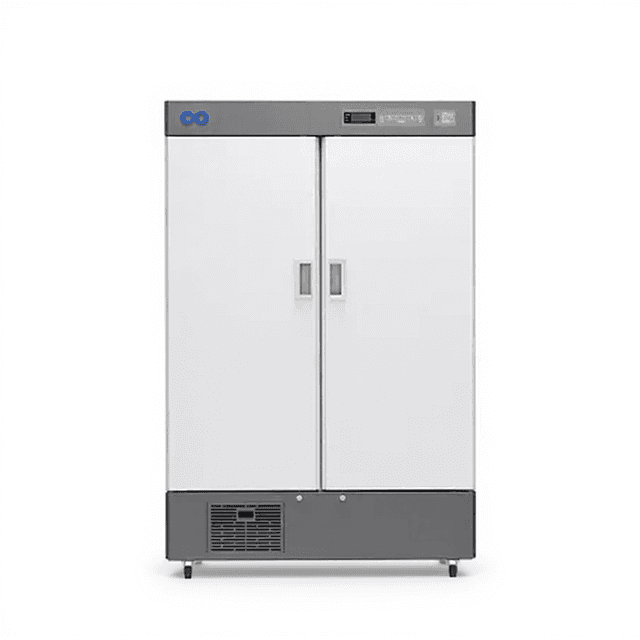
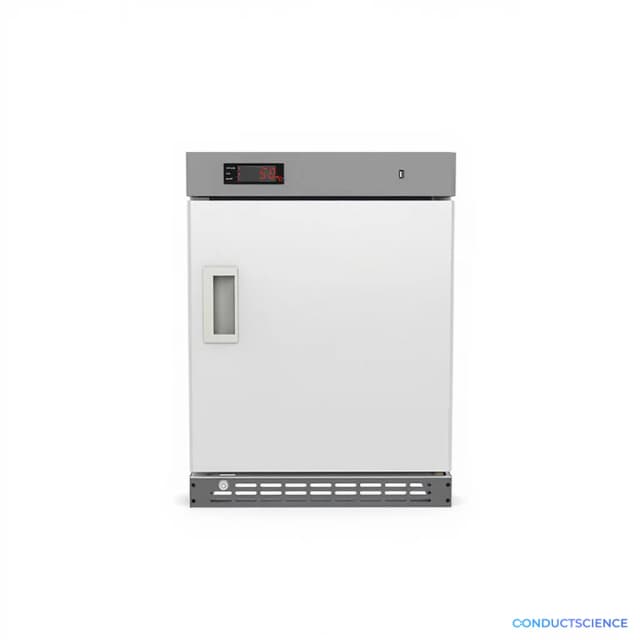
Large-Scale Microdroplet Production System
High-throughput microdroplet production system for generating uniform droplets at production scale in research and industrial applications.

Louise Corscadden, PhD
Director of Science · ConductScience
Ask Louise about Large-Scale Microdroplet Production System fit, setup, configuration, or quote prep.
Already working with us? Sign in to connect this with My Scientist.
Key Specifications
Full details →- Model fit
- Configured during quote
- SKU family
- WHM-0071
- Shipping box
- 500.0 x 400.0 x 300.0 cm
- Ordering
- Online checkout and quote request available
- Category
- Lab Equipment
- Build notes
- Confirm accessories, station layout, and support needs before purchase
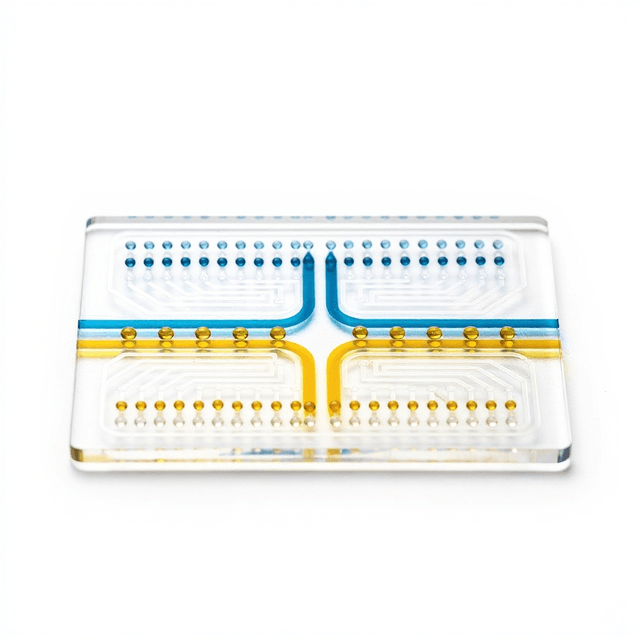
The Large-Scale Microdroplet Production System is a high-throughput platform designed for production-scale generation of uniform microdroplets in research and industrial applications. This system enables consistent droplet formation across extended operational periods, supporting applications requiring large volumes of precisely controlled droplets for downstream processing or analysis.
Operating at production scale, the system accommodates workflows where traditional laboratory-scale droplet generators lack sufficient throughput. The 500×400×300mm footprint provides stable operation while maintaining accessibility for routine maintenance and monitoring. Researchers utilize this platform when experimental protocols require thousands to millions of uniform droplets per operational cycle.
How It Works
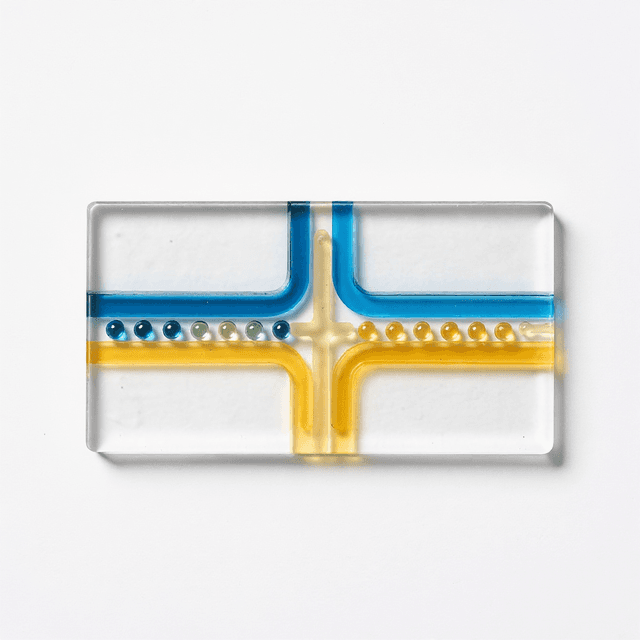
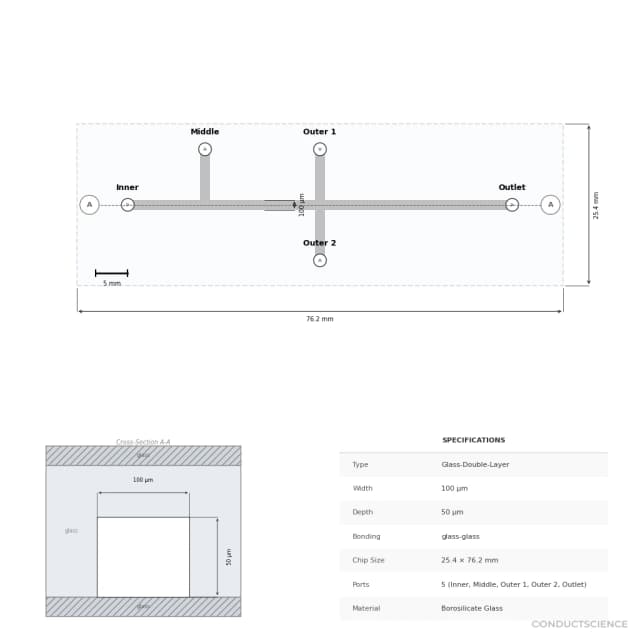
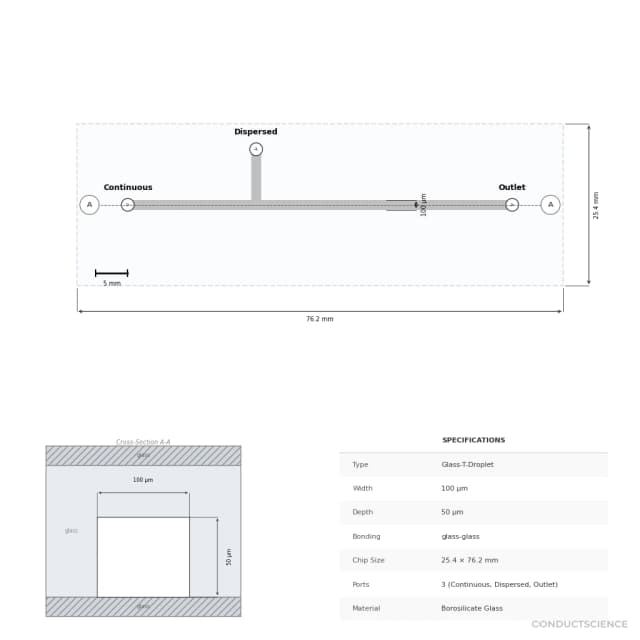
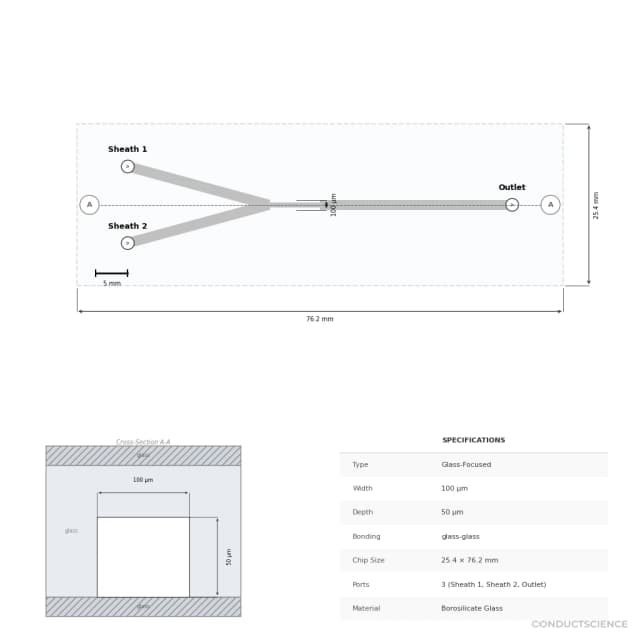
The system operates on microfluidic flow focusing principles, where continuous and dispersed phase fluids converge at precisely controlled flow rates. Controlled pressure differentials and channel geometries create shear forces that pinch off the dispersed phase into uniform droplets. Flow rate ratios between phases determine final droplet size, while channel dimensions and fluid properties influence formation frequency.
Production-scale operation maintains consistent droplet formation through automated flow control and pressure regulation systems. The platform accommodates various fluid viscosities and surface tensions through adjustable operational parameters. Droplet collection occurs downstream of the formation region, with optional integration for immediate processing or storage systems.
Features & Benefits
Scale
- Large-scale / high-throughput
Automation Level
- semi-automated
Brand
- ConductScience
Research Domain
- Analytical Chemistry
- Cell Biology
- Food Science
- Materials Science
- Microbiology
- Pharmaceutical QC
Shipping weight
- 20.0 lb
Shipping box
- L: 500.0 cm
- W: 400.0 cm
- H: 300.0 cm
| Feature | This Product | Typical Alternative | Advantage |
|---|---|---|---|
| Production Scale | Large-scale / high-throughput operation | Laboratory-scale systems typically offer lower throughput | Supports industrial research applications requiring large volumes of uniform droplets. |
| Platform Footprint | 500×400×300mm stable platform | Compact systems often have smaller footprints | Larger platform provides enhanced stability for consistent droplet formation during extended runs. |
| Operational Weight | 20 kg robust construction | Benchtop units are typically lighter | Higher mass reduces vibration interference that can affect droplet uniformity. |
| Throughput Capability | Production-scale droplet generation | Research systems often focus on flexibility over volume | Enables workflows requiring thousands to millions of droplets per experimental cycle. |
| Application Focus | Production-scale droplet generation | Laboratory systems emphasize parameter optimization | Optimized for scale-up applications rather than method development protocols. |
This system prioritizes production throughput and operational stability through robust construction and large-scale design. The platform excels in applications where droplet volume requirements exceed laboratory-scale capabilities.
Practical Tips
Verify flow rate accuracy before each production run using calibrated flow meters.
Why: Flow rate consistency directly determines droplet size uniformity across the entire production batch.
Flush all fluid channels with appropriate solvents between different fluid types to prevent cross-contamination.
Why: Residual fluids can alter surface tension properties and affect subsequent droplet formation.
Maintain constant ambient temperature during production runs to preserve fluid viscosity consistency.
Why: Temperature variations change fluid properties and can lead to droplet size drift during extended operations.
Check for air bubbles in fluid lines if droplet formation becomes irregular or stops entirely.
Why: Air bubbles disrupt the continuous flow required for stable droplet pinch-off at the formation junction.
Document flow rate settings and environmental conditions for each production batch to enable reproducibility.
Why: Consistent documentation enables optimization of parameters and troubleshooting of batch-to-batch variations.
Ensure proper ventilation when working with volatile solvents or chemicals in the droplet formation process.
Why: Enclosed systems can accumulate vapors that pose health risks during extended production operations.
Run test batches with water-based systems before switching to valuable research materials.
Why: Water systems reveal operational issues without risking expensive reagents or samples.
Setup Guide
What’s in the Box
- Large-scale microdroplet production unit (typical)
- Power supply and cables (typical)
- Fluid connection fittings (typical)
- Collection vessel adapters (typical)
- User manual and setup guide (typical)
- Maintenance tool kit (typical)
Warranty
Standard manufacturer warranty covers one year from delivery date with technical support for operational parameters and troubleshooting guidance.
Compliance
What droplet size range can this system produce consistently?
Droplet size depends on channel geometry, flow rate ratios, and fluid properties. Consult product datasheet for specific size ranges and formation parameters.
How many droplets per hour can the system generate at production scale?
Production rates vary with droplet size and operational parameters. The high-throughput design supports continuous operation for extended periods.
What types of fluids are compatible with the system?
System accommodates various fluid viscosities and surface tensions through adjustable operational parameters. Compatibility depends on chemical resistance of wetted materials.
How do I maintain consistent droplet uniformity during long runs?
Monitor flow rate stability, maintain constant temperature conditions, and ensure fluid supply consistency. Regular system calibration maintains formation precision.
Can the system integrate with downstream processing equipment?
The production-scale design accommodates integration with collection and processing systems. Collection vessel adapters enable workflow connectivity.
What maintenance schedule is recommended for continuous operation?
Regular cleaning cycles prevent channel blockage, while flow rate verification maintains operational precision. Consult user manual for specific maintenance intervals.
How does performance compare to laboratory-scale droplet generators?
This system provides significantly higher throughput for applications requiring large droplet volumes, while laboratory systems offer greater parameter flexibility for research optimization.
Have a question about this product?
Have a question? Just ask.
Send it over and we'll email you a personalized answer — no call, no scheduling.
Prefer to talk it through?
Replacement Parts & Consumables
Upgrade Options