Microdroplet Collection and Storage System
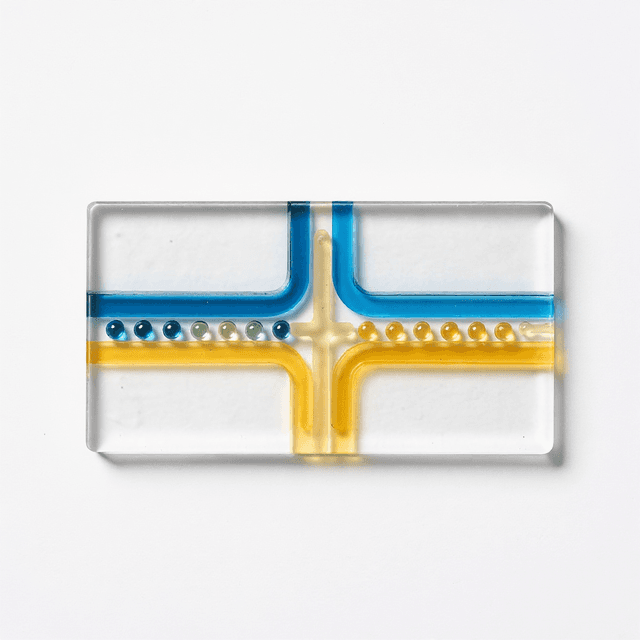
Bench-top system for collecting, counting, and storing microscale droplets from microfluidic devices and other sources for downstream research analysis.

Louise Corscadden, PhD
Director of Science · ConductScience
Ask Louise about Microdroplet Collection and Storage System fit, setup, configuration, or quote prep.
Already working with us? Sign in to connect this with My Scientist.
Key Specifications
Full details →- Model fit
- Configured during quote
- SKU family
- WHM-0070
- Shipping box
- 250.0 x 200.0 x 150.0 cm
- Ordering
- Online checkout and quote request available
- Category
- Lab Equipment
- Build notes
- Confirm accessories, station layout, and support needs before purchase
The Microdroplet Collection and Storage System provides controlled collection, counting, and storage of microscale droplets for research applications. This system enables researchers to capture droplets from microfluidic devices, aerosol generators, or other droplet sources for subsequent analysis or archival storage.
The system supports downstream analytical workflows by maintaining droplet integrity during collection and providing organized storage capabilities. Researchers can utilize collected droplets for chemical analysis, biological assays, or physical characterization studies. Dimensions of 250 × 200 × 150 mm and 5 kg weight provide bench-top convenience for laboratory environments.
How It Works
The system operates through integrated collection and counting mechanisms that process droplets as they enter the system. Droplets are directed into designated collection chambers where they can be maintained under controlled conditions for storage or immediate transfer to analysis systems.
The counting function tracks droplet numbers during collection, providing researchers with quantitative data on sample size and collection efficiency. Storage components maintain droplet samples in organized configurations, preventing cross-contamination and enabling systematic retrieval for downstream applications.
The compact design integrates all collection, counting, and storage functions within a single unit, streamlining laboratory workflows and minimizing sample handling steps.
Features & Benefits
Functions
- Collection, counting, storage
Automation Level
- semi-automated
Brand
- ConductScience
Research Domain
- Analytical Chemistry
- Cell Biology
- Environmental Monitoring
- Materials Science
- Pharmaceutical QC
Shipping weight
- 5.0 lb
Shipping box
- L: 250.0 cm
- W: 200.0 cm
- H: 150.0 cm
| Feature | This Product | Typical Alternative | Advantage |
|---|---|---|---|
| Integration Level | Combined collection, counting, and storage in single unit | Separate systems often require multiple instruments for complete droplet processing workflow | Streamlines laboratory workflow and reduces sample handling steps between collection and storage. |
| Counting Capability | Integrated counting function during collection | Manual counting methods or external counting equipment | Provides real-time quantification without additional instrumentation or time-consuming manual procedures. |
| Storage Organization | Systematic storage arrangement within collection system | Basic collection containers often lack organized sample management | Enables systematic sample retrieval and prevents mix-ups during multi-sample experiments. |
| Bench-top Design | 250 × 200 × 150 mm compact footprint | Larger systems may require dedicated bench space or floor mounting | Maximizes laboratory space efficiency while providing comprehensive droplet processing capabilities. |
This system provides integrated collection, counting, and storage capabilities within a compact bench-top design. The combination of automated counting with organized storage streamlines droplet processing workflows compared to manual collection methods or multi-instrument approaches.
Practical Tips
Verify counting accuracy periodically using known droplet standards appropriate for your sample types.
Why: Ensures quantitative data reliability throughout extended experimental campaigns.
Clean collection chambers thoroughly between different sample types to prevent cross-contamination.
Why: Maintains sample integrity and prevents analytical artifacts from residual materials.
Allow system to equilibrate at room temperature before beginning droplet collection procedures.
Why: Temperature stability optimizes collection efficiency and counting accuracy.
Label storage chambers clearly and maintain collection logs for systematic sample tracking.
Why: Prevents sample mix-ups and supports experimental documentation requirements.
Check flow path connections if counting numbers appear inconsistent during collection.
Why: Loose connections can cause droplet loss or erratic counting behavior.
Monitor collection rate consistency to identify potential system issues early in experiments.
Why: Consistent performance indicates optimal system function and reliable data collection.
Setup Guide
What’s in the Box
- Microdroplet collection and storage system main unit
- Collection chambers (typical)
- Power adapter (typical)
- User manual and setup guide (typical)
- Calibration reference materials (typical)
Warranty
ConductScience provides comprehensive warranty coverage and technical support for laboratory instrumentation. Standard coverage includes one-year manufacturer warranty with access to technical assistance for optimal system performance.
Compliance
What collection volumes can the system handle?
Collection capacity depends on chamber configuration and droplet size. Consult product specifications for volume ranges and recommended operational parameters for your specific application.
How are droplets counted during collection?
The system includes integrated counting functionality that tracks droplets as they enter collection chambers. Specific counting methodology and accuracy specifications are detailed in the technical documentation.
Can stored droplets be retrieved for analysis?
Yes, the storage system is designed for systematic sample retrieval. Collection chambers can be removed for direct analysis or droplets can be transferred to analytical instruments as needed.
What maintenance is required?
Routine maintenance includes cleaning collection chambers between samples and periodic verification of counting accuracy. Detailed maintenance protocols are provided in the user manual.
Is the system compatible with automated droplet sources?
The system accepts droplets from various sources including microfluidic devices and automated generators. Input connections accommodate standard laboratory tubing and fittings.
How does the system prevent cross-contamination?
Storage design maintains sample separation through dedicated collection chambers and controlled flow paths. Proper chamber cleaning between samples ensures sample integrity.
Have a question about this product?
Have a question? Just ask.
Send it over and we'll email you a personalized answer — no call, no scheduling.
Prefer to talk it through?
Accessories
Enhance your setup with compatible accessories
Frequently Bought Together