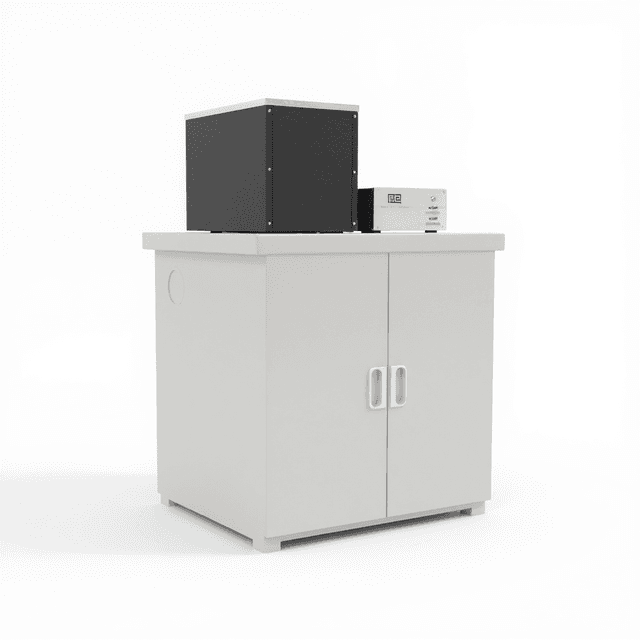
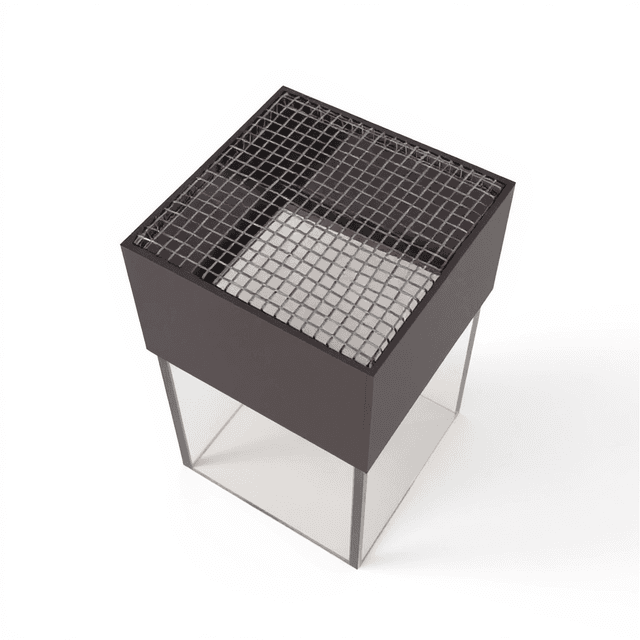
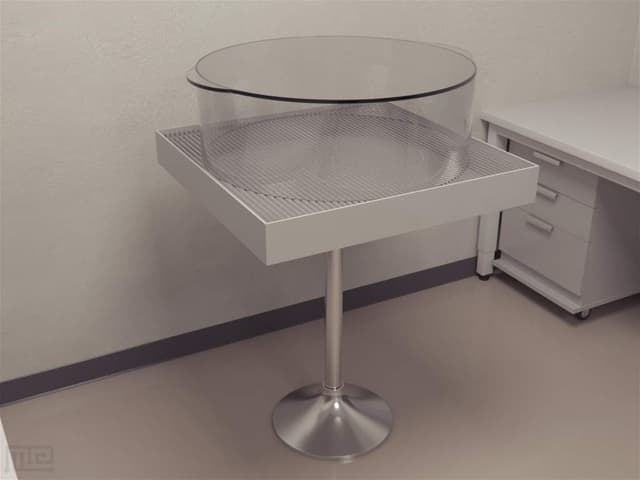
Morris Water Maze Round Arena
Round arena platform for Morris water maze spatial learning and memory testing protocols with included visual cue objects for rodent behavioral assessment.
| Automation Level | manual |
| Species | Mouse, Rat |

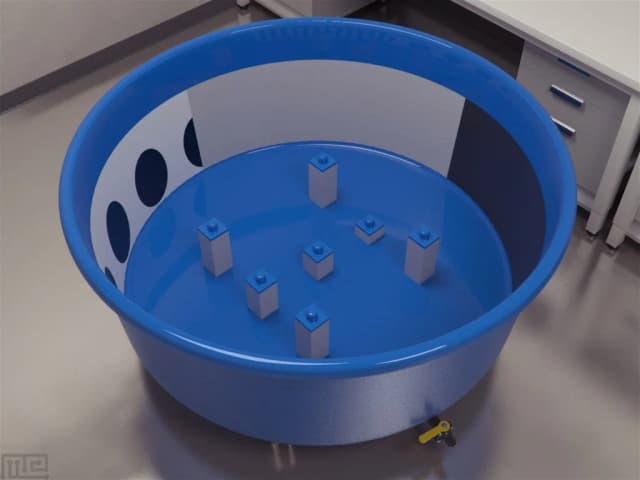
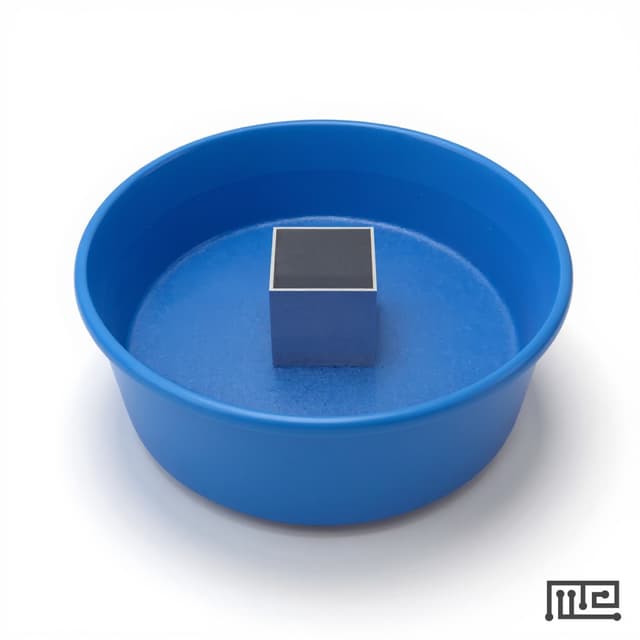
The Morris Water Maze Round Arena is a standardized behavioral testing apparatus designed for spatial learning and memory assessment in rodents. This round arena configuration provides the foundational platform for conducting Morris water maze protocols, enabling researchers to evaluate hippocampal-dependent spatial navigation, reference memory, and working memory performance in laboratory animals.
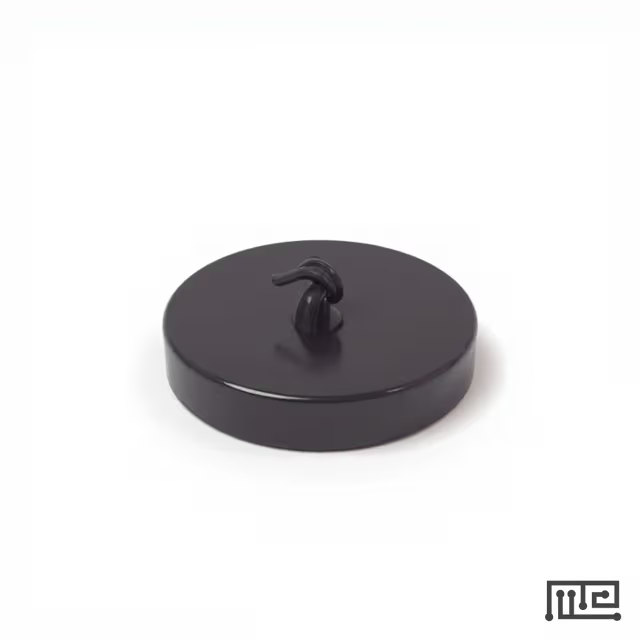
The arena kit includes 15 black block objects (6.5 × 6 × 6 cm) that serve as visual cues and landmarks for spatial orientation tasks. These standardized components support established Morris water maze methodologies for investigating cognitive function, neuroplasticity, and the effects of pharmacological interventions on spatial learning capabilities.
How It Works
The Morris water maze operates on the principle of spatial navigation using distal visual cues to locate a hidden platform beneath opaque water. Animals must develop cognitive maps of their environment by integrating multiple sensory inputs, primarily visual landmarks, to navigate efficiently to the escape platform. This process engages the hippocampal formation and associated neural circuits responsible for spatial memory encoding and retrieval.
The round arena configuration eliminates corner preferences and ensures equal access from all starting positions. The included black block objects serve as salient visual cues positioned around the maze perimeter, providing consistent spatial reference points. During training trials, animals learn to use the geometric relationships between these landmarks to develop allocentric spatial representations, transitioning from random search patterns to directed navigation strategies.
Performance metrics include escape latency, path length, swim speed, and search strategies, which collectively provide quantitative measures of spatial learning acquisition, memory retention, and cognitive flexibility during probe trials and reversal learning paradigms.
Features & Benefits
Behavioral Construct
- spatial learning
- reference memory
- working memory
- cognitive mapping
- place navigation
- spatial memory
Automation Level
- manual
Research Domain
- Aging Research
- Anxiety and Depression
- Behavioral Pharmacology
- Learning and Memory
- Neurodegeneration
- Neuroscience
Species
- Mouse
- Rat
Weight
- 21.0 kg
Dimensions
- L: 43.2 mm
- W: 38.0 mm
- H: 27.9 mm
Comparison Guide
| Feature | This Product | Typical Alternative | Advantage |
|---|---|---|---|
| Visual Cue Objects | 15 standardized black blocks (6.5 × 6 × 6 cm) | Basic setups often provide fewer cues or require separate purchase | Comprehensive cue set enables complex spatial discrimination protocols without additional component purchases |
| Arena Configuration | Purpose-built round arena design | Some laboratories use modified stock tanks or custom rectangular mazes | Eliminates geometric preferences and ensures standardized methodology consistent with published protocols |
| Cue Standardization | Uniform black block design with consistent dimensions | Variable cue types and sizes in laboratory-assembled systems | Reduces experimental variability and enables direct comparison with established literature protocols |
| Complete Kit | All essential visual cues included | Many systems require separate cue purchases or improvised landmarks | Immediate protocol implementation without sourcing additional spatial reference components |
This arena kit provides a standardized Morris water maze platform with comprehensive visual cue system, offering consistent spatial landmark configuration for reproducible cognitive assessment protocols. The round design and included black block objects support established behavioral neuroscience methodologies with reduced experimental variability.
Practical Tips
Verify visual cue positions before each experimental session using overhead photography to document spatial relationships.
Why: Maintains consistent allocentric reference frame required for valid spatial memory assessment.
Replace water completely between animal cohorts and sanitize all surfaces with non-residue disinfectants.
Why: Prevents olfactory cue contamination that could confound spatial navigation strategies.
Allow animals 30-60 seconds on platform between trials to consolidate spatial memory encoding.
Why: Adequate consolidation time improves learning acquisition and memory retention performance.
Randomize starting positions across trials while maintaining consistent visual cue arrangement.
Why: Prevents development of procedural responses and ensures assessment of true spatial learning.
Monitor water temperature continuously and maintain 25±2°C throughout testing sessions.
Why: Temperature variations affect swim motivation and motor performance, introducing non-cognitive confounds.
If animals show thigmotaxis (wall-hugging), extend pre-training period with visible platform trials.
Why: Reduces stress-related behaviors that interfere with spatial learning performance measurement.
Maintain water depth sufficient to prevent platform contact during diving behaviors.
Why: Ensures animal safety while preserving hidden platform paradigm requirements.
Setup Guide
What’s in the Box
- Round arena platform components (typical)
- 15 black block visual cue objects (6.5 × 6 × 6 cm)
- Assembly hardware (typical)
- Setup instructions (typical)
Warranty
ConductScience provides a standard 1-year manufacturer warranty covering defects in materials and workmanship, with technical support for setup and protocol optimization.
Compliance
References
Background reading relevant to this product:
What arena diameter is optimal for different rodent species?
Arena diameter should be scaled to animal size - typically 120-150 cm for rats and 90-120 cm for mice. Consult product datasheet for specific dimensions of this arena configuration.
How should visual cues be positioned for optimal spatial learning?
Distribute the 15 black blocks evenly around the arena perimeter, ensuring each cue is clearly visible from the center and maintains consistent spatial relationships throughout testing.
What training protocols are compatible with this arena setup?
Supports standard Morris water maze protocols including acquisition training, probe trials, reversal learning, and working memory variants with variable platform locations.
How do I prevent cue displacement during extended testing sessions?
Secure visual cue objects to prevent movement from water splash or animal contact, and verify cue positions between test sessions to maintain spatial consistency.
What water opacity levels work best with this cue configuration?
Use non-toxic white tempera paint or powdered milk to achieve complete platform concealment while maintaining visibility of perimeter visual cues for spatial orientation.
Can this arena accommodate automated tracking systems?
Yes, the round design and standardized dimensions are compatible with most overhead video tracking systems used for automated path analysis and behavioral scoring.
How do I clean and maintain the arena between animal cohorts?
Drain completely and sanitize with appropriate disinfectant solutions, ensuring removal of olfactory cues that could influence spatial navigation behavior in subsequent subjects.
Have a question about this product?
Accessories
Enhance your setup with compatible accessories

Frequently Bought Together