1 / 6
Adjustable Platform
SKU ME-3105
In Stock — ships now$490.00
IncludesStandard care
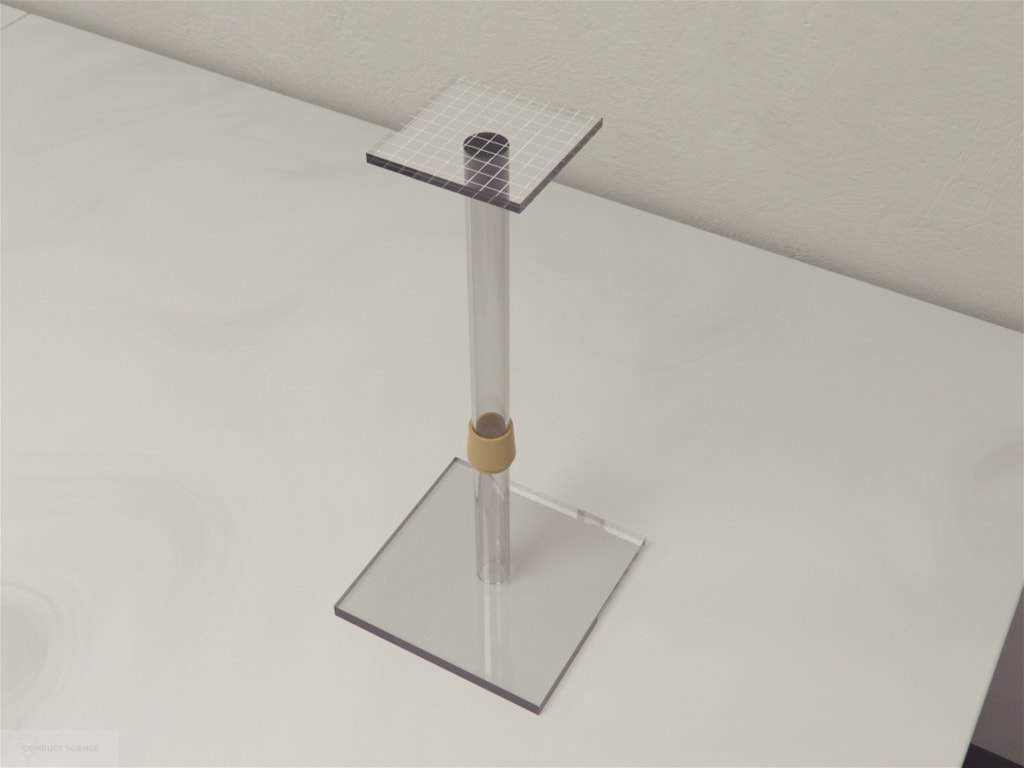
Adjustable acrylic escape platform with etched grip surface for Morris water maze spatial learning studies in mice and rats.
Scientist guidance

Louise Corscadden, PhD
Director of Science · ConductScience
Ask Louise about Adjustable Platform fit, setup, configuration, or quote prep.
Already working with us? Sign in to connect this with My Scientist.
Key Specifications
Full details →- Model fit
- Mouse, Rat
- SKU family
- ME-3104/ME-3105
- Sizing
- Mouse: Top width 4 cm; Rat: Top width 10 cm
- Ordering
- Online checkout and quote request available
- Category
- Behavioral Mazes
- Build notes
- Confirm accessories, station layout, and support needs before purchase
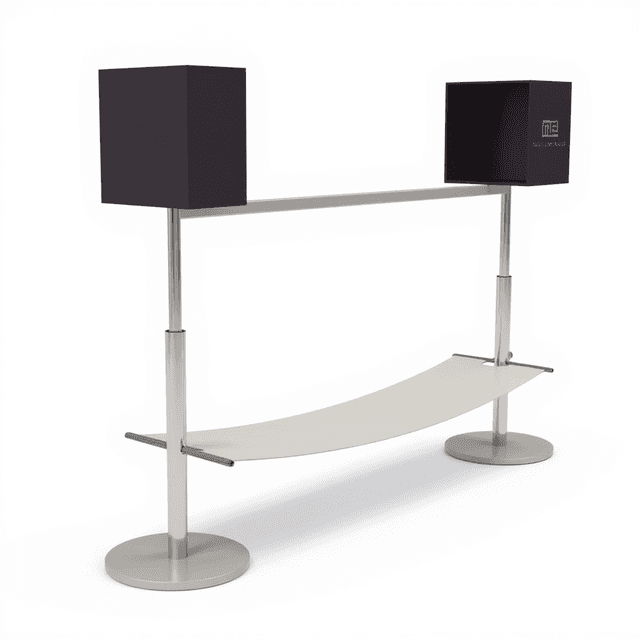
The Adjustable Platform is a precision-engineered escape platform designed for Morris water maze and spatial learning protocols. Constructed from durable acrylic with an etched surface pattern for enhanced grip, this platform provides researchers with adjustable sizing options to accommodate different experimental paradigms and animal subjects.
Available in both round and square configurations, the platform features variable top widths (4-9 cm for mouse studies, 10-16 cm for rat studies) while maintaining a consistent 12-inch base width for stability. The etched surface pattern ensures reliable footing during escape trials, critical for consistent behavioral data collection in spatial memory assessments and hippocampal function studies.
How It Works
The adjustable platform functions as the target location in Morris water maze spatial navigation paradigms. During hidden platform trials, the platform is positioned just below the water surface, invisible to the subject but providing stable footing upon contact. Animals must use distal visual cues to develop a spatial map and navigate directly to the platform location.
The etched surface pattern provides crucial tactile feedback and grip stability, preventing slipping during escape behavior. The adjustable sizing allows researchers to modify task difficulty - smaller platforms increase spatial precision requirements while larger platforms facilitate initial learning phases. Platform size adjustment also accommodates different species requirements and experimental designs.
In probe trials, the platform is removed entirely to assess spatial memory retention. Swimming patterns are analyzed for quadrant preference, platform crossings, and search strategies, providing quantitative measures of spatial memory consolidation and retrieval.
Features & Benefits
Adjustable top width (4-9 cm mouse, 10-16 cm rat)
Accommodates different species requirements and allows task difficulty modification within experimental protocols
Etched surface pattern
Provides reliable grip and tactile feedback during escape behavior, reducing variability in motor performance
Round or square configuration options
Enables shape-based experimental controls and accommodation of different maze pool designs
Durable acrylic construction
Maintains structural integrity through repeated use and cleaning cycles in aquatic environments
12-inch stable base width
Ensures platform stability regardless of top surface size selection, preventing movement during animal contact
Height adjustability
Allows switching between hidden and visible platform conditions within the same experimental session
Sizes by model
| Measurement | Mouse | Rat |
|---|---|---|
| Top width | 4 cm | 10 cm |
- Acrylic
- Round or Square
- Etched Pattern for easy grapple
- Base Width: 12 in
- Height adjustable 16-26 inches
- Mouse: to 9 cm available in 1 cm increments
- Rat: to 16 cm available in 1 cm increments
Behavioral Construct
- Spatial Learning
- Reference Memory
- Working Memory
- Cognitive Mapping
- Place Navigation
Automation Level
- manual
Research Domain
- Aging Research
- Behavioral Pharmacology
- Learning & Memory Tests
- Neurodegeneration
- Neuroscience
Compatible Tracking Software
- ConductVision
Shipping weight
- 21.0 lb
Shipping box
- L: 43.2 cm
- W: 38.0 cm
- H: 27.9 cm
| Feature | This Product | Typical Alternative | Advantage |
|---|---|---|---|
| Size Adjustability | Variable top width in 1 cm increments (4-9 cm mouse, 10-16 cm rat) | Most platforms offer fixed sizes requiring multiple units for different experimental phases | Single platform accommodates multiple protocol requirements and allows within-experiment size modifications |
| Surface Texture | Etched pattern for enhanced grip | Smooth surfaces or simple roughening | Uniform tactile feedback reduces motor performance variability in spatial learning trials |
| Base Stability | 12-inch stable base width across all top sizes | Base width typically scales with platform size | Consistent stability regardless of selected platform size prevents movement artifacts |
| Shape Options | Round or square configurations available | Single shape design | Shape-based experimental controls and compatibility with different maze pool designs |
This platform provides size flexibility and surface optimization specifically designed for spatial learning protocols. The adjustable sizing and etched grip surface support consistent behavioral data collection across different experimental phases and species requirements.
| Model | Size | SKU | Listed price | Status | Shipping box |
|---|---|---|---|---|---|
| Mouse | Top width 4 cm | ME-3104 | $450.00 | Available | 43.2 x 38.0 x 27.9 cm |
| Rat | Top width 10 cm | ME-3105 | $490.00 | Available | 43.2 x 38.0 x 27.9 cm |
Neuroscience
Spatial memory assessment in Morris water maze protocols, serving as the hidden escape platform for place navigation tasks and reference memory testing.
Learning & Memory Tests
Probe trial protocols where the platform is removed to assess spatial memory retention and search strategy analysis.
Behavioral Pharmacology
Drug efficacy studies examining cognitive enhancement or impairment effects on spatial learning acquisition and retention.
Neurodegeneration
Alzheimer's disease model studies evaluating hippocampal-dependent spatial memory deficits in transgenic mouse lines.
Aging Research
Age-related cognitive decline studies comparing spatial learning performance between young and aged rodent cohorts.
Practical Tips
Calibration
Map platform coordinates using pool wall references and maintain consistent placement logs for each experimental session.
Why: Precise spatial positioning is critical for valid place navigation data and cross-session comparisons.
Maintenance
Clean etched surface gently with soft brush to preserve grip texture while removing biological materials.
Why: Surface texture integrity directly affects animal grip consistency and behavioral data reliability.
Best Practices
Start with larger platform sizes during initial training phases and progressively reduce size as animals learn the task.
Why: Progressive difficulty increase optimizes learning curves while maintaining motivation and task engagement.
Data Quality
Verify platform remains stable and level before each trial using brief weight test.
Why: Platform movement or tilting creates confounding variables that affect spatial navigation measurements.
Troubleshooting
If animals show preference for platform edges, reduce size slightly to encourage center-platform approaches.
Why: Edge-seeking behavior can indicate platform size is too large for optimal spatial precision assessment.
Safety
Ensure all platform edges are smooth and free of sharp corners that could cause injury during escape behavior.
Why: Animal safety considerations are paramount and sharp edges can create behavioral artifacts due to contact avoidance.
Setup Guide
Unpack and Inspect
Remove platform from packaging and inspect acrylic surface for cracks or damage. Verify etched pattern is uniform across the platform surface.
Select Configuration
Choose appropriate platform size based on species and experimental protocol requirements. Mouse studies typically use 4-6 cm platforms, rat studies use 10-12 cm platforms.
Position in Maze
Place platform in designated quadrant of water maze pool using coordinate system or measurement guides. Ensure platform is level and stable on base.
Adjust Height
Set platform height so top surface is 1-2 cm below water level for hidden trials, or at water surface for visible platform control conditions.
Test Stability
Gently apply downward pressure to verify platform remains stable during simulated animal weight loading. Adjust base positioning if movement detected.
Calibrate Position
Record exact platform coordinates for consistent placement across training sessions and between experimental groups.
What’s in the Box
- Adjustable platform with selected size configuration
- Base mounting hardware (typical)
- Setup and positioning guide (typical)
- Care and maintenance instructions (typical)
Warranty
ConductScience provides a standard one-year manufacturer warranty covering defects in materials and workmanship, with technical support for setup and protocol optimization.
Compliance
IACUC Animal Care GuidelinesPlatform design supports humane animal research protocols with non-slip surface and appropriate sizing for subject safety.
NIH Guidelines for Research Animal CareDurable construction and easy cleaning support facility standards for research equipment in animal housing areas.
Q
What platform size should I use for different experimental phases?
A
Start with larger platforms (8-9 cm for mice, 14-16 cm for rats) during initial acquisition training, then reduce to smaller sizes (4-6 cm for mice, 10-12 cm for rats) for precision testing and memory consolidation trials.
Q
How do I maintain consistent platform placement across sessions?
A
Use a coordinate system referenced to pool walls and record exact platform center coordinates. Many researchers use a grid overlay or measurement template for reproducible positioning.
Q
Can the platform be used for both hidden and visible conditions?
A
Yes, adjust platform height so the top surface is 1-2 cm below water level for hidden trials, or position at water surface level for visible platform control conditions.
Q
How should I clean the platform between subjects?
A
Rinse thoroughly with clean water and wipe dry with lint-free cloth. The etched surface pattern should be gently scrubbed to remove any residual materials while preserving grip texture.
Q
What water temperature considerations apply?
A
Platform material remains stable across typical water maze temperatures (20-26°C). Acrylic construction is not temperature-sensitive within normal experimental ranges.
Q
How do I verify platform stability during trials?
A
Test with gentle downward pressure equivalent to animal weight before each session. Platform should not shift or tilt when contacted from any approach angle.
Have a question about this product?
Track rodents with ConductVision
ConductVision is our video-tracking software. Record your sessions on video, and it scores standard rodent tests, such as those listed below.
Examples of tests it scores
To check whether ConductVision scores your protocol in this apparatus, ask in your quote request.
Ask a question
Have a question? Just ask.
Send it over and we'll email you a personalized answer — no call, no scheduling.
Personalized email reply
Usually within one business day
Helpful answers published here
Prefer to talk it through?
Accessories
Enhance your setup with compatible accessories
Total: $0.00


Adjustable Platform
$490.00
Added to quoteView Quote