
1 / 3
Multivariate Concentric Square Field Test
SKU CS-958329
$4,800.00
IncludesStandard care
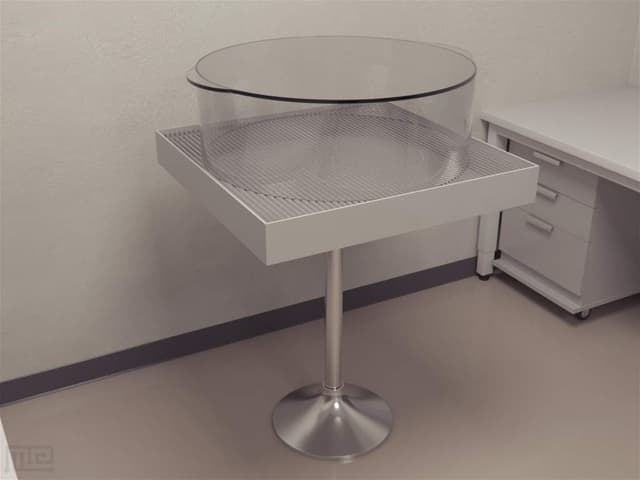
Multi-zone behavioral testing apparatus for comprehensive assessment of anxiety, risk evaluation, and exploration behaviors in mice and rats through forced exploration paradigms.
CE MarkedBAA available
Scientist guidance

Louise Corscadden, PhD
Director of Science · ConductScience
Ask Louise about Multivariate Concentric Square Field Test fit, setup, configuration, or quote prep.
Already working with us? Sign in to connect this with My Scientist.
Key Specifications
Full details →- Model fit
- Mouse, Rat
- SKU family
- CS-958329
- Sizing
- Mouse/Rat: Open field 72 cm x 72 cm; Outer wall: 28 cm high; Center: 42cm x 42 cm
- Ordering
- Online checkout and quote request available
- Category
- Behavioral Mazes
- Build notes
- stainless-steel wire mesh
The Multivariate Concentric Square Field (MCSF) test is a specialized behavioral assessment apparatus designed to evaluate risk assessment, anxiety, and shelter-seeking behaviors in rodents through forced exploration paradigms. Originally developed by Meyerson et al. (2006) for rats and later adapted by Ekmark-Lewén et al. (2010) for mice, the MCSF creates an inescapable novelty environment that evokes natural risk-assessment behaviors by releasing subjects directly into the arena without habituation periods.
The apparatus features a complex multi-zone environment with 12 distinct exploration areas including elevated platforms, sheltered corners, open corridors, and hole-board sections. This design allows simultaneous assessment of multiple behavioral dimensions including thigmotaxis, vertical exploration, sheltered vs. exposed area preferences, and risk-taking behaviors within a single testing session, providing comprehensive behavioral phenotyping capabilities for neuroscience research.
How It Works
The MCSF operates on the principle of forced exploration, where subjects are introduced directly into a complex multi-zone environment without prior habituation. This approach evokes natural risk-assessment behaviors as animals must rapidly evaluate and navigate unfamiliar territories with varying degrees of shelter, elevation, and openness. The apparatus exploits rodents' innate conflict between exploration drive and safety-seeking behaviors.
The 12-zone configuration includes contrasting environments: open corridors that elicit thigmotactic responses, elevated areas that assess vertical exploration tendencies, sheltered corners that provide refuge options, and hole-board sections that evaluate investigatory behaviors. Movement patterns, zone preferences, and time allocation across different environmental contexts provide multidimensional behavioral data reflecting anxiety levels, risk tolerance, and exploration strategies.
Behavioral scoring typically involves tracking locomotor activity, zone transitions, time spent in sheltered vs. exposed areas, vertical rearing behaviors, and shelter-seeking responses. This comprehensive approach allows researchers to distinguish between different aspects of anxiety-related behavior that may be mediated by distinct neural circuits.
Features & Benefits
12 distinct environmental zones
Enables comprehensive behavioral assessment across multiple anxiety and exploration dimensions within a single testing session
Stainless steel wire mesh construction
Provides durable, cleanable surface that withstands repeated use and standard laboratory disinfection protocols
Forced exploration paradigm
Eliminates habituation confounds by directly assessing innate risk-assessment behaviors in novel environments
Multi-height zone configuration
Allows simultaneous assessment of horizontal exploration and vertical climbing behaviors reflecting different aspects of anxiety
Sheltered and exposed area contrast
Quantifies thigmotactic responses and shelter-seeking behaviors critical for anxiety phenotyping
Modular zone design
Permits experimental customization and adaptation for specific research questions while maintaining standardized protocols
72 x 72 cm arena dimensions
Provides sufficient space for natural exploration patterns while maintaining manageable size for video tracking and analysis
Sizes by model
| Measurement | Mouse/Rat |
|---|---|
| Size | Open field 72 cm x 72 cm; Outer wall: 28 cm high; Center: 42cm x 42 cm |
- Open field 72 cm x 72 cm
- Outer wall: 28 cm high
- Center: 42cm x 42 cm
Central Arena Dimensions
- 40 x 40 cm
Peripheral Corridor Width
- 15 cm
Central Circular Zone Diameter
- 16 cm
Corridor A Opening Width
- 10 cm
Corridor B C Opening Diameter
- 8 cm
Corridor B C Opening Height
- 2.5 cm above floor
Dark Corner Room Dimensions
- 18 x 18 cm
Hurdle Corner Dimensions
- 18 x 18 cm
Hole Board Holes
- two holes of 2.5 cm each
Hole Board Elevation
- 6 cm from corridor floor
Wire Mesh Dimensions
- 40 x 15 cm
Wire Mesh Bar Spacing
- 15 mm between bars
Bridge Slope Dimensions
- 15 x 15 cm
Bridge Slope Angle
- 45 degrees
Hurdle Corner Access Opening
- 8 cm wide
Total Exploration Zones
- 12 zones
Behavioral Construct
- anxiety
- risk assessment
- exploration behavior
- shelter seeking
- thigmotaxis
- spatial navigation
- novelty response
Automation Level
- semi-automated
Material
- stainless-steel wire mesh
Species
- Mouse
- Rat
Dimensions
- 72 cm x 72 cm x 25 to 28 cm
Research Domain
- Addiction Research
- Aging Research
- Anxiety and Depression
- Behavioral Pharmacology
- Learning and Memory
- Neuroscience
Compatible Tracking Software
- ConductVision
Shipping weight
- 6.06 lb
Shipping box
- L: 65.0 cm
- W: 36.0 cm
- H: 27.0 cm
| Feature | This Product | Typical Alternative | Advantage |
|---|---|---|---|
| Environmental Zones | 12 distinct zones with varied environmental characteristics | Simple 2-4 zone configurations in traditional anxiety tests | Enables comprehensive behavioral profiling across multiple anxiety dimensions in a single test session |
| Testing Paradigm | Forced exploration without habituation period | Often includes pre-exposure or habituation phases | Directly assesses innate risk-assessment behaviors without confounding habituation effects |
| Vertical Exploration Assessment | Multiple elevated zones with wire mesh climbing areas and 45-degree bridge slope | Limited or no vertical exploration components | Captures three-dimensional exploration patterns that reflect natural rodent behaviors |
| Shelter Options | Multiple sheltered areas including dark corners and elevated refuge spaces | Single or no dedicated shelter zones | Allows quantification of shelter-seeking preferences and risk-avoidance strategies |
| Arena Dimensions | 72 x 72 cm with 40 x 40 cm central area and 15 cm peripheral corridors | Varies by model, often simpler geometric configurations | Provides sufficient space for natural exploration while maintaining manageable tracking requirements |
The MCSF apparatus distinguishes itself through comprehensive multi-zone environmental complexity that enables simultaneous assessment of diverse anxiety-related behaviors. The forced exploration paradigm and integration of vertical, sheltered, and exposed areas provides more naturalistic behavioral assessment than traditional single-dimension anxiety tests.
Neuroscience
Evaluating anxiety-related behaviors and risk assessment patterns in genetic mouse models of neuropsychiatric disorders through multi-dimensional exploration analysis.
Behavioral Pharmacology
Assessing anxiolytic drug efficacy by measuring changes in shelter-seeking behavior and exploration patterns across multiple environmental zones.
Learning and Memory
Investigating spatial memory and environmental familiarization by analyzing exploration patterns and zone preferences across repeated testing sessions.
Anxiety and Depression
Quantifying anxiety-like behaviors through measurement of sheltered area preference, vertical exploration, and thigmotactic responses in a single comprehensive test.
Addiction Research
Evaluating risk-taking behaviors and environmental preferences in animal models of substance use disorders to assess behavioral flexibility and decision-making.
Aging Research
Assessing age-related changes in exploration patterns, risk assessment behaviors, and spatial navigation capabilities in aging rodent populations.
Practical Tips
Calibration
Verify zone boundary definitions in tracking software before each experimental session and confirm accurate detection across all 12 environmental areas.
Why: Precise zone delineation is critical for accurate behavioral scoring and data interpretation across different environmental contexts.
Maintenance
Inspect wire mesh sections and elevated components weekly for structural integrity and proper positioning.
Why: Damaged or displaced components can alter exploration patterns and compromise behavioral measurements.
Best Practices
Standardize subject release position in the central circular zone to ensure consistent initial exploration conditions.
Why: Variable starting positions can introduce bias in zone preference measurements and affect reproducibility.
Data Quality
Record and analyze both horizontal movement patterns and vertical behaviors (rearing, climbing) for comprehensive behavioral assessment.
Why: Three-dimensional movement analysis provides more complete anxiety and exploration profiles than horizontal tracking alone.
Best Practices
Allow at least 15-minute intervals between subjects to ensure complete odor dissipation after cleaning procedures.
Why: Residual scent cues from previous subjects can influence exploration patterns and shelter-seeking behaviors.
Troubleshooting
If subjects show excessive freezing behavior, verify lighting levels are within appropriate range and external disturbances are minimized.
Why: Environmental stressors beyond the experimental paradigm can mask natural exploration behaviors and affect data validity.
Safety
Ensure all elevated components are securely fastened and wire mesh surfaces are free from sharp edges before introducing subjects.
Why: Structural safety is essential to prevent injury during climbing and vertical exploration behaviors.
Setup Guide
Unpack and Inspect Components
Remove all apparatus components and verify structural integrity of the main arena, wire mesh sections, and modular zone elements according to the provided assembly diagram.
Assemble Central Arena
Construct the 40 x 40 cm central arena with surrounding 15 cm peripheral corridor, ensuring all walls are securely positioned and arena dimensions are accurate.
Install Zone Components
Mount the wire mesh climbing area, elevated hole-board section, dark corner shelter, and bridge slope according to specified dimensions and angles.
Position Tracking System
Install overhead video tracking camera at appropriate height to capture the entire 72 x 72 cm arena with clear zone delineation for automated behavioral analysis.
Configure Environmental Controls
Set room lighting to appropriate levels (typically 40-100 lux) and ensure consistent ambient temperature and minimal external noise sources.
Calibrate Tracking Software
Define zone boundaries in behavioral analysis software and verify accurate detection of animal position across all 12 environmental zones.
Perform System Validation
Conduct pilot testing with representative subjects to confirm proper data collection and validate zone-specific behavioral measurements.
What’s in the Box
- Main arena base and wall components
- Wire mesh climbing section
- Elevated hole-board platform
- Dark corner shelter modules (2)
- Bridge slope component
- Assembly hardware and fasteners
- Setup and protocol manual (typical)
- Zone configuration diagram (typical)
Warranty
ConductScience provides a standard one-year manufacturer warranty covering structural defects and construction quality, with technical support available for setup assistance and protocol optimization.
Compliance
ARRIVE GuidelinesBehavioral testing protocols using this apparatus should follow ARRIVE reporting standards for animal research experimental design and data presentation.
OECD Test GuidelinesCommonly used in neurotoxicology studies that may be subject to OECD guidelines for behavioral toxicity assessment in rodents.
Good Laboratory Practice (GLP)Supports behavioral testing workflows in regulated environments requiring standardized protocols and data integrity measures.
Q
What behavioral parameters can be reliably measured using the MCSF protocol?
A
Primary measures include zone preferences, transition frequencies, time allocation across sheltered vs. exposed areas, vertical exploration (rearing), locomotor activity patterns, and shelter-seeking latencies. These parameters provide multidimensional anxiety and exploration profiles.
Q
How does testing duration affect behavioral measurements in the MCSF?
A
Standard protocols typically use 10-30 minute sessions. Initial exploration peaks occur within the first 5 minutes, while sustained behavioral patterns emerge over 15-20 minutes. Longer sessions may be needed to assess habituation patterns across repeated testing.
Q
What video tracking requirements are necessary for automated data collection?
A
Overhead camera positioning with clear zone boundary definition is essential. Tracking software must reliably distinguish animal position across all 12 zones and accurately detect vertical behaviors like rearing. Minimum frame rate of 25-30 fps is recommended.
Q
How should environmental conditions be standardized for reproducible results?
A
Maintain consistent lighting levels (40-100 lux), ambient temperature (22±2°C), and minimal external noise. Test subjects during consistent circadian phases and ensure thorough apparatus cleaning between subjects to eliminate odor cues.
Q
What sample sizes are typically required for detecting significant behavioral differences?
A
Power analysis should consider effect sizes for primary outcome measures. Generally, n=8-12 per group provides adequate power for detecting moderate effect sizes in zone preferences and exploration parameters, though specific requirements depend on experimental design and strain variability.
Q
How does the MCSF compare to traditional open field or elevated plus maze tests?
A
The MCSF provides more comprehensive behavioral profiling than traditional single-dimension tests by simultaneously assessing multiple anxiety-related behaviors. Unlike open field tests focusing on center vs. periphery preferences, the MCSF evaluates shelter-seeking, vertical exploration, and environmental complexity preferences.
Q
What maintenance procedures are required to ensure consistent performance?
A
Regular cleaning with appropriate disinfectants between subjects, periodic inspection of structural integrity especially at connection points, and verification that elevated components maintain proper positioning and stability. Wire mesh sections should be checked for damage that might affect climbing behavior.
Q
Can the apparatus be modified for specific experimental requirements?
A
The modular design allows some customization of zone configurations while maintaining core structural elements. However, modifications should be carefully validated as they may affect behavioral baselines and comparability with published protocols.
Have a question about this product?
Track rodents with ConductVision
ConductVision is our video-tracking software. Record your sessions on video, and it scores standard rodent tests, such as those listed below.
Examples of tests it scores
To check whether ConductVision scores your protocol in this apparatus, ask in your quote request.
Ask a question
Have a question? Just ask.
Send it over and we'll email you a personalized answer — no call, no scheduling.
Personalized email reply
Usually within one business day
Helpful answers published here
Prefer to talk it through?
Accessories
Enhance your setup with compatible accessories

Total: $0.00
Frequently Bought Together
+
+
Total: $2,530.00


Multivariate Concentric Square Field Test
$4,800.00
Added to quoteView Quote