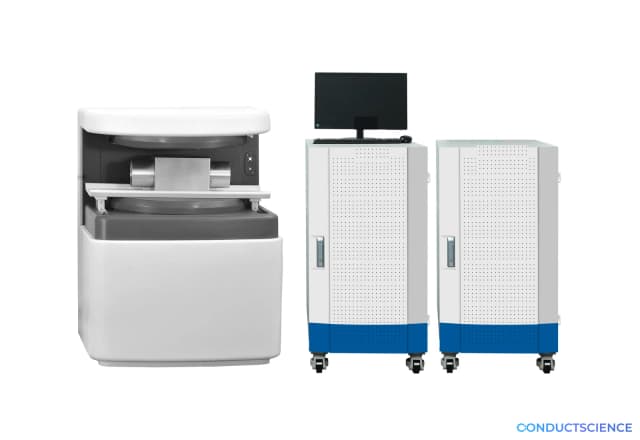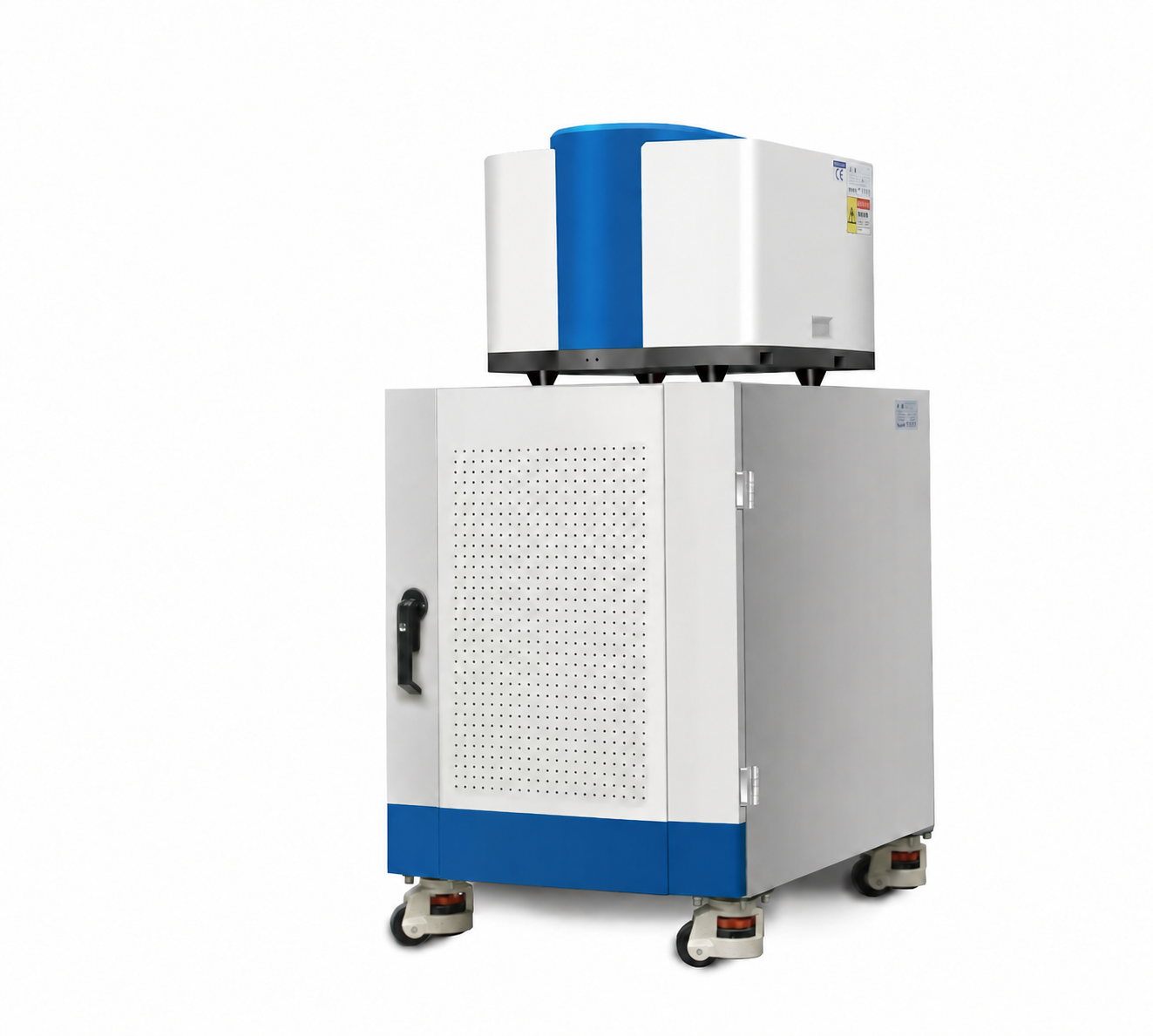
NMR Oil & Water Content Analyzer
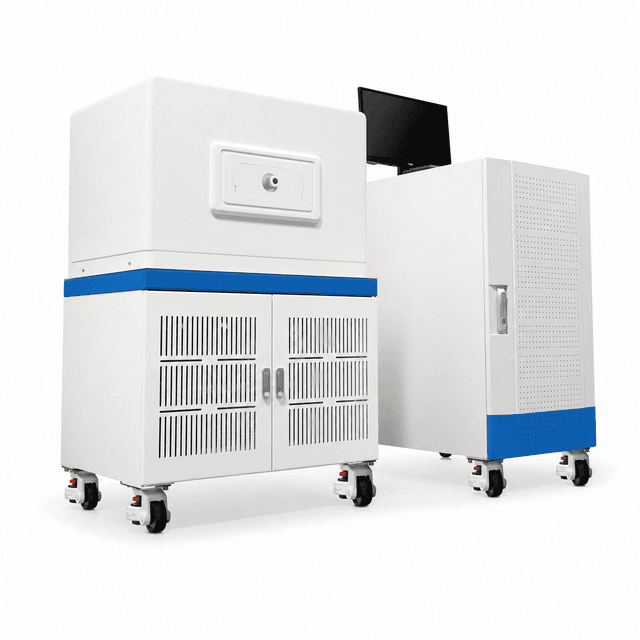
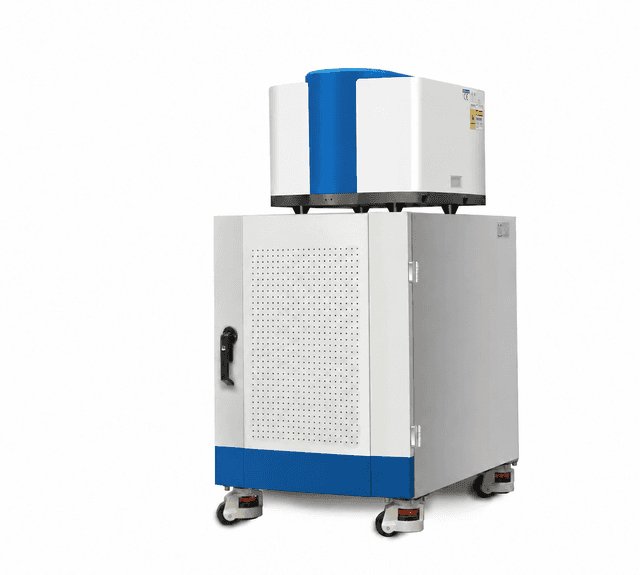
Benchtop 0.5 Tesla NMR analyzer for simultaneous, non-destructive measurement of oil and water content in agricultural, food, and industrial samples.

Louise Corscadden, PhD
Director of Science · ConductScience
Ask Louise about NMR Oil & Water Content Analyzer fit, setup, configuration, or quote prep.
Already working with us? Sign in to connect this with My Scientist.
Key Specifications
Full details →- Field Strength
- 0.5 T (20 MHz)
- Bore Diameter
- 20 mm
- Automation Level
- Semi-automated
- SKU family
- NMS-PQ001-OW
- Shipping box
- 80.0 × 60.0 × 80.0 cm
- Ordering
- Quote-reviewed before fulfillment
The NMR Oil & Water Content Analyzer employs 0.5 Tesla (20 MHz) nuclear magnetic resonance spectroscopy to provide rapid, non-destructive quantification of oil and moisture content in diverse materials. The benchtop system utilizes a 20 mm bore diameter for direct sample analysis without chemical extraction or complex sample preparation protocols.
This compact analyzer leverages the distinct NMR relaxation properties of hydrogen nuclei in oil and water phases to simultaneously determine both components in a single measurement cycle. The system accommodates solid, semi-solid, and liquid samples, making it suitable for food science, agricultural analysis, and industrial quality control applications where traditional gravimetric or chemical methods may be time-consuming or destructive to sample integrity.
How It Works
Nuclear magnetic resonance spectroscopy measures the behavior of hydrogen nuclei (protons) when subjected to a strong magnetic field and radiofrequency pulses. In this 0.5 Tesla system, hydrogen atoms in oil and water molecules exhibit distinct relaxation characteristics due to their different molecular environments and mobility patterns.
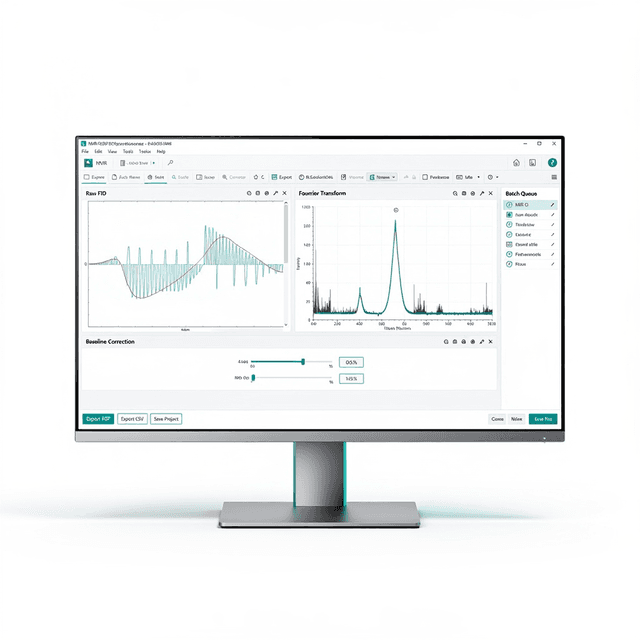
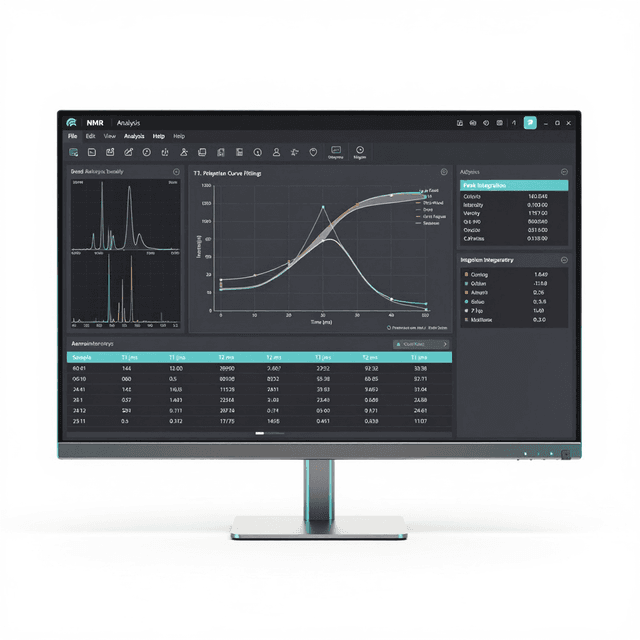
The analyzer applies a 20 MHz radiofrequency pulse sequence that excites hydrogen nuclei, then measures the resulting NMR signal decay. Oil-bound hydrogen typically exhibits longer T2 relaxation times compared to water-bound hydrogen due to reduced molecular motion constraints. The system employs mathematical deconvolution algorithms to separate overlapping signal components and quantify the relative contributions of oil and water phases.
Sample analysis occurs within the 20 mm bore without chemical pretreatment, preserving sample integrity while providing quantitative results based on signal amplitude integration. The measurement principle relies on the proportional relationship between hydrogen concentration and NMR signal intensity for each phase component.
Features & Benefits
Research identifier
This ID comes from the Ontology for Biomedical Investigations (OBI). Use it in data records and methods sections.
- Device type
- NMR instrument
OBI:0000566
Field Strength
- 0.5 T (20 MHz)
Bore Diameter
- 20 mm
Automation Level
- semi-automated
Brand
- Greenwaves Scientific
Research Domain
- Agricultural Research
- Analytical Chemistry
- Food Science
- Industrial Hygiene
- Materials Science
- Pharmaceutical QC
Shipping weight
- 100.0 lb
Shipping box
- L: 80.0 cm
- W: 60.0 cm
- H: 80.0 cm
Data sharing
Ready for RO-Crate, the open standard for sharing data.
| Feature | This Product | Typical Alternative | Advantage |
|---|---|---|---|
| Magnetic Field Strength | 0.5 Tesla (20 MHz) | Entry-level systems often use 0.2-0.3 Tesla fields | Higher field strength improves signal-to-noise ratio and measurement precision for low-concentration samples. |
| Sample Accommodation | 20 mm bore diameter | Smaller bore systems may limit sample size options | Larger bore diameter accommodates various sample containers and geometries for greater analytical flexibility. |
| Measurement Capability | Simultaneous oil and water content | Some systems measure only moisture or require separate oil analysis | Dual-parameter measurement reduces analysis time and provides comprehensive compositional data in a single run. |
| System Design | Compact benchtop configuration | Larger systems may require dedicated floor space | Space-efficient design integrates into existing laboratory workflows without facility modifications. |
| Sample Preparation | No preparation required | Chemical extraction methods require solvents and heating | Direct analysis eliminates reagent costs and safety concerns while preserving sample integrity. |
This analyzer combines 0.5 Tesla field strength with simultaneous oil and water measurement capability in a compact benchtop design. The 20 mm bore accommodates diverse sample types while the non-destructive measurement approach eliminates chemical pretreatment requirements.
Practical Tips
Verify calibration using certified reference materials that span your expected concentration range before analyzing unknown samples.
Why: Ensures measurement accuracy across the full analytical range and compensates for any drift in system response.
Clean the bore tube regularly with appropriate solvents to remove sample residues that could affect measurement consistency.
Why: Sample contamination can alter background signals and reduce measurement precision over time.
Allow samples to equilibrate to room temperature for at least 30 minutes before analysis.
Why: Temperature variations affect NMR relaxation times and can introduce systematic errors in oil and water quantification.
Monitor signal-to-noise ratios and repeat measurements if values fall below acceptable thresholds.
Why: Poor signal quality can compromise the mathematical deconvolution of oil and water components.
If measurements show unusual variability, check for ferromagnetic materials near the analyzer that could affect field homogeneity.
Why: Magnetic field disturbances can cause signal instability and reduce measurement reproducibility.
Ensure the 0.5 Tesla magnetic field safety perimeter is maintained and post appropriate warning signs.
Why: Strong magnetic fields can affect pacemakers and attract ferromagnetic objects, creating safety hazards.
Use consistent sample positioning within the bore to minimize measurement variation between replicates.
Why: Sample geometry affects signal uniformity and can introduce systematic differences in relaxation measurements.
What’s in the Box
- NMR Oil & Water Content Analyzer main unit
- Power supply and cables (typical)
- Sample tubes and holders (typical)
- Analysis software CD/USB (typical)
- USB interface cable (typical)
- User manual and quick start guide (typical)
- Calibration certificate (typical)
No Q&A yet. Have a question? Ask below.
Have a question about this product?
Have a question? Just ask.
Send it over and we'll email you a personalized answer, with no call or scheduling.
Prefer to talk it through?
Accessories
Enhance your setup with compatible accessories