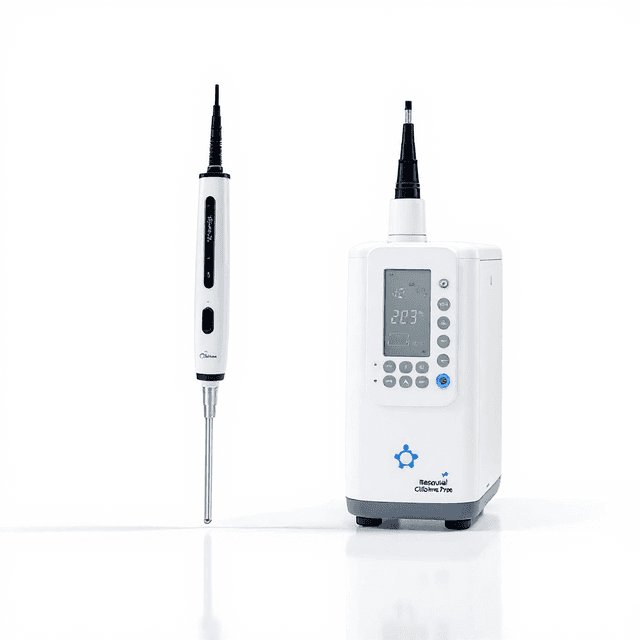
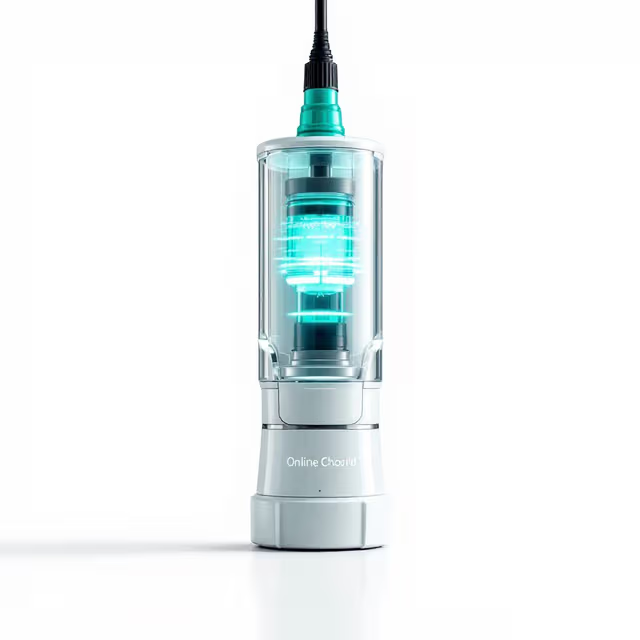
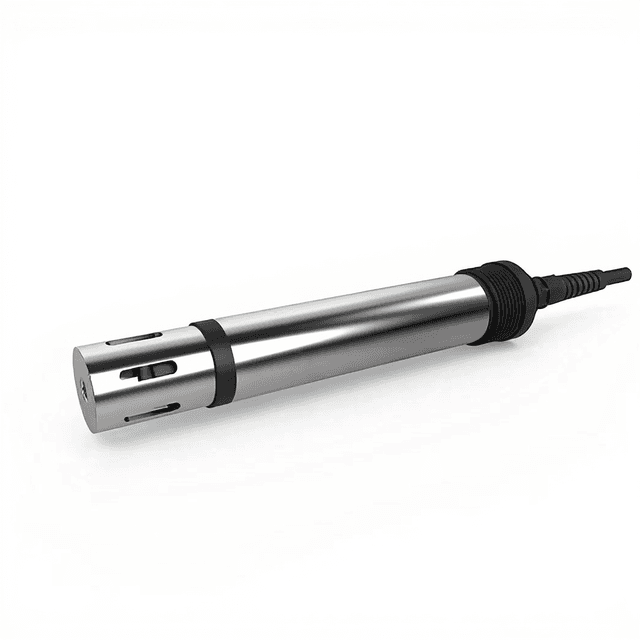
Online Residual Chlorine Probe
Amperometric probe for continuous online monitoring of residual chlorine (0-20 mg/L) in water systems with pH compensation and rapid response times under 120 seconds.
| Measuring range | 0-20mg/L |
| Lower limit | 0.05mg/L |
| Ph range | 4-8 |
| Repeatability | 0.05mg/L or 5% larger as the standard |
| Respinse time | T90ï¼120S |
| Velocity of flow | â¥20L/H |

The Online Residual Chlorine Probe employs amperometric sensing technology to provide continuous monitoring of hypochlorous acid concentrations in aqueous systems. The sensor consists of a gold cathode and silver/silver chloride anode immersed in an electrolyte chamber, separated from the measurement environment by a selective membrane that permits hypochlorous acid passage while preventing electrolyte leakage and contaminant infiltration. The measured current is directly proportional to hypochlorous acid concentration, with integrated pH compensation to ensure accurate residual chlorine determination across varying solution conditions.
This probe offers a measurement range of 0-20 mg/L with detection limits of 0.05 mg/L, operating effectively within pH ranges of 4-8. The sensor provides ±10% accuracy (DPD method) with T90 response times under 120 seconds, making it suitable for real-time process monitoring applications requiring rapid feedback on disinfection efficacy. The probe accommodates flow rates up to 20 L/H and maintains consistent repeatability of 0.05 mg/L or 5% of reading, whichever is greater.
How It Works
The probe operates on the principle of amperometric detection, where hypochlorous acid (HOCl) undergoes electrochemical reduction at the gold cathode surface. When a polarizing voltage is applied between the cathode and silver/silver chloride reference anode, dissolved hypochlorous acid molecules diffuse through the selective membrane and are reduced according to the reaction: HOCl + H+ + 2e- → Cl- + H2O. The resulting reduction current is directly proportional to the hypochlorous acid concentration in the sample matrix.
The selective membrane serves dual functions: preventing electrolyte leakage from the internal chamber while allowing selective passage of hypochlorous acid molecules. This design eliminates interference from other electroactive species commonly present in water samples. The integrated pH compensation algorithm accounts for the pH-dependent equilibrium between hypochlorous acid (HOCl) and hypochlorite ion (OCl-), ensuring accurate total residual chlorine measurements across the specified pH range of 4-8.
Signal processing electronics convert the measured current to concentration units through factory calibration curves, with real-time temperature compensation to maintain measurement accuracy across varying environmental conditions. The probe's rapid T90 response time of less than 120 seconds enables real-time process control applications where immediate feedback on chlorine levels is critical for maintaining disinfection efficacy.
Features & Benefits
Measuring range
- 0-20mg/L
Lower limit
- 0.05mg/L
Ph range
- 4-8
Repeatability
- 0.05mg/L or 5% larger as the standard
Respinse time
- T90ï¼120S
Velocity of flow
- â¥20L/H
Automation Level
- semi-automated
Brand
- ConductScience
Accuracy
- ±10%ï¼DPDï¼
Research Domain
- Analytical Chemistry
- Environmental Monitoring
- Food Science
- Industrial Hygiene
- Microbiology
- Pharmaceutical QC
Weight
- 0.26 kg
Dimensions
- L: 15.0 mm
- W: 5.0 mm
- H: 5.0 mm
Comparison Guide
| Feature | This Product | Typical Alternative | Advantage |
|---|---|---|---|
| Measurement Range | 0-20 mg/L | Entry-level models often limited to 0-10 mg/L ranges | Accommodates both trace-level environmental monitoring and high-concentration sanitization applications without range switching. |
| Detection Limit | 0.05 mg/L | Basic sensors typically offer 0.1-0.2 mg/L detection limits | Enables regulatory compliance monitoring for low-level residual requirements in drinking water systems. |
| Response Time | T90 <120 seconds | Standard probes often require 3-5 minutes for stable readings | Provides rapid feedback for process control applications requiring immediate response to concentration changes. |
| pH Range Compatibility | pH 4-8 with compensation | Many sensors limited to neutral pH ranges without compensation | Maintains accuracy across wider sample conditions without requiring pH adjustment or buffering steps. |
| Flow Rate Accommodation | Up to 20 L/H | Lower-end models may require specific flow conditions | Integrates into various process streams without flow regulation or bypass systems. |
This probe offers extended measurement range up to 20 mg/L with sensitive 0.05 mg/L detection limits and rapid response times under 120 seconds. The integrated pH compensation (pH 4-8) and flow rate flexibility up to 20 L/H provide operational versatility for diverse water treatment and monitoring applications.
Practical Tips
Perform two-point calibrations using freshly prepared DPD-verified standards, with one point near your typical operating range and another at 80% of full scale.
Why: This approach ensures accuracy across your working range while maintaining traceability to established analytical methods.
Inspect the membrane monthly for discoloration or physical damage, and maintain a log of response time measurements to track sensor aging.
Why: Early detection of membrane degradation prevents measurement drift and allows proactive replacement before critical applications are affected.
Install the probe in a location with consistent flow and minimal air bubbles, avoiding areas with high turbulence or sediment accumulation.
Why: Stable hydraulic conditions ensure consistent mass transfer across the membrane and prevent physical damage from debris impact.
If response time increases significantly, check for membrane fouling or air entrapment in the sample line before assuming electrode failure.
Why: Most response time issues stem from mass transfer limitations rather than electrode problems, and simple cleaning often restores performance.
Monitor both the absolute reading and the rate of change - sudden spikes or drops often indicate sample line problems rather than actual concentration changes.
Why: Process systems typically show gradual chlorine changes, so rapid fluctuations usually indicate measurement artifacts requiring investigation.
Use appropriate PPE when handling calibration standards and cleaning solutions, as concentrated chlorine solutions can cause skin and respiratory irritation.
Why: Even low-concentration chlorine standards can cause chemical burns with prolonged contact, and vapors may irritate respiratory systems.
Store DPD calibration standards in dark, cool conditions and prepare fresh solutions weekly to prevent degradation-induced calibration errors.
Why: Chlorine standards are light-sensitive and can decompose over time, leading to systematic calibration bias if aged standards are used.
Record temperature and pH conditions during calibration to facilitate troubleshooting if measurement discrepancies arise during operation.
Why: Environmental conditions affect both electrode response and chlorine chemistry, making this data valuable for diagnosing accuracy problems.
Setup Guide
What’s in the Box
- Online residual chlorine probe assembly
- Signal cable with connector (typical)
- Mounting hardware and fittings (typical)
- Calibration standards kit (typical)
- User manual and calibration certificate
- Membrane replacement instructions (typical)
Warranty
ConductScience provides a standard one-year manufacturer warranty covering electrode defects and electronic component failures, with technical support for calibration and troubleshooting procedures.
Compliance
How does membrane fouling affect measurement accuracy and what maintenance is required?
Membrane fouling typically manifests as slower response times and baseline drift. Regular inspection and gentle cleaning with appropriate solvents maintains performance. Membrane replacement intervals depend on sample matrix but typically range from 6-12 months in clean water systems.
Can the probe differentiate between free chlorine and combined chlorine species?
The amperometric method responds to hypochlorous acid (free chlorine) primarily. Combined chlorine (chloramines) shows reduced response due to slower electrochemical kinetics. For total chlorine measurement including chloramines, consult product datasheet for specific response factors.
What calibration frequency is recommended for maintaining ±10% accuracy?
Calibration frequency depends on application criticality and sample matrix. For process control applications, weekly two-point calibrations using DPD-verified standards are recommended. Clean water systems may extend to monthly calibrations with daily single-point checks.
How does temperature variation affect measurement accuracy?
Temperature affects both electrode kinetics and chlorine stability in solution. The probe includes temperature compensation algorithms, but for critical measurements, maintain sample temperature within ±5°C of calibration conditions or implement active temperature correction.
What interference effects should be considered in complex sample matrices?
Common interferences include oxidizing species (ozone, permanganate) that may cause positive bias, and reducing agents (sulfite, organic matter) causing negative bias. The selective membrane minimizes but does not eliminate all interferences - matrix-matched calibrations may be required.
Is the probe suitable for continuous monitoring in automated systems?
Yes, the probe provides analog output suitable for integration with SCADA systems and process controllers. The 120-second response time enables feedback control loops for automated chlorine dosing systems in water treatment applications.
What are the minimum flow requirements for accurate measurements?
Minimum flow rate of 20 L/H ensures adequate sample turnover across the membrane surface and prevents stagnation effects. Lower flows may result in concentration gradients and reduced measurement accuracy, particularly in high-chlorine applications.
How does this probe compare to colorimetric DPD methods for routine analysis?
The probe provides continuous monitoring capability versus discrete DPD measurements, with comparable ±10% accuracy. DPD methods offer better specificity for chlorine species differentiation but require reagent preparation and operator intervention for each measurement.
Have a question about this product?
Accessories
Enhance your setup with compatible accessories
Frequently Bought Together