ORP Water Quality Meter
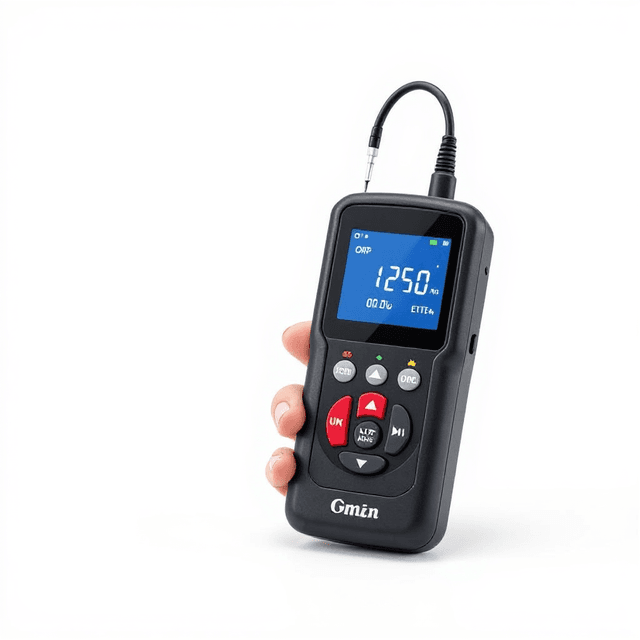
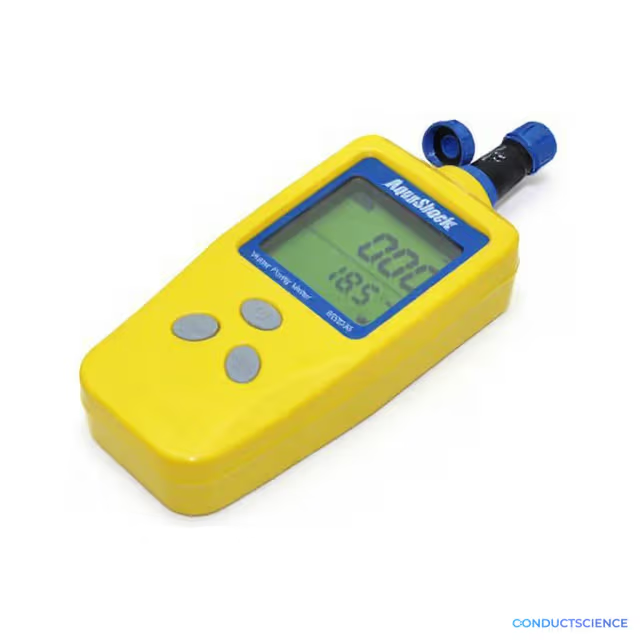
Portable ORP meter with platinum electrode technology for water quality monitoring, featuring -1999mV to +1999mV range and renewable junction design.
| Product name | orp water quality ORP-286 |
| Measuring range | -1999mV - 1999mV |
| Model | ORP-286 |
| Calibration | 1 point |
| Operation conditions | 0~60°C, RH<95%(Without magnetic interference around the meter & conspicuous centrum) |
| Feature | ⢠Replaceable electrode, usable with virtually any electrode that shares the same connector⢠Small size, portable⢠Waterproof |

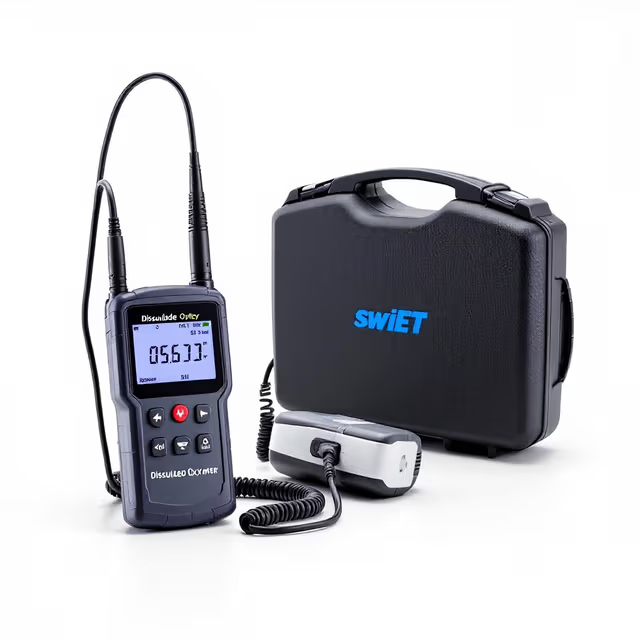
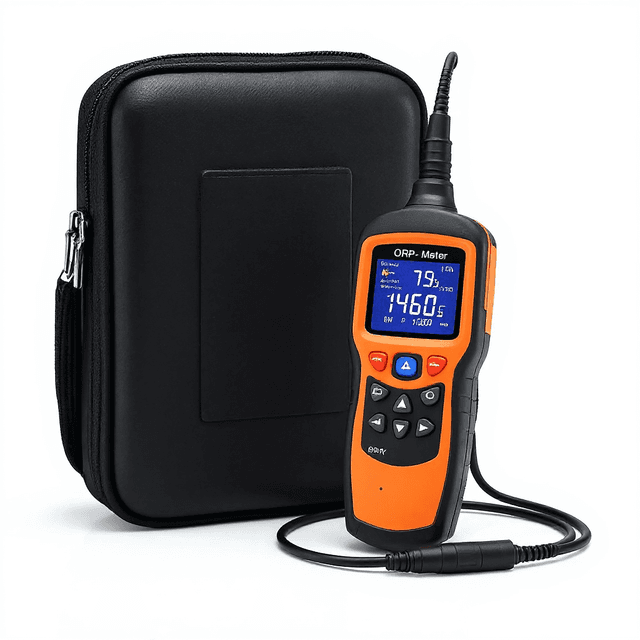
The ORP Water Quality Meter (Model ORP-286) is a portable oxidation-reduction potential measurement instrument designed for aquatic environment monitoring and industrial water quality assessment. This digital meter employs a platinum electrode with renewable cloth junction technology, enabling accurate ORP measurements across a wide range of -1999mV to +1999mV with 1mV resolution and ±5mV accuracy.
Oxidation-reduction potential quantifies the electron transfer capacity of aqueous solutions, providing critical information about water chemistry, disinfection efficacy, and microbial control potential. The instrument features a replaceable electrode system with standard connector compatibility, waterproof construction, and compact design suitable for field measurements. Single-point calibration capability ensures measurement traceability, while the renewable junction design allows restoration of electrode function when contamination occurs.
How It Works
Oxidation-reduction potential measurement relies on electron transfer equilibrium between a platinum working electrode and a reference electrode immersed in the test solution. The platinum electrode serves as an inert conductor that equilibrates with redox-active species in solution, while the reference electrode provides a stable potential baseline through a renewable cloth junction filled with reference electrolyte.
When oxidizing agents predominate in solution, they extract electrons from the platinum electrode, creating a positive potential. Conversely, reducing agents donate electrons to the electrode, generating negative potentials. The meter measures this potential difference and displays results in millivolts, with positive values indicating oxidizing conditions and negative values indicating reducing conditions.
The renewable cloth junction design allows restoration of electrode function when contamination or fouling occurs. By pulling out the clogged junction material, fresh reference electrolyte contact is established, reactivating the electrode and maintaining measurement accuracy throughout extended use.
Features & Benefits
Product name
- orp water quality ORP-286
Measuring range
- -1999mV - 1999mV
Research Domain
- Analytical Chemistry
- Environmental Monitoring
- Food Science
- Industrial Hygiene
- Pharmaceutical QC
Model
- ORP-286
Calibration
- 1 point
Operation conditions
- 0~60°C, RH<95%(Without magnetic interference around the meter & conspicuous centrum)
Feature
- ⢠Replaceable electrode, usable with virtually any electrode that shares the same connector⢠Small size, portable⢠Waterproof
Automation Level
- manual
Brand
- ConductScience
Accuracy
- ±5mV
Power/Voltage
- 4Ã 1.5V (AG-13 model button cell)
Dimensions
- 180Ã65Ã33mm
Weight
- 142g
Weight
- 0.18 kg
Dimensions
- L: 7.09 mm
- W: 2.56 mm
- H: 1.3 mm
Comparison Guide
| Feature | This Product | Typical Alternative | Advantage |
|---|---|---|---|
| Measurement Range | -1999mV to +1999mV | Entry-level models often offer narrower ranges around ±1000mV | Wider range accommodates extreme redox conditions encountered in industrial and environmental applications. |
| Electrode System | Replaceable electrode with renewable junction | Basic models use sealed electrodes without junction renewal capability | Renewable junction extends electrode life and reduces operating costs in contaminating sample matrices. |
| Resolution | 1mV resolution | Lower-cost meters typically offer 10mV resolution | Higher resolution enables detection of subtle redox changes important for process optimization. |
| Physical Design | Waterproof construction, 142g weight | Many portable meters lack waterproof rating | Waterproof design provides reliability in wet field conditions and protection against sample contamination. |
The ORP-286 combines wide measurement range, renewable electrode technology, and waterproof construction in a compact portable package. The replaceable electrode system and high resolution provide research-grade performance for water quality monitoring applications.
Practical Tips
Verify calibration using fresh ORP standard solutions before each measurement session, as electrode drift can occur with temperature changes.
Why: Regular calibration verification ensures measurement accuracy and identifies electrode performance issues.
Rinse the electrode thoroughly with distilled water between samples and inspect the junction for contamination or crystalline deposits.
Why: Cross-contamination and junction fouling are primary sources of measurement error in electrochemical systems.
Allow 2-3 minutes for reading stabilization in each sample, especially when transitioning between oxidizing and reducing solutions.
Why: Electrode equilibration time is critical for accurate ORP measurements due to slow electron transfer kinetics.
If readings appear unstable or incorrect, pull out the cloth junction to expose fresh reference electrolyte and re-equilibrate.
Why: Junction renewal restores electrode function when contamination blocks ionic contact with the sample.
Record sample temperature alongside ORP readings, as redox potentials are temperature-dependent measurements.
Why: Temperature correction may be necessary for comparing measurements taken under different thermal conditions.
Avoid immersing the meter body in liquids despite waterproof rating; only the electrode should contact samples.
Why: Waterproof rating protects against splashing, but full immersion may exceed design specifications.
Store the electrode in appropriate storage solution when not in use to maintain junction hydration and electrode performance.
Why: Proper electrode storage prevents junction drying and maintains stable reference potential.
Replace batteries when display becomes dim or readings become erratic, as low voltage affects measurement stability.
Why: Electrochemical measurements require stable power supply for accurate analog-to-digital conversion.
Setup Guide
What’s in the Box
- ORP-286 digital meter (typical)
- Platinum ORP electrode with renewable junction (typical)
- Battery set (4× AG-13 button cells) (typical)
- Electrode storage solution (typical)
- User manual and calibration instructions (typical)
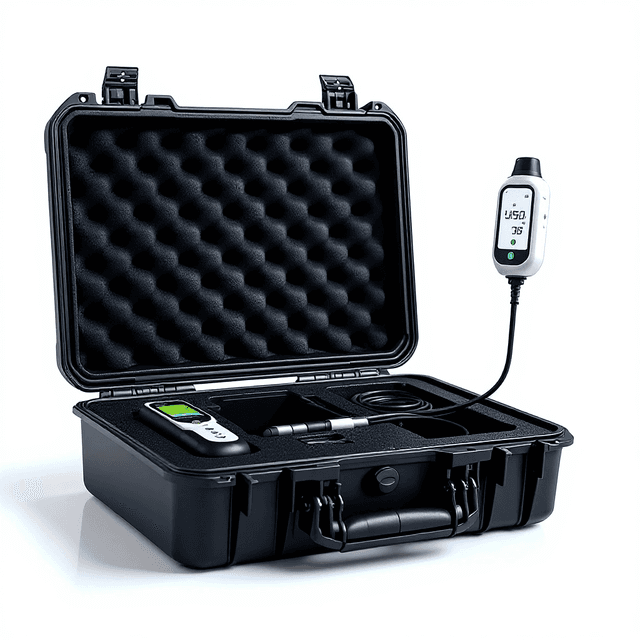
- Carrying case (typical)
Compliance
References
Background reading relevant to this product:
Warranty & ConductCare
ConductScience provides a standard one-year manufacturer warranty covering defects in materials and workmanship, with technical support available for calibration and measurement protocols.
What is the required frequency for calibration verification?
Single-point calibration should be verified before each measurement session or daily use, depending on application requirements and sample matrix complexity.
How do I know when the electrode junction needs renewal?
Sluggish response, unstable readings, or failure to achieve expected values in standard solutions indicate junction contamination requiring renewal.
What electrode storage solution should be used between measurements?
Consult electrode manufacturer specifications for appropriate storage solution, typically KCl-based electrolyte matching the reference system.
Can this meter be used for continuous monitoring applications?
The ORP-286 is designed for spot measurements rather than continuous logging; dedicated data logging systems should be considered for long-term monitoring.
What factors affect measurement accuracy in complex sample matrices?
Temperature variations, ionic strength, dissolved organic matter, and interfering redox couples can influence readings; sample conditioning may be required.
How does this compare to laboratory-grade ORP meters?
Laboratory instruments typically offer higher precision, temperature compensation, and data logging capabilities, while this portable meter prioritizes field convenience and basic accuracy.
Have a question about this product?
Upgrade Options