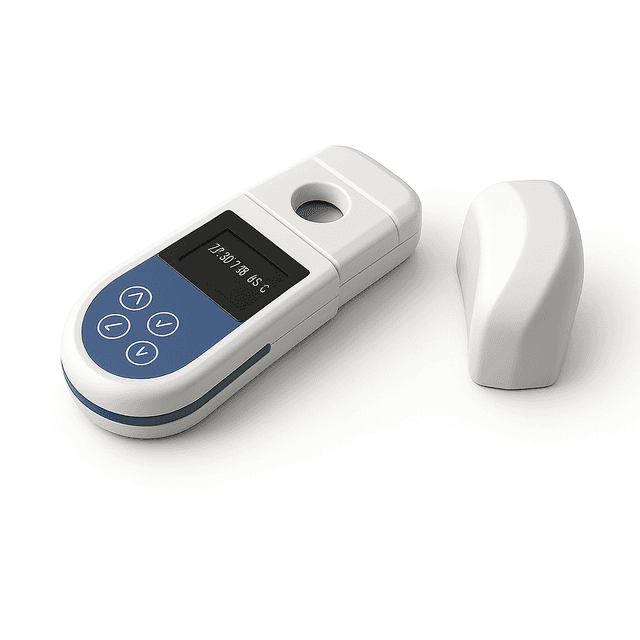
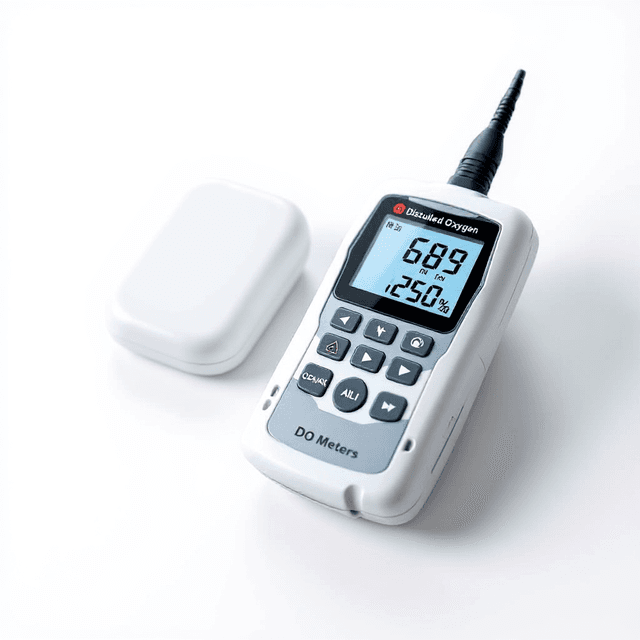
ORP Water Tester
Compact ORP controller with ±1999 mV measurement range and 1 mV resolution for continuous redox potential monitoring and automatic process control in aqueous systems.

Louise Corscadden, PhD
Director of Science · ConductScience
Ask Louise about ORP Water Tester fit, setup, configuration, or quote prep.
Already working with us? Sign in to connect this with My Scientist.
Key Specifications
Full details →- Model fit
- Configured during quote
- SKU family
- CS-LH-ORP-2626
- Shipping box
- 22.8 x 16.3 x 7.8 cm
- Ordering
- Online checkout and quote request available
- Category
- Portable Analyzers
- Build notes
- Confirm accessories, station layout, and support needs before purchase
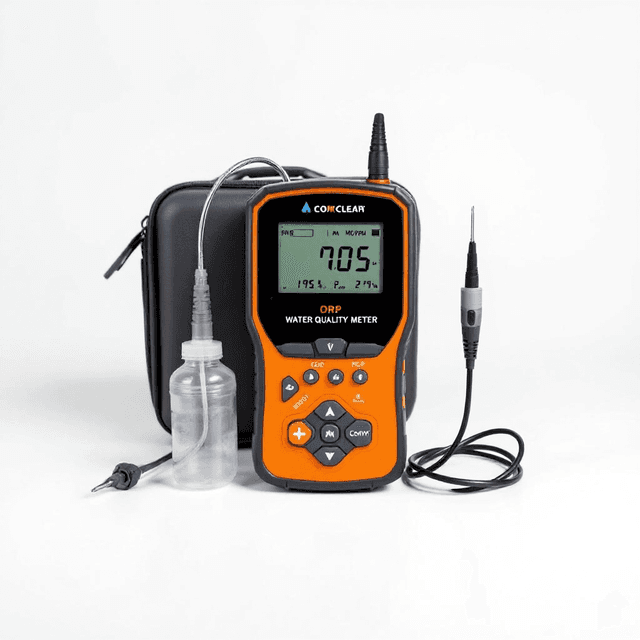
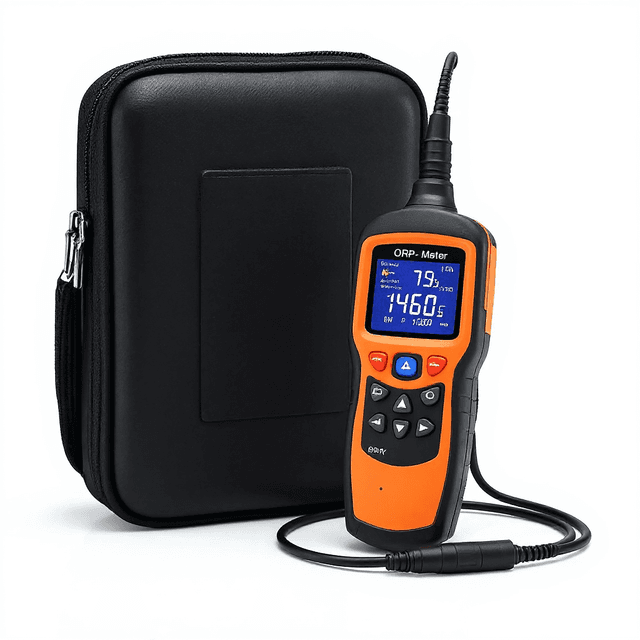
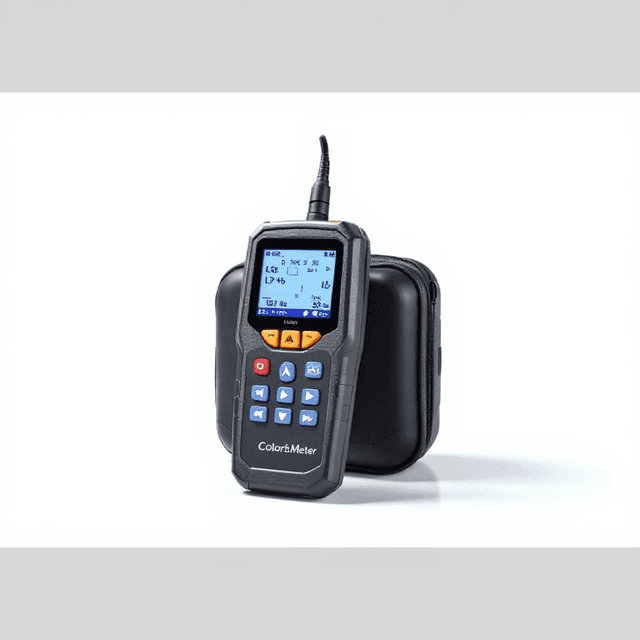
The ORP-2626 is a compact oxidation-reduction potential controller designed for continuous electrochemical monitoring in aqueous systems. This instrument measures redox potential across a ±1999 mV range with 1 mV resolution and ±5 mV accuracy, enabling precise control of oxidizing and reducing processes in laboratory and industrial applications. The unit features front-panel trimmer adjustments for set point control and calibration, with automatic control capabilities for installations previously monitored manually.
Housed in a compact 228×163×78 mm enclosure weighing 774g, the ORP-2626 can be positioned directly adjacent to reaction vessels, tanks, or treatment systems. The controller operates across 0-60°C with automatic temperature compensation and includes relay outputs rated at 5A/AC 250V for direct control of dosing pumps or valves. One-point or two-point calibration protocols ensure measurement accuracy across the full operating range.
How It Works
The ORP-2626 operates on the principle of potentiometric measurement using a combination electrode system. The instrument measures the electrical potential difference between a platinum sensing electrode and a reference electrode (typically Ag/AgCl) when immersed in the test solution. This potential difference, expressed in millivolts, reflects the solution's tendency to gain or lose electrons - positive values indicating oxidizing conditions and negative values indicating reducing conditions.
The controller incorporates automatic temperature compensation across 0-60°C to correct for temperature-dependent variations in electrode potential. Signal processing circuitry converts the electrode potential to a digital readout with 1 mV resolution, while internal comparators evaluate the measured value against user-programmed set points. When ORP values deviate from target ranges, relay outputs activate connected dosing equipment to add oxidizing or reducing agents as needed.
Calibration employs standard ORP solutions with known redox potentials. The instrument supports both one-point calibration for basic applications and two-point calibration for enhanced accuracy across the full measurement range. Front-panel trimmers allow field adjustment of calibration parameters and set point thresholds without requiring external programming tools.
Features & Benefits
Model
- ORP-2626
Items
- ORP
Measuring range
- -1999~1999mV
Calibration
- 1point or 2point
Set range
- -500~500mV
Standard of CPS
- 5A/AC 250V
Operating conditions
- 0~60°C, RH<95%
ATC
- 0~60°C
Revise
- 1 point
Automation Level
- semi-automated
Brand
- ConductScience
Accuracy
- ±5mV
Power/Voltage
- AC230V± 10%, 50HZ±2%
Dimensions
- 228Ã163Ã78mm
Weight
- 774g
Research Domain
- Analytical Chemistry
- Environmental Monitoring
- Industrial Hygiene
- Microbiology
- Pharmaceutical QC
- Water Quality & Environmental Monitoring
Shipping weight
- 1.71 lb
Shipping box
- L: 22.8 cm
- W: 16.3 cm
- H: 7.8 cm
| Feature | This Product | Typical Alternative | Advantage |
|---|---|---|---|
| Measurement Range | ±1999 mV with 1 mV resolution | Entry-level controllers often provide ±1000 mV range with 10 mV resolution | Broader measurement range accommodates extreme redox conditions while higher resolution detects subtle process variations. |
| Temperature Compensation | Automatic compensation across 0-60°C | Basic models may require manual temperature correction | Automatic ATC maintains accuracy across variable temperature conditions without operator intervention. |
| Installation Flexibility | Compact 228×163×78 mm housing (774g) | Panel-mount controllers often require larger enclosures | Small footprint enables tank-side installation for reduced wiring runs and faster response times. |
| Control Output Capacity | 5A/AC 250V relay rating | Lower-cost units typically provide 1-3A relay capacity | Higher relay rating directly controls larger pumps and valves without intermediate relays. |
| Set Point Range | -500 to +500 mV control range | Basic controllers may limit set points to narrower ranges | Wide control range accommodates diverse process requirements from anaerobic to highly oxidizing conditions. |
| Calibration Options | One-point or two-point calibration protocols | Simple controllers often provide only single-point calibration | Two-point calibration improves accuracy across the full measurement range for critical applications. |
The ORP-2626 combines laboratory-grade measurement specifications with compact controller functionality, providing automatic temperature compensation, flexible calibration options, and robust relay outputs for direct pump control. The unit's small form factor and front-panel configuration enable tank-side installation while maintaining precision suitable for research and process control applications.
Practical Tips
Always use fresh ORP standard solutions and ensure they are at the same temperature as your process for accurate calibration.
Why: Old or temperature-mismatched standards introduce systematic errors that compromise measurement accuracy.
Clean the platinum electrode surface weekly with mild abrasive paste and rinse thoroughly before returning to service.
Why: Protein buildup and surface contamination slow electrode response and reduce measurement stability.
Install the controller away from electromagnetic interference sources like motor drives and high-frequency equipment.
Why: ORP measurements involve high-impedance signals susceptible to electrical noise that can cause unstable readings.
Program appropriate deadband values around set points to prevent excessive relay cycling during normal process fluctuations.
Why: Tight deadbands cause frequent on-off cycling that reduces equipment life and creates process instability.
If readings drift continuously, check electrode junction condition and ensure proper electrolyte levels in the reference chamber.
Why: Compromised reference electrodes produce unstable potentials that manifest as measurement drift.
Allow 2-3 electrode time constants for readings to stabilize when measuring solutions with different ionic strengths.
Why: Electrode response time varies with solution composition, and premature readings may not represent true equilibrium values.
Ensure proper grounding of all electrical connections and use GFCI protection when installing near water sources.
Why: Electrochemical measurements in aqueous environments create shock hazards without proper electrical safety measures.
Store backup electrodes in appropriate storage solution and verify their response before using as replacements.
Why: Improperly stored electrodes may require extended conditioning periods or may be permanently damaged.
Setup Guide
What’s in the Box
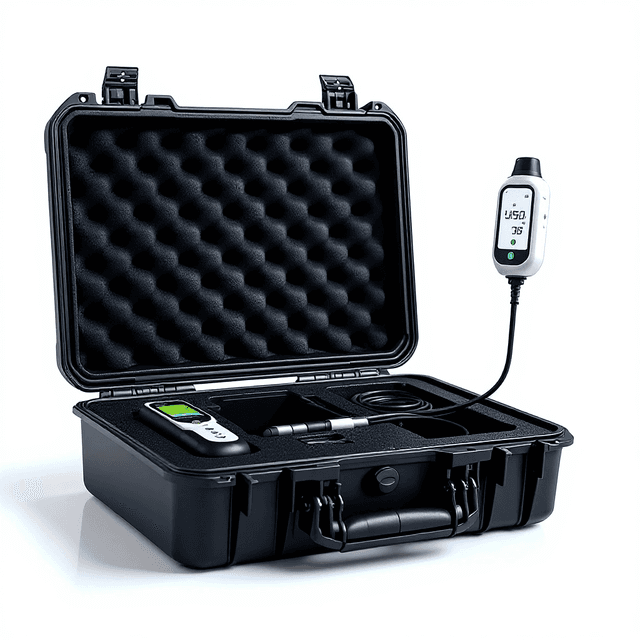
- ORP-2626 controller unit
- Power cord (typical)
- Electrode mounting hardware (typical)
- User manual and calibration instructions (typical)
- Calibration certificate (typical)
Warranty
ConductScience provides a one-year manufacturer warranty covering defects in materials and workmanship. Technical support includes calibration guidance and troubleshooting assistance for the full product lifecycle.
Compliance
References
Background reading relevant to this product:
What electrode types are compatible with the ORP-2626?
The unit accepts standard combination ORP electrodes with BNC connectors. Platinum sensing elements with Ag/AgCl reference are recommended for most applications, though consult the product datasheet for specific electrode compatibility requirements.
How frequently should calibration be performed?
Calibration frequency depends on application criticality and environmental conditions. Monthly calibration using certified ORP standard solutions is typical for process control applications, while research applications may require weekly verification.
Can the controller interface with data logging systems?
The standard unit provides relay outputs for control functions. For data logging capabilities and analog output specifications, consult the product datasheet as interface options may vary by configuration.
What is the response time for ORP measurements?
Response time depends primarily on the electrode characteristics and solution properties. Typical platinum electrodes reach 95% of final reading within 1-3 minutes in well-buffered solutions, though consult electrode specifications for detailed response characteristics.
How does the automatic temperature compensation function?
The ATC system operates across 0-60°C using integrated temperature sensing. It applies standard temperature coefficients to correct electrode potential drift, maintaining measurement accuracy without manual temperature entry.
What maintenance is required for optimal performance?
Primary maintenance involves electrode cleaning and periodic calibration verification. Keep electrode junctions clean and properly hydrated, replace electrodes when response becomes sluggish, and verify calibration against fresh standard solutions.
Can the unit control both oxidizing and reducing dosing systems?
Yes, the controller can be configured for either oxidizing or reducing dosage control through front-panel settings. Relay outputs activate based on whether measured ORP is above or below programmed set points.
What are the power requirements and consumption?
The unit operates on AC 230V±10% at 50Hz±2%. Specific power consumption ratings and alternative voltage options should be confirmed in the product datasheet for installation planning.
Have a question about this product?
Have a question? Just ask.
Send it over and we'll email you a personalized answer — no call, no scheduling.
Prefer to talk it through?
Accessories
Enhance your setup with compatible accessories