PCR Microfluidic Chip
Microfluidic chip with 200 μm channels in serpentine, chamber, and continuous flow geometries for PCR amplification, genetic testing, and molecular diagnostics applications.
Reusable chip — designed for multiple experimental runs. Compatible with standard microfluidic tubing: steel pins (0.7 mm ID / 1.0 mm OD) and silicone tubing (0.8 mm ID / 1.9 mm OD). Available in bulk packs (5‑, 10‑, and 25‑unit) for lab-scale and consumable workflows.

Louise Corscadden, PhD
Director of Science · ConductScience
Ask Louise about PCR Microfluidic Chip fit, setup, configuration, or quote prep.
Already working with us? Sign in to connect this with My Scientist.
Key Specifications
Full details →- Model fit
- 3 selectable configurations
- SKU family
- WHM-0144
- Shipping box
- 181.8 x 136.3 x 90.9 cm
- Ordering
- Online checkout and quote request available
- Category
- Environmental Detection Chips
- Build notes
- Confirm accessories, station layout, and support needs before purchase
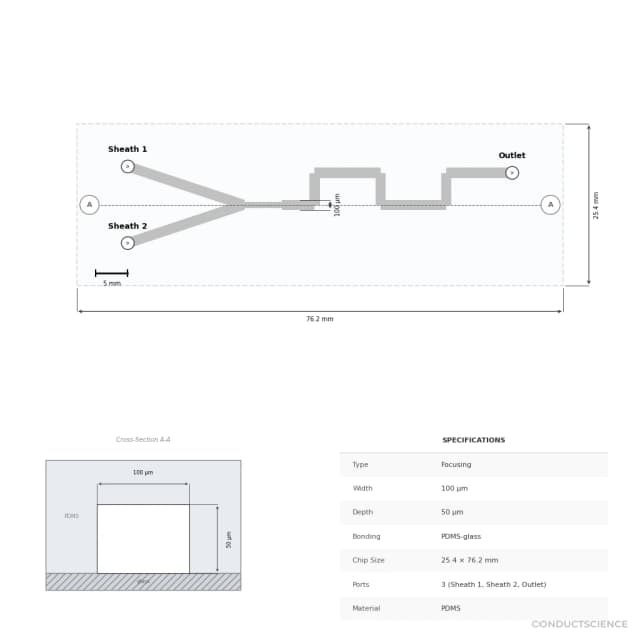
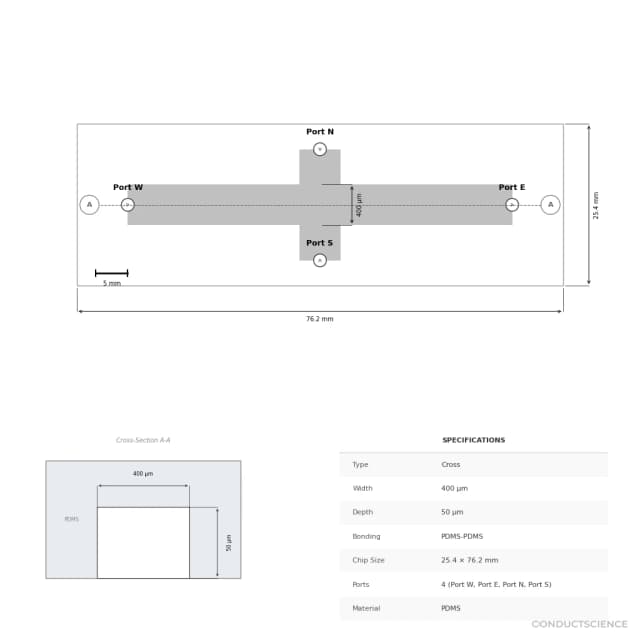
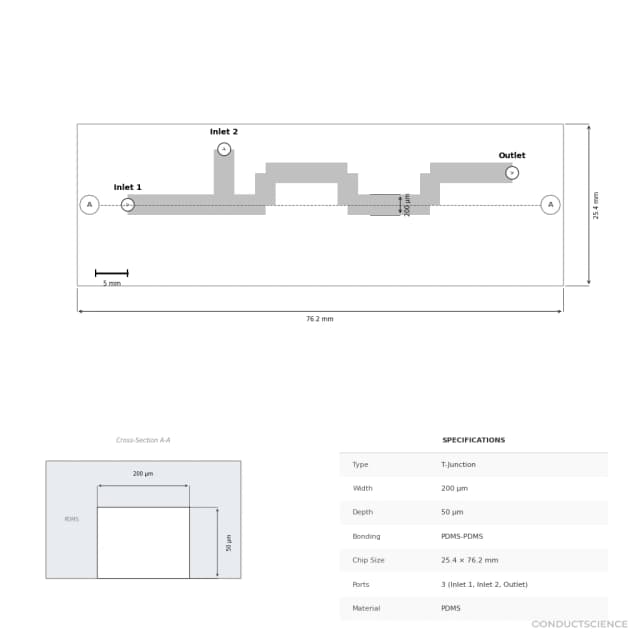
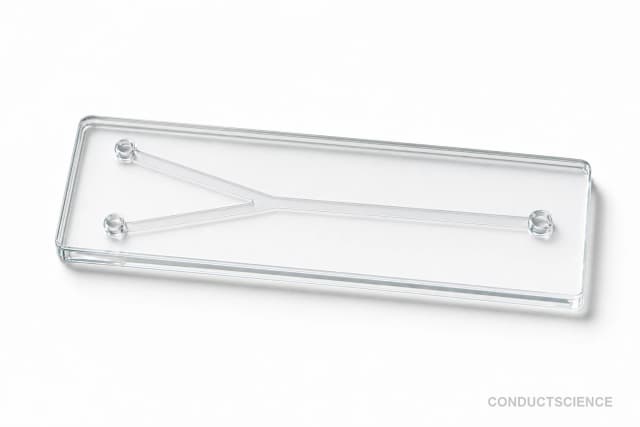
The PCR Microfluidic Chip (WHM-0144) is a specialized lab-on-a-chip device designed for nucleic acid amplification in microfluidic formats. This chip features precisely engineered 200 x 200 μm channels arranged in serpentine, chamber, and continuous flow geometries to enable efficient thermal cycling and DNA/RNA amplification in miniaturized reaction volumes.
The device integrates multiple microfluidic architectures to support diverse PCR protocols, from rapid point-of-care diagnostics to environmental DNA detection applications. The serpentine channel design facilitates thermal gradient formation for efficient amplification, while dedicated reaction chambers provide controlled environments for nucleic acid processing. Continuous flow capabilities enable high-throughput sample processing and real-time monitoring of amplification reactions.
How It Works
The PCR microfluidic chip operates on the principle of thermal cycling within precisely controlled microscale channels. The 200 x 200 μm channel dimensions provide optimal surface-to-volume ratios for efficient heat transfer, enabling rapid temperature transitions essential for PCR cycling. The serpentine geometry creates defined thermal zones as the sample flows through different temperature regions, facilitating denaturation, annealing, and extension steps of the PCR process.
Reaction chambers within the chip serve as discrete reaction vessels where samples and reagents mix under controlled conditions. The continuous flow architecture enables real-time processing, where samples enter the chip, undergo thermal cycling as they traverse the channel network, and exit as amplified products. This design minimizes dead volume, reduces reagent consumption compared to conventional PCR, and provides precise temperature control through the chip's thermal interface with external heating/cooling systems.
The microfluidic format enables integration of multiple processing steps on a single device, including sample preparation, nucleic acid amplification, and potentially detection stages. The small reaction volumes (typically microliters to nanoliters) result in faster thermal equilibration and reduced amplification times compared to traditional PCR methods.
Features & Benefits
Shipping weight
- 3.3 lb
Shipping box
- L: 181.8 cm
- W: 136.3 cm
- H: 90.9 cm
| Feature | This Product | Typical Alternative | Advantage |
|---|---|---|---|
| Channel Dimensions | 200 x 200 μm channels | Entry-level chips often feature larger channels with less precise thermal control | Optimized dimensions provide superior thermal transfer characteristics for consistent PCR cycling |
| Geometric Configurations | Serpentine, chamber, and continuous flow geometries | Many chips offer single geometry designs with limited protocol flexibility | Multiple configurations enable diverse PCR protocols and experimental approaches on one platform |
| Application Range | PCR, genetic testing, and diagnostics | Specialized chips often target single applications | Broad application compatibility reduces need for multiple chip types in research settings |
| Flow Capabilities | Continuous flow processing | Static chamber designs require batch processing | Enables high-throughput sample processing with real-time monitoring capabilities |
This PCR microfluidic chip offers multiple geometric configurations within precision-manufactured 200 μm channels, supporting diverse amplification protocols from point-of-care diagnostics to environmental DNA analysis. The integrated serpentine, chamber, and continuous flow designs provide experimental flexibility while maintaining consistent thermal characteristics.
| Model | SKU | Listed price | Status | Shipping box |
|---|---|---|---|---|
| 25-Pack | WHM-0144-25PK | Quote | Available | 181.8 x 136.3 x 90.9 cm |
| 10-Pack | WHM-0144-10PK | $1,490.00 | Available | 181.8 x 136.3 x 90.9 cm |
| 5-Pack | WHM-0144-5PK | Quote | Available | 181.8 x 136.3 x 90.9 cm |
Practical Tips
Verify temperature uniformity across all channel geometries before running critical samples.
Why: Channel geometry variations can create thermal gradients that affect amplification efficiency.
Flush channels with nuclease-free water between different sample types to prevent cross-contamination.
Why: Residual DNA templates can carry over between runs and compromise results.
Optimize flow rates based on desired residence time for complete thermal cycling in continuous flow mode.
Why: Proper residence time ensures adequate heating and cooling phases for efficient amplification.
Check for air bubbles in channels if amplification efficiency is inconsistent.
Why: Air bubbles disrupt flow patterns and create thermal barriers affecting PCR performance.
Run positive and negative controls in parallel channels when using chamber-based protocols.
Why: On-chip controls validate amplification conditions and detect potential contamination.
Use appropriate biosafety practices when handling potentially infectious samples in the microfluidic format.
Why: Microfluidic devices can aerosolize samples during loading and handling operations.
Pre-condition chip surfaces with blocking agents when working with low-concentration templates.
Why: Surface conditioning prevents non-specific binding that can reduce template availability.
Store chips in dust-free environments and protect channel openings when not in use.
Why: Particulate contamination can block small channels and affect fluidic performance.
Setup Guide
What’s in the Box
- PCR Microfluidic Chip (WHM-0144)
- User manual with protocol guidelines (typical)
- Chip holder or mounting fixture (typical)
- Fluidic connection tubing (typical)
- Quality control certificate (typical)
Warranty
ConductScience provides a standard one-year manufacturer warranty covering defects in materials and workmanship. Technical support is available for protocol optimization and troubleshooting assistance.
Compliance
References
Background reading relevant to this product:
What thermal cycling protocols are compatible with this chip design?
The chip supports standard PCR protocols with the continuous flow and chamber geometries enabling both traditional thermal cycling and flow-through amplification methods. Temperature ramp rates and hold times depend on the external thermal cycling system specifications.
How do I prevent cross-contamination between samples?
Use dedicated fluidic pathways for each sample, implement proper washing protocols between runs, and consider single-use chip operation for critical applications. The channel geometry minimizes carryover risk through designed flow patterns.
What sample volumes are required for optimal performance?
Microfluidic channels typically require sample volumes in the microliter range. Exact volumes depend on the specific protocol and whether using chamber-based or continuous flow operation modes.
Can this chip be integrated with real-time detection systems?
Yes, the chip design accommodates integration with optical detection systems for real-time PCR monitoring. Transparent chip materials and channel positioning support fluorescence-based detection methods.
What reagents and master mixes are compatible?
Standard PCR reagents and commercially available master mixes are compatible. Viscosity and ionic strength should be considered for optimal flow characteristics through the 200 μm channels.
How do I optimize flow rates for different applications?
Flow rates depend on desired residence time, thermal cycling requirements, and detection needs. Start with manufacturer recommendations and adjust based on amplification efficiency and thermal profile requirements.
What cleaning and maintenance protocols are recommended?
Follow standard microfluidic cleaning protocols using appropriate solvents and pH-neutral solutions. Avoid harsh chemicals that may damage channel surfaces or alter geometric specifications.
How does this compare to conventional PCR tube methods?
Microfluidic PCR offers reduced reagent consumption, faster thermal cycling due to small volumes, and potential for integration with sample preparation and detection steps. Traditional tubes provide larger reaction volumes and established protocols.
Have a question about this product?
Have a question? Just ask.
Send it over and we'll email you a personalized answer — no call, no scheduling.
Prefer to talk it through?