Pig Spatial Maze Task
Behavioral assessment platform for evaluating spatial learning, memory, and navigation abilities in swine research models through controlled maze testing protocols.

Louise Corscadden, PhD
Director of Science · ConductScience
Ask Louise about Pig Spatial Maze Task fit, setup, configuration, or quote prep.
Already working with us? Sign in to connect this with My Scientist.
Key Specifications
Full details →- Model fit
- Pig
- SKU family
- CS-958170
- Shipping box
- 65.0 x 36.0 x 27.0 cm
- Ordering
- Online checkout and quote request available
- Category
- Behavioral Mazes
- Build notes
- Confirm accessories, station layout, and support needs before purchase
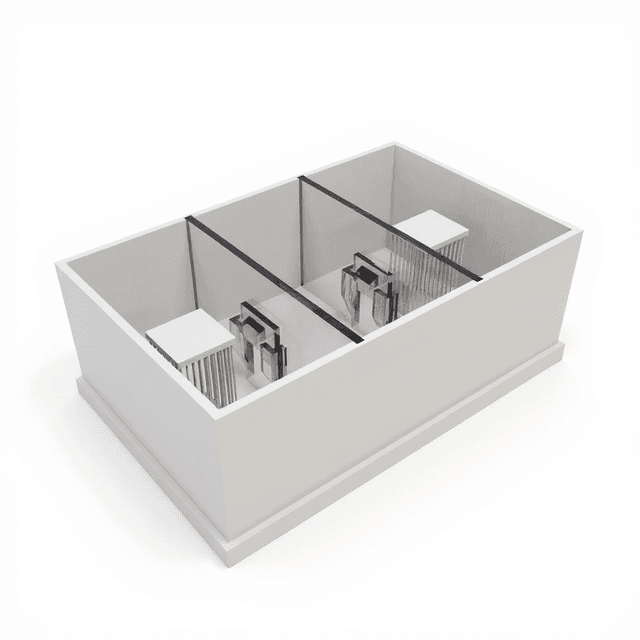
The Pig Spatial Maze Task provides a controlled behavioral assessment platform for evaluating spatial learning, memory, and navigation abilities in swine models. This maze system enables researchers to conduct standardized cognitive testing protocols in large animal models, offering insights into spatial processing mechanisms that may translate more directly to human cognition than traditional rodent models.
The apparatus supports various maze configurations and testing paradigms, allowing investigators to assess working memory, reference memory, and spatial navigation strategies in pigs. The system accommodates the unique behavioral characteristics and size requirements of swine subjects while maintaining experimental control and data reproducibility across testing sessions.
How It Works
The Pig Spatial Maze Task operates on principles of spatial cognition assessment, utilizing the animal's natural tendency to navigate environments and form spatial memories. Pigs must learn the spatial relationships between environmental cues and goal locations, engaging hippocampal and cortical networks involved in spatial processing and memory formation.
During testing, subjects navigate the maze structure while researchers record movement patterns, choice accuracy, latency measures, and error frequencies. The experimental design allows for assessment of both working memory (trial-specific information) and reference memory (consistent spatial relationships) by varying reward locations and cue configurations across trials.
Data collection focuses on behavioral metrics including path efficiency, search strategies, and learning curves, providing quantitative measures of spatial cognitive performance that can be analyzed using established behavioral analysis protocols.
Features & Benefits
Behavioral Construct
- Spatial Learning
- Spatial Memory
- Working Memory
- Reference Memory
- Navigation
- Cognitive Flexibility
Automation Level
- manual
Research Domain
- Aging Research
- Behavioral Pharmacology
- Developmental Biology
- Learning and Memory
- Neurodegeneration
- Neuroscience
Species
- Pig
Compatible Tracking Software
- ConductVision
Shipping weight
- 6.06 lb
Shipping box
- L: 65.0 cm
- W: 36.0 cm
- H: 27.0 cm
| Feature | This Product | Typical Alternative | Advantage |
|---|---|---|---|
| Subject Species | Designed for pig subjects | Most maze systems accommodate rodents or smaller laboratory animals | Enables spatial cognitive research in large animal models with greater translational relevance to human neuroscience. |
| Maze Scale | Large-scale construction for pig accommodation | Smaller maze systems designed for rodent subjects | Allows assessment of spatial abilities in animals with brain complexity more similar to humans. |
| Behavioral Complexity | Supports complex spatial cognitive assessment | Basic maze designs with limited behavioral metrics | Enables investigation of sophisticated navigation strategies and memory processes. |
| Experimental Flexibility | Configurable layouts for multiple testing paradigms | Fixed maze configurations with limited adaptability | Permits comprehensive evaluation of different spatial cognitive domains within a single system. |
This pig spatial maze system provides unique capabilities for large animal cognitive research, offering configurable testing environments and comprehensive behavioral assessment tools for investigating spatial learning and memory in swine models.
Practical Tips
Establish consistent daily testing schedules and environmental conditions to minimize circadian and contextual effects on spatial performance.
Why: Standardized conditions reduce variability in cognitive performance measures and improve data reproducibility.
Clean maze surfaces thoroughly between subjects and sessions to eliminate olfactory cues that could influence navigation behavior.
Why: Residual scent trails can provide inadvertent navigation cues that confound spatial memory assessment.
Record multiple behavioral metrics including path efficiency, choice latency, and error patterns to provide comprehensive cognitive assessment.
Why: Multiple measures capture different aspects of spatial processing and provide more robust cognitive evaluation.
Allow adequate habituation periods before formal testing to distinguish spatial learning from stress-related behavioral changes.
Why: Novelty-induced stress can mask true cognitive abilities and affect interpretation of spatial learning performance.
Monitor subject motivation levels and adjust reward schedules if performance appears to plateau or decline.
Why: Maintaining appropriate motivation is essential for accurate assessment of spatial cognitive capabilities.
Validate maze dimensions and spatial cue positioning before each experimental series to ensure consistent testing conditions.
Why: Precise spatial relationships are critical for reliable assessment of navigation and memory formation.
Ensure maze construction materials are non-toxic and edges are smoothed to prevent injury during active exploration.
Why: Subject safety is paramount and injuries could affect natural movement patterns and cognitive performance.
Setup Guide
What’s in the Box
- Maze wall components (typical)
- Floor section panels (typical)
- Assembly hardware and connectors (typical)
- Setup and configuration guide (typical)
- Behavioral testing protocol examples (typical)
Warranty
ConductScience provides a standard one-year manufacturer warranty covering structural components and construction defects, with technical support for setup and configuration guidance.
Compliance
References
Background reading relevant to this product:
What spatial cognitive abilities can be assessed using this maze system?
The system evaluates spatial learning, working memory, reference memory, navigation strategies, and cognitive flexibility through various maze configurations and testing protocols.
How does pig spatial cognition compare to rodent models in maze testing?
Pigs demonstrate more complex spatial processing abilities similar to primates, with larger brain size and cortical development providing potentially greater translational relevance to human cognition.
What behavioral measures are typically recorded during testing?
Standard metrics include path length, latency to goal, choice accuracy, error frequencies, search strategies, and learning curve progression across trials.
Can the maze configuration be modified for different experimental designs?
Yes, the modular design allows reconfiguration to create various spatial layouts for testing different aspects of navigation and memory formation.
What age ranges of pigs can be tested in this system?
The system accommodates juvenile to adult pigs, enabling developmental studies of spatial cognitive abilities across age groups.
How many trials are typically required to assess spatial learning?
Protocol-dependent, but most studies employ 10-20 acquisition trials followed by probe tests to evaluate memory retention and spatial strategy use.
What environmental factors should be controlled during testing?
Maintain consistent lighting, spatial cues, noise levels, and testing times to minimize confounding variables that could affect spatial navigation performance.
Have a question about this product?
Have a question? Just ask.
Send it over and we'll email you a personalized answer — no call, no scheduling.
Prefer to talk it through?