Pilot Freeze Dryer, Large Lyophilization System
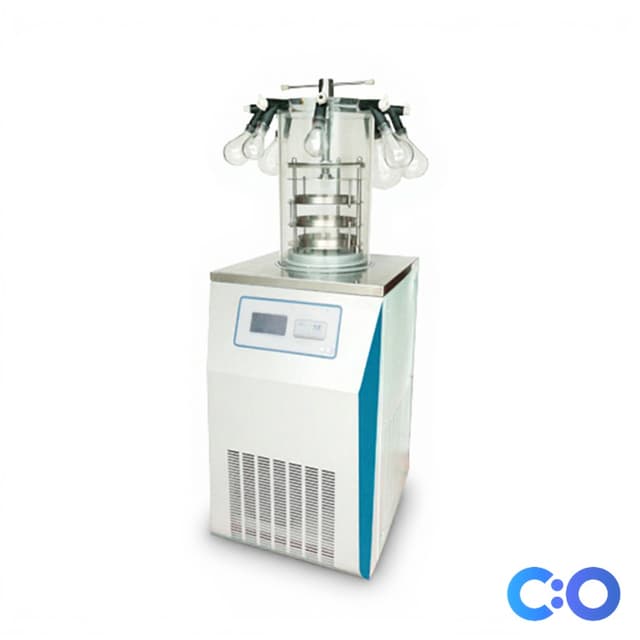
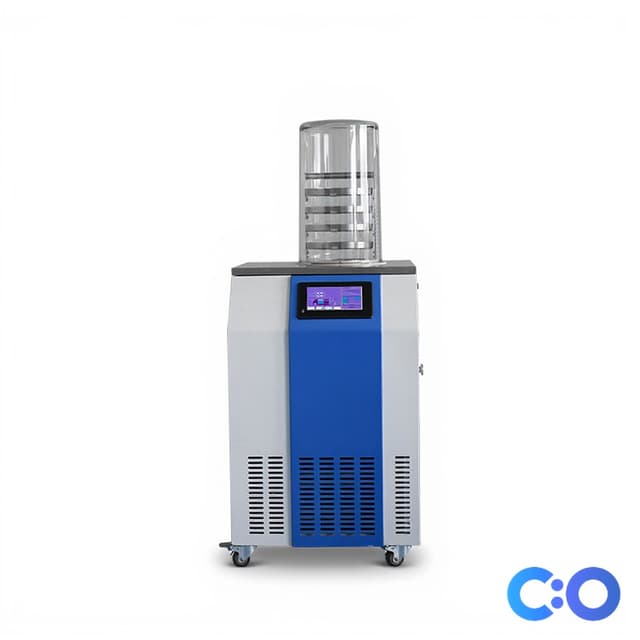
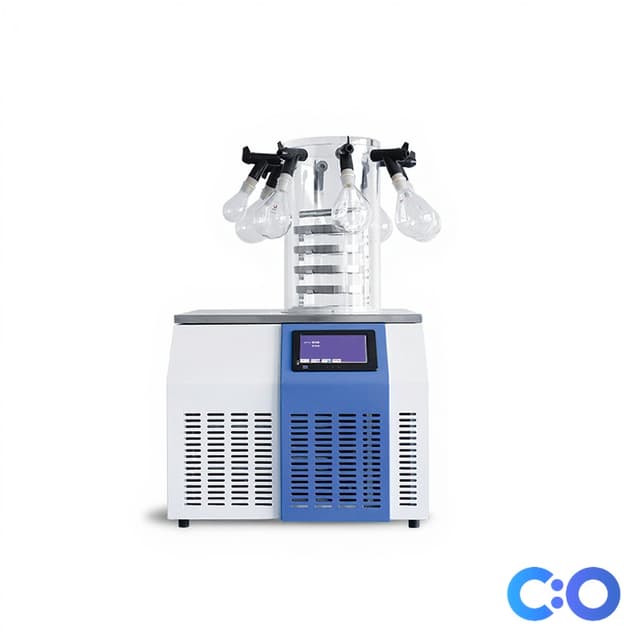
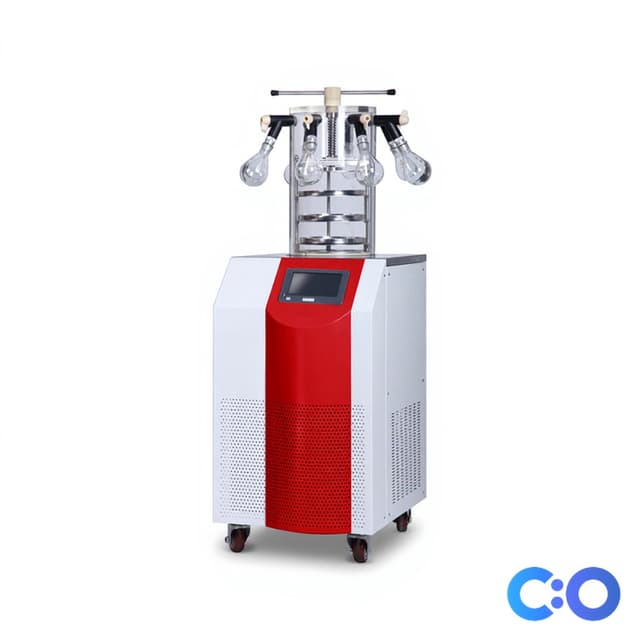
Floor-standing pilot freeze dryer available in three configurations: BK-FD20S (20 kg, manifold), BK-FD20T (20 kg, temperature-controlled shelves with optional stoppering), and BK-FD30S (30 kg, highest manifold throughput).
Designed for labs that have outgrown benchtop capacity or are developing lyophilization processes for scale-up.

Louise Corscadden, PhD
Director of Science · ConductScience
Ask Louise about Pilot Freeze Dryer, Large Lyophilization System fit, setup, configuration, or quote prep.
Already working with us? Sign in to connect this with My Scientist.
Key Specifications
Full details →- Model fit
- 2 selectable configurations
- SKU family
- Assigned during quote
- Shipping box
- 47.0 x 33.0 x 32.5 cm
- Ordering
- Online checkout and quote request available
- Category
- Freeze Dryers
- Build notes
- Confirm accessories, station layout, and support needs before purchase
The BK-FD20/30 series bridges the gap between benchtop R&D freeze dryers and full-scale GMP production equipment. These floor-standing pilot units are built for labs that have outgrown benchtop capacity — process development groups, scale-up studies, and core facilities serving multiple research teams.
Choosing Your Configuration
| BK-FD20S | BK-FD20T | BK-FD30S | |
|---|---|---|---|
| Ice capacity | 20 kg/batch | 20 kg/batch | 30 kg/batch |
| Shelf configuration | Manifold (flasks/vials) | Temperature-controlled trays | Manifold (flasks/vials) |
| Shelf temp control | No | Yes (−40 °C to +60 °C) | No |
| Stoppering | No | Optional | No |
| Best for | Large-volume flask and vial lyophilization, core facility shared use | Pharmaceutical process development, formulation studies requiring precise shelf temperature profiles | Highest throughput manifold drying — natural products, biologics, bulk material processing |
When to Choose a Pilot Unit Over Benchtop
- Your weekly sample load exceeds 250 vials or 5 kg wet weight
- You need to run lyophilization cycles for multiple labs simultaneously
- Your formulation work requires programmed shelf temperature ramps (BK-FD20T)
- You are developing a process for scale-up to GMP manufacturing
- You process large flasks (>500 mL) or bulk trays that won’t fit benchtop manifolds
Common Applications
- Biopharmaceutical process development — lyophilization cycle optimization ahead of cGMP manufacturing
- Vaccine & biologics research — large-batch antigen or adjuvant preservation
- Nutraceutical & botanical extracts — bulk powder production from aqueous extracts
- Academic core facilities — shared infrastructure for multiple PIs and sample types
- Food science R&D — pilot-scale ingredient and formulation testing
Need help mapping your process requirements to the right configuration? Request a quote — our applications team can advise on shelf temperature profiles, cycle parameters, and scale-up path.
How It Works
Freeze drying operates through sublimation, the direct transition of ice from solid to vapor phase under reduced pressure. The process begins with freezing the sample to temperatures typically below -40°C, forming ice crystals that trap the sample matrix in its frozen structure.
Under vacuum conditions, the ice crystals sublimate directly to water vapor without passing through the liquid phase. A condenser maintained at extremely low temperatures captures the water vapor, preventing it from returning to the sample chamber. This controlled process preserves the original structure of the sample while removing up to 95% of water content.
Temperature and pressure parameters are carefully controlled throughout the cycle to optimize sublimation rates while preventing sample damage from excessive heat or pressure fluctuations.
Features & Benefits
Shipping weight
- 300.0 lb
Shipping box
- L: 47.0 cm
- W: 33.0 cm
- H: 32.5 cm
| Feature | This Product | Typical Alternative | Advantage |
|---|---|---|---|
| Chamber Size | Large capacity design with 47.0 x 33.0 x 32.5 inch dimensions | Smaller benchtop units often limited to 12-24 inch chamber dimensions | Accommodates larger batch sizes and multiple sample types simultaneously for increased research productivity. |
| Construction Quality | 300 kg robust construction indicating substantial build quality | Lighter units may compromise on insulation and structural stability | Provides consistent temperature control and reduced vibration for reliable long-term operation. |
| Model Variants | Three model options (BK-FD20S, BK-FD20T, BK-FD30S) for different requirements | Single model offerings limit customization options | Allows selection of optimal features and capacity for specific research applications and budget constraints. |
| Benchtop Design | Compact footprint suitable for standard laboratory benches | Floor-standing units require dedicated space and installations | Integrates into existing laboratory layouts without facility modifications or additional floor space requirements. |
The Pilot Freeze Dryer series combines substantial chamber capacity with benchtop convenience through robust construction and multiple model variants. The large dimensions and heavy-duty build provide research-grade capabilities while maintaining laboratory workspace compatibility.
| Model | SKU | Listed price | Status | Shipping box |
|---|---|---|---|---|
| Standard | BIO-0112 | $29,750.00 | Available | 47.0 x 33.0 x 32.5 cm |
| BK-FD20/30 Series | BIO-0113 | $23,800.00 | Available | 47.0 x 33.0 x 32.5 cm |
Practical Tips
Pre-freeze samples to -80°C before loading to ensure complete ice crystal formation throughout the sample matrix.
Why: Uniform freezing prevents uneven drying and maintains sample structure integrity.
Clean condenser coils monthly and replace vacuum pump oil according to manufacturer schedule.
Why: Proper maintenance ensures optimal heat transfer and vacuum performance throughout the drying cycle.
Verify temperature accuracy using certified reference thermometers at multiple points in the chamber.
Why: Temperature uniformity is critical for consistent drying results and sample quality.
Monitor vacuum levels throughout the cycle to ensure consistent sublimation conditions.
Why: Vacuum fluctuations can cause uneven drying and affect final sample moisture content.
Allow system to reach atmospheric pressure before opening chamber to prevent rapid pressure changes.
Why: Sudden pressure changes can damage delicate samples and create safety hazards.
Check for ice buildup on condenser surfaces if drying times become extended.
Why: Condenser efficiency decreases with ice accumulation, reducing overall system performance.
Setup Guide
What’s in the Box
- Freeze dryer main unit
- Sample trays and containers (typical)
- Vacuum pump system
- Condenser unit
- Temperature monitoring probes (typical)
- Power cable
- User manual and operating instructions
- Maintenance kit (typical)
Warranty
ConductScience provides standard one-year manufacturer warranty covering parts and labor with comprehensive technical support for installation and operation guidance.
Compliance
What sample types are compatible with this freeze dryer?
The system accommodates aqueous solutions, biological tissues, pharmaceutical formulations, and food products. Sample containers must be compatible with vacuum conditions and temperature ranges used in the drying cycle.
How long does a typical freeze drying cycle take?
Cycle times vary from 12-48 hours depending on sample volume, water content, and desired final moisture levels. Thicker samples and higher water content require longer processing times.
What maintenance is required for optimal performance?
Regular condenser cleaning, vacuum pump oil changes, and seal inspection are essential. Temperature calibration should be verified periodically using certified reference standards.
Can the system handle organic solvents or only water?
Consult product specifications for solvent compatibility. Some freeze dryers can handle certain organic solvents, but condenser temperature and vacuum pump compatibility must be verified.
What is the maximum sample volume per batch?
Chamber capacity varies by model variant (BK-FD20S/BK-FD20T/BK-FD30S). Effective sample volume depends on container geometry and required heat transfer characteristics.
How is temperature controlled during the drying process?
The system uses programmable temperature ramping to control sublimation rates. Shelf temperature is monitored and adjusted based on sample characteristics and drying progression.
Have a question about this product?
Have a question? Just ask.
Send it over and we'll email you a personalized answer — no call, no scheduling.
Prefer to talk it through?