Pole Mount Anesthesia System
Mobile anesthesia delivery system combining gas delivery, physiological monitoring, and ventilation capabilities on a transportable pole mount for laboratory animal procedures.
| Automation Level | semi-automated |
| Species | Gerbil, Hamster, Rabbit, Mouse, Rat, Guinea pig |

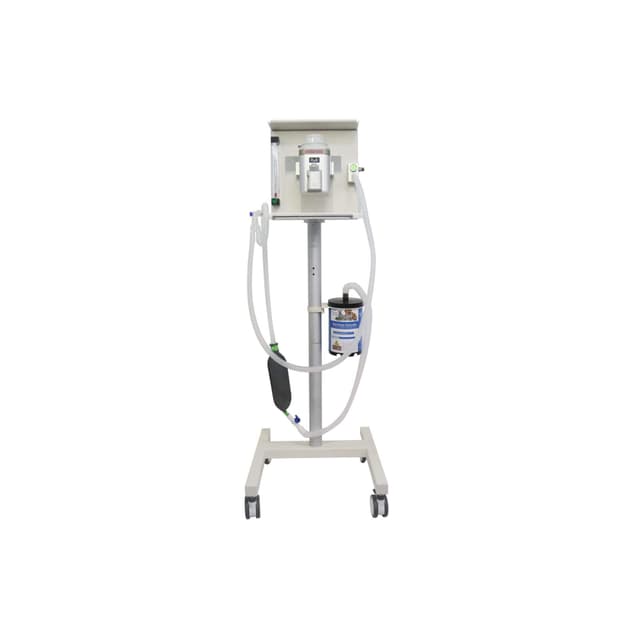
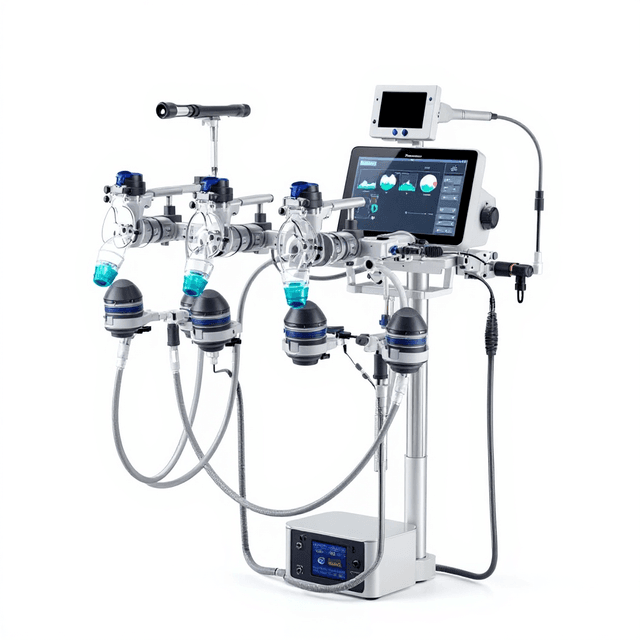
The Pole Mount Anesthesia System (RWD-R620) provides a mobile, comprehensive anesthesia delivery platform for laboratory animal procedures. This integrated unit combines an anesthesia machine, veterinary monitor, and ventilator on a transportable pole mount, enabling consistent anesthetic management across multiple laboratory sites. The system delivers precise isoflurane or sevoflurane concentrations through a temperature-compensated vaporizer with internal capacity ≥120ml, maintaining stable gas delivery across the 0.2-10L/min flow range.
Built-in safety features include anti-accident open lock structures and closed-state protection systems, while the high-integrity design maintains 50kPa internal pressure with zero leakage. The complete system includes monitoring capabilities for SpO2, ECG, respiratory rate, non-invasive blood pressure, temperature, and heart rate, supporting comprehensive physiological assessment during anesthetic procedures. Mixed anesthetic gas output pressure remains within ΔP ≤ 2.5kPa across the operational temperature range of 10-35°C.
How It Works
The system operates through temperature-compensated vaporization of volatile anesthetics (isoflurane 0-5%, sevoflurane 0-8%) mixed with oxygen carrier gas. The built-in temperature compensator maintains consistent anesthetic concentration across varying ambient temperatures (10-35°C) and flow rates (0.2-10L/min), compensating for the temperature-dependent vapor pressure characteristics of volatile agents.
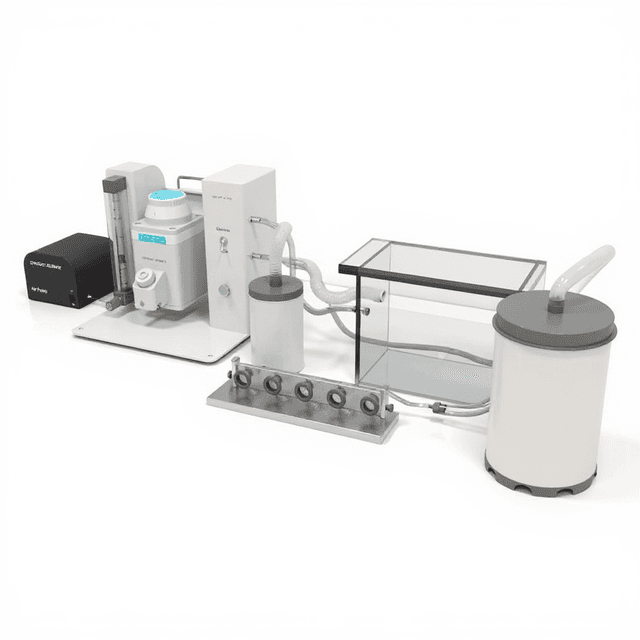
Gas delivery occurs through a sealed manifold system maintaining internal pressures up to 50kPa with zero leakage tolerance. The vaporizer chamber (≥120ml capacity) uses controlled bypass flow to achieve precise concentration mixing, while anti-accident locks prevent inadvertent concentration changes during procedures. Mixed gas output pressure regulation (ΔP ≤ 2.5kPa) ensures consistent delivery pressure to the breathing circuit.
Integrated monitoring systems provide continuous physiological parameter assessment through pulse oximetry (SpO2), electrocardiography (ECG), respiratory rate detection, non-invasive blood pressure measurement, and temperature monitoring. The veterinary ventilator component enables controlled or assisted ventilation modes when spontaneous breathing becomes inadequate under anesthetic depth.
Features & Benefits
Automation Level
- semi-automated
Anesthetic Agent
- Isoflurane
- Sevoflurane
Vaporizer Type
- Easy Fill
Research Domain
- Addiction Research
- Aging Research
- Anxiety and Depression
- Behavioral Pharmacology
- Cancer Research
- Cardiovascular
- Learning and Memory
- Metabolic Research
- Motor Function
- Neurodegeneration
- Neuroscience
- Pain Research
- Social Behavior
- Toxicology
Species
- Gerbil
- Hamster
- Rabbit
- Mouse
- Rat
- Guinea pig
Weight
- 6.06 kg
Dimensions
- L: 65.0 mm
- W: 36.0 mm
- H: 27.0 mm
Comparison Guide
| Feature | This Product | Typical Alternative | Advantage |
|---|---|---|---|
| Anesthetic Agent Compatibility | Dual compatibility with isoflurane (0-5%) and sevoflurane (0-8%) | Many systems support single agent types or limited concentration ranges | Provides protocol flexibility without requiring separate vaporizer units for different experimental designs |
| Temperature Compensation | Built-in temperature compensator for stable delivery across 10-35°C | Basic systems often lack temperature compensation mechanisms | Eliminates concentration drift due to ambient temperature variations in laboratory environments |
| Integrated Monitoring | Complete RWD-RM300 monitor with SpO2, ECG, RESP, NIBP, TEMP, and HR | Separate monitoring equipment often required with basic anesthesia machines | Reduces setup complexity and ensures synchronized anesthetic delivery and physiological assessment |
| Pressure Maintenance | 50kPa internal pressure with zero leakage specification | Lower pressure ratings or acceptable leakage tolerances in entry-level systems | Ensures consistent gas delivery and prevents environmental contamination during procedures |
| Mobility Design | Pole mount system enabling transport between laboratory sites | Fixed installation or limited portability options | Supports multi-location research protocols without equipment duplication or setup reconfiguration |
| Safety Interlocks | Anti-accident open lock and closed state protection structures | Basic manual controls without mechanical safety features | Prevents inadvertent concentration changes during procedures, reducing anesthetic depth variability |
This system provides comprehensive anesthetic management through integrated gas delivery, physiological monitoring, and ventilation capabilities in a mobile platform. The temperature-compensated vaporizer and zero-leakage design ensure consistent anesthetic delivery across varying laboratory conditions, while integrated monitoring eliminates the need for separate physiological assessment equipment.
Practical Tips
Perform daily oxygen flow rate verification across the 0.2-10L/min range using a calibrated flowmeter before first use.
Why: Flow rate accuracy directly affects anesthetic concentration delivery and animal safety.
Check vaporizer chamber level before extended procedures and refill when capacity drops below 25% to prevent concentration instability.
Why: Low anesthetic levels can cause delivery inconsistency during critical experimental phases.
Allow 10-15 minutes for temperature equilibration after moving the pole mount system between laboratory locations.
Why: Temperature compensation requires stabilization time to ensure accurate concentration delivery.
Test anti-accident locks and closed-state protection mechanisms weekly to verify proper safety interlock function.
Why: Safety mechanism failure can lead to inadvertent concentration changes during procedures.
If gas delivery pressure fluctuates, check all connection points for leaks using the 50kPa pressure test protocol.
Why: Even small leaks can cause pressure instability affecting consistent anesthetic delivery.
Monitor physiological parameters for 5-10 minutes after anesthetic adjustments to confirm stable response.
Why: Anesthetic depth changes require time for physiological equilibration and accurate assessment.
Clean breathing circuit components after each use and inspect for wear or contamination before storage.
Why: Residual anesthetic agents or biological contamination can affect subsequent procedure quality.
Record ambient temperature and flow rate settings for each procedure to enable protocol reproducibility.
Why: Environmental conditions affect anesthetic delivery and are important for experimental standardization.
Setup Guide
What’s in the Box
- RWD-R620 Anesthesia Machine with pole mount
- RWD-RM300 Veterinary Monitor
- RWD-R409 Veterinary Ventilator
- Manifold with 4LPM O2 flowmeter
- 1L and 2L breathing bags
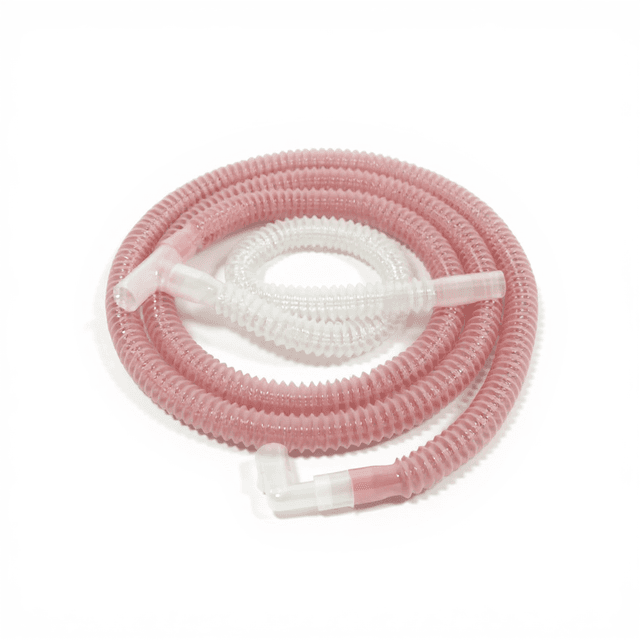
- Breathing circuit assembly
- Vaporizer unit
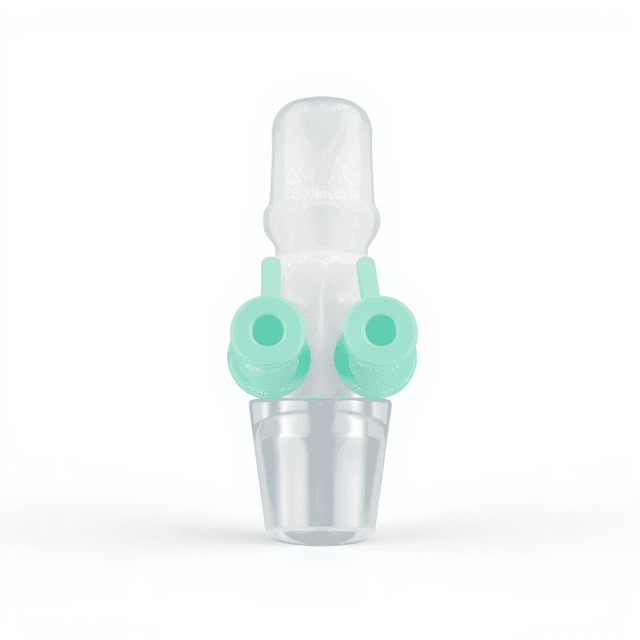
- End caps (pair)
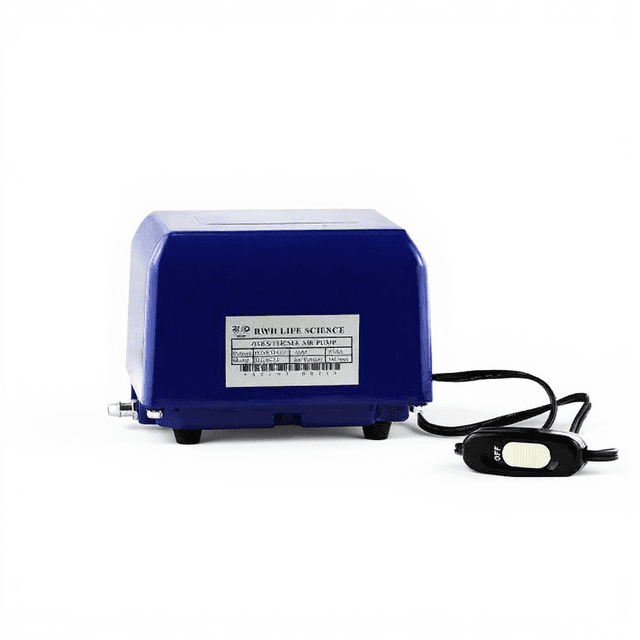
- Air hose
- Gas canister
- Endotracheal tube set
- User manual and documentation (typical)
- Power cables and connectors (typical)
Warranty
ConductScience provides a standard one-year manufacturer warranty covering defects in materials and workmanship, with technical support for setup, calibration, and troubleshooting assistance.
Compliance
What is the accuracy of anesthetic concentration delivery across different flow rates?
The temperature-compensated vaporizer maintains stable concentration delivery across the 0.2-10L/min flow range, with compensation for ambient temperature variations from 10-35°C. Specific accuracy specifications should be consulted in the product datasheet.
Can the system be used for both induction and maintenance anesthesia?
Yes, the system supports both induction and maintenance phases with isoflurane (0-5%) and sevoflurane (0-8%) concentration ranges. The 4LPM oxygen flowmeter and variable concentration control accommodate different anesthetic protocols.
What physiological parameters are monitored and at what sampling rates?
The RWD-RM300 monitor tracks SpO2, ECG, respiratory rate, non-invasive blood pressure, temperature, and heart rate. Specific sampling rates and measurement ranges should be verified in the monitor specifications.
How is the system validated for leak-free operation?
The system maintains 50kPa internal pressure with zero leakage specification and includes high-integrity sealing throughout the gas pathway. Pre-use pressure testing at 50kPa confirms system integrity before animal procedures.
What breathing circuit configurations are supported?
The system includes 1L and 2L breathing bags with breathing circuit assembly, accommodating different animal sizes and ventilation requirements. The integrated ventilator provides controlled or assisted breathing modes when needed.
Can multiple vaporizer types be quickly exchanged during procedures?
The system uses an easy-fill vaporizer design, though specific vaporizer exchange procedures depend on the mounting mechanism. The anti-accident lock structure prevents inadvertent concentration changes during use.
What are the power requirements and backup options?
Power specifications for the integrated monitor and ventilator components should be consulted in the system documentation. The pole mount design suggests standard laboratory electrical requirements.
How does this compare to tabletop anesthesia systems?
The pole mount version provides mobility and space efficiency compared to fixed tabletop units, while maintaining the same core anesthesia delivery and monitoring capabilities as the R610 tabletop system.
Have a question about this product?