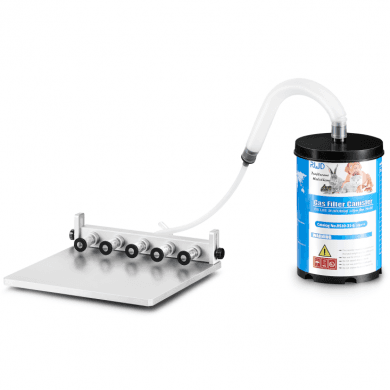
Anesthesia Operation Platform Kit (Manifold for Five Cone Masks)
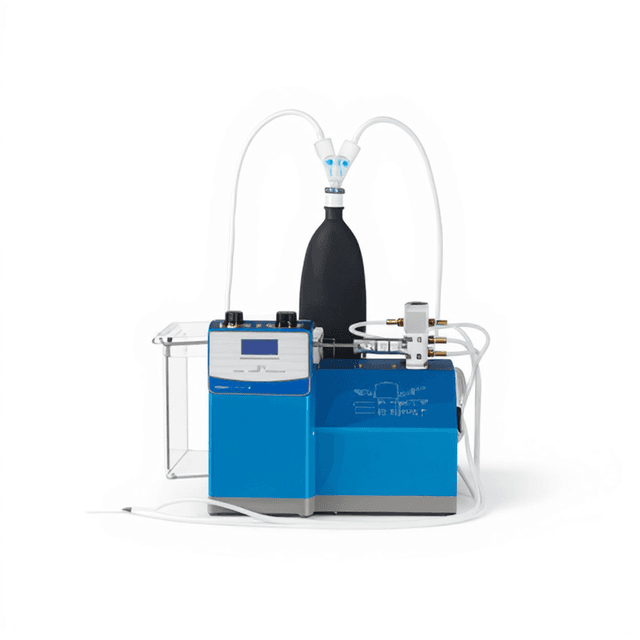
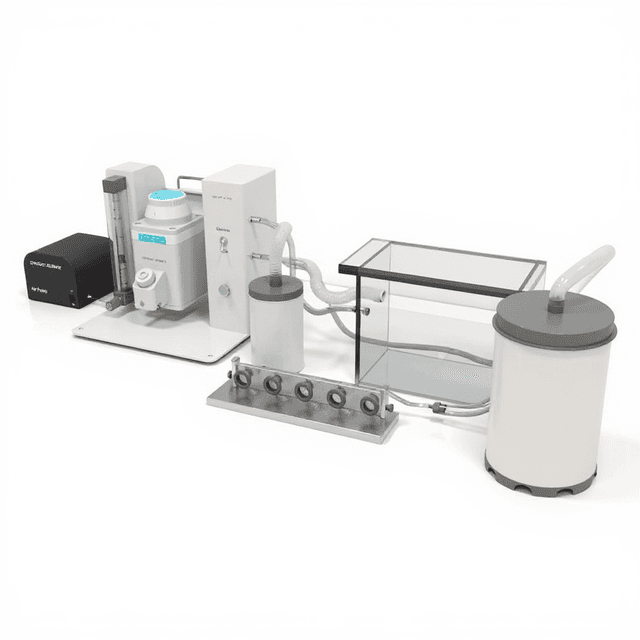
Multi-position anesthesia manifold system for simultaneous anesthetic delivery to up to five small laboratory animals with integrated gas scavenging capabilities.

Louise Corscadden, PhD
Director of Science · ConductScience
Ask Louise about Anesthesia Operation Platform Kit (Manifold for Five Cone Masks) fit, setup, configuration, or quote prep.
Already working with us? Sign in to connect this with My Scientist.
Key Specifications
Full details →- Model fit
- Mouse, Rat
- SKU family
- CS-958421
- Shipping box
- 65.0 x 36.0 x 27.0 cm
- Ordering
- Online checkout and quote request available
- Category
- Anesthesia & Ventilation
- Build notes
- Confirm accessories, station layout, and support needs before purchase
The Anesthesia Operation Platform Kit provides a comprehensive manifold system for simultaneous anesthetic delivery to up to five small laboratory animals. The system features specialized inlet tubing design that enables exhaust gas scavenging through compatible gas filter canisters, supporting proper ventilation protocols in research facilities. The manifold accommodates species-specific cone masks sized for neonatal mice through adult rats, with precise dimensional specifications for optimal fit and minimal dead space.
The platform integrates with the RWD-68630 operation bed for single-animal procedures or functions as a standalone five-position manifold for multi-animal protocols. Cone mask design provides access to eyes, ears, and cranial regions while maintaining anesthetic delivery, supporting surgical and experimental procedures requiring head access. The concentric tubing system (6mm inlet/15mm outlet) ensures efficient gas delivery and scavenging throughout the breathing circuit.
How It Works
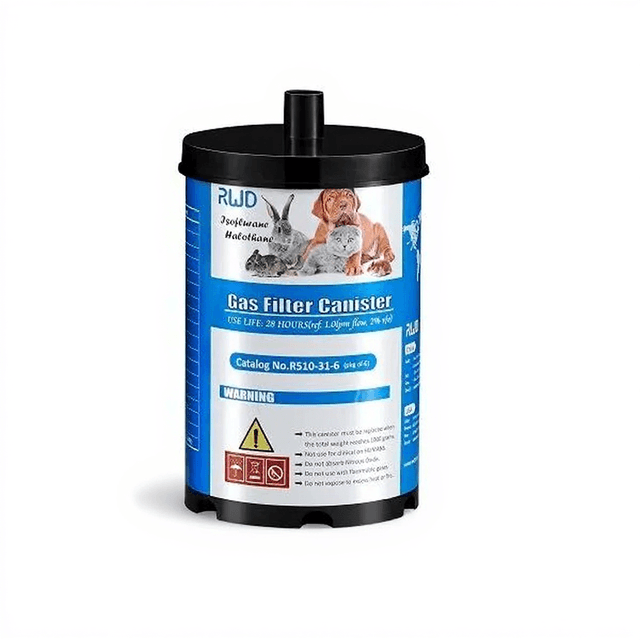
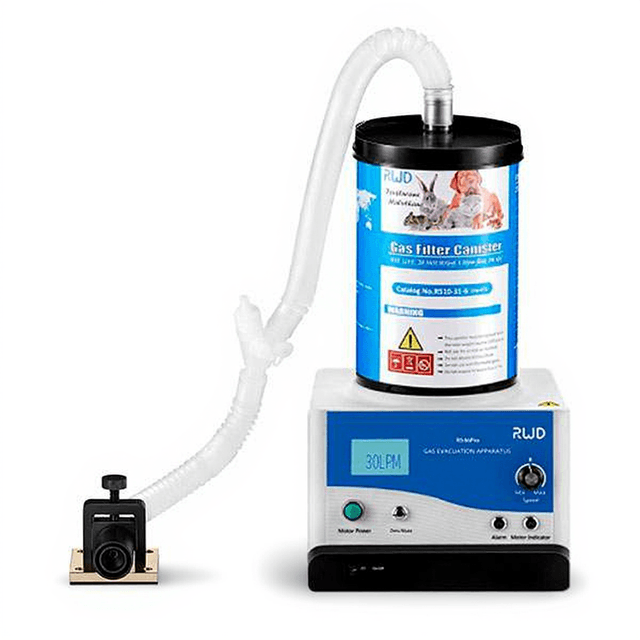
The anesthesia operation platform functions through a manifold distribution system that delivers vaporized anesthetic agent through precisely sized cone masks to individual animals. The concentric tubing design incorporates a 6mm inlet channel for fresh gas delivery nested within a 15mm outlet channel for exhaust gas collection. This configuration minimizes rebreathing while enabling efficient scavenging of waste anesthetic gases through the integrated filter canister connection.
Species-specific cone mask dimensions ensure proper fit across different animal sizes, from neonatal mice (<15g) with 13mm outer diameter masks to adult rats (200-350g) requiring 25mm outer diameter cones. The mask geometry provides adequate seal around the muzzle while maintaining access to cranial structures. Gas flow dynamics within the system maintain consistent anesthetic delivery pressure across all five positions while facilitating exhaust collection through the shared scavenging circuit.
Features & Benefits
Automation Level
- manual
Research Domain
- Addiction Research
- Aging Research
- Anxiety and Depression
- Behavioral Pharmacology
- Cancer Research
- Cardiovascular
- Developmental Biology
- Learning and Memory
- Motor Function
- Neurodegeneration
- Neuroscience
- Pain Research
- Social Behavior
- Toxicology
Shipping weight
- 6.06 lb
Shipping box
- L: 65.0 cm
- W: 36.0 cm
- H: 27.0 cm
| Feature | This Product | Typical Alternative | Advantage |
|---|---|---|---|
| Number of simultaneous positions | Five-position manifold system | Many systems offer 2-3 positions or require individual circuits | Higher throughput for multi-animal procedures reduces experimental time and ensures consistent anesthetic conditions across subjects. |
| Gas scavenging integration | Built-in exhaust collection with filter canister connection | Separate scavenging systems or passive exhaust methods | Simplified setup while maintaining laboratory safety compliance for anesthetic gas exposure. |
| Species size range | Covers neonatal mice (<15g) through adult rats (200-350g) | Limited size ranges or universal masks with poor fit | Species-specific sizing minimizes dead space and ensures effective anesthetic delivery across research animal sizes. |
| Tubing design | Concentric 6mm inlet/15mm outlet configuration | Separate supply and exhaust lines | Reduces connection complexity and workspace clutter while maintaining efficient gas separation. |
| Cranial access capability | Cone design allows access to eyes, ears, and head top | Full-face masks limit surgical access | Enables stereotaxic and cranial procedures without compromising anesthetic delivery. |
This manifold system combines multi-position anesthetic delivery with integrated waste gas scavenging in a single platform. The species-specific cone masks and concentric tubing design provide efficient gas management across research animal sizes while supporting complex surgical access requirements.
| Model | SKU | Listed price | Status | Shipping box |
|---|---|---|---|---|
| Mouse | RWD-AOP5CM-01 | $1,756.00 | Available | 65.0 x 36.0 x 27.0 cm |
| Rat | RWD-AOP5CM-02-1 | $1,956.00 | Available | 65.0 x 36.0 x 27.0 cm |
Practical Tips
Select cone mask size based on animal weight ranges rather than species alone to ensure proper fit and minimize dead space.
Why: Optimal mask sizing prevents rebreathing and ensures effective anesthetic delivery.
Replace gas filter canisters regularly and monitor for breakthrough of anesthetic vapors through color indicator changes.
Why: Saturated filters lose scavenging effectiveness and may expose laboratory personnel to anesthetic gases.
Perform leak testing of all connections before initiating anesthetic procedures using soap solution or electronic leak detectors.
Why: Anesthetic gas leaks compromise both animal anesthesia and laboratory safety protocols.
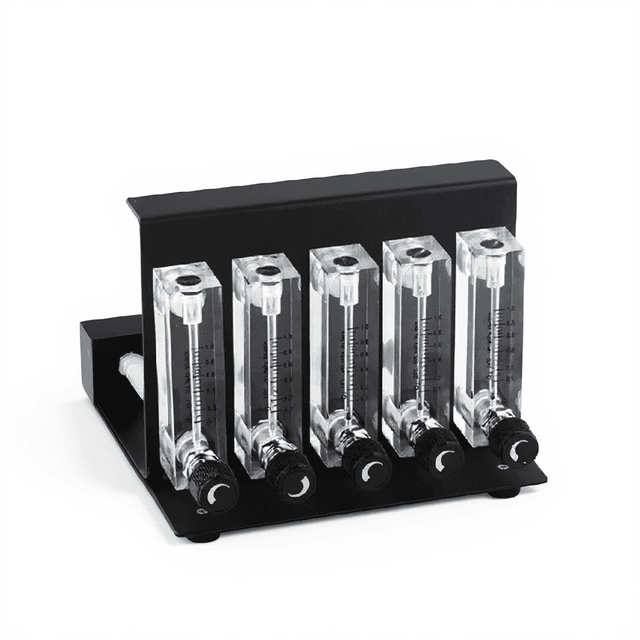
Verify gas flow distribution across all five manifold positions using flow meters to ensure equal anesthetic delivery.
Why: Uneven flow distribution can result in inadequate anesthesia in some positions while causing overdose in others.
Position animals to prevent kinking of the concentric tubing during procedures requiring animal manipulation.
Why: Kinked tubing disrupts both anesthetic delivery and exhaust scavenging, compromising procedure safety.
If individual positions show poor anesthetic delivery, check for blockages in the specific cone mask or connection tubing.
Why: Partial obstructions can reduce anesthetic flow without completely stopping gas delivery.
Monitor and record anesthetic depth indicators for each animal position to ensure consistent experimental conditions.
Why: Variable anesthetic planes across subjects can introduce confounding factors in experimental results.
Clean cone masks with appropriate disinfectants between animals to prevent cross-contamination while preserving mask materials.
Why: Proper sanitation prevents pathogen transmission while maintaining equipment integrity for reliable sealing.
Setup Guide
What’s in the Box
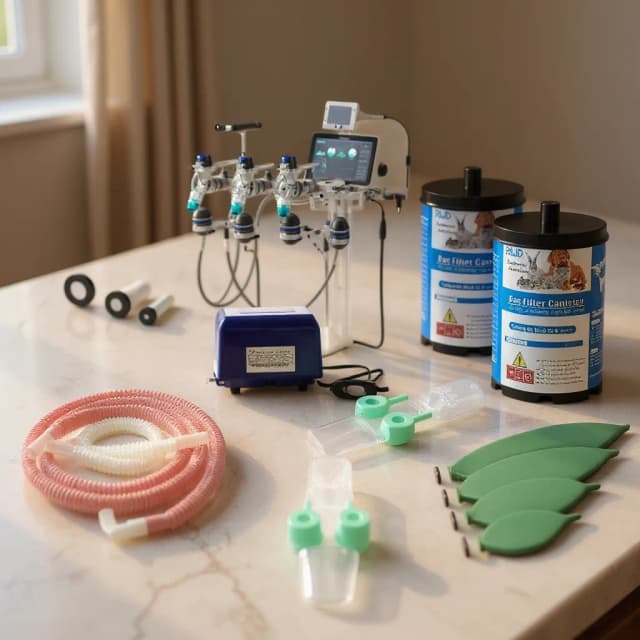
- RWD-68656 Manifold for Five Cone Mask
- RWD-68680 Cone Mask with Tubing for Neonatal Mouse (<15g)
- RWD-68681 Cone Mask with Tubing for Mouse or Neonatal Rat (15-40g)
- RWD-68682 Cone Mask with Tubing for Rat (200-350g)
- RWD-R-CT-6/15 Concentric Tubing (6mm Inlet/15mm Outlet, 45cm)
- Connection hardware and fittings (typical)
- User manual and setup instructions (typical)
Warranty
ConductScience provides standard one-year manufacturer warranty coverage for the manifold system and associated components, with technical support for setup, operation, and troubleshooting assistance.
Compliance
What are the internal diameter specifications for each cone mask size?
The neonatal mouse mask (<15g) has a 5mm internal diameter, the mouse/neonatal rat mask (15-40g) has a 10mm internal diameter, and the adult rat mask (200-350g) has a 15mm internal diameter.
How does the gas scavenging system connect to exhaust filtration?
The manifold features specialized inlet tubing design that directs exhaust gases to a connection port for gas filter canister attachment, enabling waste anesthetic removal from the breathing circuit.
Can individual gas flow rates be controlled for each position?
The system provides manifold distribution from a central gas supply; individual flow control would require upstream regulation at the vaporizer or through individual flow meters if precise per-animal control is needed.
What is the dead space volume for each cone mask size?
Consult product datasheet for specific dead space calculations, as this depends on mask geometry and connection tubing configuration for each size variant.
Is the system compatible with all common anesthetic agents?
The system is designed for standard veterinary anesthetic agents delivered through vaporizers; compatibility with specific agents should be verified based on tubing and seal materials.
How many animals can be anesthetized simultaneously?
The five-position manifold enables simultaneous anesthesia delivery to up to five animals using the appropriate species-specific cone masks.
What maintenance is required for the gas scavenging components?
Regular inspection of tubing connections for leaks, periodic replacement of gas filter canisters, and cleaning of cone masks between uses to maintain system integrity and prevent cross-contamination.
Have a question about this product?
Have a question? Just ask.
Send it over and we'll email you a personalized answer — no call, no scheduling.
Prefer to talk it through?
Accessories
Enhance your setup with compatible accessories
Frequently Bought Together
Upgrade Options