MRI Compatible Concentric Masks Package
Non-metallic concentric tubing anesthesia mask system designed for rodent imaging studies in MRI, PET, and SPECT environments with integrated waste gas scavenging.

Louise Corscadden, PhD
Director of Science · ConductScience
Ask Louise about MRI Compatible Concentric Masks Package fit, setup, configuration, or quote prep.
Already working with us? Sign in to connect this with My Scientist.
Key Specifications
Full details →- Model fit
- MRI, PET, SPECT
- SKU family
- CS-958428
- Shipping box
- 65.0 x 36.0 x 27.0 cm
- Ordering
- Online checkout and quote request available
- Category
- Anesthesia & Ventilation
- Build notes
- non-metallic
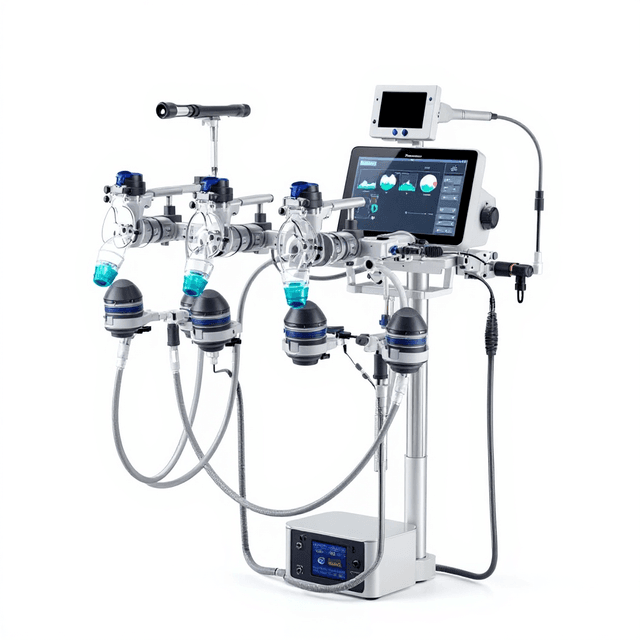
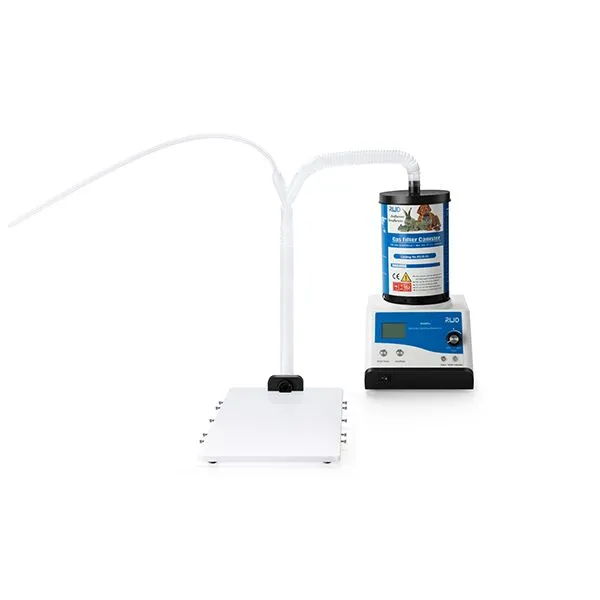
The MRI Compatible Concentric Masks Package provides anesthesia delivery for rodent research in magnetic resonance environments. The concentric tubing mask design offers enhanced positioning flexibility compared to traditional cone masks, providing a wider field of view around the animal's head while maintaining secure anesthesia delivery. The integrated scavenging system effectively removes waste gas from around the animal's nose, improving safety and reducing environmental contamination.
Constructed entirely from non-metallic materials, the system is fully compatible with MRI, PET, and SPECT imaging environments. The height-adjustable design accommodates various experimental setups and can be fixed using either a mounting bracket or platform system. Multiple configuration options are available including single-channel, dual-channel, and five-channel configurations to support different experimental requirements.
How It Works
The concentric tubing mask system delivers anesthetic gas through a central supply tube while simultaneously removing waste gases through an outer concentric scavenging pathway. This design creates a continuous flow pattern that maintains consistent anesthetic concentration at the animal's nose while preventing accumulation of expired gases. The non-metallic construction eliminates magnetic susceptibility artifacts that could interfere with image quality in MRI environments.
The height-adjustable mounting system allows precise positioning of the mask relative to the animal's head, accommodating different body sizes and experimental orientations. The scavenging system operates on passive flow principles, drawing waste gases away from the breathing zone through the outer tube while fresh anesthetic gas is supplied through the central pathway. This configuration maintains a stable anesthetic environment while minimizing environmental contamination in the imaging suite.
Features & Benefits
Mask Design
- concentric tubing
MRI Compatible
- yes
Scavenging System
- efficient waste gas removal
Height Adjustable
- yes
Imaging System Compatibility
- MRI, PET, SPECT
Mounting Options
- fixed bracket (68625) or fixed platform (68626)
Automation Level
- manual
Species
- Mouse
- Rat
Material
- non-metallic
Research Domain
- Cancer Research
- Cardiovascular
- Developmental Biology
- Metabolic Research
- Neurodegeneration
- Neuroscience
Shipping weight
- 6.06 lb
Shipping box
- L: 65.0 cm
- W: 36.0 cm
- H: 27.0 cm
| Feature | This Product | Typical Alternative | Advantage |
|---|---|---|---|
| Mask Design | Concentric tubing design with integrated scavenging | Traditional cone masks or simple tube systems | Provides better positioning flexibility and automatic waste gas removal without requiring separate scavenging connections. |
| MRI Compatibility | Complete non-metallic construction | Some systems contain metal components requiring modification | Eliminates the need for compatibility verification or component substitution in magnetic environments. |
| Mounting Options | Multiple mounting solutions (bracket and platform systems) | Limited mounting configurations | Accommodates different experimental setups and imaging system configurations without requiring custom hardware. |
| Height Adjustment | Adjustable height positioning system | Fixed-height designs | Allows optimal mask positioning for different animal sizes and experimental orientations without system modification. |
| Channel Options | Single-channel, dual-channel, and five-channel configurations available | Typically single-channel systems only | Supports multi-animal studies and different experimental protocols with a single system platform. |
| Multi-Modality Use | Compatible with MRI, PET, and SPECT systems | Often designed for single imaging modality | Provides versatility across different imaging platforms in multi-modal research facilities. |
This system combines concentric tubing design with non-metallic construction and multiple mounting options to provide versatile anesthesia delivery across MRI, PET, and SPECT imaging modalities. The integrated scavenging system and adjustable positioning offer operational advantages over traditional cone mask designs.
| Model | SKU | Listed price | Status | Shipping box |
|---|---|---|---|---|
| Operation platform | RWD-R510M-PGL | $185.00 | Available | 65.0 x 36.0 x 27.0 cm |
| Five-channel | RWD-R510M-R510-54 | $889.00 | Available | 65.0 x 36.0 x 27.0 cm |
| Dual-channel | RWD-R510M-R510-89 | $365.00 | Available | 65.0 x 36.0 x 27.0 cm |
| Single-channel | RWD-R510M-68625 | $180.00 | Available | 65.0 x 36.0 x 27.0 cm |
| Mounting platform | RWD-R510M-68626 | $237.00 | Available | 65.0 x 36.0 x 27.0 cm |
Practical Tips
Position the mask 2-3mm from the animal's nose and monitor respiratory rate to ensure adequate anesthetic delivery without restricting natural breathing.
Why: Proper positioning maintains effective anesthesia while preventing respiratory compromise.
Inspect all tubing connections before each use and replace tubing that shows signs of cracking or gas permeability loss.
Why: Compromised tubing can lead to anesthetic leaks and inconsistent delivery.
Verify scavenging system function at the start of each session by confirming waste gas flow through the outer tube.
Why: Effective scavenging prevents accumulation of anesthetic gases in the imaging environment.
Calibrate gas flow rates based on animal weight and anesthetic protocol, adjusting for changes in respiratory patterns during imaging.
Why: Proper flow calibration ensures consistent anesthetic depth throughout the imaging session.
If anesthetic depth appears inadequate, check for leaks in the delivery system and verify proper mask positioning before increasing gas flow rates.
Why: System leaks are a common cause of apparent anesthetic insufficiency and should be addressed before protocol adjustments.
Perform test scans with the anesthesia system in place to verify absence of imaging artifacts before beginning data collection protocols.
Why: MRI compatibility verification ensures that the anesthesia system does not compromise image quality or experimental data.
Use separate tubing sets for different anesthetic agents to prevent cross-contamination and maintain protocol consistency.
Why: Anesthetic cross-contamination can affect experimental reproducibility and animal safety.
Setup Guide
What’s in the Box
- Concentric tubing anesthesia mask (configuration-dependent)
- Gas supply tubing (typical)
- Scavenging system tubing (typical)
- Mounting hardware (bracket or platform as specified)
- User manual and setup instructions (typical)
- Gas connection fittings (typical)
Warranty
ConductScience provides a one-year manufacturer warranty covering defects in materials and workmanship, with technical support for setup and troubleshooting. Extended warranty options may be available for high-use research facilities.
Compliance
What gas flow rates are recommended for different animal weights?
Consult product datasheet for specific flow rate recommendations. Generally, flow rates are adjusted based on animal size with mice requiring lower rates than rats, but specific protocols depend on anesthetic agent and experimental duration.
How does the scavenging system prevent waste gas accumulation?
The concentric tube design creates continuous waste gas removal through the outer tube while delivering fresh anesthetic through the central tube, maintaining a clean breathing environment around the animal's nose.
Can this system be used with different anesthetic agents?
The system is compatible with standard volatile anesthetics used in rodent research. Gas compatibility depends on tubing materials and system specifications - consult product datasheet for approved anesthetic agents.
What maintenance is required for the scavenging system?
Regular inspection of tubing connections for leaks, cleaning of gas pathways, and verification of scavenging flow rates. Replace tubing according to usage frequency and manufacturer recommendations.
How is the mask positioned for optimal anesthetic delivery?
Position the mask opening 2-3mm from the animal's nose using the height adjustment mechanism. Too close restricts breathing, too far reduces anesthetic efficiency.
What imaging artifacts should I check for during MRI compatibility testing?
Verify absence of signal dropout, distortion, or noise artifacts in critical imaging regions. Perform test scans with and without the anesthesia system to confirm compatibility.
Can multiple animals be anesthetized simultaneously with multi-channel configurations?
Multi-channel configurations allow independent anesthetic delivery to multiple animals, but each channel requires separate gas flow control and monitoring for proper anesthetic depth management.
Have a question about this product?
Have a question? Just ask.
Send it over and we'll email you a personalized answer — no call, no scheduling.
Prefer to talk it through?
Accessories
Enhance your setup with compatible accessories
Frequently Bought Together