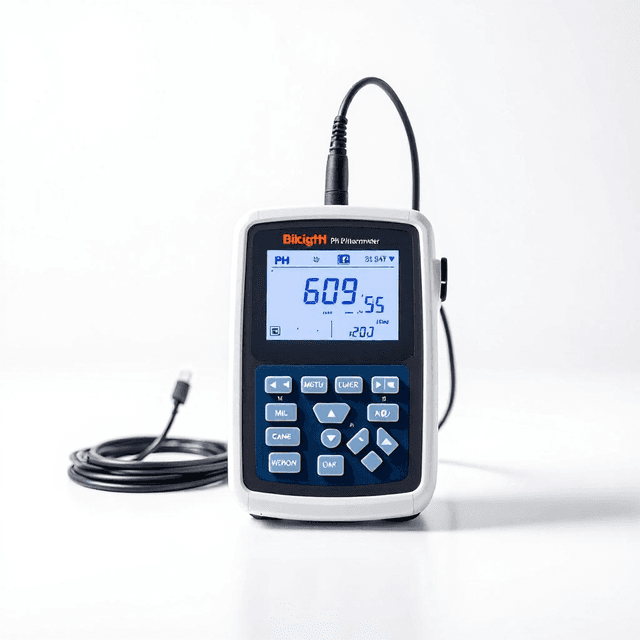
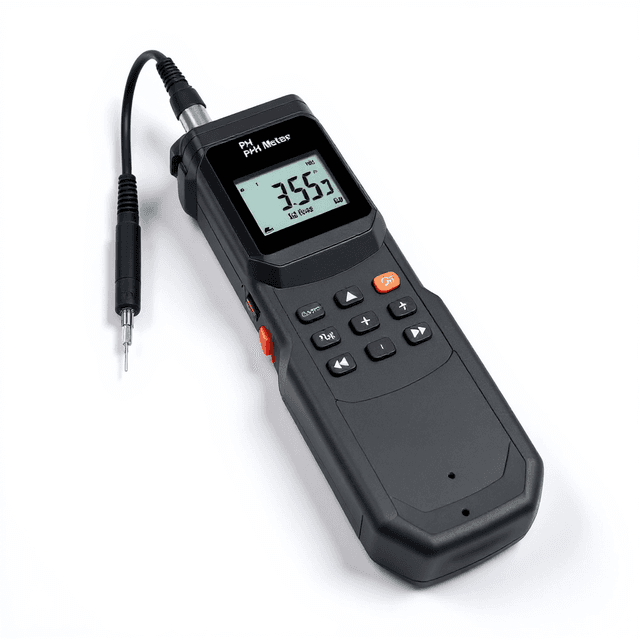
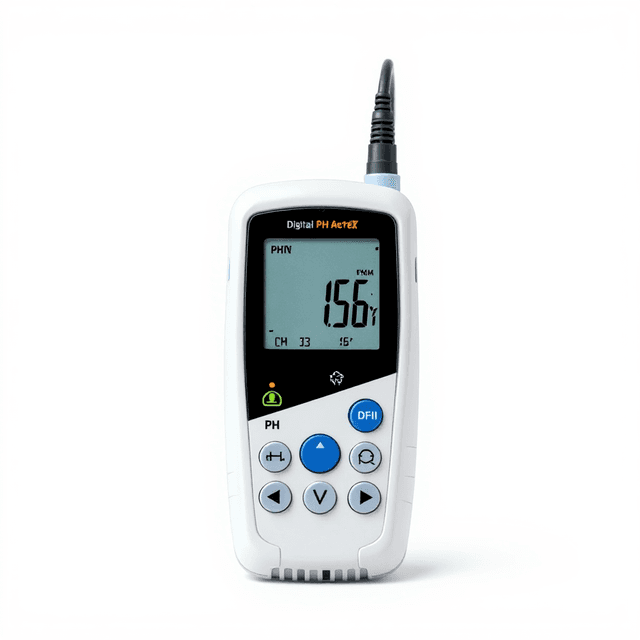
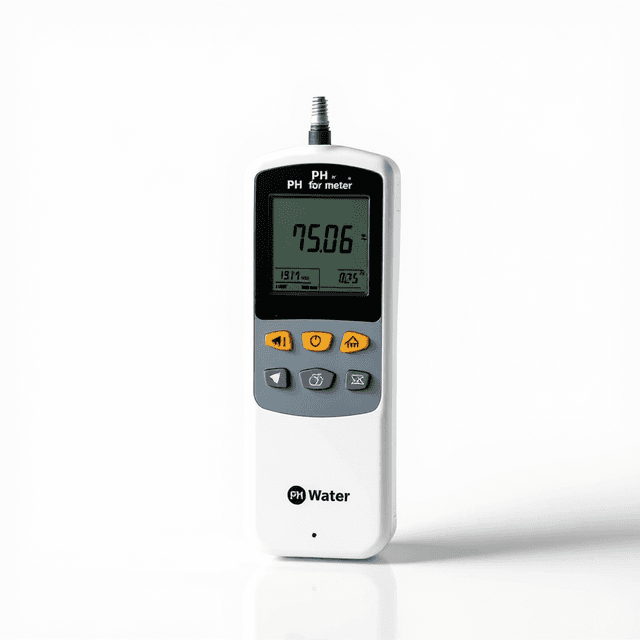
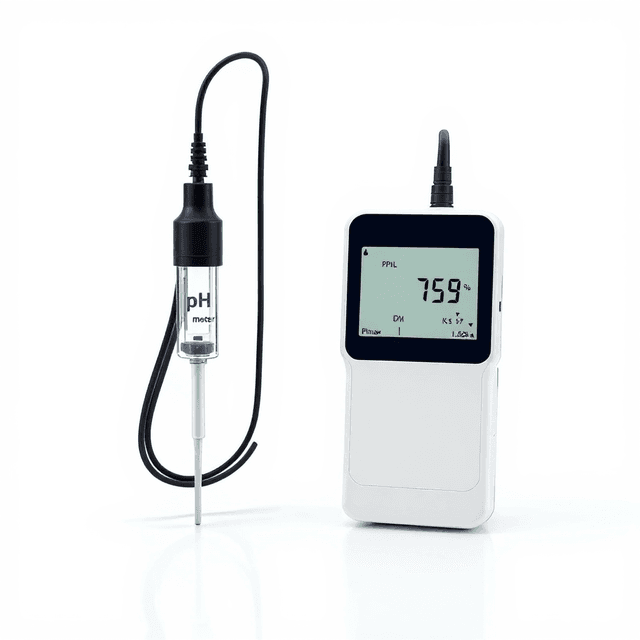
Portable Multi parameter Water Quality Meter
Portable multi-parameter water quality analyzer measuring pH, conductivity, TDS, and optional ORP/ion concentration with flexible calibration protocols and temperature compensation.
| Automation Level | semi-automated |
| pH | Range |
| Calibration Points | 1 or 2 points |
| pH Buffer Options | USA, NIST, DIN, 2 custom buffers |
| ORP(Optional) | Range |
| lon(Optional) | Range |

The Portable Multi-parameter Water Quality Meter is a comprehensive field instrument designed for simultaneous measurement of multiple water quality parameters including pH, conductivity, TDS, and optional ORP and ion concentration. This portable system combines multiple sensors in a single unit, enabling researchers to perform multi-parameter analysis at sampling sites without laboratory transport requirements.
The instrument features flexible calibration options with 1 or 2-point pH calibration using USA, NIST, DIN, or custom buffer standards, and conductivity calibration across five standard solutions ranging from 10 μS/cm to 111.8 mS/cm. Temperature compensation is provided through linear coefficient adjustment (0.0-10.0%/°C) with selectable reference temperatures of 20°C or 25°C. Measurement data can be displayed in multiple units including ppm, mg/L, mol/L, and mmol/L to match analytical protocols and reporting requirements.
How It Works
The multi-parameter water quality meter operates through electrochemical and conductometric measurement principles. pH measurement utilizes a glass electrode system that generates a potential difference proportional to hydrogen ion activity in solution, following the Nernst equation. The reference electrode provides a stable potential against which the pH-sensitive glass electrode is measured, with automatic temperature compensation adjusting for the temperature dependence of electrode response.
Conductivity measurement employs a four-electrode conductivity cell that applies an alternating current between two drive electrodes and measures the resulting voltage across two sense electrodes. This configuration eliminates polarization effects and enables accurate conductivity determination across the full measurement range. The cell constant (K=0.1, 1, 10, or custom) is used to convert measured conductance to specific conductivity values, with temperature coefficient correction applied based on the linear relationship between temperature and ionic mobility.
TDS values are calculated from conductivity measurements using established conversion factors, while optional ORP and ion-selective electrode measurements extend the analytical capability to include redox potential and specific ion concentrations. All measurements incorporate temperature compensation algorithms to provide temperature-corrected values referenced to standard conditions.
Features & Benefits
Automation Level
- semi-automated
pH
- Range
Calibration Points
- 1 or 2 points
pH Buffer Options
- USA, NIST, DIN, 2 custom buffers
ORP(Optional)
- Range
lon(Optional)
- Range
Measurement Units
- ppm, mg/L, mol/L, mmol/L
Conductivity
- Range
Calibration Solutions
- 10μS/cm, 84μS/cm, 1413μS/cm, 12.88mS/cm, 111.8mS/cm
T emperature Coefficient
- Linear(0.0~10.0%/°C), pure water
Reference Temperature
- 20/25°C
Cell Constant
- K=0.1, 1, 10 or custom
TDS
- Range
Brand
- ConductScience
Research Domain
- Analytical Chemistry
- Environmental Monitoring
- Food Science
- Materials Science
- Microbiology
- Pharmaceutical QC
Accuracy
- ±0.2mg/L, ±2.0%
Weight
- 2.0 kg
Dimensions
- L: 3.0 mm
- W: 17.0 mm
- H: 8.5 mm
Comparison Guide
| Feature | This Product | Typical Alternative | Advantage |
|---|---|---|---|
| Calibration Flexibility | Supports 1 or 2-point pH calibration with USA, NIST, DIN, or 2 custom buffer options | Basic meters often limited to 1-point calibration with standard buffers only | Multiple calibration protocols enable optimization for different analytical methods and sample types. |
| Conductivity Standards Range | Five calibration solutions from 10 μS/cm to 111.8 mS/cm | Entry-level instruments typically offer 2-3 conductivity standards | Broader calibration range ensures accuracy across pure water to concentrated solution measurements. |
| Cell Constant Options | Supports K=0.1, 1, 10, or custom cell constants | Fixed cell constant designs limit measurement range optimization | Configurable cell constants allow optimization for specific conductivity ranges and sample types. |
| Temperature Compensation | Linear coefficient adjustable from 0.0-10.0%/°C with dual reference temperatures | Fixed temperature compensation coefficients in basic models | Customizable compensation enables accurate measurements across diverse sample matrices and temperature conditions. |
| Measurement Units | Four unit options: ppm, mg/L, mol/L, mmol/L | Limited unit display options in simpler instruments | Multiple unit formats accommodate different reporting requirements and analytical protocols. |
| Multi-Parameter Capability | Simultaneous pH, conductivity, TDS measurement with optional ORP and ion detection | Single-parameter instruments require separate measurements | Correlated multi-parameter data from single sample reduces measurement variability and analysis time. |
This instrument combines multi-parameter measurement capability with flexible calibration protocols and configurable temperature compensation. The system supports multiple buffer standards, conductivity calibration solutions, and cell constants while providing measurement data in four unit formats for diverse analytical requirements.
Practical Tips
Perform pH calibration with buffers that bracket your expected sample pH range for optimal accuracy.
Why: Interpolation between calibration points provides better accuracy than extrapolation beyond the calibrated range.
Store pH electrode in appropriate storage solution and conductivity electrode in deionized water when not in use.
Why: Proper storage maintains electrode response and extends operational lifetime.
Allow sufficient equilibration time between samples, especially when transitioning between different ionic strengths.
Why: Electrode response time varies with sample composition and adequate equilibration ensures stable, accurate readings.
Use fresh calibration solutions and verify buffer pH values with each calibration session.
Why: Buffer solutions can drift over time due to CO2 absorption and contamination, affecting calibration accuracy.
If conductivity readings are unstable, check for air bubbles in the conductivity cell and ensure adequate sample volume.
Why: Air bubbles disrupt current flow between electrodes leading to erratic conductivity measurements.
Record temperature along with measurements and verify temperature compensation settings match your sample type.
Why: Temperature significantly affects both pH and conductivity measurements, and proper compensation is critical for accurate results.
Clean conductivity electrodes with appropriate cleaning solutions when measuring samples with high organic content or biological activity.
Why: Organic fouling and biofilm formation on electrode surfaces can significantly affect conductivity measurement accuracy.
Ensure electrodes are properly rinsed between samples to prevent cross-contamination, especially when measuring samples of significantly different composition.
Why: Carryover effects can bias subsequent measurements and compromise data quality in analytical sequences.
Setup Guide
What’s in the Box
- Multi-parameter water quality meter (typical)
- pH combination electrode (typical)
- Conductivity electrode (typical)
- Temperature sensor (typical)
- Protective electrode caps (typical)
- Calibration solutions kit (typical)
- Power adapter/battery pack (typical)
- Carrying case (typical)
- User manual and calibration certificates (typical)
Warranty
ConductScience provides a standard one-year manufacturer warranty covering defects in materials and workmanship. Technical support and calibration services are available throughout the warranty period to ensure optimal instrument performance.
Compliance
What calibration frequency is recommended for pH and conductivity measurements?
pH calibration should be performed daily or with each measurement session using fresh buffer solutions. Conductivity calibration typically requires weekly verification with standard solutions, though frequency depends on sample matrix and accuracy requirements.
Can the meter handle high-salinity samples or extreme pH ranges?
Measurement ranges are not specified in the product datasheet. Consult the technical specifications for specific pH and conductivity ranges, and verify electrode compatibility with high-ionic-strength or extreme pH samples.
How does temperature compensation affect measurement accuracy?
The linear temperature compensation (0.0-10.0%/°C) automatically adjusts readings based on sample temperature. Proper coefficient selection for your sample type and reference temperature setting (20°C or 25°C) is critical for accurate results.
What data storage and export options are available?
Data storage and connectivity features are not detailed in the basic specifications. Consult the product datasheet for information on internal memory capacity, data logging capabilities, and computer interface options.
Can the electrodes be replaced or upgraded?
The system accepts different cell constants (K=0.1, 1, 10, or custom), suggesting electrode interchangeability. Contact technical support for specific electrode compatibility and replacement options for your application requirements.
How does this compare to separate single-parameter instruments?
Multi-parameter design provides correlated measurements from the same sample volume, reducing sampling variability compared to sequential single-parameter measurements. However, specialized single-parameter instruments may offer enhanced accuracy for specific determinations.
What maintenance is required for optimal performance?
Regular electrode cleaning, proper storage in appropriate solutions, and periodic calibration verification are essential. pH electrode conditioning and conductivity cell cleaning frequency depends on sample matrix and measurement frequency.
Can custom calibration solutions be used?
Yes, the system supports custom pH buffers in addition to USA, NIST, and DIN standards. Custom cell constants are also supported for conductivity measurements, allowing adaptation to specific analytical requirements.
Have a question about this product?
Accessories
Enhance your setup with compatible accessories
Frequently Bought Together
Upgrade Options