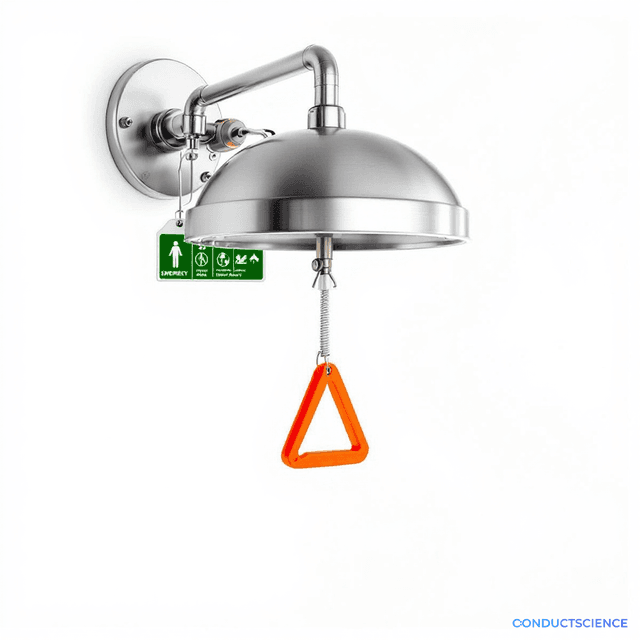
Removable Eye Washer Wall Mounted Eye Washer
Wall-mounted emergency eyewash station with removable design for laboratory chemical exposure response and eye irrigation safety protocols.

Louise Corscadden, PhD
Director of Science · ConductScience
Ask Louise about Removable Eye Washer Wall Mounted Eye Washer fit, setup, configuration, or quote prep.
Already working with us? Sign in to connect this with My Scientist.
Key Specifications
Full details →- Model fit
- Configured during quote
- SKU family
- BIO-0884
- Shipping box
- 42.0 x 43.6 x 38.0 cm
- Ordering
- Online checkout and quote request available
- Category
- Safety Equipment
- Build notes
- Confirm accessories, station layout, and support needs before purchase
The Removable Eye Washer Wall Mounted Eye Washer provides emergency eye irrigation for laboratory and industrial environments where chemical exposure risks are present. This wall-mounted station delivers immediate access to flushing solution when researchers or technicians experience chemical splashes or particulate contamination in the eyes.
The removable design allows for flexible installation and maintenance while maintaining ready access during emergencies. The unit mounts securely to laboratory walls, positioning the eyewash at appropriate height for user access while conserving valuable bench space.
How It Works
Emergency eyewash stations operate through gravity-fed or pressurized water delivery systems that provide controlled flow of irrigation solution directly to affected eyes. The flushing action mechanically removes chemical contaminants, particulates, and irritants from ocular surfaces and surrounding tissue.
Effective eye irrigation requires sustained flow for 15-minute minimum duration to ensure complete removal of chemical residues. The station's design directs water flow from inner to outer eye corners, preventing cross-contamination between eyes while maintaining adequate pressure for thorough flushing.
Wall-mounted positioning ensures immediate accessibility during emergencies when vision may be impaired. The removable configuration facilitates routine cleaning, inspection, and maintenance of internal components without requiring complete system replacement.
Features & Benefits
Automation Level
- manual
Brand
- ConductScience
Research Domain
- Analytical Chemistry
- Environmental Monitoring
- Industrial Hygiene
- Materials Science
- Microbiology
- Pharmaceutical QC
Shipping weight
- 29.98 lb
Shipping box
- L: 42.0 cm
- W: 43.6 cm
- H: 38.0 cm
| Feature | This Product | Typical Alternative | Advantage |
|---|---|---|---|
| Installation Method | Wall-mounted with removable design | Entry-level models often require permanent fixed mounting | Facilitates maintenance and cleaning while preserving emergency accessibility |
| Space Requirements | Wall-mounted configuration | Portable units occupy floor or bench space | Conserves valuable laboratory work surfaces while maintaining emergency access |
| Water Supply | Direct plumbing connection | Portable units use limited stored solution volumes | Enables sustained 15-minute irrigation duration required for complete decontamination |
| Maintenance Access | Removable unit design | Fixed units require in-place servicing | Allows thorough inspection and cleaning without disrupting installation infrastructure |
The wall-mounted removable design combines the continuous water supply advantages of fixed installations with the maintenance accessibility of portable units. This configuration optimizes laboratory space utilization while ensuring emergency response capability.
Practical Tips
Perform weekly activation testing to clear stagnant water and verify proper flow function.
Why: Regular use prevents bacterial growth in supply lines and ensures immediate availability during emergencies.
Install eyewash within 10 seconds unobstructed travel time from all chemical work areas.
Why: Delayed access increases severity of chemical injury and may compromise decontamination effectiveness.
Ensure water temperature remains between 60-100°F through temperature mixing valves if necessary.
Why: Water outside this range can cause thermal shock or discourage adequate 15-minute flushing duration.
Clean and inspect nozzles monthly to remove mineral deposits and biological growth.
Why: Blocked or contaminated nozzles reduce irrigation effectiveness and may introduce additional contaminants.
Document all activations and maintenance activities for safety compliance records.
Why: Maintenance logs demonstrate due diligence and help identify usage patterns or system issues.
Verify adequate water pressure if spray pattern appears weak or uneven between eyes.
Why: Insufficient pressure reduces flushing effectiveness and may indicate supply line restrictions or valve problems.
Train all laboratory personnel on proper eyewash operation and 15-minute minimum flush duration.
Why: Emergency situations impair judgment and training ensures proper decontamination procedures are followed.
Setup Guide
What’s in the Box
- Wall-mounted eyewash unit (typical)
- Mounting bracket and hardware (typical)
- Installation instructions (typical)
- Plumbing fittings for water connection (typical)
- Safety and operation manual (typical)
Warranty
ConductScience provides standard one-year manufacturer warranty covering materials and workmanship defects. Technical support includes installation guidance and maintenance recommendations for optimal emergency response readiness.
Compliance
What flow rate and pressure specifications ensure adequate eye irrigation?
Consult product datasheet for specific flow rates. Effective emergency eyewash requires sustained flow capable of flushing both eyes simultaneously for minimum 15-minute duration per safety standards.
How does the removable design affect maintenance scheduling?
Removable configuration allows thorough cleaning and inspection without disconnecting plumbing lines. Weekly activation testing and monthly cleaning can be performed while maintaining wall-mounted accessibility.
What water temperature range is appropriate for emergency eye irrigation?
Emergency eyewash should deliver tepid water between 60-100°F (16-38°C) to prevent thermal shock during extended flushing. Temperature mixing valves may be required depending on supply water temperature.
What clearance requirements apply for emergency eyewash installation?
Units require unobstructed access within 10 seconds travel time from hazard areas. Minimum clearance around activation area should accommodate users and allow unrestricted approach during emergencies.
How does this unit compare to portable emergency eyewash solutions?
Wall-mounted units provide unlimited flushing duration through direct water supply connection, while portable units offer limited solution volume but greater flexibility for remote work areas.
What routine inspection procedures maintain emergency readiness?
Weekly activation testing verifies flow function and clears stagnant water. Monthly inspection includes checking spray patterns, cleaning nozzles, and verifying mounting security.
Can this unit be integrated with laboratory alarm systems?
Integration capabilities depend on specific model features. Consult product specifications for available monitoring connections or activation logging options for emergency response documentation.
Have a question about this product?
Have a question? Just ask.
Send it over and we'll email you a personalized answer — no call, no scheduling.
Prefer to talk it through?