1 / 3
Repeated Acquisition and Performance Chamber
SKU CS-958341
$8,990.00
IncludesStandard care
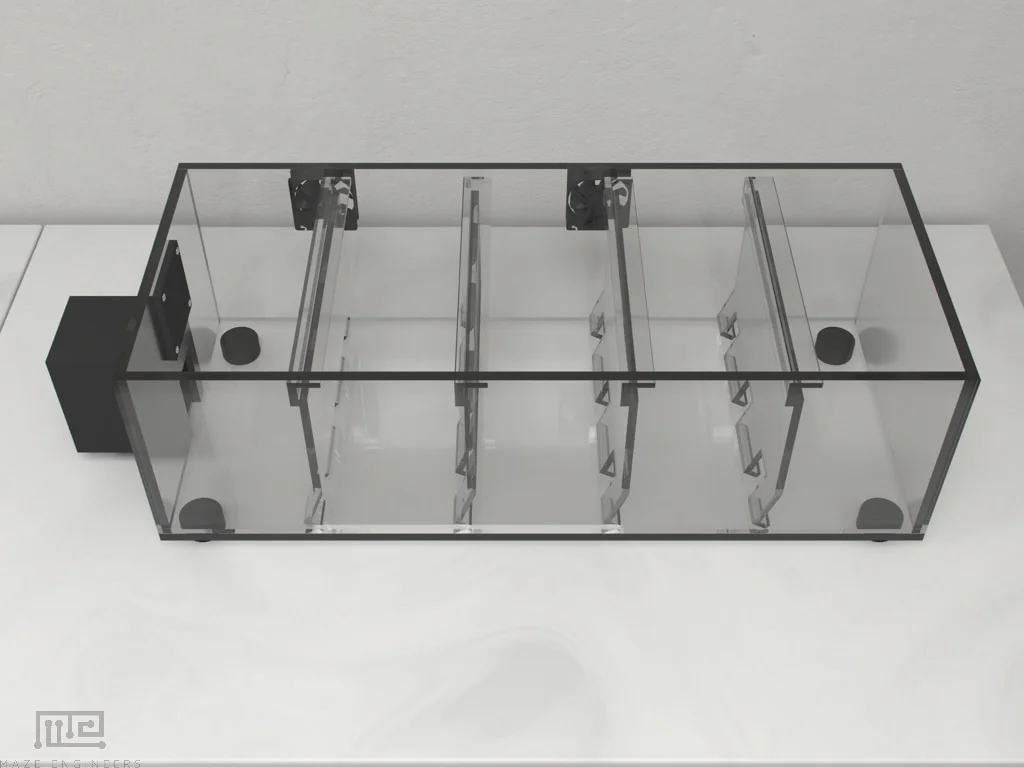
Specialized behavioral chamber with five sequential compartments and one-way doors for assessing learning acquisition, performance retention, and cognitive flexibility in rodents through alternating learning and performance protocols.
CE MarkedBAA available
Scientist guidance

Louise Corscadden, PhD
Director of Science · ConductScience
Ask Louise about Repeated Acquisition and Performance Chamber fit, setup, configuration, or quote prep.
Already working with us? Sign in to connect this with My Scientist.
Key Specifications
Full details →- Model fit
- Mouse, Rat
- SKU family
- CS-958341
- Sizing
- Mouse Manual: Chamber dimensions: 90cm L x 40cm W x 30cm H; Doors: 6cm L x 6cm H; Start box: 14cm L x 10cm W x 10H; Rat Manual: Chamber dimensions: 135cm L x 44cm W x 40cm H; Doors: 12cm L x 12cm H; Start box: 20cm L x 12cm W x 15H
- Ordering
- Online checkout and quote request available
- Category
- Behavioral Mazes
- Build notes
- Acrylic
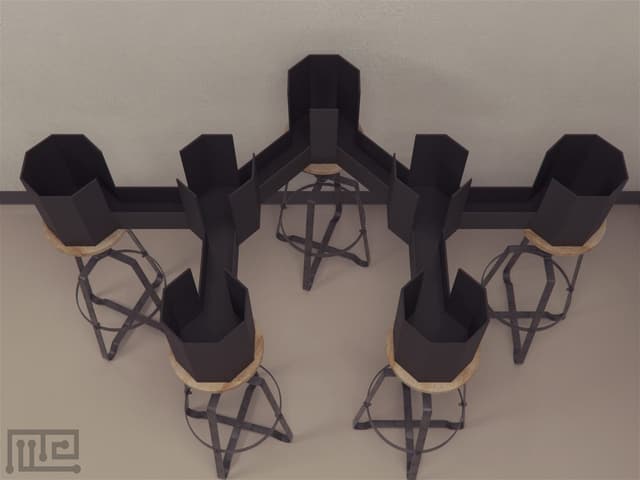
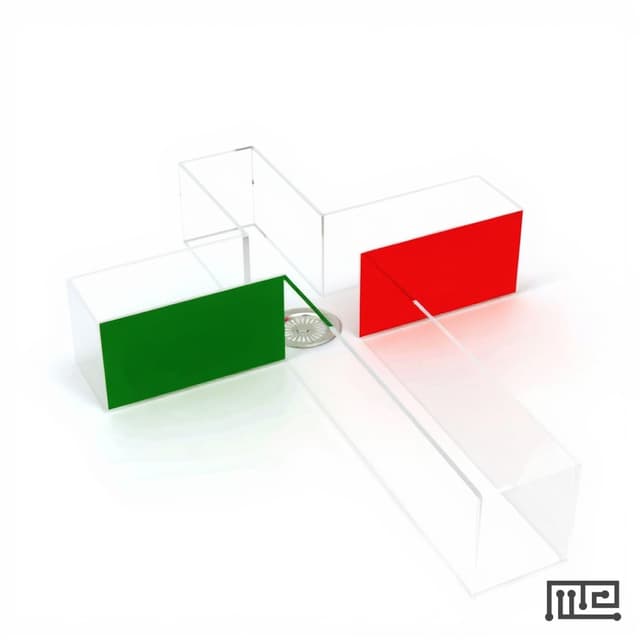
The Repeated Acquisition and Performance Chamber (RAPC) is a specialized behavioral testing apparatus designed to assess both learning acquisition and performance retention in rodents. This chamber features five discrete equidistant compartments connected by three sets of one-way doors, creating a sequential navigation paradigm that allows researchers to evaluate cognitive flexibility, discrimination learning, and reversal learning protocols. The system alternates between learning and performance components across sessions, enabling comprehensive assessment of both initial acquisition and established performance under different auditory stimulation conditions.
Available in both manual and automated configurations for mice and rats, the RAPC provides a standardized environment for investigating motor learning, sequential learning paradigms, and cognitive behavioral phenotyping. The automated version integrates with Conduct software for precise experimental control and real-time data capture, making it particularly valuable for studies requiring consistent protocol execution and detailed behavioral tracking across multiple sessions and trials.
How It Works
The RAPC operates on the principle of sequential learning paradigms where animals navigate through a linear series of compartments using one-way doors to reach a goal location with positive reinforcement. The chamber's design creates a unidirectional pathway that requires subjects to learn and remember specific navigation sequences, with different auditory stimuli providing contextual cues for learning versus performance components.
During experimental sessions, subjects begin in the start box and must traverse through the compartments following the established sequence to reach the saccharin reinforcement at the goal box. The alternating session structure allows researchers to distinguish between initial learning acquisition (where new sequences are established) and performance retention (where previously learned sequences are executed), providing distinct measures of cognitive flexibility and procedural memory.
The automated version employs sensor tracking at each one-way door to capture precise timing and movement data, enabling quantitative analysis of navigation efficiency, error patterns, and learning curves across the three trials per session and multiple sessions per component structure.
Features & Benefits
Five discrete equidistant compartments
Provides standardized spatial intervals for consistent sequential learning assessment across subjects and sessions
Three sets of one-way doors per chamber
Creates unidirectional navigation pathway enabling precise control of movement sequences and prevention of backtracking behaviors
Alternating learning and performance components
Distinguishes between acquisition of new sequences and execution of established behaviors for comprehensive cognitive assessment
Automated sensor tracking (automated version)
Captures real-time door crossing events with precise timing data for quantitative analysis of navigation efficiency and error patterns
Species-specific chamber dimensions
Optimizes spatial parameters for mouse (90×40×30cm) and rat (135×44×40cm) studies ensuring appropriate scale for natural movement patterns
Conduct software integration
Enables standardized protocol execution with automated session control and comprehensive data logging for experimental consistency
Positive reinforcement with saccharin
Provides consistent motivation without confounding effects of food restriction or aversive stimuli on learning performance
Different auditory stimulation per component
Establishes distinct contextual cues for learning versus performance phases enabling discrimination between cognitive processes
Sizes by model
| Measurement | Mouse Manual | Rat Manual |
|---|---|---|
| Size | Chamber dimensions: 90cm L x 40cm W x 30cm H; Doors: 6cm L x 6cm H; Start box: 14cm L x 10cm W x 10H | Chamber dimensions: 135cm L x 44cm W x 40cm H; Doors: 12cm L x 12cm H; Start box: 20cm L x 12cm W x 15H |
- 5 discrete equidistant compartments
- 3 sets of one-way doors per chamber
- Mouse Manual: Chamber dimensions: 90cm L x 40cm W x 30cm H
- Mouse Manual: Doors: 6cm L x 6cm H
- Mouse Manual: Start box: 14cm L x 10cm W x 10H
- Rat Manual: Chamber dimensions: 135cm L x 44cm W x 40cm H
- Rat Manual: Doors: 12cm L x 12cm H
- Rat Manual: Start box: 20cm L x 12cm W x 15H
Chamber Compartments
- 5 equidistant compartments
Panel Configuration
- 4 panels with 3 one-way doors each
Reinforcement Type
- positive reinforcement (saccharin)
Session Structure
- alternating learning and performance components
Trials per Session
- 3 trials
Sessions per Component
- 3 sessions
Auditory Stimulation
- different for each component
Chamber Type
- rectangular with start box and goal box at opposite ends
Behavioral Construct
- Learning acquisition
- Performance retention
- Cognitive flexibility
- Sequential learning
- Reversal learning
- Procedural memory
- Navigation behavior
- Motor learning
Automation Level
- semi-automated
Material
- Acrylic
Species
- Mouse
- Rat
Dimensions
- 135 cm x 45 cm x 40 cm
Research Domain
- Aging Research
- Anxiety and Depression
- Behavioral Pharmacology
- Learning and Memory
- Motor Function
- Neurodegeneration
- Neuroscience
Compatible Tracking Software
- ConductVision
Shipping weight
- 6.06 lb
Shipping box
- L: 65.0 cm
- W: 36.0 cm
- H: 27.0 cm
| Feature | This Product | Typical Alternative | Advantage |
|---|---|---|---|
| Chamber Compartments | 5 discrete equidistant compartments with linear arrangement | Traditional operant chambers typically offer 1-2 chambers without spatial navigation components | Enables assessment of sequential learning and spatial memory in addition to basic operant responses |
| Door Configuration | 3 sets of one-way doors creating unidirectional pathway | Standard chambers often use retractable levers or simple access ports | Prevents backtracking behaviors and ensures consistent navigation sequence execution |
| Session Structure | Alternating learning and performance components with 3 trials per session | Basic operant systems typically offer single-phase protocols | Distinguishes between acquisition and retention processes for comprehensive cognitive assessment |
| Species Configurations | Dedicated mouse and rat chamber dimensions with appropriate door sizing | Some systems use adjustable or one-size configurations | Optimizes spatial parameters for natural movement patterns and species-appropriate navigation behaviors |
| Reinforcement Type | Positive reinforcement using saccharin at goal location | Many systems rely on food pellets requiring dietary restriction | Provides consistent motivation without confounding metabolic or hunger state variables |
| Real-time Tracking | Sensor-equipped doors with Conduct software integration for automated data capture | Entry-level systems often require manual observation or basic event logging | Captures precise timing and sequence data for quantitative analysis of navigation efficiency |
The RAPC offers a specialized approach to behavioral assessment through its five-compartment linear design with one-way doors, providing unique capabilities for sequential learning and cognitive flexibility studies. The alternating learning-performance structure and species-specific configurations make it particularly suitable for comprehensive behavioral phenotyping in neuroscience research.
| Model | SKU | Listed price | Status | Shipping box |
|---|---|---|---|---|
| Rat Automated | CS-958341 | $8,990.00 | Available | 65.0 x 36.0 x 27.0 cm |
| Rat Manual | CS-958341 | $2,590.00 | Available | 135 x 44 x 40 cm |
| Mouse Automated | CS-958341 | $7,990.00 | Available | 65.0 x 36.0 x 27.0 cm |
| Mouse Manual | CS-958341 | $2,290.00 | Available | 90 x 40 x 30 cm |
Neuroscience
Evaluating cognitive flexibility and reversal learning in animal models of neurological disorders by measuring adaptation to changing reward contingencies across sequential compartments.
Behavioral Pharmacology
Assessing drug effects on learning acquisition versus established performance by comparing behavioral outcomes during learning and performance components of the protocol.
Learning and Memory
Investigating the neural mechanisms underlying procedural learning and memory consolidation through repeated acquisition paradigms with positive reinforcement schedules.
Aging Research
Characterizing age-related changes in cognitive flexibility and learning efficiency by comparing acquisition rates and performance stability across different age groups.
Neurodegeneration
Monitoring progressive cognitive decline in disease models by tracking changes in learning acquisition speed and performance retention over time.
Anxiety and Depression
Examining how affective disorders influence learning motivation and cognitive performance through sequential navigation tasks with saccharin reinforcement.
Practical Tips
Calibration
Verify sensor detection accuracy at each one-way door using test objects before beginning experimental sessions.
Why: Ensures reliable data capture and prevents loss of critical behavioral timing information during protocols.
Maintenance
Clean door tracks weekly and inspect one-way door mechanisms for smooth operation to prevent navigation impediments.
Why: Maintains consistent chamber function and prevents mechanical issues that could confound behavioral measurements.
Best Practices
Conduct habituation sessions before experimental protocols to familiarize subjects with chamber environment and reduce novelty effects.
Why: Establishes baseline navigation behavior and improves reliability of learning acquisition measurements.
Data Quality
Monitor initial trial completion times to identify subjects requiring extended habituation before beginning formal protocols.
Why: Ensures subjects are motivated to complete navigation sequences and prevents data exclusion due to incomplete trials.
Best Practices
Maintain consistent auditory stimulation timing and intensity across learning and performance components.
Why: Provides reliable contextual cues that enable subjects to discriminate between different protocol phases.
Troubleshooting
If subjects show reluctance to traverse doors, verify saccharin reinforcement delivery and check for door obstruction.
Why: Maintains motivation and ensures proper navigation sequence completion for valid behavioral assessment.
Safety
Ensure door openings are appropriately sized for target species to prevent injury during navigation.
Why: Protects animal welfare while maintaining proper experimental conditions for behavioral testing.
Setup Guide
Unpack and Inspect Chamber
Remove the RAPC from packaging and inspect all acrylic components, one-way doors, and sensor assemblies (automated version) for damage during shipping.
Assemble Chamber Structure
Connect the five compartments ensuring proper alignment of one-way doors and verify smooth door operation throughout the linear pathway.
Configure Start and Goal Boxes
Position the start box at one end and establish the goal box location at the opposite end, ensuring proper access for subject placement and reinforcement delivery.
Install Sensor System (Automated)
Connect door sensors to the control interface and verify sensor detection accuracy for each one-way door crossing event.
Setup Software Integration
Launch Conduct software, configure chamber parameters, and establish data logging protocols for the alternating learning and performance components.
Calibrate Reinforcement System
Test saccharin delivery mechanism and verify appropriate reinforcement timing and quantity for the target species.
Conduct Habituation Session
Run initial habituation trials to familiarize subjects with chamber environment and verify all systems function properly before experimental protocols.
What’s in the Box
- RAPC chamber with five compartments (typical)
- Three sets of one-way doors (typical)
- Start box assembly (typical)
- Door sensor system (automated version) (typical)
- Conduct software license (automated version) (typical)
- User manual and setup guide (typical)
- Calibration tools and accessories (typical)
Warranty
ConductScience provides a standard one-year manufacturer warranty covering defects in materials and workmanship, with technical support for setup, calibration, and troubleshooting assistance.
Compliance
IACUC Guidelines for Laboratory Animal UseCommonly used in animal research facilities subject to institutional oversight for behavioral testing protocols and animal welfare standards.
NIH Guide for Care and Use of Laboratory AnimalsSupports behavioral research workflows governed by federal guidelines for humane animal experimentation and environmental enrichment requirements.
Q
What is the difference between learning and performance components in the RAPC protocol?
A
Learning components involve acquisition of new navigation sequences with novel contingencies, while performance components assess execution of previously established sequences. Both use different auditory stimulation to provide distinct contextual cues.
Q
How does the sensor tracking system capture behavioral data in the automated version?
A
Each one-way door is equipped with sensors that detect subject entry and generate switch closure events, capturing door crossing timing and sequence data displayed in real-time through Conduct software integration.
Q
Can the chamber be used for both acquisition and reversal learning protocols?
A
Yes, the alternating session structure and one-way door design specifically enable both initial acquisition studies and reversal learning paradigms by modifying reinforcement contingencies between components.
Q
What type of reinforcement schedule is recommended for RAPC studies?
A
The system uses positive reinforcement with saccharin delivery at the goal location, providing consistent motivation without requiring food restriction or aversive stimuli that could confound learning measures.
Q
How many animals can be tested simultaneously in a single chamber?
A
The RAPC is designed for individual subject testing with one animal per chamber session to ensure accurate behavioral tracking and eliminate social interaction variables.
Q
What maintenance is required for the one-way door mechanisms?
A
Regular inspection of door movement smoothness and sensor calibration (automated version) is recommended, along with periodic cleaning of door tracks to prevent debris interference with navigation.
Q
Can the chamber dimensions be modified for different research applications?
A
The chamber provides fixed dimensions optimized for each species, but the five-compartment structure and door spacing represent standardized parameters for consistent cross-study comparisons.
Have a question about this product?
Track rodents with ConductVision
ConductVision is our video-tracking software. Record your sessions on video, and it scores standard rodent tests, such as those listed below.
Examples of tests it scores
To check whether ConductVision scores your protocol in this apparatus, ask in your quote request.
Ask a question
Have a question? Just ask.
Send it over and we'll email you a personalized answer — no call, no scheduling.
Personalized email reply
Usually within one business day
Helpful answers published here
Prefer to talk it through?

Repeated Acquisition and Performance Chamber
$8,990.00
Added to quoteView Quote