Slime Mold Y-Maze
Y-shaped behavioral maze for studying spatial navigation and decision-making in slime molds and other simple organisms without centralized nervous systems.

Louise Corscadden, PhD
Director of Science · ConductScience
Ask Louise about Slime Mold Y-Maze fit, setup, configuration, or quote prep.
Already working with us? Sign in to connect this with My Scientist.
Key Specifications
Full details →- Model fit
- Configured during quote
- SKU family
- Assigned during quote
- Shipping box
- 46.5 x 44.0 x 35.5 cm
- Ordering
- Online checkout and quote request available
- Category
- Behavioral Mazes
- Build notes
- Confirm accessories, station layout, and support needs before purchase
The Slime Mold Y-Maze is a specialized behavioral testing apparatus designed for investigating spatial navigation, decision-making, and learning behaviors in Physarum polycephalum and other slime mold species. This Y-shaped maze provides a controlled experimental environment for studying non-neuronal cognition and primitive intelligence in these unicellular organisms.
The maze enables researchers to examine how slime molds navigate spatial choices, respond to environmental gradients, and exhibit adaptive behaviors without a centralized nervous system. The apparatus supports investigations into network-based decision-making, foraging strategies, and information processing in simple biological systems, contributing to our understanding of fundamental cognitive processes across different forms of life.
How It Works
The Y-maze functions by presenting the test organism with a binary choice point where it must select between two identical pathways. The maze design exploits the natural exploratory behavior of slime molds, which extend pseudopodia to sample their environment and make navigation decisions based on chemical gradients, nutrient availability, or other environmental cues.
During testing, researchers can establish different conditions in each arm of the Y-maze, such as varying nutrient concentrations, light levels, or chemical gradients. The slime mold's movement patterns, arm selection preferences, and decision-making latency provide quantitative measures of behavioral responses. The organism's plasmodium naturally flows through the maze channels, allowing researchers to track movement dynamics and choice behaviors over time.
Data collection typically involves recording the initial arm choice, time spent in each arm, and overall exploration patterns. Advanced studies may incorporate time-lapse imaging to analyze the complete decision-making process and network dynamics of the organism as it navigates the spatial choice.
Features & Benefits
Compatible Tracking Software
- ConductVision
Shipping weight
- 44.02 lb
Shipping box
- L: 46.5 cm
- W: 44.0 cm
- H: 35.5 cm
| Feature | This Product | Typical Alternative | Advantage |
|---|---|---|---|
| Maze Configuration | Y-shaped binary choice design | Linear or T-maze configurations with different choice architectures | Simplified decision paradigm reduces confounding variables while maintaining robust behavioral discrimination. |
| Target Organisms | Optimized for slime molds and similar organisms | General-purpose designs for various species | Specialized dimensions and surfaces accommodate unique movement patterns of non-neuronal organisms. |
| Channel Design | Smooth-walled channels for plasmodium flow | Standard maze walls designed primarily for locomoting animals | Enables natural slime mold movement without physical impediments affecting behavior. |
| Experimental Applications | Supports gradient and choice preference studies | Limited to basic navigation or memory testing | Versatile design accommodates multiple experimental paradigms in primitive cognition research. |
This Y-maze provides specialized features for slime mold behavioral research with optimized channel design and binary choice architecture. The apparatus supports diverse experimental protocols while maintaining the simplicity needed for clear behavioral discrimination in non-neuronal organisms.
Practical Tips
Allow slime molds to acclimate in the maze environment for 30-60 minutes before beginning formal data collection.
Why: Initial exploration reduces novelty effects that could confound choice behavior measurements.
Thoroughly clean and dry all maze surfaces between experiments using laboratory-grade disinfectants.
Why: Residual chemical traces from previous experiments can create unintended gradients affecting organism behavior.
Record environmental conditions (temperature, humidity, lighting) throughout each experimental session.
Why: Environmental fluctuations can significantly influence slime mold behavior and movement patterns.
If organisms avoid entering the maze, verify that channel surfaces are properly hydrated and free of air bubbles.
Why: Dry surfaces or air barriers can prevent natural plasmodium flow and exploration behavior.
Use consistent lighting conditions and minimize vibrations during behavioral testing sessions.
Why: Slime molds are sensitive to environmental disturbances that can alter natural navigation responses.
Handle all biological specimens according to institutional biosafety protocols and dispose of materials properly.
Why: Maintains laboratory safety standards and prevents contamination of experimental environments.
Setup Guide
What’s in the Box
- Y-maze main unit (typical)
- Removable channel inserts (typical)
- Cleaning protocols documentation (typical)
- User manual with setup instructions (typical)
Warranty
ConductScience provides a standard one-year manufacturer warranty covering defects in materials and workmanship, along with technical support for proper usage and maintenance procedures.
Compliance
References
Background reading relevant to this product:
Protocol and background
Introduction
The traditional understanding of learning implies that a nervous system is required for an animal to be able to learn. However, numerous studies have shown learning as well as efficient decision-making capabilities in the nonneuronal, reactive organism, the slime mold (Reid, Garnier, Beekman, & Latty, 2015). The Slime Mold Y-maze allows a simple, yet complex environment to assess the learning capabilities of the organism. The maze provides a two-choice set-up that narrows the decision-making process for the slime mold, thereby decreasing the number of parameters involved during data analysis. The maze can be adapted to evaluate behaviors such as foraging under different conditions (such as light versus dark or high versus low-quality food). Other investigatory areas can include observation of preference behaviors in plasmodia that exhibit fusing with other genetically similar and compatible plasmodia.
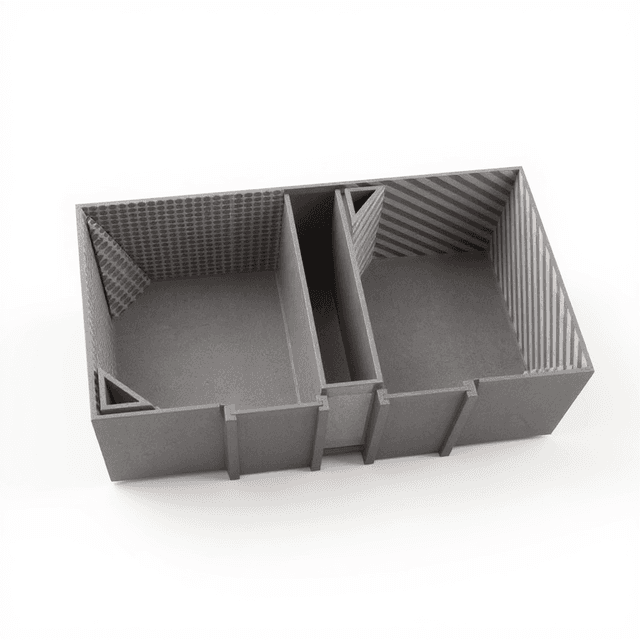
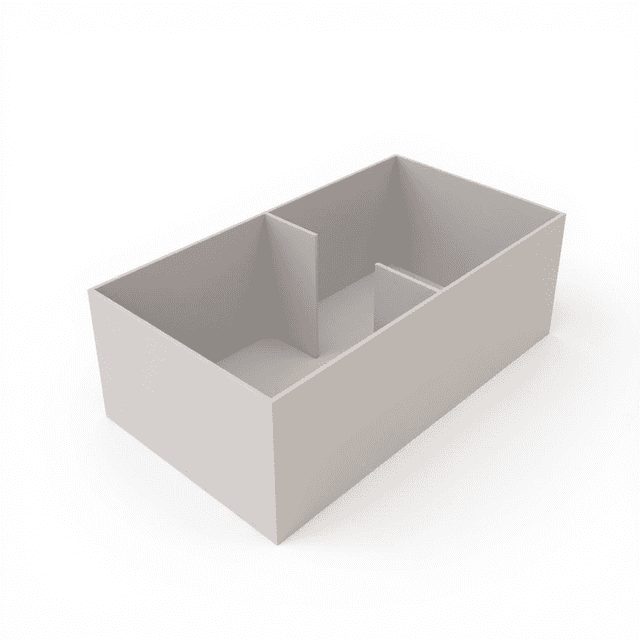
The Slime Mold Y-maze consists of a start arena that allows entry to two choice arms. Each choice arm is equipped with a goal end that can be used for placing rewards or stimuli.
Specifications
The Slime Mold Y Maze includes:
- Peri dish
- 1 cm × 1 cm start area
- U-shaped maze with two choice arms of 4cm in length and 1.2cm in width
Apparatus and Equipment
The Slime Mold Y-maze is composed o a start area that allows leads to two choice arms. Each choice arm end is used as goals that can be used to place food. The maze uses 1% agar substrate.
Data Analysis
The following parameters can be observed in the Slime Mold Y-maze,
- Distance covered
- Percentage of plasmodia that reach the goal
- Selection of the correct arm
- Selection of the incorrect arm
- Speed with which the goal was reached
- Split decisions (both goals reached by the organism at the same time)
- Time taken to reach the goal
- Time spent in the start area
Training Protocol
Ensure that substrates used are not contaminated with unintended stimuli. Experimental conditions should be maintained throughout the task to prevent unintended influences. Task observations can be assisted by the use of tracking and recording system such as the Noldus EthoVision XT.
Avoidance Response Task (Extracellular Slime vs. Blank Trail)
Obtain extracellular slime by allowing a culture of slime mold, from the same stock being tested, to migrate (8 to 12 hours) across a 1% agar surface. Place the agar with the extracellular slime trail in one of the Y-Maze arms. Place blank agar in the other arm. Reward the ends of each arm with food such as oats. Place 3 cm2 of plasmodial in the start area and begin observation. Alternate the arm containing the slime trail between replicates.
Protocols can vary depending on the investigatory aims.
Evaluation of externalized spatial memory-based navigation in slime mold
Reid, Latty, Dussutour, and Beekman (2012) evaluated the decision-making behaviors of the physarum polycephalum plasmodia when encountered with a path that exhibited the previous exploration versus a blank path. The plasmodia were placed in the start area of the Y-Maze with both choice arms leading to identical food sources (10% wt/vol powdered oat-agar) at their ends. One of the choice arms was trailed with extracellular slime obtained from conspecifics while the other consisted of only plain agar. Of the 40 plasmodia tested, 39 chose the blank path suggesting a strong preference for unexplored pathways. However, when both paths were covered with extracellular slime, plasmodia showed no preference for either path. Additionally, no left or right bias was observed when the organism was tested in agar only set-up. Based on the observations, it was concluded that the presence of extracellular slime trail influences the decision of the plasmodia only when a choice is available. Further, the behaviors also suggested that the plasmodia are able to sense and use the presence of the extracellular slime as an externalized spatial memory system to differentiate between explored and unexplored areas.
Strengths and Limitations
The Slime Mold Y-maze offers a simple design that serves as a complex test environment for slime mold. Behaviors such as decision-making and problem-solving can be effectively assessed using the Y-Maze. The two-choice set-up simplifies the analysis of performances; however, a limited number of choices may not be suitable for all learning-based experiments. The maze can be adapted to for exploration of other experimental aims such as preference testing and effects of different path compositions or environments on slime mold behavior.
The slime mold behaviors can be influenced by the presence of unintended chemical cues in the maze. Slime mold displays an averseness for bright lights, and hence appropriate lighting set-up should be used during experimentation.
Summary
The Slime Mold Y-maze is used in the assessment of problem-solving and decision-making behaviors of slime mold.
- The Y-Maze serves as a complex environment for slime mold despite its simplistic design.
- Slime mold display avoidance behaviors towards cues such as extracellular slime and bright lights, which can be used to manipulate the Y-maze environment during the task.
- The Slime Mold Y-maze can easily be adapted for different experimental protocols.
- The presence of unintended chemical cues within the maze can affect slime mold performances.
References
Reid, C. R., Garnier, S., Beekman, M., & Latty, T. (2015). Information integration and multiattribute decision making in non-neuronal organisms. Animal Behaviour, 100, 44–50. doi:10.1016/j.anbehav.2014.11.010
Reid, C. R., Latty, T., Dussutour, A., & Beekman, M. (2012). Slime mold uses an externalized spatial “memory” to navigate in complex environments. Proceedings of the National Academy of Sciences, 109(43), 17490–17494. doi:10.1073/pnas.1215037109
Are you an academic scientist and creator?
Learn how your lab can tech transfer this and similar devices from your lab to industry.
From the Maze Engineers documentation for this apparatus.
What organisms can be tested in this Y-maze besides Physarum polycephalum?
The maze can accommodate various slime mold species and other motile microorganisms, though channel dimensions should be verified for compatibility with specific organism sizes and movement patterns.
How do I establish chemical gradients within the maze arms?
Gradients can be created by placing different nutrient sources, chemical attractants, or repellents at the end of each arm, allowing natural diffusion to establish concentration gradients throughout the channels.
What is the typical duration for slime mold choice experiments?
Experiments typically run 2-24 hours depending on the research question, with initial choice behaviors observable within minutes to hours of organism placement.
How should the maze be sterilized between experiments?
Use appropriate laboratory disinfectants followed by thorough rinsing and drying; specific sterilization protocols depend on the organisms being studied and contamination concerns.
Can this maze be used for learning studies with repeated trials?
Yes, the maze supports repeated testing protocols to investigate learning-like behaviors, though organism recovery time and maze cleaning between trials must be considered.
What environmental conditions are critical for slime mold behavior testing?
Maintain stable temperature (typically 20-25°C), high humidity (>90%), and minimize vibrations and light fluctuations that could affect natural behavior patterns.
How do I quantify and analyze choice behavior data?
Common metrics include initial arm choice, time to decision, percentage of time in each arm, and movement velocity; video tracking software can automate data collection.
Have a question about this product?
Have a question? Just ask.
Send it over and we'll email you a personalized answer — no call, no scheduling.
Prefer to talk it through?