Social/Sexual Appetitive Behavior Test
Behavioral testing apparatus for measuring social and sexual appetitive behaviors in laboratory rats.
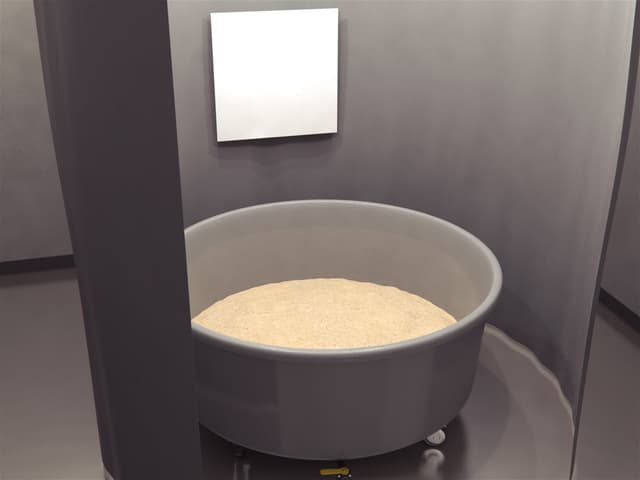
Features a 85x35x50cm dark gray acrylic (Plexiglas) arena with wire mesh stimulus cage, removable clear acrylic partition, and pin-studded obstacle board for effort-based and conflict-based paradigms.

Louise Corscadden, PhD
Director of Science · ConductScience
Ask Louise about Social/Sexual Appetitive Behavior Test fit, setup, configuration, or quote prep.
Already working with us? Sign in to connect this with My Scientist.
Key Specifications
Full details →- Model fit
- Mouse, Rat
- SKU family
- CS-958212
- Shipping box
- 85.0 x 35.0 x 50.0 cm
- Ordering
- Online checkout and quote request available
- Category
- Behavioral Mazes
- Build notes
- Confirm accessories, station layout, and support needs before purchase
Apparatus Overview
Large open-top rectangular behavioral testing chamber made of dark gray Plexiglas. The chamber measures 85 cm long by 35 cm wide with 50 cm tall walls. A small wire mesh stimulus cage (15 cm deep x 25 cm wide x 25 cm tall) is positioned inside at one end of the chamber, holding an incentive animal (either a male rat for social testing or an estrous female for sexual testing). The wire mesh allows visual, olfactory, and auditory contact while preventing physical interaction. An incentive zone is marked around the stimulus cage. For effort-based testing, a clear acrylic partition spans the full width of the chamber between the open field area and the stimulus cage, with height progressively increased from 6 to 30 cm. For conflict-based testing, the partition is replaced with a board studded with metal pins, height adjustable from 0 to 29 cm.
Specifications
| Overall Dimensions | 85 x 35 x 50 cm (L x W x H) |
|---|---|
| Primary Material | Dark Gray Acrylic (Plexiglas) |
| Species | Rat |
| Source Paper | Bai Y, Belin D, Zheng X, Liu Z, Zhang Y (2017). Acute stress worsens the deficits in appetitive behaviors for social and sexual stimuli displayed by rats after long-term withdrawal from morphine. Psychopharmacology. DOI: 10.1007/s00213-017-4571-3 |
Components
| Component | Type | Dimensions (cm) | Material | Details |
|---|---|---|---|---|
| Main Chamber | Box | 85 x 35 x 50 | Black Acrylic | Open-top rectangular arena, dark gray/black Plexiglas walls and floor |
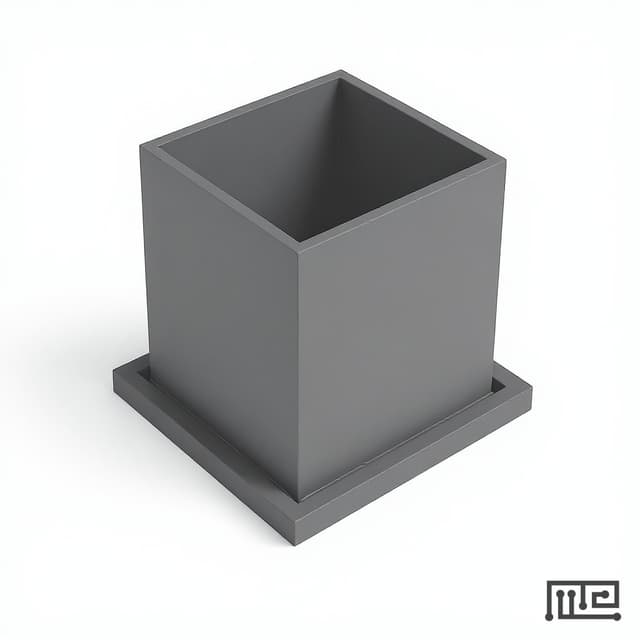
| Stimulus Cage | Wire Cage | 15 x 25 x 25 | Wire Mesh | Stainless steel wire mesh cage at far end, holds incentive animal (male rat or estrous female). Wire bars allow visual, olfactory, and auditory contact but prevent physical interaction. |
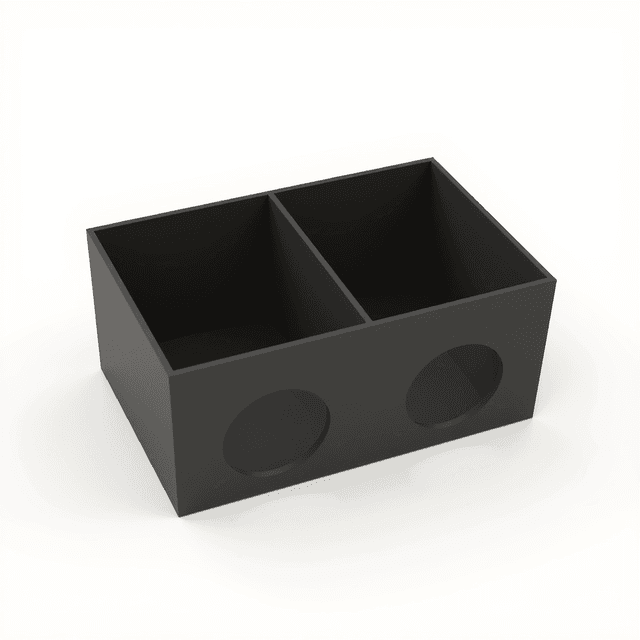
| Partition | Partition | 0.5 x 35 x 20 | Clear Acrylic | Removable clear acrylic partition spanning full chamber width. Height adjustable from 6-30 cm for effort-based testing. Rat must climb over to reach stimulus cage. |
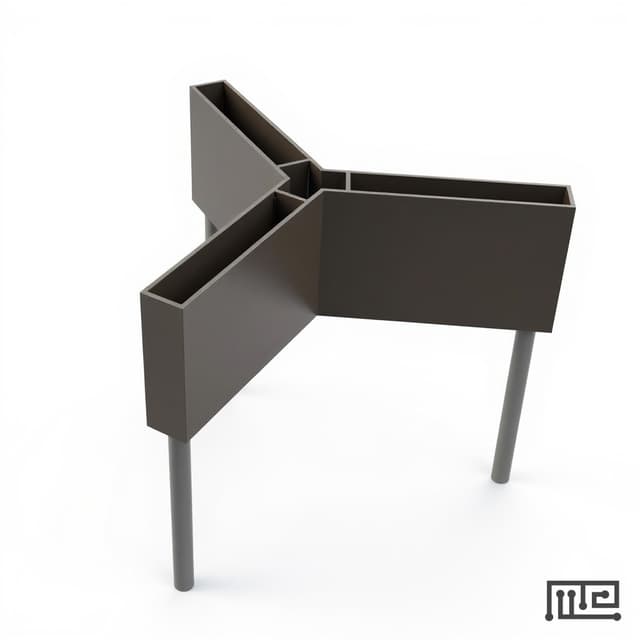
| Obstacle With Pins | Obstacle | 1.0 x 35 x 15 | Black Acrylic | Board studded with metal pins for conflict-based testing. Height adjustable 0-29 cm. Creates approach-avoidance conflict — rat must surmount painful obstacle to reach stimulus. |
Test Configurations
- Simple appetitive behavior test: Subject rat freely approaches and investigates incentive animal in stimulus cage. No barriers.
- Effort-based appetitive behavior test: Clear acrylic partition placed between subject and stimulus cage. Height progressively increased (6-30 cm). Rat must climb over.
- Conflict-based appetitive behavior test: Pin-studded obstacle placed between subject and stimulus cage. Height progressively increased (0-29 cm). Creates approach-avoidance conflict.
How It Works
The Social/Sexual Appetitive Behavior Test operates on the principle that appetitive behaviors represent the initial motivational phase of behavioral sequences, distinct from consummatory behaviors. The apparatus typically consists of multiple chambers or zones that allow the test subject to demonstrate preference through spatial positioning and time allocation. The system measures approach behaviors, proximity maintenance, and choice patterns when presented with social or sexual stimuli.
During testing, the subject's movement patterns, zone preferences, and interaction initiation are recorded and analyzed. The apparatus design allows for controlled presentation of stimulus animals or objects while maintaining standardized environmental conditions. Behavioral parameters such as approach latency, time spent in proximity to stimuli, and frequency of approach attempts provide quantitative measures of appetitive motivation.
The testing protocol typically involves habituation phases followed by preference testing with various stimulus conditions, allowing researchers to isolate specific motivational components and assess the relative strength of different appetitive drives under controlled experimental conditions.
Features & Benefits
Behavioral Construct
- Social Behavior
- Sexual Behavior
- Approach Behavior
- Preference
- Motivation
Automation Level
- manual
Research Domain
- Addiction Research
- Aging Research
- Anxiety and Depression
- Behavioral Pharmacology
- Neuroscience
- Social Behavior
Species
- Mouse
- Rat
Compatible Tracking Software
- ConductVision
Shipping weight
- 6.06 lb
Shipping box
- L: 85.0 cm
- W: 35.0 cm
- H: 50.0 cm
| Feature | This Product | Typical Alternative | Advantage |
|---|---|---|---|
| Testing Environment | Multi-chamber design for controlled choice testing | Single-chamber observation setups with limited stimulus control | Enables direct measurement of preference through spatial positioning and choice behavior. |
| Behavioral Metrics | Quantitative measurement of approach behaviors and time allocation | Subjective behavioral scoring methods | Provides objective, reproducible measurements suitable for statistical analysis. |
| Experimental Flexibility | Accommodates various social and sexual behavior testing paradigms | Purpose-built apparatus for single test types | Allows researchers to conduct multiple types of appetitive behavior assessments with one system. |
| Data Collection | Compatible with video tracking systems for automated analysis | Manual observation and recording methods | Reduces observer bias and enables detailed analysis of movement patterns and behavioral sequences. |
This apparatus provides a standardized platform for measuring appetitive behaviors with quantitative precision and experimental flexibility. The controlled environment enables reliable assessment of social and sexual motivation across various research paradigms.
Practical Tips
Conduct testing at consistent times relative to the animal's light cycle, particularly during active periods for most reliable behavioral expression.
Why: Circadian rhythms significantly influence social and sexual behaviors, affecting the validity and reproducibility of measurements.
Validate behavioral tracking zones and measurement parameters using known reference points before beginning data collection.
Why: Accurate zone definition is critical for reliable measurement of spatial preferences and time allocation patterns.
Clean apparatus thoroughly between subjects using appropriate disinfectants to eliminate olfactory cues from previous animals.
Why: Residual scents can influence approach behaviors and confound measurements of social and sexual preferences.
Monitor stimulus animal behavior and health status throughout testing sessions to ensure consistent stimulus presentation.
Why: Variations in stimulus animal behavior can affect the test subject's responses and compromise data interpretation.
If subjects show no zone preferences, extend habituation periods and verify that stimulus conditions are sufficiently distinct.
Why: Inadequate habituation or insufficient stimulus salience can result in random spatial distribution rather than meaningful preference behavior.
Ensure proper ventilation and monitor both test and stimulus animals for signs of stress during testing procedures.
Why: Adequate air circulation and animal welfare monitoring are essential for ethical conduct and valid behavioral measurements.
Include appropriate control conditions such as empty chambers or neutral objects to validate preference measurements.
Why: Control conditions help distinguish specific appetitive responses from general exploration or novelty-seeking behaviors.
Setup Guide
What’s in the Box
- Testing apparatus with chambers (typical)
- Assembly hardware and fasteners (typical)
- User manual and protocol guide (typical)
- Cleaning and maintenance supplies (typical)
Warranty
ConductScience provides a standard one-year manufacturer warranty covering defects in materials and workmanship, along with technical support for setup and operational guidance.
Compliance
What behavioral parameters can be measured with this apparatus?
The system measures approach latencies, time spent in proximity to stimuli, zone preferences, interaction frequency, and spatial distribution patterns to quantify appetitive behaviors and motivational states.
How long should habituation periods be before testing?
Habituation protocols typically require multiple sessions over 2-3 days to reduce novelty effects, with specific timing dependent on species and experimental design requirements.
Can this apparatus be used for both social and sexual behavior testing?
Yes, the flexible design accommodates various stimulus presentation paradigms including social preference tests, sexual motivation assessments, and comparative choice experiments.
What video recording setup is recommended for data collection?
Overhead camera positioning provides optimal viewing angles for tracking movement patterns, with additional side cameras if detailed interaction analysis is required.
How should stimulus animals be prepared and presented?
Stimulus animals should be habituated to containment conditions and presented consistently across sessions, with appropriate controls for stimulus animal behavior and health status.
What environmental factors need to be controlled during testing?
Lighting levels, temperature, humidity, and background noise should be maintained consistently, with testing conducted at appropriate times relative to the species' circadian rhythm.
How is data typically analyzed from these behavioral tests?
Data analysis involves calculating preference indices, comparing time allocations between zones, analyzing approach latencies, and using appropriate statistical methods for repeated measures designs.
Have a question about this product?
Have a question? Just ask.
Send it over and we'll email you a personalized answer — no call, no scheduling.
Prefer to talk it through?
Accessories
Enhance your setup with compatible accessories

Frequently Bought Together