Songbird Y-Maze
Three-arm behavioral maze for assessing spatial learning, memory, and decision-making in songbirds and other avian species through controlled choice testing protocols.

Louise Corscadden, PhD
Director of Science · ConductScience
Ask Louise about Songbird Y-Maze fit, setup, configuration, or quote prep.
Already working with us? Sign in to connect this with My Scientist.
Key Specifications
Full details →- Model fit
- Bird
- SKU family
- CS-958161
- Shipping box
- 65.0 x 36.0 x 27.0 cm
- Ordering
- Online checkout and quote request available
- Category
- Behavioral Mazes
- Build notes
- Confirm accessories, station layout, and support needs before purchase
The Songbird Y-Maze is a behavioral testing apparatus designed for assessing spatial learning, memory, and decision-making processes in avian subjects. This three-arm maze provides researchers with a controlled environment to evaluate cognitive function, spatial navigation abilities, and choice behavior in songbirds and other bird species. The Y-shaped configuration allows for spontaneous alternation testing, spatial discrimination tasks, and memory assessment protocols.
The apparatus supports various experimental paradigms including novel object recognition, spatial working memory evaluation, and cognitive flexibility testing. Researchers can implement both rewarded and non-rewarded protocols to assess different aspects of avian cognition and behavior. The maze design accommodates the natural movement patterns and behavioral characteristics of songbird species while providing standardized testing conditions for reproducible results.
How It Works
The Y-Maze operates on the principle of spatial choice behavior, utilizing the natural tendency of birds to explore novel environments and avoid recently visited locations. The three-arm configuration creates a decision point where subjects must choose between available pathways, allowing researchers to measure spatial working memory through spontaneous alternation behavior. This behavioral response relies on the subject's ability to remember previously visited locations and make decisions based on spatial memory.
During testing, birds are placed in the start arm and allowed to freely explore the maze. Researchers record arm entries, sequence of choices, and time spent in each arm to quantify cognitive performance. The maze design eliminates external spatial cues, forcing subjects to rely on internal spatial representations and working memory processes. Different experimental protocols can be implemented by modifying reward placement, introducing visual cues, or altering the testing environment to assess various aspects of avian cognition.
Features & Benefits
Add-ons and modifications
| Add-on | Price | Details |
|---|---|---|
| Songbird Y-Maze | $990 | Length of branching arms: 50cm Length of start arm: 50cm Length of start box: 14cm Width of start box: 12cm |
Add any of these to your quote request.
Behavioral Construct
- Spatial Learning
- Working Memory
- Decision Making
- Exploratory Behavior
- Cognitive Flexibility
Automation Level
- manual
Research Domain
- Behavioral Pharmacology
- Developmental Biology
- Learning and Memory
- Neurodegeneration
- Neuroscience
Species
- Bird
Compatible Tracking Software
- ConductVision
Shipping weight
- 6.06 lb
Shipping box
- L: 65.0 cm
- W: 36.0 cm
- H: 27.0 cm
| Feature | This Product | Typical Alternative | Advantage |
|---|---|---|---|
| Arm Configuration | Three arms arranged at 120-degree angles | T-mazes offer two-choice options while radial mazes provide 8 or more arms | Provides balanced choice complexity without overwhelming smaller avian species with too many decision options |
| Species Specificity | Designed specifically for songbirds and similar avian species | Many mazes are designed primarily for rodent testing with different dimensional requirements | Optimized dimensions and features accommodate natural avian movement patterns and behavioral characteristics |
| Assembly Design | Modular construction for easy setup and storage | Some models feature fixed construction that requires permanent setup space | Enables flexible laboratory use and efficient storage when not in active use |
| Testing Protocols | Supports both spontaneous alternation and reward-based learning paradigms | Simpler maze designs may be limited to single testing protocols | Allows researchers to implement multiple experimental approaches with the same apparatus |
The Songbird Y-Maze offers species-appropriate testing for avian behavioral research with balanced choice complexity. The modular design supports flexible laboratory use while accommodating multiple experimental protocols for comprehensive cognitive assessment.
Practical Tips
Verify that all three arms are exactly the same length and that angles between arms are precisely 120 degrees to prevent spatial bias.
Why: Unequal arm dimensions can introduce confounding variables that affect choice behavior independent of cognitive processes.
Inspect maze joints and connections regularly to ensure structural integrity and prevent gaps that might trap small birds or create safety hazards.
Why: Loose connections can alter maze geometry and potentially cause injury to test subjects during exploration.
Allow subjects multiple habituation sessions before formal testing to reduce stress-related effects on cognitive performance.
Why: Novel environment stress can interfere with normal spatial memory processes and confound behavioral measurements.
Record ambient temperature and lighting conditions for each testing session as these environmental factors can influence avian activity levels.
Why: Environmental variations can affect locomotor activity and exploration patterns independent of cognitive abilities.
If subjects show strong arm preferences, rotate the maze orientation between sessions to verify that choices are not based on external cues.
Why: Persistent directional bias may indicate the presence of uncontrolled environmental stimuli influencing spatial decisions.
Ensure maze walls are high enough to prevent escape but low enough to allow easy subject retrieval without causing stress or injury.
Why: Appropriate wall height maintains experimental control while ensuring researcher access for safe subject handling.
Setup Guide
What’s in the Box
- Y-Maze main structure with three arms (typical)
- Assembly hardware and connectors (typical)
- Setup and operation manual (typical)
- Cleaning and maintenance guidelines (typical)
Warranty
ConductScience provides a standard one-year manufacturer warranty covering defects in materials and workmanship, with technical support available for setup and operational questions.
Compliance
References
Background reading relevant to this product:
Protocol and background
Introduction
The Bird Y-Maze is based on the conventional rodent Y-Maze and is used to study choice behaviors in birds based on olfactory cues. The apparatus utilizes a closed design that limits the interferences of external stimuli on the task performances.
A wide number of studies in birds have concentrated their efforts on investigating the use of auditory and visual stimuli in species recognition, foraging, and mating (Matyjasiak, 2005). The primary reason for this fixation was the belief that birds lacked the ability to utilize olfactory cues (Balthazart & Taziaux, 2009). Studies have shown birds to use olfactory cues for kin recognition, self/mate recognition, burrow recognition, and sex recognition (Krause et al., 2014; Bonadonna & Sanz-Aguilar, 2012; Whittaker et al., 2011). The binary choice design of the Bird Y-Maze offers a simple approach to the evaluation of odor discrimination in a wide variety of birds under different investigatory protocols.
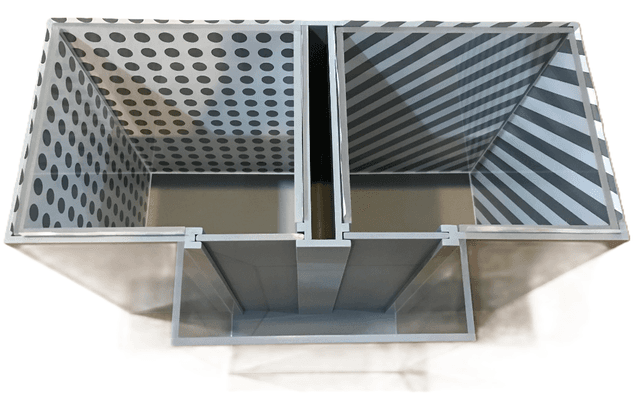
The Bird Y-Maze consists of three symmetrical arms that are equally angled from each other. The two choice arms contain compartments at the ends to hold odor stimuli. Stimuli placement and manipulation during trials is made easy by the trap doors that are accessible from the outside. The compartments also prevent the subjects from having direct access to the source. Appropriately placed cooling fans in the maze allow the spreading of the odor cues through the choice arms to the start arm. The start arm is equipped with traps doors to create a temporary isolation chamber, which can be used to reduce stress in the subject. Simple modifications such as visual and auditory stimuli or changing the ceiling transparency allow the use of the Bird Y-Maze for different investigatory purposes.
Other Y-mazes used in the evaluation of choice behaviors in other animals include the Bat Y-Maze, the Snake Y-Maze, the Ant Y-Maze, and the Zebrafish Y-Maze.
Apparatus and Equipment
The Bird Y-Maze is composed of three symmetrical opaque arms (start arm and 2 choice arms) that measure 60 cm in length, 12 cm in width, and 11 cm in height, with a 120° angle between each arm. The starting arm contains two traps doors that are 30 cm apart to provide a temporary holding compartment for the subject. The two choice arms are also equipped with separate compartments at the ends, which are used to hold the odor source and contain trap doors that are accessible from the outside. A second partition is present 20 cm from each choice arm end, which is equipped with cooling fans that provide controlled airflow to carry the odors in the maze.
Training protocol
Thoroughly wash the maze with methanol after each trial to remove odor residues. Appropriately light the apparatus. A tracking and recording system such as the Noldus Ethovision XT can be used to assist with observations.
Bird Y-Maze task
Place the two different odor stimuli in the odor compartments of the choice arms. Turn on the cooling fans for 60 seconds. Place the subject in the holding compartment at the entrance of the Bird Y-Maze for 5 minutes. Lift the trap door and allow the subject to explore the maze. Remove the subject from the maze once it stays in a choice arm for more than 30 seconds or does not make a choice within 15 minutes. Alternate the odor stimuli between arms across trials.
Data Analysis
The following can be observed using the Bird Y-Maze:
- Number of times subject chose the right maze arm
- Number of times subject chose the left maze arm
- Number of times subject did not make a choice
- Number of correct choices made
- Number of errors
- Time spent in the right maze arm
- Time spent in the left maze arm
- Time taken to complete a trial
Strengths and Limitations
Strengths
The Bird Y-maze offers a simple two-choice design to asses olfactory cue-based choice behaviors in birds. The temporary compartment in the start arm allows isolation of the subject before trials, which helps reduce the influence of stress on the performances. The maze choice arms are equipped with compartments that are accessible from the outside to ease the placement and removal of stimuli during the tasks. The Bird Y-Maze can be modified according to the needs of the experimenter, such as by the inclusion of light barriers to assist with choice behavior recording. The simple design also makes it adaptable for different investigations such as those involving visual or acoustic stimuli.
Limitations
Birds, such as passerines, may find it uncomfortable to stand on the flat surfaces of the maze. This can be remedied by equipping the maze with perches. Factors such as age, gender, and strain of the subjects, in addition to exploratory drive, may affect task performance. It is essential to wash the maze thoroughly in between trials to avoid the interference of odor cues from previous trials. Unintentional auditory or visual stimuli may affect the subject’s task performance.
Summary
- The Bird Y-Maze is used to study choice behaviors in birds based on olfactory cues.
- It consists of three symmetrical arms; a starting arm and two choice arms that are joined together, creating a Y-shaped apparatus.
- The choice arms of the Bird Y-maze contain compartments to hold different odor stimuli.
- The two-choice design of the apparatus can be extended to assess other preferences in birds such as visual or acoustic preferences.
References
- Balthazart, J., & Taziaux, M. (2009). The underestimated role of olfaction in avian reproduction?. Behavioural brain research, 200(2), 248-259.
- Bonadonna, F., & Mardon, J. (2010). One house two families: petrel squatters get a sniff of low‐cost breeding opportunities. Ethology, 116(2), 176-182.
- Bonadonna, F., & Sanz-Aguilar, A. (2012). Kin recognition and inbreeding avoidance in wild birds: the first evidence for individual kin-related odour recognition. Animal Behaviour, 84(3), 509-513.
- Matyjasiak, P. (2004). Birds associate species-specific acoustic and visual cues: recognition of heterospecific rivals by male blackcaps. Behavioral Ecology, 16(2), 467-471.
- Krause, E. T., Brummel, C., Kohlwey, S., Baier, M. C., Müller, C., Bonadonna, F., & Caspers, B. A. (2014). Differences in olfactory species recognition in the females of two Australian songbird species. Behavioral ecology and sociobiology, 68(11), 1819-1827.
- Leclaire, S., Strandh, M., Mardon, J., Westerdahl, H., & Bonadonna, F. (2017). Odour-based discrimination of similarity at the major histocompatibility complex in birds. Proceedings of the Royal Society B: Biological Sciences, 284(1846), 20162466.
- Whittaker, D. J., Richmond, K. M., Miller, A. K., Kiley, R., Bergeon Burns, C., Atwell, J. W., & Ketterson, E. D. (2011). Intraspecific preen oil odor preferences in dark-eyed juncos (Junco hyemalis). Behavioral Ecology, 22(6), 1256-1263.
From the Maze Engineers documentation for this apparatus.
What species size range is appropriate for this Y-Maze design?
The maze is designed for songbirds and similar-sized avian species. Consult product specifications for exact dimensional requirements and ensure the maze size is appropriate for your target species' natural movement patterns.
How do I prevent olfactory cues from affecting behavioral testing?
Clean all maze surfaces thoroughly with appropriate disinfectant between subjects. Allow sufficient drying time and consider using materials that do not retain odors. Some protocols include wiping with alcohol solutions followed by water rinses.
What recording equipment is recommended for behavioral analysis?
Position cameras to capture all three arms and the central choice point. Consider overhead mounting for complete path tracking, and ensure adequate lighting for clear video analysis. Some researchers use automated tracking software compatible with maze testing.
How long should habituation periods be before testing begins?
Habituation requirements vary by species and individual subjects. Typical protocols allow 5-10 minutes for initial maze exploration before formal testing, though some studies use longer habituation sessions across multiple days.
What defines an arm entry for scoring purposes?
Most protocols define arm entry as the subject's entire body crossing into the arm beyond a predetermined threshold point. Establish clear, consistent criteria and mark reference points if needed for accurate scoring.
Can the maze be modified for different experimental protocols?
The basic Y-configuration supports various testing paradigms including spontaneous alternation, forced alternation, and reward-based learning tasks. Researchers can add visual cues, barriers, or reward stations as needed for specific protocols.
How do I assess spatial working memory versus reference memory?
Spontaneous alternation protocols typically assess working memory, while reward-based discrimination tasks can evaluate reference memory. The specific protocol design determines which memory system is primarily engaged during testing.
Have a question about this product?
Have a question? Just ask.
Send it over and we'll email you a personalized answer — no call, no scheduling.
Prefer to talk it through?