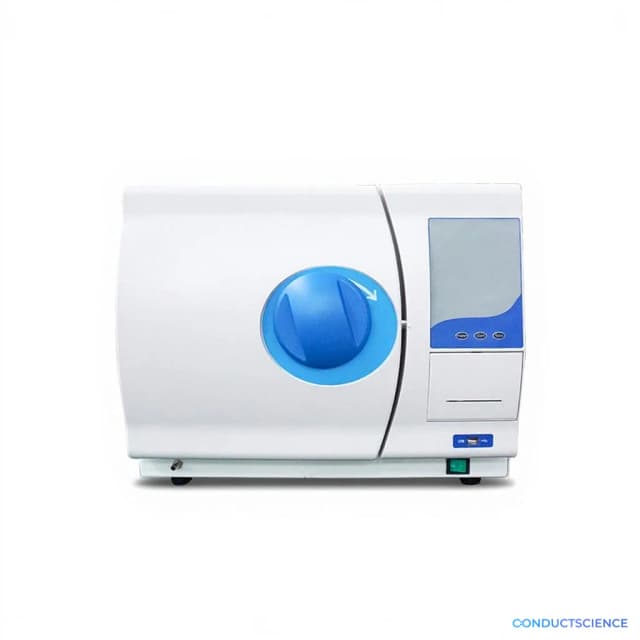
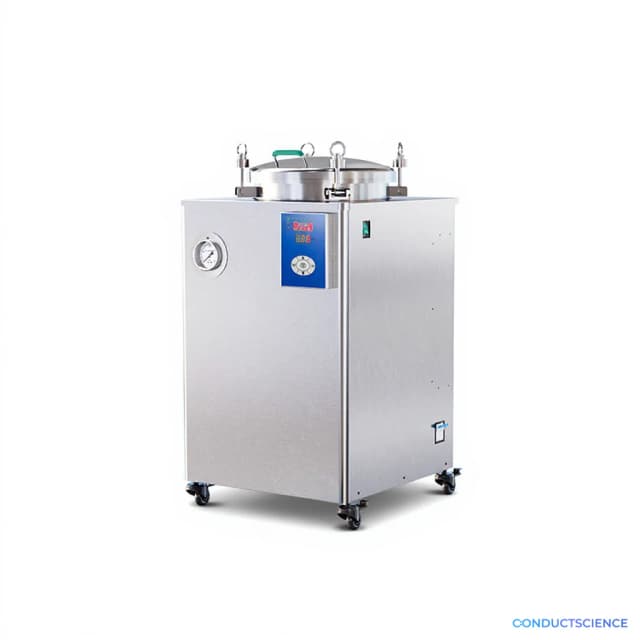
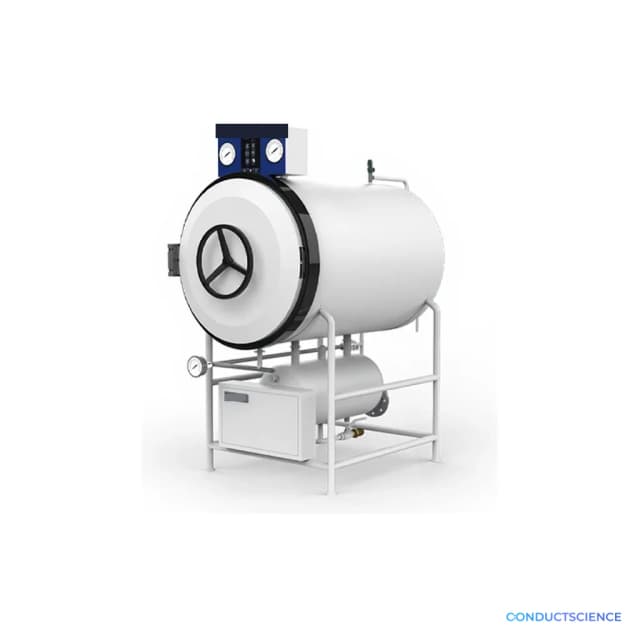
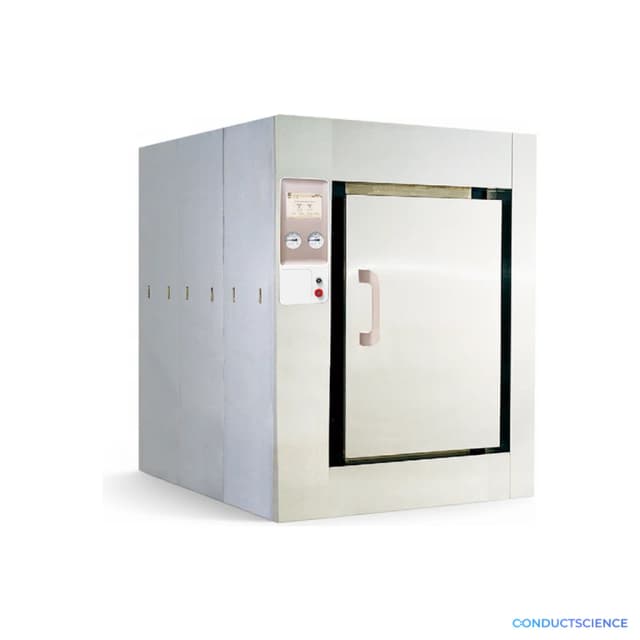
Table Top Class B Autoclave
Table top Class B steam autoclave with LCD touch screen interface, pulse vacuum system, and programmable sterilization cycles.
Available in 18L, 23L, 45L, 60L, and 80L chamber capacities for laboratory and clinical sterilization.

Louise Corscadden, PhD
Director of Science · ConductScience
Ask Louise about Table Top Class B Autoclave fit, setup, configuration, or quote prep.
Already working with us? Sign in to connect this with My Scientist.
Key Specifications
Full details →- Model fit
- 5 selectable configurations
- SKU family
- BIO-0141
- Shipping box
- 45.0 x 63.0 x 48.5 cm
- Ordering
- Online checkout and quote request available
- Category
- Autoclaves
- Build notes
- Confirm accessories, station layout, and support needs before purchase
The Table Top Class B Autoclave is a benchtop steam sterilization system designed for laboratory and clinical environments requiring reliable sterilization of instruments, glassware, and media. This 18-liter capacity unit operates at working pressures up to 0.23 MPa and temperatures from 105-134°C, providing effective steam sterilization cycles for heat-stable materials.
The system features a 5-inch LCD touch screen interface for cycle programming and monitoring, with adjustable sterilization times up to 99 minutes and integrated drying functionality. The high-efficiency vacuum pump enables proper air removal for effective steam penetration, while the 3.5-liter water tank provides sufficient steam generation for multiple cycles. Manual door operation and straightforward controls make this autoclave suitable for routine sterilization workflows in research laboratories and small clinical facilities.
How It Works
Steam sterilization operates through moist heat transfer, where saturated steam at elevated temperature and pressure destroys microorganisms by coagulating cellular proteins and disrupting cell membranes. The autoclave generates steam from distilled water in the integrated tank, creating pressurized conditions that allow steam temperature to exceed 100°C at atmospheric pressure.
The vacuum pump removes air from the chamber before steam injection, ensuring complete steam penetration into porous materials and hollow instruments. Steam contacts all surfaces at the programmed temperature and pressure, with exposure time determining the sterility assurance level. The system maintains precise temperature control within 0.1°C to ensure consistent sterilization efficacy across all load components.
Following the sterilization phase, the vacuum system removes residual moisture during the drying cycle, preventing recontamination during cooling and unloading. The complete cycle—vacuum, steam injection, sterilization hold, and drying—provides validated sterility for heat-stable laboratory materials.
Features & Benefits
Shipping weight
- 48.0 lb
Shipping box
- L: 45.0 cm
- W: 63.0 cm
- H: 48.5 cm
| Feature | This Product | Typical Alternative | Advantage |
|---|---|---|---|
| Chamber Capacity | 18-liter chamber volume | Entry-level units often provide 12-15 liter capacity | Larger capacity reduces the number of sterilization cycles needed for batch processing of laboratory materials. |
| Vacuum System | High-efficiency vacuum pump | Basic models may use gravity displacement only | Vacuum-assisted air removal ensures complete steam penetration for reliable sterilization of porous and hollow items. |
| Display Interface | 5-inch LCD touch screen | Many units have basic LED displays or mechanical timers | Touch screen interface enables precise cycle programming and provides real-time monitoring of critical parameters. |
| Temperature Control | 0.1°C temperature precision | Standard models typically offer ±1-2°C accuracy | Precise temperature control ensures consistent sterilization conditions and supports rigorous process validation requirements. |
| Cycle Programming | Programmable sterilization and drying times up to 99 minutes each | Fixed cycle options are common in basic autoclaves | Flexible programming accommodates different load types and sterility assurance requirements for diverse laboratory applications. |
| Water Tank Capacity | 3.5-liter integrated water tank | Smaller units often have 2-2.5 liter tanks | Larger water capacity supports multiple consecutive cycles without refilling, improving workflow efficiency. |
This autoclave combines Class B sterilization capability with advanced control features, offering vacuum-assisted steam penetration, precise temperature control within 0.1°C, and flexible cycle programming through a touch screen interface. The 18-liter capacity and 3.5-liter water tank provide practical efficiency for laboratory batch sterilization workflows.
| Model | SKU | Listed price | Status | Shipping box |
|---|---|---|---|---|
| 23L | BIO-0141-23L | $3,457.99 | Available | 45.0 x 63.0 x 48.5 cm |
| 80L | BIO-0141-80L | $9,432.99 | Available | 45.0 x 63.0 x 48.5 cm |
| 60L | BIO-0141-60L | $8,637.99 | Available | 45.0 x 63.0 x 48.5 cm |
| 45L | BIO-0141-45L | $5,246.99 | Available | 45.0 x 63.0 x 48.5 cm |
| 18L | BIO-0141-18L | $2,898.99 | Available | 45.0 x 63.0 x 48.5 cm |
Practical Tips
Verify temperature accuracy quarterly using calibrated thermocouples placed at multiple chamber locations during a full sterilization cycle.
Why: Temperature uniformity validation ensures all load areas receive adequate thermal treatment for reliable sterilization.
Clean the chamber weekly with mild detergent and inspect door seals for wear or damage that could compromise vacuum integrity.
Why: Regular cleaning prevents residue buildup while seal inspection maintains proper vacuum function for effective air removal.
Arrange loads to allow steam circulation around all items and avoid overpacking the 18-liter chamber capacity.
Why: Proper load configuration ensures steam contact with all surfaces and prevents cold spots that could harbor viable microorganisms.
Document cycle parameters including time, temperature, and pressure readings from the LCD display for each sterilization run.
Why: Complete cycle documentation provides traceability and supports process validation requirements in regulated environments.
If vacuum pump performance degrades, check water tank level and quality, as poor water conditions can affect steam generation efficiency.
Why: Adequate high-quality water supply is essential for consistent steam production and vacuum system operation.
Allow chamber pressure to return to atmospheric before opening the door, and use appropriate PPE when handling hot sterilized items.
Why: Pressure equalization prevents sudden steam release while thermal protection prevents burns from superheated materials and surfaces.
Use appropriate packaging materials that allow steam penetration while maintaining sterility barrier properties post-cycle.
Why: Proper packaging ensures steam access during sterilization while protecting sterile items from recontamination during storage.
Replace distilled water in the 3.5L tank regularly and drain the system completely during extended shutdown periods.
Why: Fresh water prevents mineral accumulation and bacterial growth that could compromise steam quality and system components.
Setup Guide
What’s in the Box
- Table Top Class B Autoclave main unit
- Power cable
- Water tank and fittings
- Chamber shelving system (typical)
- User manual and operation guide
- Steam test indicators (typical)
- Installation hardware (typical)
Warranty
ConductScience provides a comprehensive 1-year manufacturer warranty covering parts and labor, with technical support for installation guidance and operational troubleshooting.
Compliance
What load types can be sterilized in this 18-liter chamber?
The chamber accommodates wrapped surgical instruments, glassware, media bottles, and solid materials that can withstand 134°C. Liquid volumes should not exceed 75% of container capacity to prevent overflow during heating.
How do I verify sterilization efficacy for different load configurations?
Use biological indicators (spore strips) placed at the coldest spots in your typical loads. Chemical indicators provide cycle parameter verification, while the 0.1°C temperature precision enables consistent thermal validation.
What water quality is required for the steam generation system?
Use distilled or deionized water to prevent mineral buildup in the steam generator and vacuum pump. Regularly monitor water quality and replace the 3.5L tank contents to maintain system performance.
How long does a typical sterilization cycle require?
Cycle time depends on load type and sterility requirements. Standard wrapped instruments require 15-30 minutes at 121-134°C, plus vacuum/heating time and the programmable drying phase up to 99 minutes.
Can this autoclave handle routine laboratory glassware sterilization?
Yes, the 18-liter capacity and programmable cycles accommodate beakers, flasks, pipettes, and other heat-stable glassware. Use appropriate wrapping or containers to maintain sterility post-cycle.
What maintenance schedule is recommended for optimal performance?
Perform daily water level checks, weekly chamber cleaning, and monthly vacuum pump maintenance. Annual calibration verification and safety valve testing ensure continued performance and compliance.
How does this compare to gravity-displacement autoclaves?
The vacuum pump provides more effective air removal than gravity systems, enabling better steam penetration for porous loads and hollow instruments while reducing cycle times.
What should I check before using this autoclave for liquid media sterilization?
For liquid applications — such as culture buffers, agar-based media, or liquid-containing biohazardous waste — confirm that the unit offers a cycle with slow exhaust venting and a limited or absent pre-vacuum phase. This prevents superheating and liquid ejection from containers during pressure release. Containers should be open or loosely capped (for example, covered with aluminum foil rather than sealed) to allow pressure equalization, and should be loaded upright throughout the cycle.
Can I sterilize both liquid media and biohazardous solid waste in the same autoclave?
Yes, both applications are standard in microbiology labs and handled using different cycle programs. Liquid media (buffers, agar, culture media) requires a liquid or slow-exhaust cycle to prevent boilover, while biohazardous solid waste — used plates, pipette tips, contaminated plasticware — uses a gravity or vacuum cycle. Running both load types in the same autoclave is routine; use tray liners to contain any spills and prevent cross-contamination between runs.
Have a question about this product?
Have a question? Just ask.
Send it over and we'll email you a personalized answer — no call, no scheduling.
Prefer to talk it through?
Accessories
Enhance your setup with compatible accessories
Upgrade Options