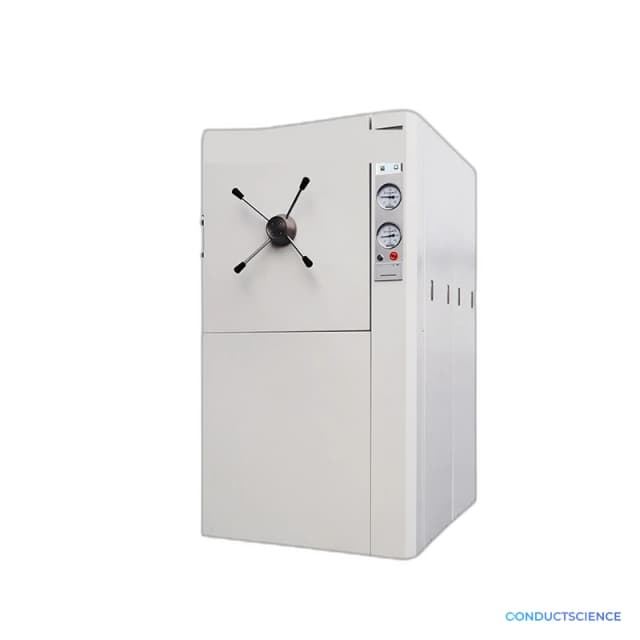
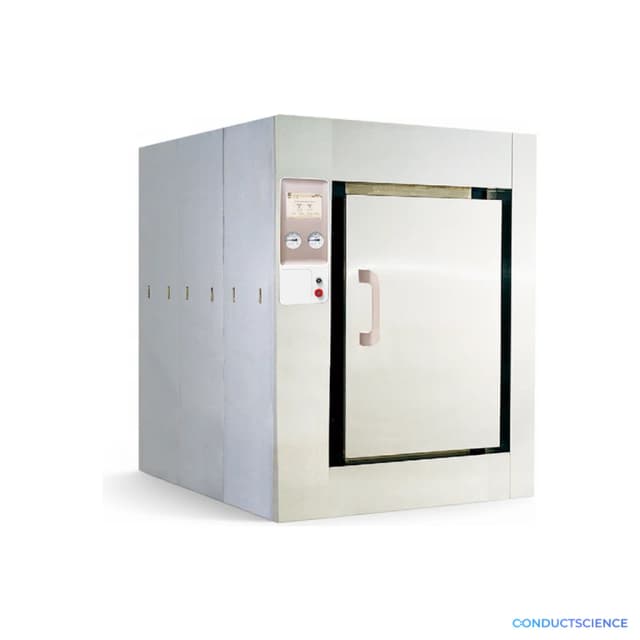
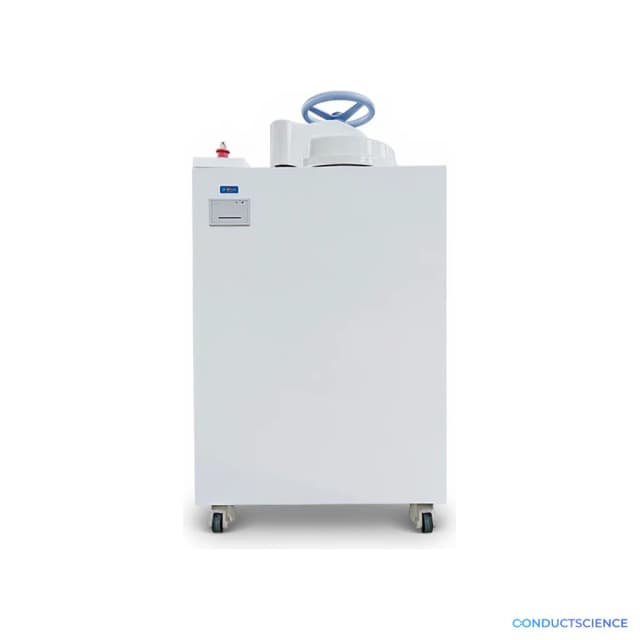
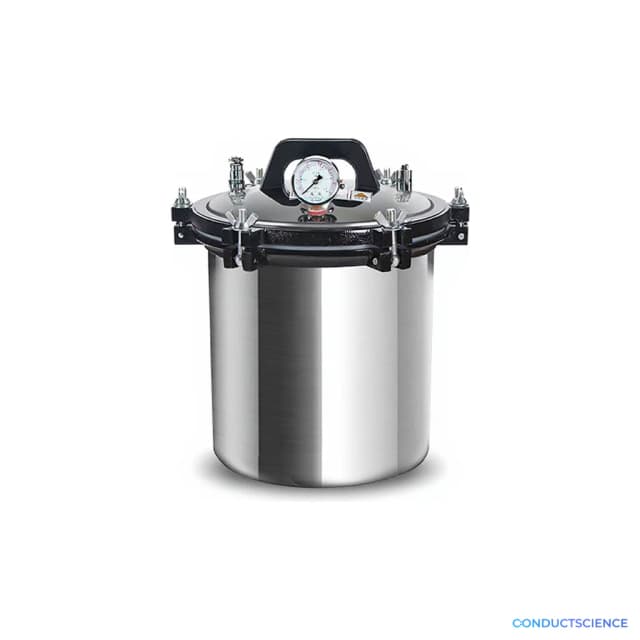
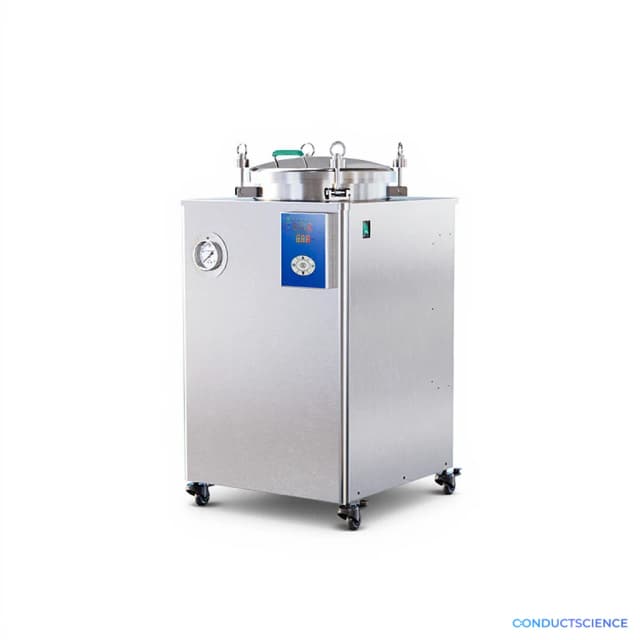
Horizontal Cylindrical Pressure Autoclave 150L
150-liter horizontal steam autoclave with built-in generator, dual pressure settings (0.12/0.23 MPa), and programmable sterilization cycles for laboratory equipment and media sterilization.

Louise Corscadden, PhD
Director of Science · ConductScience
Ask Louise about Horizontal Cylindrical Pressure Autoclave 150L fit, setup, configuration, or quote prep.
Already working with us? Sign in to connect this with My Scientist.
Key Specifications
Full details →- Model fit
- Configured during quote
- SKU family
- BIO-0149
- Shipping box
- 155.0 x 68.0 x 127.0 cm
- Ordering
- Online checkout and quote request available
- Category
- Autoclaves
- Build notes
- 304 stainless steel
The Horizontal Cylindrical Pressure Autoclave is a 150-liter capacity sterilization system designed for laboratory and research environments requiring reliable steam sterilization of media, glassware, and equipment. This horizontal autoclave features a built-in steam generator and operates at dual pressure/temperature settings of 0.12 MPa/121°C or 0.23 MPa/134°C with precise temperature control to ±0.1°C. The 304 stainless steel chamber construction provides corrosion resistance and durability for routine sterilization cycles.
The system offers programmable sterilization and drying cycles with timing ranges of 1-99 minutes for each phase, allowing researchers to optimize protocols for different load types. The horizontal chamber design facilitates loading of larger items and media containers while maintaining uniform steam penetration throughout the sterilization volume.
How It Works
Steam sterilization operates through moist heat transfer, where saturated steam at elevated temperature and pressure penetrates materials to denature proteins and destroy microorganisms. The autoclave generates steam internally through the built-in steam generator, which produces saturated steam that displaces air from the chamber through gravity displacement. As steam contacts cooler surfaces, it condenses and releases latent heat energy, raising material temperatures to lethal levels for vegetative bacteria, spores, viruses, and fungi.
The system maintains precise temperature control through pressure regulation, as steam temperature is directly related to pressure according to thermodynamic principles. At 0.12 MPa gauge pressure, steam temperature reaches 121°C, while 0.23 MPa produces 134°C steam for more aggressive sterilization cycles. The horizontal chamber design promotes uniform steam distribution through natural convection patterns, ensuring consistent heat transfer throughout the load.
Following the sterilization phase, the drying cycle reduces chamber pressure while maintaining elevated temperature to evaporate residual moisture from sterilized items. The programmable timing controls allow optimization of exposure times based on load density, material composition, and bioburden levels.
Features & Benefits
Automation Level
- semi-automated
BKQ-H200
- BKQ-H300
200L
- 300L
Designed Pressure
- 0.28MPa
Built-in Steam Generator
- Yes
Rated Working Pressure
- 0.12MPa/0.23MPa
Rated Operating Temperature
- 121℃/134℃
Ambient Temp.
- 5~40℃
Adjustable Drying Temperature Range
- 115~134℃
Temp. Precision
- 0.1℃
Sterilization Timing Adjustable Range
- 1~99min
Adjustable Drying Timing Range
- 1~99min
Vacuum System
- No
Chamber Material
- 304 stainless steel
Brand
- ConductScience
Research Domain
- Analytical Chemistry
- Cell Biology
- Environmental Monitoring
- Food Science
- Materials Science
- Microbiology
- Pharmaceutical QC
Capacity
- 150L
Shipping weight
- 230.0 lb
Shipping box
- L: 155.0 cm
- W: 68.0 cm
- H: 127.0 cm
| Feature | This Product | Typical Alternative | Advantage |
|---|---|---|---|
| Chamber Capacity | 150 liters | Entry-level models often offer 50-100L capacity | Higher capacity reduces cycle frequency and improves laboratory workflow efficiency |
| Pressure/Temperature Options | Dual settings: 0.12 MPa/121°C or 0.23 MPa/134°C | Basic models typically offer single temperature operation | Flexibility to optimize sterilization parameters for different materials and protocols |
| Temperature Precision | ±0.1°C | Standard models often provide ±0.5-1.0°C precision | Enhanced temperature control ensures consistent sterilization efficacy and protocol reproducibility |
| Steam Generation | Built-in steam generator | Some models require external steam supply | Independent operation eliminates dependency on facility steam systems |
| Timing Control | Programmable 1-99 minutes for sterilization and drying | Basic models may have limited timing options | Customizable cycles allow optimization for specific load types and materials |
| Chamber Orientation | Horizontal configuration | Varies by model and capacity | Facilitates loading of large equipment and promotes uniform steam distribution |
The BKQ-H150 provides dual-pressure operation, precise temperature control, and built-in steam generation in a 150-liter horizontal configuration. The programmable timing controls and 304 stainless steel construction support reliable sterilization protocols for diverse laboratory applications.
Practical Tips
Perform quarterly temperature mapping using multiple calibrated probes distributed throughout the chamber to verify temperature uniformity.
Why: Temperature variations can compromise sterilization efficacy and invalidate protocols.
Descale the steam generator monthly or as indicated by water quality and usage patterns using appropriate descaling agents.
Why: Scale buildup reduces heat transfer efficiency and can cause equipment failure.
Allow adequate spacing between items in the chamber and avoid overloading to ensure proper steam circulation.
Why: Poor steam penetration results in cold spots and sterilization failures.
Never attempt to open the chamber door until pressure has been fully released and safety interlocks disengage.
Why: Pressurized chambers pose serious safety hazards and can cause severe burns or equipment damage.
Document cycle parameters, load composition, and biological indicator results for each sterilization run.
Why: Comprehensive records support protocol validation and regulatory compliance requirements.
If sterilization failures occur, verify steam quality, check for air pockets in the load, and confirm adequate exposure times.
Why: Systematic troubleshooting identifies root causes and prevents repeated failures.
Use appropriate packaging materials that allow steam penetration while maintaining sterility after processing.
Why: Proper packaging ensures both sterilization efficacy and post-cycle sterility maintenance.
Inspect and replace door seals regularly to maintain proper pressure and steam containment.
Why: Compromised seals lead to pressure loss, extended cycle times, and sterilization failures.
Setup Guide
What’s in the Box
- BKQ-H150 horizontal autoclave unit
- Chamber loading racks (typical)
- Power cord and electrical connections
- Water supply connections
- User manual and operation guide
- Pressure relief valve
- Temperature monitoring probes (typical)
- Warranty documentation
Warranty
ConductScience provides a standard one-year manufacturer warranty covering parts and technical support. Extended service plans may be available for laboratory environments requiring enhanced maintenance coverage.
Compliance
What bioburden levels can this autoclave reliably eliminate?
Steam sterilization at 121°C or 134°C achieves 6-log reduction of vegetative bacteria and 4-log reduction of bacterial spores when proper exposure times are maintained. Consult product datasheet for specific kill curve data and validation protocols.
How do I validate sterilization efficacy for my specific loads?
Use biological indicators containing Geobacillus stearothermophilus spores placed in challenging locations within your load. Combine with chemical indicators and temperature mapping to demonstrate steam penetration and thermal distribution.
What water quality is required for the steam generator?
Use distilled or deionized water to prevent scale buildup and maintain steam purity. Consult product documentation for specific conductivity and pH requirements to ensure optimal performance and equipment longevity.
Can this autoclave process liquid media in sealed containers?
Yes, but ensure containers have appropriate venting or are designed for steam sterilization. Use liquid cycles with extended cooling phases to prevent superheating and container failure.
What routine maintenance does this system require?
Regular descaling of the steam generator, inspection of door seals and safety valves, and periodic temperature calibration verification. Maintenance frequency depends on usage intensity and water quality.
How does the horizontal design compare to vertical autoclaves?
Horizontal configuration facilitates loading of large items and improves steam circulation patterns. Loading capacity may be more efficient for bulky equipment compared to vertical chamber designs.
What data logging capabilities does this autoclave provide?
Consult product datasheet for available data recording and documentation features. Many modern autoclaves provide cycle parameter logging for validation and regulatory documentation.
Have a question about this product?
Have a question? Just ask.
Send it over and we'll email you a personalized answer — no call, no scheduling.
Prefer to talk it through?
Accessories
Enhance your setup with compatible accessories