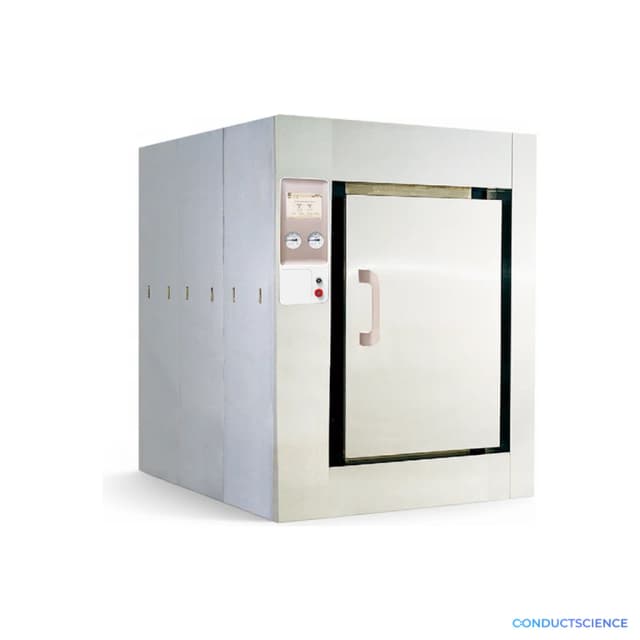
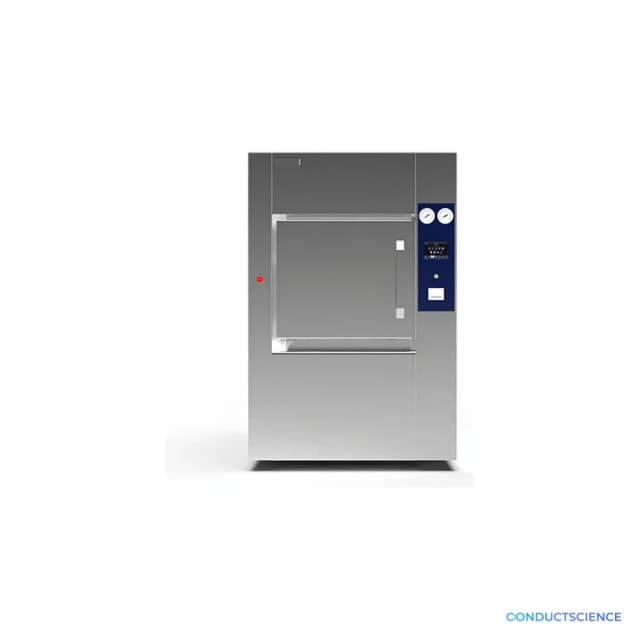
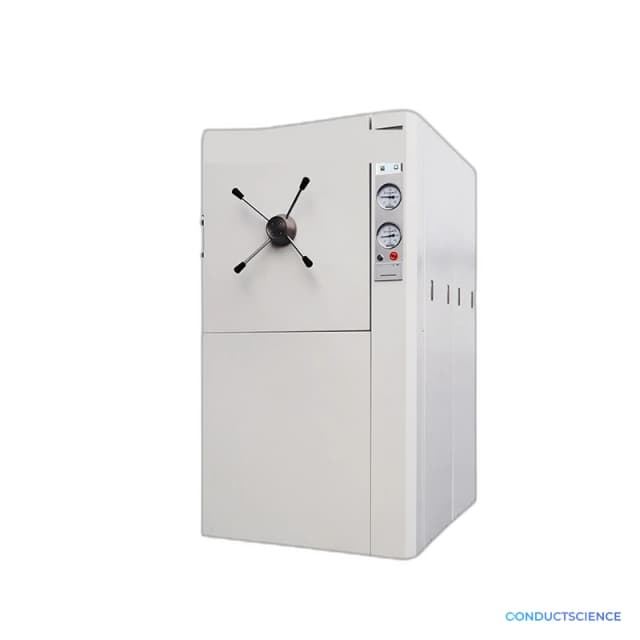
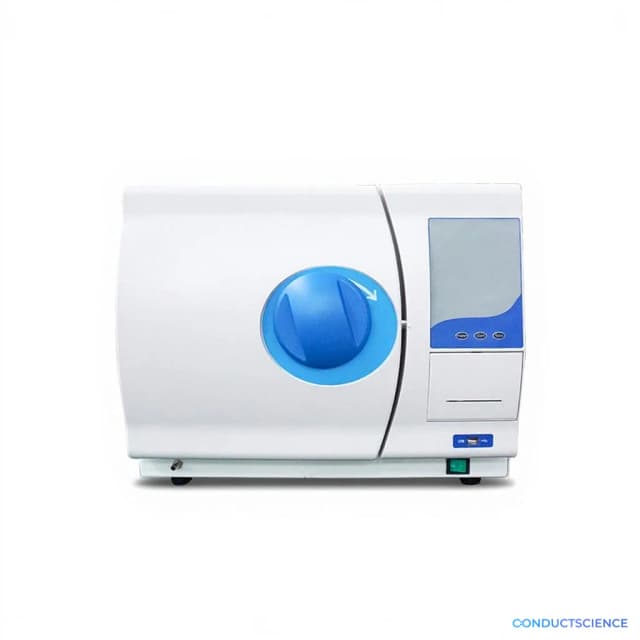
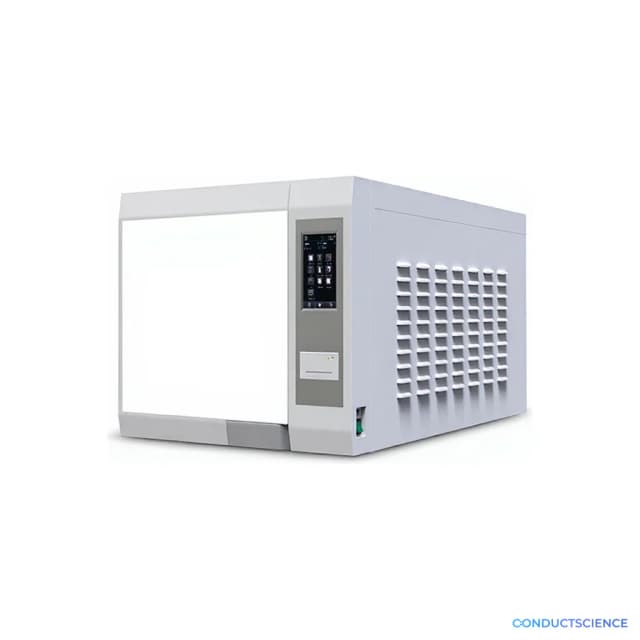
Vertical Pressure Autoclave
50L vertical pressure autoclave with 0.23 MPa working pressure, 105-136°C temperature range, and integrated printer for laboratory sterilization applications.

Louise Corscadden, PhD
Director of Science · ConductScience
Ask Louise about Vertical Pressure Autoclave fit, setup, configuration, or quote prep.
Already working with us? Sign in to connect this with My Scientist.
Key Specifications
Full details →- Model fit
- 6 selectable configurations
- SKU family
- BIO-0146
- Shipping box
- 107.0 x 64.0 x 55.0 cm
- Ordering
- Online checkout and quote request available
- Category
- Autoclaves
- Build notes
- Confirm accessories, station layout, and support needs before purchase
Premium pressure sterilizer autoclave designed for medical-grade sterilization. Features advanced steam pressure control and multiple safety systems. Reliable performance for critical sterilization applications.
How It Works
The autoclave employs moist heat sterilization through pressurized steam to achieve microbial kill. Steam under pressure allows temperatures above 100°C at atmospheric conditions, with the combination of elevated temperature, pressure, and moisture providing effective destruction of vegetative bacteria, spores, viruses, and fungi. The 0.23 MPa working pressure enables steam temperatures of 105-136°C, which penetrates materials and denatures proteins essential for microbial survival.
The vertical chamber design promotes efficient steam circulation and heat distribution throughout the load. Steam enters the chamber and displaces air, creating uniform temperature conditions measured with 0.1°C precision. The S30408 stainless steel construction resists corrosion from steam and cleaning agents while maintaining structural integrity under repeated pressure cycling. The integrated printer documents time, temperature, and pressure parameters for each sterilization cycle, providing traceability records required in regulated laboratories.
Features & Benefits
Shipping weight
- 127.0 lb
Shipping box
- L: 107.0 cm
- W: 64.0 cm
- H: 55.0 cm
Review how our vertical pressure autoclave compares to other sterilization systems in terms of efficiency and reliability. Superior for unwrapped instruments and bulk sterilization.
| Model | SKU | Listed price | Status | Shipping box |
|---|---|---|---|---|
| 200L | BKQ-B200II | $16,990.00 | Available | 107.0 x 64.0 x 55.0 cm |
| 150L | BKQ-B150II | $11,990.00 | Available | 107.0 x 64.0 x 55.0 cm |
| 120L | BKQ-B120II | $8,990.00 | Available | 107.0 x 64.0 x 55.0 cm |
| 100L | BKQ-B100II | $7,590.00 | Available | 107.0 x 64.0 x 55.0 cm |
| 75L | BKQ-B75II | $6,090.00 | Available | 107.0 x 64.0 x 55.0 cm |
| 50L | BKQ-B50II | $4,190.00 | Available | 107.0 x 64.0 x 55.0 cm |
Essential for hospitals, surgical centers, dental offices, and medical facilities. Suitable for sterilizing wrapped instruments, linens, and medical devices. Ideal for daily clinical use.
Practical Tips
Verify temperature accuracy using Type T thermocouples placed at multiple chamber locations during empty and loaded test cycles.
Why: Ensures uniform heat distribution and validates sterilization effectiveness throughout the chamber volume.
Perform weekly chamber cleaning with enzymatic detergent followed by rinse cycles to remove protein residues and mineral deposits.
Why: Prevents buildup that can interfere with steam circulation and cause corrosion of chamber surfaces.
Leave space between items in the mesh basket and avoid overloading to ensure adequate steam penetration to all surfaces.
Why: Steam must contact all surfaces directly for effective sterilization, and overcrowding creates steam shadows that compromise sterility assurance.
Replace printer paper regularly and store printed records in controlled environment to prevent fading of thermal printouts.
Why: Thermal printing can fade over time, potentially compromising long-term traceability records required for regulatory compliance.
If temperature does not reach setpoint, check steam generator water level and descale heating elements if mineral buildup is suspected.
Why: Scale formation reduces heat transfer efficiency and can cause temperature control problems or heating element failure.
Allow complete pressure release and cooling before opening chamber door, and use protective equipment when handling hot items.
Why: Residual pressure and high temperatures can cause serious injury, and superheated materials may not appear hot despite dangerous temperatures.
Use biological indicators containing Geobacillus stearothermophilus spores monthly to verify sterilization effectiveness.
Why: Biological indicators provide the most stringent test of sterilization efficacy and are required for process validation in regulated environments.
Inspect door gaskets monthly for cracks, cuts, or hardening that could compromise pressure seal integrity.
Why: Damaged gaskets allow pressure loss that prevents proper sterilization temperatures and creates safety hazards from steam leaks.
Setup Guide
Professional installation support. Comprehensive operator training. Ongoing technical assistance available. Intuitive controls for regular clinical staff operation.
What’s in the Box
- Vertical pressure autoclave main unit
- Integrated printer system
- Mesh bottom basket (φ365×265mm)
- Power cable
- User manual and documentation
- Installation hardware (typical)
- Calibration certificate (typical)
Warranty
ConductScience provides a standard one-year manufacturer warranty covering parts and labor, with technical support available for installation guidance and operational troubleshooting.
Compliance
Technical specifications, user manuals, and maintenance guides included. All certifications and compliance documents provided. Regular maintenance schedules documented.
Steam pressure sterilization is the most reliable method for medical instrument sterilization. Our systems ensure complete penetration and sterilization efficacy. Validated sterilization cycles for optimal safety.
Have a question about this product?
Have a question? Just ask.
Send it over and we'll email you a personalized answer — no call, no scheduling.
Prefer to talk it through?