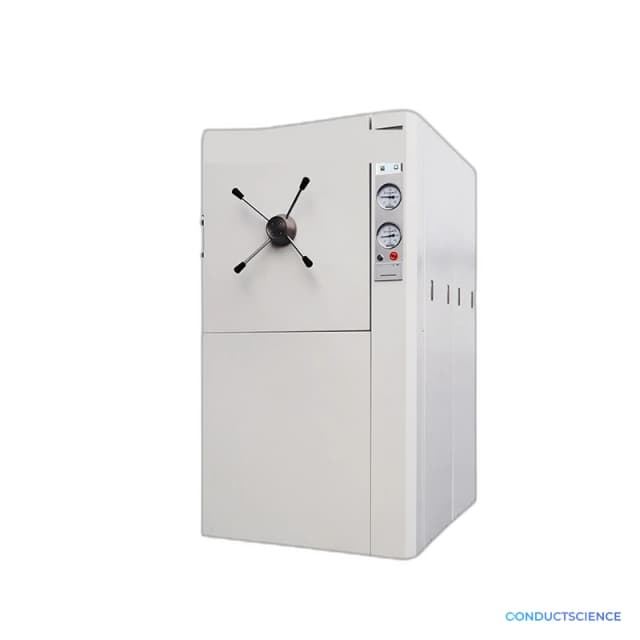
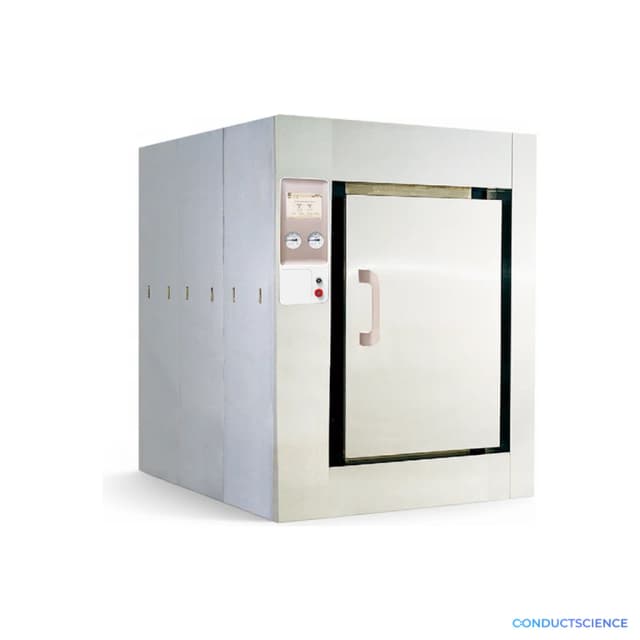
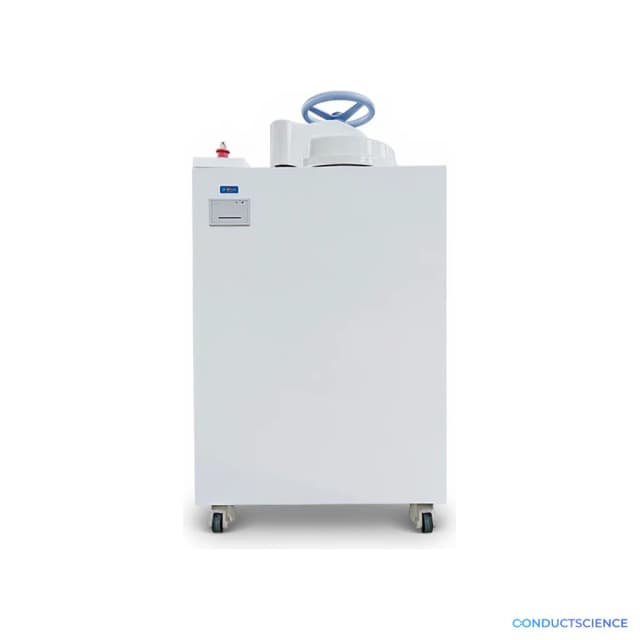
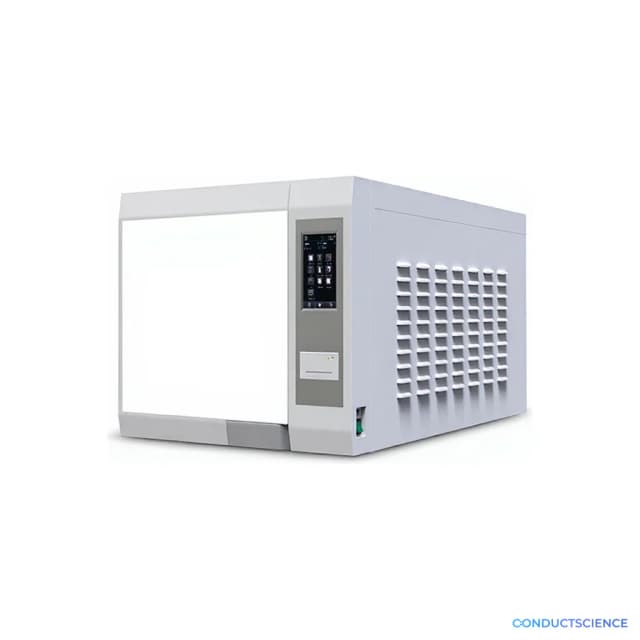
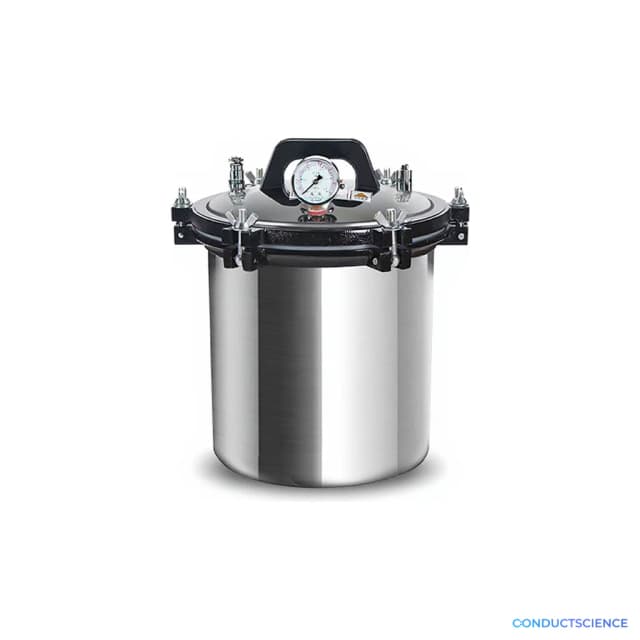
Vertical Pulse Vacuum Autoclave
50-liter vertical autoclave with pulse vacuum system, operating at 105-134°C with ±0.1°C precision for laboratory sterilization applications.

Louise Corscadden, PhD
Director of Science · ConductScience
Ask Louise about Vertical Pulse Vacuum Autoclave fit, setup, configuration, or quote prep.
Already working with us? Sign in to connect this with My Scientist.
Key Specifications
Full details →- Model fit
- 3 selectable configurations
- SKU family
- BIO-0148
- Shipping box
- 107.0 x 70.0 x 61.0 cm
- Ordering
- Online checkout and quote request available
- Category
- Autoclaves
- Build notes
- Confirm accessories, station layout, and support needs before purchase
Advanced vertical pulse vacuum autoclave designed for fast and efficient sterilization of medical instruments and wrapped items. Pulse vacuum technology ensures effective penetration into wrapped materials and complex instrument cavities.
How It Works
Steam sterilization operates through moist heat transfer, where saturated steam at elevated temperature denatures proteins and disrupts cellular membranes in microorganisms. The vertical pulse vacuum system creates alternating vacuum and steam injection cycles, removing air pockets that would otherwise insulate materials from steam contact. This process ensures uniform temperature distribution throughout the load.
The S30408 stainless steel chamber withstands repeated thermal cycling while maintaining structural integrity. Temperature sensors monitor the chamber environment, maintaining working temperatures between 105-134°C with ±0.1°C precision. The vacuum system removes residual air before steam introduction, then evacuates moisture after sterilization to facilitate drying.
Sterilization kinetics follow first-order kinetics, where microbial death rate depends on temperature and time exposure. The combination of saturated steam, elevated temperature, and vacuum-enhanced penetration achieves sterility assurance levels appropriate for laboratory applications.
Features & Benefits
Shipping weight
- 127.0 lb
Shipping box
- L: 107.0 cm
- W: 70.0 cm
- H: 61.0 cm
Compare our vertical pulse vacuum line with other sterilization methods for wrapped items and complex instruments. Pulse vacuum method is superior for porous loads and complex geometries.
| Model | SKU | Listed price | Status | Shipping box |
|---|---|---|---|---|
| 100L | BKQ-B100V | $13,990.00 | Available | 107.0 x 70.0 x 61.0 cm |
| 75L | BKQ-B75V | $10,990.00 | Available | 107.0 x 70.0 x 61.0 cm |
| 50L | BKQ-B50V | $8,990.00 | Available | 107.0 x 70.0 x 61.0 cm |
Ideal for hospitals, clinics, sterilization centers, and medical facilities requiring reliable pulse vacuum sterilization for wrapped instruments and textiles.
Practical Tips
Verify temperature accuracy using calibrated thermocouples placed at multiple chamber locations during monthly calibration checks.
Why: Temperature uniformity validation ensures reliable sterilization throughout the chamber volume.
Clean chamber walls and door gaskets daily with appropriate detergents, then rinse thoroughly before next use.
Why: Residue buildup can interfere with vacuum performance and create potential contamination sources.
Leave space between items in the basket to allow steam circulation, avoiding tight packing that could create cold spots.
Why: Adequate steam flow ensures uniform heat transfer to all surfaces being sterilized.
If vacuum performance decreases, check door seal integrity and vacuum system filters for blockages or wear.
Why: Poor vacuum performance directly impacts air removal and sterilization efficacy.
Record chamber temperature, pressure readings, and cycle times for each sterilization run to maintain validation records.
Why: Documentation provides evidence of proper sterilization conditions for quality assurance and regulatory requirements.
Allow chamber pressure to return to atmospheric before opening door, and use appropriate PPE when handling hot materials.
Why: Pressurized chambers and superheated materials pose serious injury risks if proper safety procedures are not followed.
Pre-warm the chamber for 10-15 minutes before loading heat-sensitive materials to reduce thermal shock.
Why: Gradual temperature changes prevent cracking of glassware and thermal stress on delicate materials.
Inspect and replace door gaskets annually or when signs of wear become apparent during routine inspections.
Why: Compromised seals reduce vacuum efficiency and can lead to incomplete sterilization cycles.
Setup Guide
Easy installation and operation with intuitive interface. Professional training and technical support available. Compact design suitable for space-constrained facilities.
What’s in the Box
- Vertical pulse vacuum autoclave main unit
- Stainless steel basket (360mm × 260mm)
- Power connection cables
- Water supply fittings (typical)
- Operating manual and safety documentation
- Warranty registration materials (typical)
Warranty
ConductScience provides a standard one-year manufacturer warranty covering defects in materials and workmanship, with technical support available for installation guidance and operational questions.
Compliance
Complete operation and maintenance manuals provided. Certification documents included. Technical support documentation accessible online.
Pulse vacuum technology ensures effective penetration into wrapped items and complex cavities. Significantly reduces sterilization time compared to standard autoclaves. Typical cycle time: 20-30 minutes for wrapped instruments.
Have a question about this product?
Have a question? Just ask.
Send it over and we'll email you a personalized answer — no call, no scheduling.
Prefer to talk it through?
Frequently Bought Together