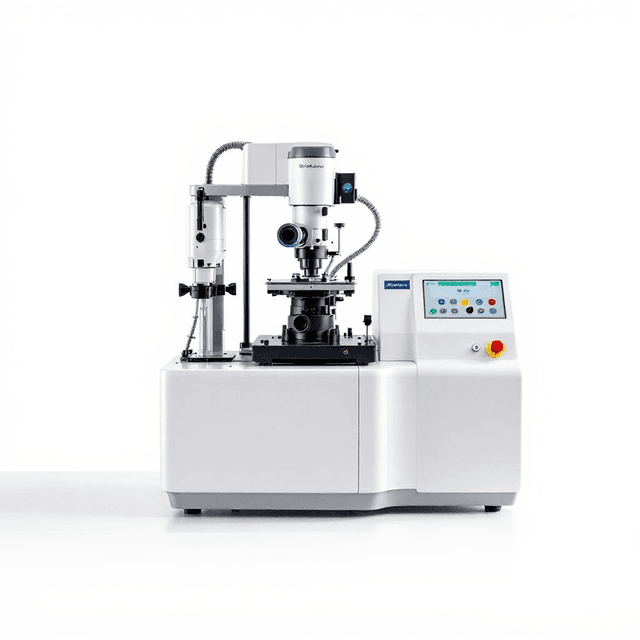
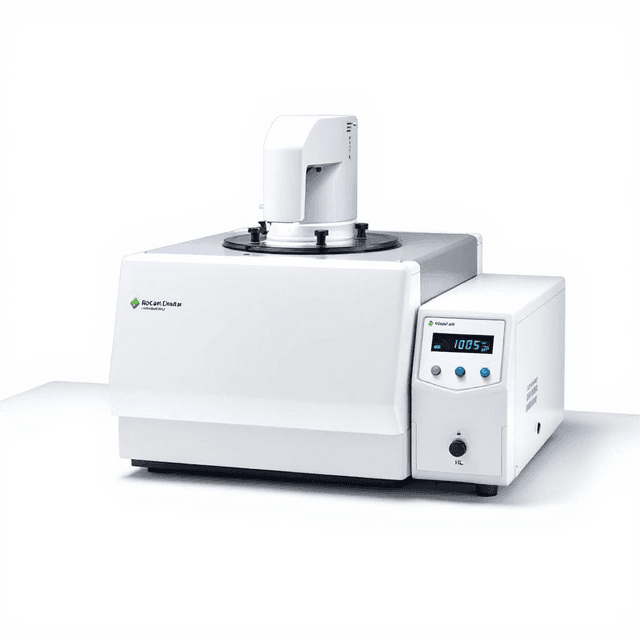
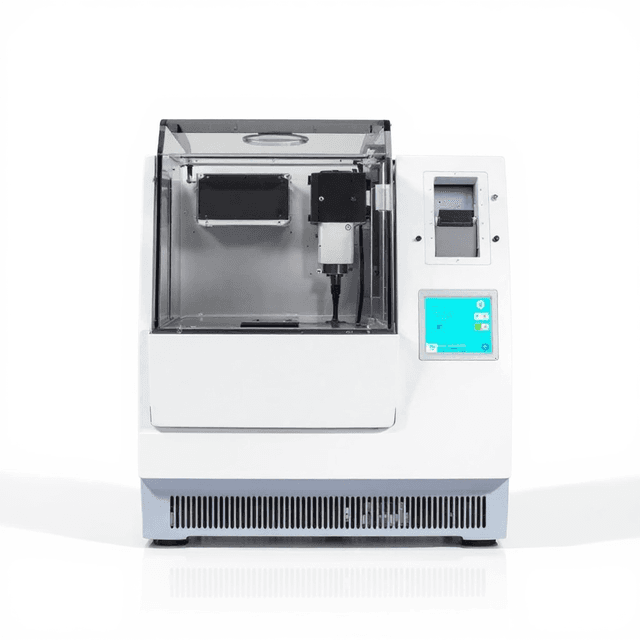
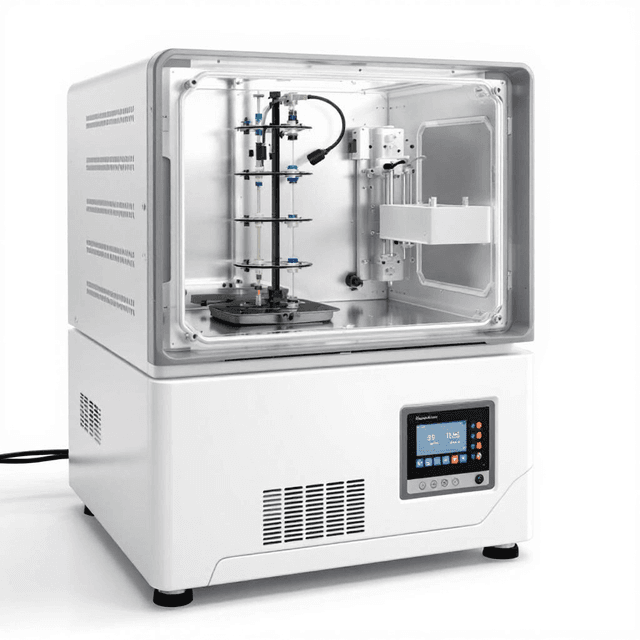
Tissue Grinding Machine
Bench-top tissue grinding machine for rapid extraction and purification of DNA, RNA, and proteins. Processes 24 samples in ~1 minute via vertical oscillation with full enclosure to prevent cross-contamination. Supports dry, wet, and low-temperature grinding modes.

Louise Corscadden, PhD
Director of Science · ConductScience
Ask Louise about Tissue Grinding Machine fit, setup, configuration, or quote prep.
Already working with us? Sign in to connect this with My Scientist.
The tissue grinding machine completes grinding, crushing, mixing, and cell wall disruption of biological samples in a very short time, enabling efficient extraction and purification of DNA, RNA, and proteins from any source. The dual-slide vertical oscillation mechanism ensures thorough grinding while maintaining sample stability. A mechanical butterfly lock combined with an electronic door limit provides double safety protection during operation.
The instrument supports direct placement of centrifuge tubes, including pre-freezing, making it suitable for temperature-sensitive samples. Quiet operation design minimizes laboratory noise during runs. The standard 24 × 2 ml adapter is included; optional adapters support 96×2 ml, 48×2 ml, 32×2 ml, 16×5 ml, 8×10 ml, 2×15 ml, 2×25 ml, and 2×50 ml formats.
| Parameter | Specification |
|---|---|
| Display | 7-inch OLED touch screen |
| Oscillation Mode | Up and down vertical oscillation |
| Grinding Speed | 500–2300 rpm |
| Grinding Methods | Dry / Wet / Low-temperature |
| Grinding Time | 0–120 s per segment; multi-segment programmable |
| Standard Adapter | 24 × 2 ml tubes |
| Standard Grinding Balls | φ3 mm × 800, φ5 mm × 200 |
| Adapter Material | Aluminum alloy |
| Power Consumption | 180 W |
| Power Supply | AC 110–220 V, 50/60 Hz |
| Dimensions (W×D×H) | 265×405×520 mm |
| Package Dimensions (W×D×H) | 375×530×670 mm |
| Net Weight | 29 kg |
| Gross Weight | 41 kg |
Applicable sample types: animal tissues, plant tissues, microorganisms, food products, volatile samples, plastics/polymers, and environmental samples (soil, sediment, sludge).
How It Works
The tissue grinding mechanism operates through controlled vertical oscillation of stainless steel grinding balls within sealed sample containers. The oscillatory motion creates repetitive impact forces that mechanically disrupt tissue architecture and cell membranes, releasing intracellular components for analysis. Speed control from 500 to 2300 rpm allows optimization of grinding intensity based on tissue hardness and desired particle size distribution.
The multi-stage programming capability enables complex grinding protocols where different speeds and durations can be applied sequentially. This approach minimizes heat generation during processing while ensuring complete tissue homogenization. The system accommodates various grinding conditions including dry grinding for dehydrated samples, wet grinding with buffer solutions, and low-temperature grinding to preserve heat-sensitive biomolecules.
Features & Benefits
Grinding Speed
- 500–2300 rpm
Brand
- ConductScience
Standard Capacity
- 24 × 2 ml tubes
Display
- 7-inch OLED touch screen
Power Consumption
- 180 W
Grinding Methods
- Dry / Wet / Low-temperature
Power Supply
- AC 110–220 V, 50/60 Hz
Net Weight
- 29 kg
Weight
- 28.5 kg
Dimensions
- L: 47.5 mm
- W: 26.5 mm
- H: 40.5 mm
| Feature | This Product | Typical Alternative | Advantage |
|---|---|---|---|
| Speed Range Control | 500-2300 rpm variable speed control | Fixed speed or limited range options | Enables optimization of grinding intensity for different tissue hardness and biomolecule preservation requirements. |
| Programming Capability | Multi-stage operation with automated parameter recording | Single-stage operation with manual parameter tracking | Supports complex protocols with documented reproducibility for regulatory compliance workflows. |
| User Interface | 5-inch OLED touch screen | Basic LED displays or mechanical controls | Provides intuitive parameter programming and real-time monitoring for enhanced protocol development. |
| Safety Systems | Dual mechanical butterfly and electronic door locks | Single safety mechanism | Redundant safety features ensure secure operation with valuable or hazardous biological samples. |
| Grinding Modes | Dry, wet, and low-temperature grinding capabilities | Limited to ambient temperature dry grinding | Accommodates diverse sample preservation requirements including heat-sensitive biomolecules. |
This tissue grinding machine offers comprehensive programmability with multi-stage operation control, dual safety mechanisms, and versatile grinding modes. The OLED interface and automated parameter recording support protocol standardization requirements in regulated research environments.
Practical Tips
Verify speed accuracy quarterly using an external tachometer to ensure grinding parameters match programmed values.
Why: Speed drift can affect reproducibility of tissue homogenization and biomolecule extraction efficiency.
Inspect grinding balls for wear or deformation monthly and replace as needed to maintain consistent grinding action.
Why: Worn balls reduce grinding efficiency and can introduce metal contamination into samples.
Start with shorter grinding segments and lower speeds for new tissue types to optimize protocols before processing valuable samples.
Why: Prevents over-grinding and heat generation that can degrade sensitive biomolecules.
Always verify both mechanical and electronic safety locks are engaged before starting grinding operations.
Why: Redundant safety verification prevents accidents during high-speed oscillation cycles.
Document grinding ball selection and quantity in laboratory notebooks along with automatically recorded parameters.
Why: Complete documentation enables protocol replication and troubleshooting of unexpected results.
If grinding efficiency decreases, check for proper ball movement by briefly running empty containers before sample processing.
Why: Restricted ball movement indicates container damage or improper loading that compromises homogenization.
Pre-cool grinding balls and containers for low-temperature processing of thermolabile samples.
Why: Temperature equilibration prevents thermal shock and maintains sample integrity during grinding.
Setup Guide
What’s in the Box
- Tissue Grinding Machine main unit
- Stainless steel grinding balls φ3mm (800 pieces)
- Stainless steel grinding balls φ5mm (200 pieces)
- Power cord and adapter
- Sample containers (typical)
- User manual and operation guide
- Safety documentation (typical)
Warranty
ConductScience provides standard one-year manufacturer warranty covering parts and labor with comprehensive technical support for installation, operation, and maintenance procedures.
Compliance
References
Background reading relevant to this product:
What grinding ball size should I use for different tissue types?
Use φ3mm balls for softer tissues like liver or brain, and φ5mm balls for harder tissues like bone or cartilage. The smaller balls provide more contact points for gentle homogenization.
Can I process frozen tissue samples directly?
Yes, the low-temperature grinding mode accommodates frozen samples. Allow brief equilibration to prevent condensation, and use shorter initial grinding segments to assess optimal processing parameters.
How do I prevent cross-contamination between samples?
Use dedicated sample containers for each sample type and thoroughly clean grinding balls with appropriate solvents between uses. The removable components facilitate decontamination protocols.
What is the maximum sample volume per grinding cycle?
Optimal sample volume depends on tissue type and container size. Consult product datasheet for specific volume recommendations to ensure effective grinding ball movement and homogenization.
Can I interrupt grinding cycles if needed?
Yes, the electronic safety controls allow immediate stopping of grinding operations. Multi-stage programming also enables paused protocols for sample inspection or parameter adjustment.
How do I maintain consistent results across multiple samples?
Use the automatic parameter recording feature to document successful protocols, and employ identical grinding ball quantities and sample volumes for reproducible homogenization conditions.
What maintenance is required for optimal performance?
Regular cleaning of grinding balls and sample containers, periodic verification of safety lock mechanisms, and annual calibration of speed control ensure consistent performance and safety compliance.
Have a question about this product?
Upgrade Options