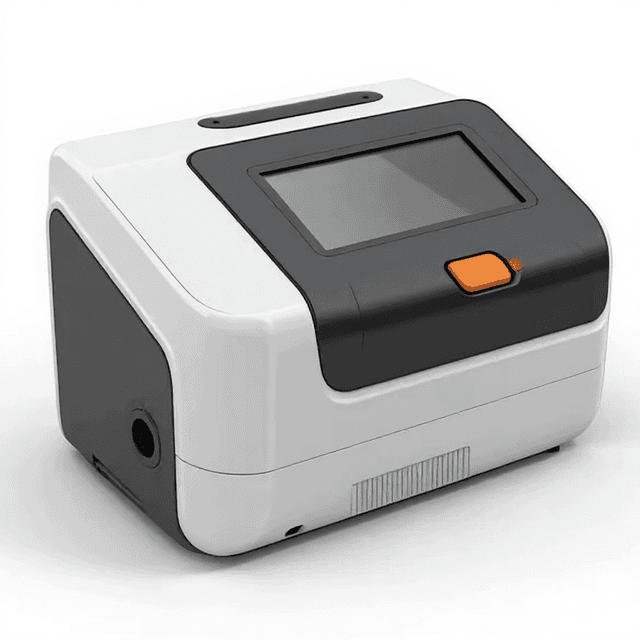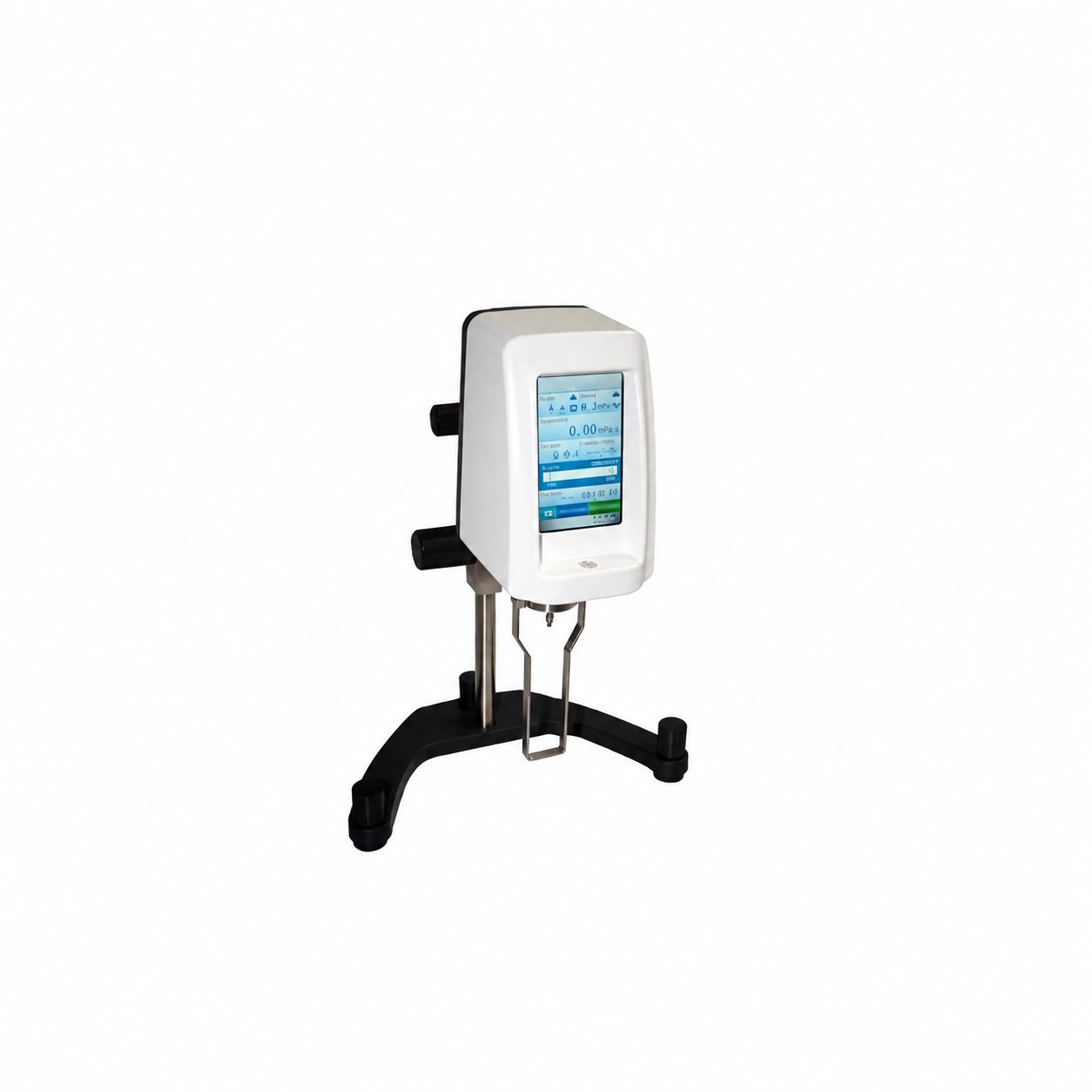
Touch Screen Digital Display Viscometer
Digital touchscreen viscometer with automated measurement protocols, providing ±2% accuracy across 1-100,000 mPa·s range with USB/RS232 connectivity for research applications.

Louise Corscadden, PhD
Director of Science · ConductScience
Ask Louise about Touch Screen Digital Display Viscometer fit, setup, configuration, or quote prep.
Already working with us? Sign in to connect this with My Scientist.
Key Specifications
Full details →- Model fit
- Configured during quote
- SKU family
- BIO-0438
- Shipping box
- 48.0 x 20.0 x 44.0 cm
- Ordering
- Online checkout and quote request available
- Category
- Analytical Instruments
- Build notes
- Confirm accessories, station layout, and support needs before purchase
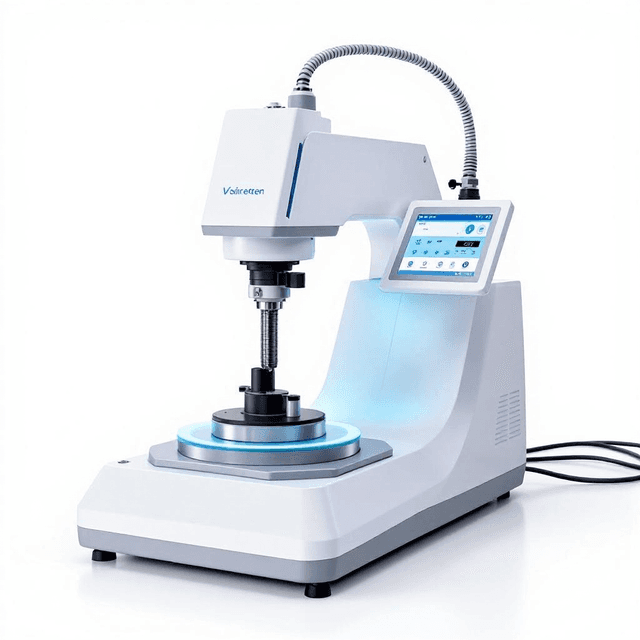
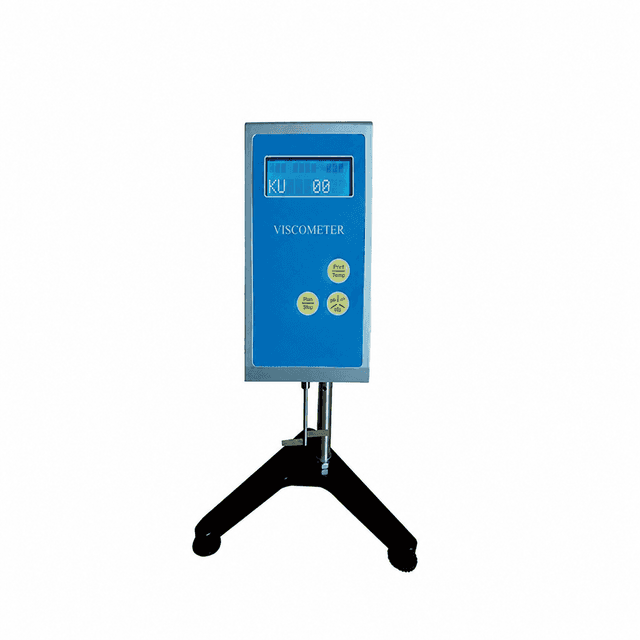
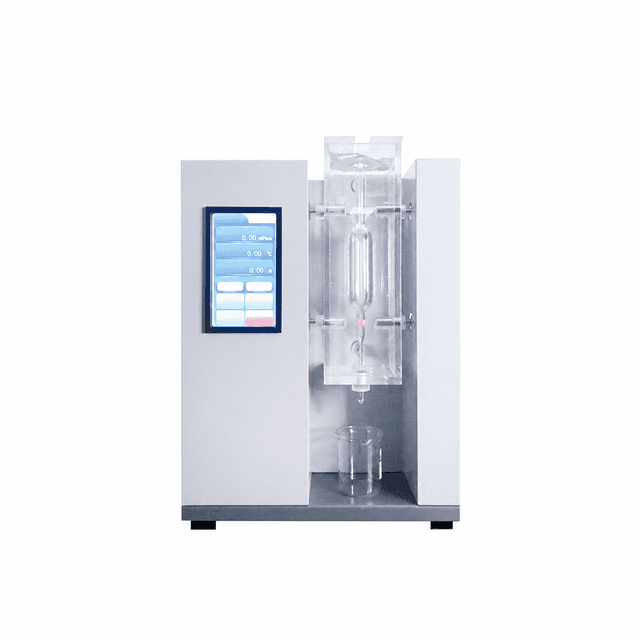
Touch Screen Digital Display Viscometer - modern viscometer with intuitive touchscreen interface and digital display for seamless operation. Provides real-time viscosity data, temperature monitoring, and programmable test protocols. Suitable for routine viscosity testing in pharmaceutical, cosmetic, food, and chemical industries with minimal operator training required.
How It Works
The viscometer operates on the principle of rotational rheometry, where a calibrated spindle rotates at controlled speeds within the test fluid. The instrument measures the torque required to maintain constant rotational velocity, which directly correlates to the fluid's viscosity through established mathematical relationships. The digital torque sensor converts mechanical resistance into electrical signals that are processed by the internal microcontroller.
The touchscreen interface displays real-time viscosity measurements while the automated measurement system monitors reading stability. When consecutive measurements fall within specified tolerance limits, the rotor automatically stops and locks in the final viscosity value. Temperature compensation is achieved through the integrated temperature sensor interface, allowing for accurate viscosity determinations across varying thermal conditions.
Multiple rotor speeds (6, 12, 30, 60 rpm standard) enable characterization of both Newtonian and shear-dependent fluids, while the digital display provides 0.01 mPa·s resolution for precise measurements. Data output through USB and RS232 interfaces facilitates integration with laboratory information management systems and statistical analysis software.
Features & Benefits
Automation Level
- semi-automated
BDV-8SC
- BDV-9SC
Measured Range
- 1~1*105mpa.s
1~2*106mpa.s
- 1~6*106mpa.s
Measurement Accuracy
- ±2%(FS)(Newtonian liquid)
Repetitive Error
- 1%(FS)(Newtonian liquid)
Display Accuracy
- 0.01mpa.s
Single Measurement Automatic
- When the measurement result is stable, the rotor stops automatically
Rotor Speed(rpm)
- 6, 12, 30, 60
0.3, 0.6, 1.5, 3, 6, 12, 30, 60
- 0.1, 0.3, 0.6, 1.5, 3, 6, 12, 30, 60
Standard Accessory
- Temperature sensor interface, computer USB interface, RS232 interface
Package Size(W*D*H)
- 200*440*480mm
Brand
- ConductScience
Research Domain
- Analytical Chemistry
- Environmental Monitoring
- Food Science
- Industrial Hygiene
- Materials Science
- Pharmaceutical QC
Power/Voltage
- AC110~240V, 50/60Hz, DC 12V
Weight
- 10.6kg
Shipping weight
- 6.3 lb
Shipping box
- L: 48.0 cm
- W: 20.0 cm
- H: 44.0 cm
| Feature | This Product | Typical Alternative | Advantage |
|---|---|---|---|
| Measurement Range | 1 to 1×10⁵ mPa·s (with extended range variants to 6×10⁶ mPa·s) | Entry-level models often limited to narrower ranges or require multiple spindle sets | Wide dynamic range accommodates diverse sample types without instrument changes |
| Display Interface | Touch screen digital display with 0.01 mPa·s resolution | Basic LCD or analog displays with limited resolution | Intuitive operation and precise readout improve measurement efficiency and accuracy |
| Measurement Control | Automatic termination when readings stabilize | Manual timing and operator judgment for measurement endpoints | Eliminates operator variability and improves measurement repeatability |
| Connectivity Options | USB, RS232, and temperature sensor interfaces | Limited or no digital connectivity in basic models | Enables automated data collection and integration with laboratory systems |
| Power Supply Compatibility | Universal AC110-240V, 50/60Hz with DC 12V option | Region-specific power requirements | Global compatibility reduces installation complexity in international laboratories |
| Rotor Speed Options | Four standard speeds (6, 12, 30, 60 rpm) with extended models up to nine speeds | Fewer speed options in entry-level instruments | Multiple shear rates enable comprehensive rheological characterization |
This viscometer combines wide measurement range capabilities with automated operation and comprehensive connectivity options. The touchscreen interface and automatic measurement termination provide operational advantages for both routine quality control and research applications requiring precise viscosity determinations.
Practical Tips
Verify zero-point calibration daily by running the spindle in air and checking for near-zero torque readings.
Why: Temperature changes and mechanical settling can introduce baseline drift affecting measurement accuracy.
Clean spindles immediately after use with appropriate solvents and inspect for damage or coating buildup.
Why: Sample residue or spindle damage creates measurement artifacts and reduces accuracy.
Allow samples to equilibrate to measurement temperature for at least 10 minutes before testing.
Why: Temperature gradients within the sample create convection currents that interfere with viscosity measurements.
If readings drift continuously, check for air bubbles around the spindle or insufficient sample volume.
Why: Air entrainment and edge effects from container walls cause measurement instability.
Record sample temperature along with viscosity measurements for accurate data interpretation and repeatability.
Why: Viscosity is exponentially dependent on temperature, making thermal documentation essential for reproducible results.
Ensure spindle guards are in place during operation and avoid contact with rotating components.
Why: Rotating spindles present mechanical hazards and sample splashing risks during operation.
Use the automatic measurement termination feature rather than manual timing for consistent results.
Why: Automated endpoint detection eliminates operator timing variability and improves measurement repeatability.
Maintain certified viscosity standards at multiple points across your measurement range for accuracy verification.
Why: Multi-point calibration verification ensures accuracy across the full measurement range rather than just at zero.
Setup Guide
What’s in the Box
- Touch Screen Digital Viscometer (main unit)
- Power adapter (AC110-240V)
- Temperature sensor interface cable
- USB interface cable
- RS232 interface cable
- Standard spindle set (typical)
- Sample containers (typical)
- User manual and calibration certificate (typical)
Warranty
ConductScience provides a standard one-year manufacturer warranty covering defects in materials and workmanship, with comprehensive technical support for calibration procedures and measurement optimization.
Compliance
What is the optimal spindle selection for different viscosity ranges?
Spindle selection depends on the expected viscosity range and desired torque readings. Higher viscosity samples require smaller spindles to maintain torque within the instrument's measurement range, while low viscosity fluids require larger spindles for adequate torque generation. Consult the spindle selection chart in the user manual for specific viscosity-spindle combinations.
How does temperature affect viscosity measurements and what compensation is available?
Viscosity is highly temperature-dependent, typically decreasing exponentially with temperature increase. The integrated temperature sensor interface allows real-time temperature monitoring and manual temperature correction calculations. For precise work, maintain samples at constant temperature or use the temperature data to apply standardized temperature corrections.
What maintenance procedures are required for measurement accuracy?
Regular calibration verification using certified viscosity standards, spindle cleaning with appropriate solvents, and zero-point calibration checks ensure measurement accuracy. The digital torque sensor requires periodic professional calibration, typically annually for critical applications.
Can the instrument handle non-Newtonian fluids and what are the limitations?
The viscometer can measure apparent viscosity of non-Newtonian fluids, but results are shear-rate dependent. Multiple speed measurements reveal shear-thinning or shear-thickening behavior. The specified ±2% accuracy applies only to Newtonian liquids; non-Newtonian fluid measurements require careful interpretation of rheological behavior.
What data output formats are available through the digital interfaces?
The USB and RS232 interfaces provide real-time data streaming and measurement logging capabilities. Consult the software documentation for specific data formats, sampling rates, and compatibility with laboratory information systems.
How does sample volume affect measurement accuracy?
Adequate sample volume is critical to prevent boundary effects and ensure proper spindle immersion. Use sample containers with sufficient diameter to minimize wall effects (typically >1 cm clearance around spindle) and maintain proper immersion depth as specified in the operating manual.
What is the measurement time for typical samples?
Measurement time varies with fluid properties and selected speed, as the automatic termination system waits for reading stability. Low viscosity fluids typically stabilize within 30-60 seconds, while high viscosity or thixotropic materials may require several minutes for equilibration.
Have a question about this product?
Have a question? Just ask.
Send it over and we'll email you a personalized answer — no call, no scheduling.
Prefer to talk it through?