Toxic Compound Detection PMMA Chip
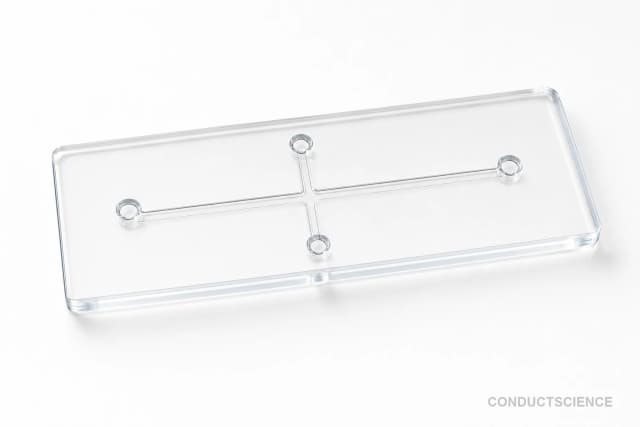
PMMA microfluidic chip with 3-electrode electrochemical configuration for toxic compound and pesticide detection in environmental samples.
Reusable chip — designed for multiple experimental runs. Compatible with standard microfluidic tubing: steel pins (0.7 mm ID / 1.0 mm OD) and silicone tubing (0.8 mm ID / 1.9 mm OD). Available in bulk packs (5‑, 10‑, and 25‑unit) for lab-scale and consumable workflows.

Louise Corscadden, PhD
Director of Science · ConductScience
Ask Louise about Toxic Compound Detection PMMA Chip fit, setup, configuration, or quote prep.
Already working with us? Sign in to connect this with My Scientist.
Key Specifications
Full details →- Model fit
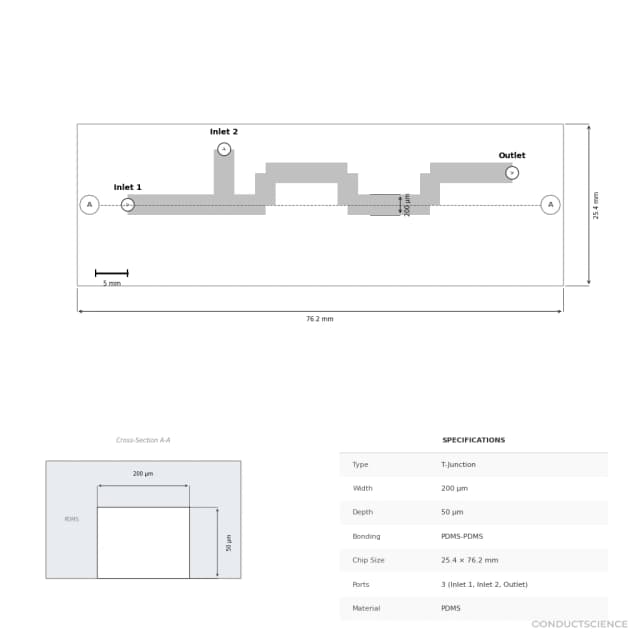
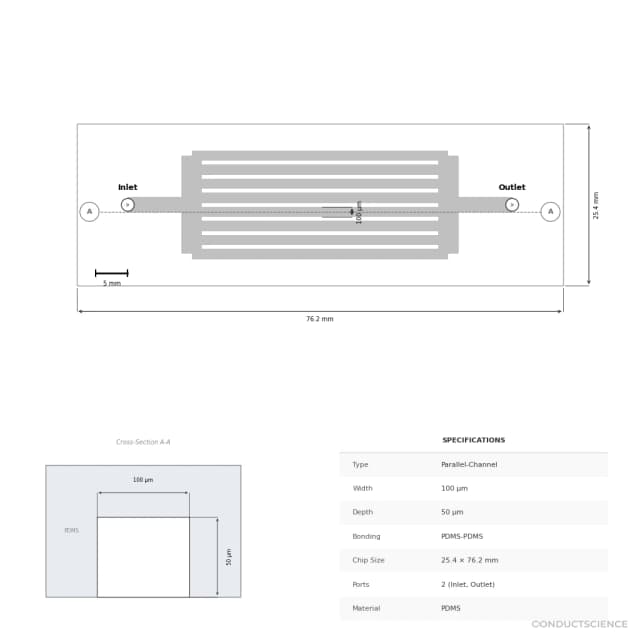
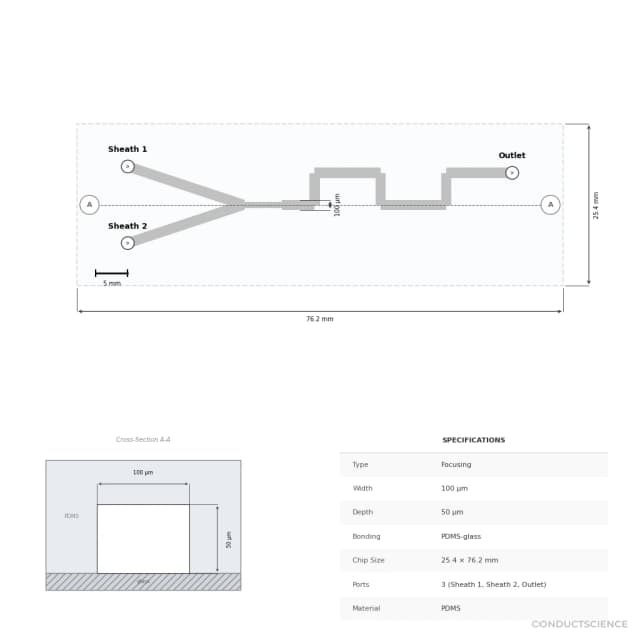
- 3 selectable configurations
- SKU family
- WHM-0135
- Shipping box
- 181.8 x 136.3 x 90.9 cm
- Ordering
- Online checkout and quote request available
- Category
- Environmental Detection Chips
- Build notes
- Confirm accessories, station layout, and support needs before purchase
The Toxic Compound Detection PMMA Chip is a microfluidic electrochemical sensor designed for environmental analysis applications. This chip employs a 3-electrode electrochemical configuration fabricated in PMMA (polymethyl methacrylate) to enable detection of toxic compounds and pesticides in environmental samples.
The device integrates microfluidic sample handling with electrochemical detection, allowing researchers to analyze small sample volumes for the presence of environmental contaminants. The PMMA construction provides chemical compatibility with a range of analytes while maintaining optical transparency for potential integration with optical detection methods.
How It Works
The chip operates on electrochemical detection principles using a 3-electrode configuration consisting of working, reference, and counter electrodes. When a sample containing target compounds is introduced to the microfluidic channel, the analytes undergo oxidation or reduction reactions at the working electrode surface under controlled potential conditions.
The resulting current response is proportional to the concentration of electroactive species in the sample. The microfluidic design enables precise control of sample volume and residence time, while the PMMA substrate provides a stable platform for electrode patterning and chemical compatibility with various solvents and buffer systems.
The 3-electrode system allows for accurate potential control and current measurement, enabling both qualitative identification through characteristic redox potentials and quantitative analysis through current magnitude correlation with concentration.
Features & Benefits
Shipping weight
- 3.3 lb
Shipping box
- L: 181.8 cm
- W: 136.3 cm
- H: 90.9 cm
| Feature | This Product | Typical Alternative | Advantage |
|---|---|---|---|
| Electrode Configuration | 3-electrode electrochemical system | Some devices use 2-electrode configurations with limited potential control | Enables accurate potential control and eliminates IR drop effects for quantitative measurements |
| Substrate Material | PMMA construction | Glass or silicon substrates are common alternatives | Provides chemical compatibility with organic solvents while maintaining lower fabrication costs |
| Target Applications | Specifically optimized for toxic compounds and pesticides | General-purpose electrochemical chips may lack application-specific optimization | Electrode surface treatments and geometry optimized for environmental contaminant detection |
| Integration Level | Lab-on-chip microfluidic design | Separate electrochemical cells require external sample handling | Combines sample introduction, mixing, and detection in a single disposable device |
This chip offers application-specific optimization for toxic compound detection with PMMA construction providing chemical compatibility and cost-effectiveness. The 3-electrode configuration ensures accurate electrochemical measurements in a microfluidic format.
| Model | SKU | Listed price | Status | Shipping box |
|---|---|---|---|---|
| 25-Pack | WHM-0135-25PK | Quote | Available | 181.8 x 136.3 x 90.9 cm |
| 10-Pack | WHM-0135-10PK | $1,490.00 | Available | 181.8 x 136.3 x 90.9 cm |
| 5-Pack | WHM-0135-5PK | Quote | Available | 181.8 x 136.3 x 90.9 cm |
Practical Tips
Perform electrode conditioning with multiple cyclic voltammetry scans in supporting electrolyte before sample analysis.
Why: Ensures stable baseline current and reproducible electrode response
Store chips in dry conditions with protective packaging to prevent electrode oxidation and channel contamination.
Why: PMMA can absorb moisture and electrode surfaces may degrade if exposed to ambient conditions
Use consistent flow rates and residence times when comparing samples to maintain reproducible mass transport conditions.
Why: Electrochemical response depends strongly on analyte delivery rate to electrode surface
If current response is unstable, check for air bubbles in microfluidic channels using microscopic inspection.
Why: Air bubbles disrupt electrical continuity and create variable electrode contact area
Record blank measurements between samples using the same buffer and flow conditions as test samples.
Why: Enables proper background subtraction and detection of electrode fouling or contamination
Handle environmental samples in appropriate containment facilities and dispose of used chips according to chemical waste protocols.
Why: Environmental samples may contain unknown toxic compounds requiring proper safety precautions
Setup Guide
What’s in the Box
- Toxic Compound Detection PMMA Chip
- Electrode connection guide (typical)
- Fluidic interface specifications (typical)
- Operating protocol documentation (typical)
Warranty
ConductScience provides a standard 1-year manufacturer warranty covering material defects and fabrication issues. Technical support includes protocol guidance and troubleshooting assistance for electrochemical detection applications.
Compliance
References
Background reading relevant to this product:
What types of toxic compounds can this chip detect?
The chip is designed for electroactive toxic compounds and pesticides. Specific detection capabilities depend on the redox properties of target analytes. Consult product datasheet for validated compound list and detection limits.
What potentiostat specifications are required?
The chip requires a 3-electrode capable potentiostat with appropriate current sensitivity for microelectrode applications. Standard laboratory potentiostats with sub-microampere current resolution are typically suitable.
How should samples be prepared for analysis?
Samples should be filtered to remove particulates and pH-adjusted as appropriate for target analytes. Buffer compatibility with PMMA and electrode materials should be verified.
What is the typical chip lifetime?
Chip lifetime depends on sample matrix and cleaning protocols. Single-use operation is recommended for contaminated environmental samples to prevent cross-contamination.
Can the chip be regenerated between samples?
Electrode surfaces may be regenerated using appropriate cleaning solutions, though effectiveness varies by analyte type and contamination level. Fresh chips are recommended for critical quantitative analyses.
What data output formats are available?
Data output depends on the connected potentiostat system. Standard voltammetric data formats including cyclic voltammograms and chronoamperometric responses are typically supported.
How does this compare to conventional electrochemical cells?
The microfluidic format reduces sample volume requirements and provides better mass transport compared to conventional macro-electrodes, potentially improving sensitivity for trace-level analysis.
Have a question about this product?
Have a question? Just ask.
Send it over and we'll email you a personalized answer — no call, no scheduling.
Prefer to talk it through?