TPSX-G250 Seed Color Sorter
CCD true-color seed color sorter with ≥99% purity, 100–250 kg/h throughput, and 0.01 mm² defect detection.
Request a quote for your crop protocol.

Louise Corscadden, PhD
Director of Science · ConductScience
Ask Louise about TPSX-G250 Seed Color Sorter fit, setup, configuration, or quote prep.
Already working with us? Sign in to connect this with My Scientist.
Key Specifications
Full details →- Model fit
- Configured during quote
- SKU family
- AGR-0018
- Sizing
- Model-specific dimensions confirmed from the selected configuration
- Ordering
- Quote-reviewed before fulfillment
- Category
- Agriculture & Food Science
- Build notes
- Wear-resistant
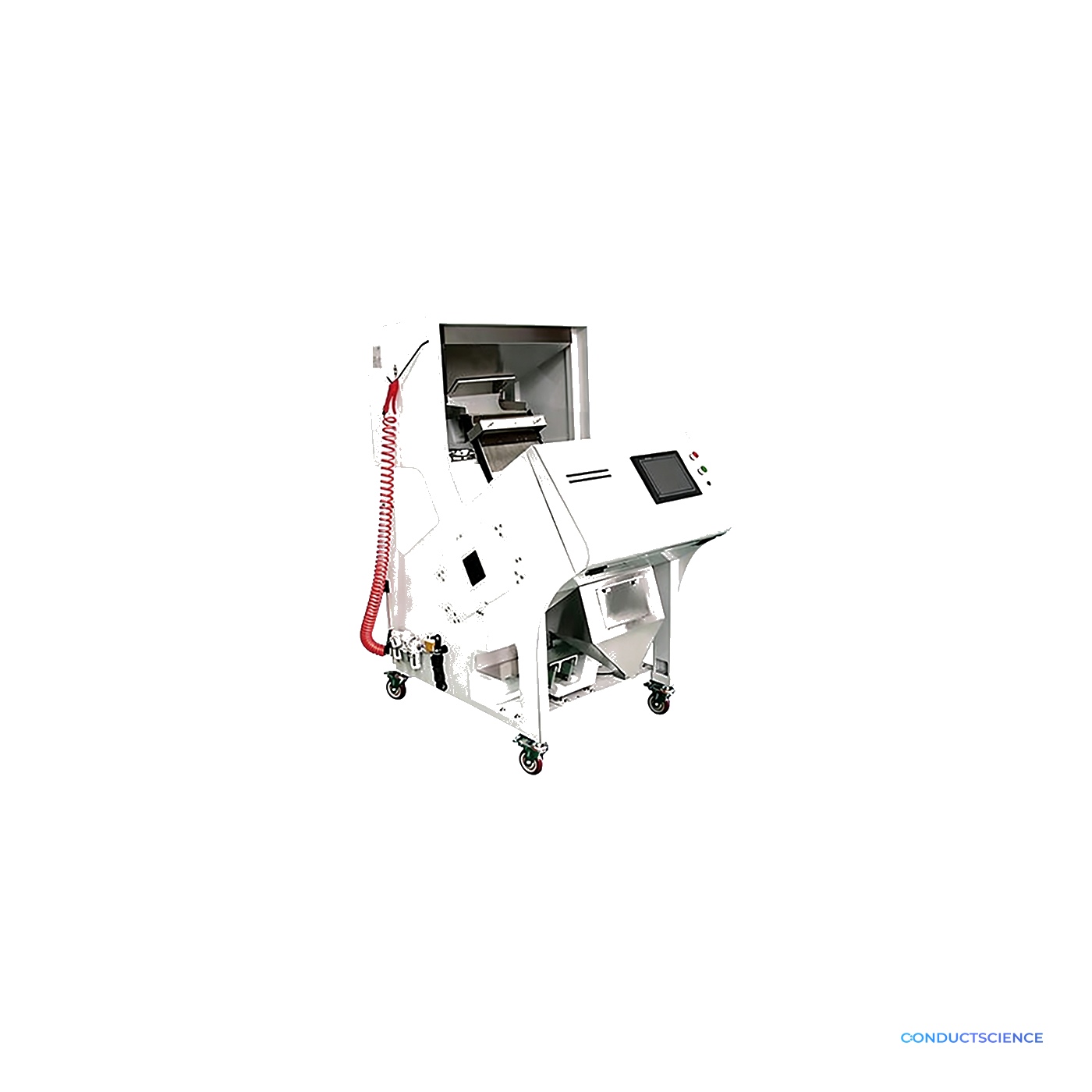
The TPSX-G250 Seed Color Sorter uses high-resolution CCD true-color imaging and intelligent processing algorithms to identify and eject defective seed material—including moldy seeds, discolored particles, stones, and foreign impurities—based on color and shape differences. The system achieves sorting purity of ≥99%, making it suitable for seed quality control workflows where removal of off-grade material is critical.
At the core of the instrument is a high-resolution camera that captures fast, clear images of individual seeds as they travel through a wear-resistant chute. Advanced algorithms then evaluate each particle across multiple color channels and shape parameters, triggering corrosion-resistant solenoid valves to eject defective material with precision. The system can detect surface defects as small as 0.01 mm², and supports positive sorting, reverse sorting, multi-color sorting, and shape-based sorting modes.
The TPSX-G250 handles throughput of 200–500 jin per hour (100–250 kg/h) while drawing 0.8–3.5 kW of power, and operates from a standard 220 V / 50 Hz supply with a compressed-air source at 0.4–0.6 MPa. An integrated filtration stage removes mist, water, oil, and dust from the air stream to protect internal components. Remote monitoring enables real-time operation and maintenance, and historical sorting data can be stored and retrieved for recordkeeping or protocol validation.
Because optimal configuration—sorting mode, detection sensitivity, and throughput settings—depends on seed type, particle size distribution, and defect profile specific to each study, the TPSX-G250 is available through a guided quote process. Contact our team to discuss your crop type and sorting requirements so we can configure the instrument to match your protocol.
Output
- 200–500 jin/hour (100–250 kg/h)
Sorting Purity
- ≥99%
Carryover Ratio (bad : good)
- 12.5 : 1
Minimum Detectable Defect
- 0.01 mm²
Power Supply
- 220 V, 50 Hz
Power Consumption
- 0.8–3.5 kW
Air Source Pressure
- 0.4–0.6 MPa
Air Consumption
- 140–560 L/min
Total Weight
- 127 kg
Overall Dimensions (L × W × H)
- 1110 × 500 × 1450 mm
Sorting Modes
- Positive, reverse, multi-color, and shape sorting
Imaging Technology
- High-resolution CCD true-color camera
Chute Material
- Wear-resistant
Solenoid Valves
- Corrosion-resistant
Air Filtration
- Integrated; removes mist, water, oil, and dust
Remote Monitoring
- Real-time operation and maintenance via remote control
Data Memory
- Stores and retrieves historical sorting data
What throughput can I expect from the TPSX-G250?
The TPSX-G250 is rated for 200–500 jin per hour, equivalent to 100–250 kg/h. Actual throughput within that range depends on seed type, particle size, and the proportion of defective material present in the incoming sample.
How small a defect can the sorter reliably detect?
The CCD true-color imaging system can detect surface defects as small as 0.01 mm², enabling the sorter to flag discoloration, mold spots, and other blemishes that may be missed by conventional screening equipment.
What types of impurities and defects does the TPSX-G250 remove?
The system is designed to eject moldy seeds, stones, foreign impurities, and discolored particles. It supports positive sorting (keeping good material), reverse sorting (ejecting target material), multi-color sorting, and shape-based sorting, so it can be configured for a range of defect profiles.
What utilities does the instrument require?
The TPSX-G250 requires a 220 V / 50 Hz electrical supply and a compressed-air source providing 0.4–0.6 MPa at 140–560 L/min air consumption. An integrated filtration stage within the unit removes mist, water, oil, and dust from the air stream.
Can sorting parameters be saved and recalled between runs?
Yes. The instrument includes onboard data memory that stores historical sorting configurations and results, allowing operators to retrieve previously validated settings for repeat crops or standard seed lots.
Have a question about this product?
Have a question? Just ask.
Send it over and we'll email you a personalized answer — no call, no scheduling.
Prefer to talk it through?
Frequently Bought Together