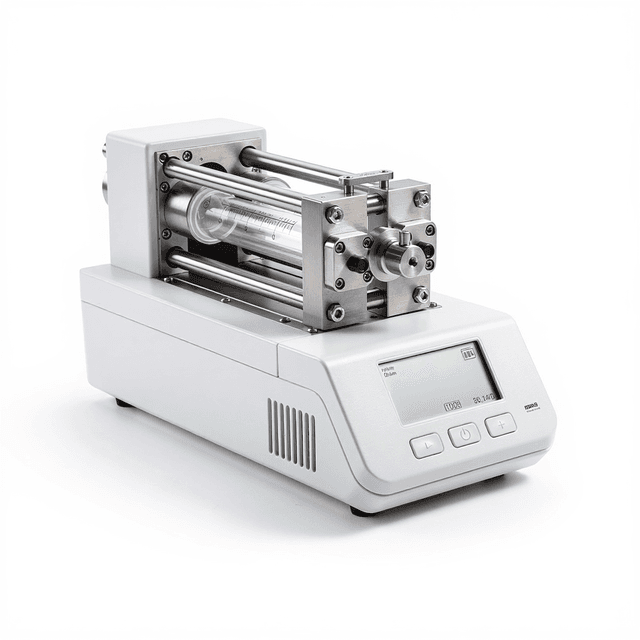
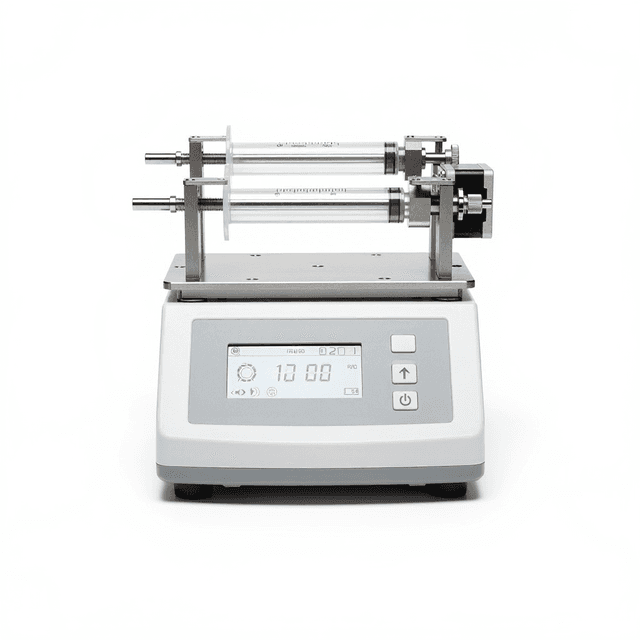
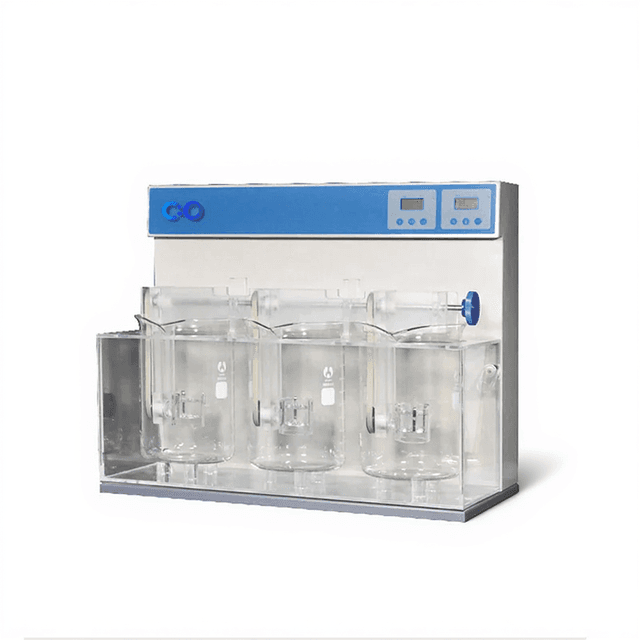
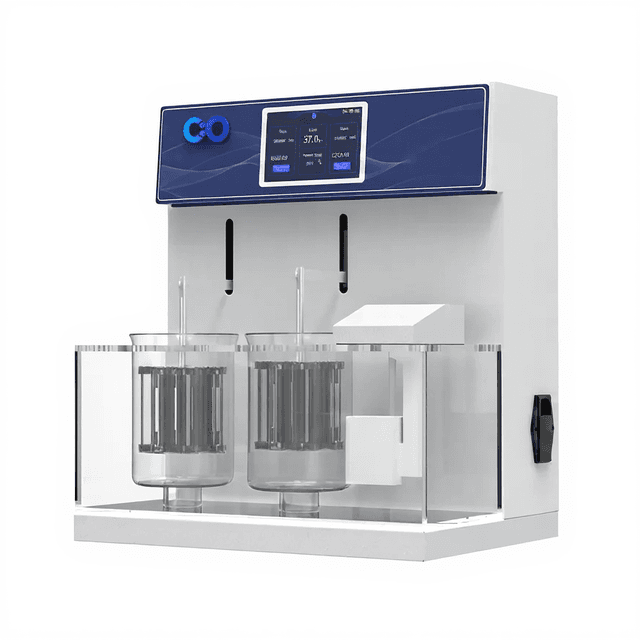
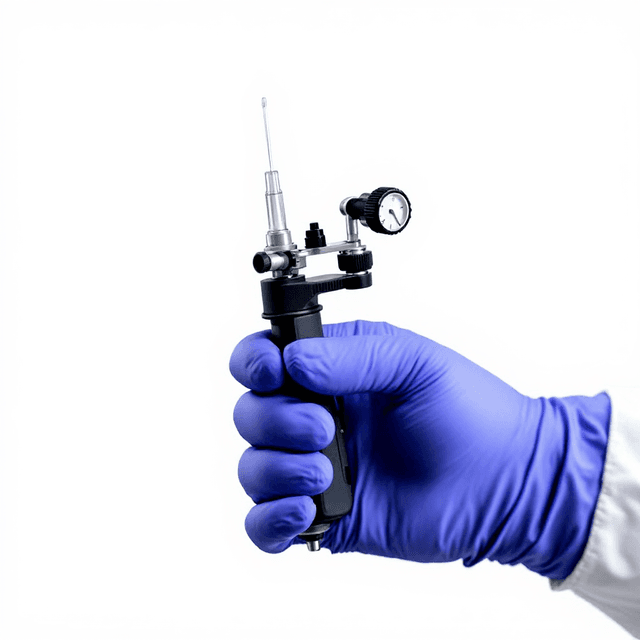
UV-Vis Photocatalytic Glass Microreactor
Borosilicate glass microreactor for UV-Vis photochemistry and photocatalysis research, enabling controlled light-driven chemical transformations in laboratory-scale reaction volumes.

Louise Corscadden, PhD
Director of Science · ConductScience
Ask Louise about UV-Vis Photocatalytic Glass Microreactor fit, setup, configuration, or quote prep.
Already working with us? Sign in to connect this with My Scientist.
Key Specifications
Full details →- Model fit
- Configured during quote
- SKU family
- WHM-0060
- Shipping box
- 300.0 x 200.0 x 150.0 cm
- Ordering
- Online checkout and quote request available
- Category
- Lab Equipment
- Build notes
- glass
The UV-Vis Photocatalytic Glass Microreactor is a specialized borosilicate glass reaction vessel designed for photochemical synthesis and photocatalytic studies under ultraviolet and visible light irradiation. This compact microreactor enables controlled photochemical transformations in small-scale reaction volumes, providing researchers with a platform for studying light-driven chemical processes, catalyst screening, and synthetic methodology development.
The transparent borosilicate glass construction ensures broad spectral transmission across UV and visible wavelengths while maintaining chemical inertness to most organic solvents and reaction conditions. The microreactor format allows for precise control of reaction parameters including light exposure, temperature, and reagent mixing, making it suitable for mechanistic studies and optimization of photocatalytic processes in laboratory settings.
How It Works
Photocatalytic microreactors operate on the principle of light-activated chemical transformation, where photons of specific wavelengths provide the energy required to initiate or drive chemical reactions. When UV or visible light irradiates the reaction mixture within the glass vessel, photons are absorbed by photocatalysts, photosensitizers, or reactant molecules themselves, promoting electrons to excited states and enabling bond formation, cleavage, or rearrangement processes that would not occur under thermal conditions alone.
The borosilicate glass construction provides excellent optical transparency across the UV-Vis spectrum while maintaining chemical resistance to organic solvents and reaction conditions. The microreactor geometry ensures uniform light distribution throughout the reaction volume while allowing for temperature control and reagent addition. The compact dimensions facilitate integration with standard laboratory light sources and analytical equipment for real-time monitoring of photochemical processes.
Features & Benefits
Light Source
- UV-Vis
Automation Level
- manual
Brand
- ConductScience
Material
- glass
Research Domain
- Analytical Chemistry
- Environmental Monitoring
- Materials Science
Shipping weight
- 8.0 lb
Shipping box
- L: 300.0 cm
- W: 200.0 cm
- H: 150.0 cm
| Feature | This Product | Typical Alternative | Advantage |
|---|---|---|---|
| Construction Material | Borosilicate glass with excellent UV-Vis transmission | Some models use quartz or standard glass with different optical properties | Provides optimal light transmission across UV-Vis spectrum while maintaining chemical resistance to most organic solvents. |
| Reactor Size | Compact 300×200×150 mm microreactor format | Larger batch reactors often require more space and reagents | Enables efficient screening of reaction conditions and catalyst systems with minimal reagent consumption. |
| Application Focus | Specifically designed for UV-Vis photochemistry and photocatalysis | General-purpose reactors may lack optimization for photochemical applications | Optimized geometry and materials selection ensure reliable performance in light-driven chemical processes. |
| System Weight | 8 kg stable platform configuration | Lighter systems may lack stability during extended reactions | Provides stable positioning during long photochemical reactions while remaining manageable for laboratory use. |
This microreactor combines borosilicate glass construction for optimal UV-Vis transparency with a compact form factor suitable for benchtop photochemical studies. The system is specifically optimized for photocatalysis and photochemical synthesis applications, offering researchers a dedicated platform for light-driven chemical transformations.
Practical Tips
Use magnetic stirring during photolysis to ensure uniform light exposure throughout the reaction mixture and prevent concentration gradients.
Why: Ensures all reactant molecules experience consistent photon flux for reproducible photochemical transformations.
Clean the reactor immediately after photocatalytic experiments to prevent catalyst adhesion to glass surfaces.
Why: Photocatalyst buildup can affect optical transparency and alter light distribution in subsequent experiments.
Always use appropriate UV protection and ventilation when operating with UV light sources.
Why: UV radiation exposure can cause eye damage and skin burns, while some photochemical reactions may generate volatile products.
Monitor reaction temperature during photolysis to distinguish between photochemical and thermal reaction pathways.
Why: Temperature increases from light absorption can activate thermal side reactions that complicate mechanistic interpretation.
Measure light intensity at the reactor position using a calibrated radiometer before starting photochemical experiments.
Why: Light intensity affects reaction rates and selectivity, making intensity measurement essential for reproducible results and literature comparison.
If photochemical reactions proceed slower than expected, check for optical contamination on glass surfaces and catalyst deactivation.
Why: Reduced light transmission or catalyst poisoning are common causes of decreased photochemical efficiency.
Setup Guide
What’s in the Box
- UV-Vis Photocatalytic Glass Microreactor (main unit)
- User manual and operation guide
- Cleaning and maintenance instructions (typical)
- Safety documentation (typical)
Warranty
ConductScience provides a standard one-year manufacturer warranty covering defects in materials and workmanship, with technical support available for setup and operational questions.
Compliance
What wavelength range does the borosilicate glass transmit for photochemical studies?
Borosilicate glass typically provides good transmission from approximately 280 nm through the visible spectrum, making it suitable for most UV-A, UV-B, and visible light photochemistry applications. Consult the product datasheet for specific transmission characteristics.
How do I ensure uniform light distribution throughout the reaction volume?
Position the light source to provide even illumination across the reactor vessel and consider using magnetic stirring during photolysis to ensure all reaction mixture experiences consistent light exposure.
What types of photocatalysts are compatible with this reactor system?
The chemically inert borosilicate glass construction is compatible with most common photocatalysts including titanium dioxide, zinc oxide, organic photosensitizers, and metal complexes used in photochemical synthesis.
Can this reactor be used with high-intensity light sources?
The reactor can accommodate various light intensities, though temperature control becomes important with high-intensity sources to prevent thermal side reactions and maintain photochemical selectivity.
How do I clean the reactor between different photochemical experiments?
Clean with appropriate organic solvents followed by deionized water rinse, then dry thoroughly. For stubborn photocatalyst residues, mild acid or base treatment may be necessary depending on the catalyst system used.
What analytical techniques can be coupled with this reactor for real-time monitoring?
The transparent construction enables UV-Vis spectroscopy, fluorescence measurements, and visual observation during photolysis, while sampling ports allow for chromatographic analysis of reaction progress.
Is the reactor suitable for gas-phase photochemical reactions?
The reactor is primarily designed for solution-phase photochemistry. Gas-phase applications would require appropriate sealing and gas handling modifications not included with the standard unit.
Have a question about this product?
Have a question? Just ask.
Send it over and we'll email you a personalized answer — no call, no scheduling.
Prefer to talk it through?