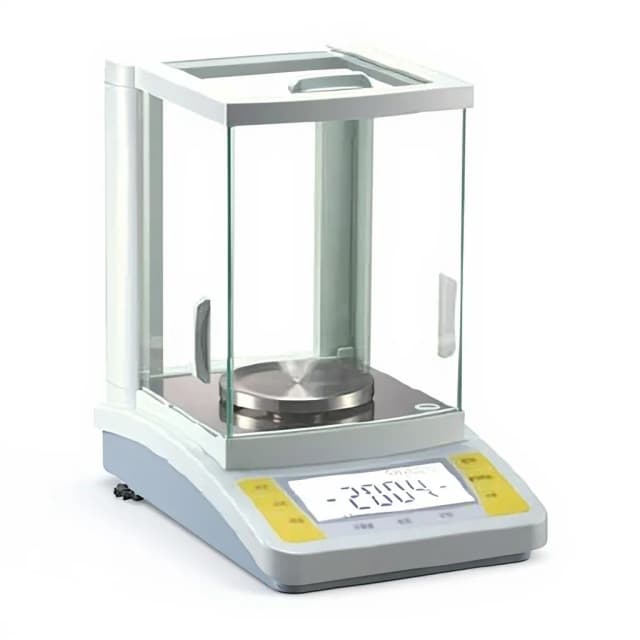
Visual Disc Polarimeter
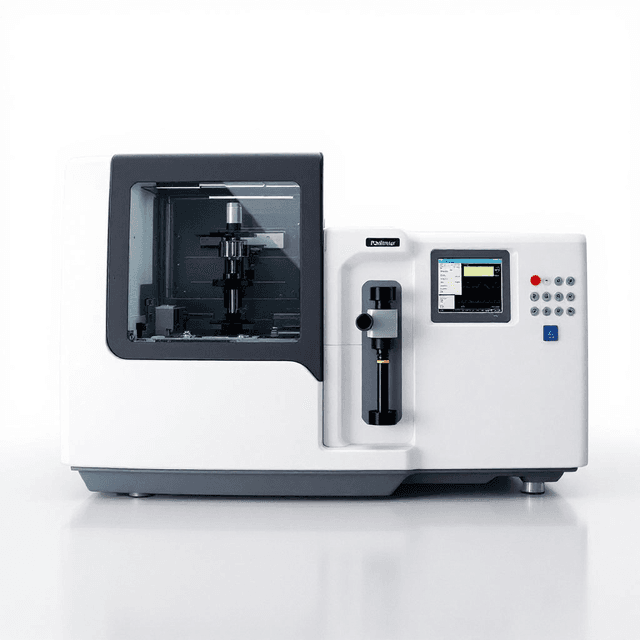
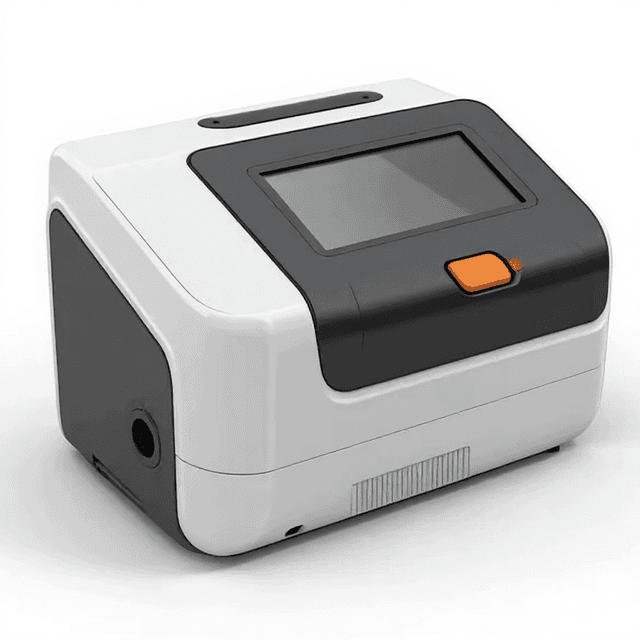
Benchtop visual disc polarimeter for measuring optical rotation of chiral compounds through direct observation of polarized light angle changes in liquid samples.

Louise Corscadden, PhD
Director of Science · ConductScience
Ask Louise about Visual Disc Polarimeter fit, setup, configuration, or quote prep.
Already working with us? Sign in to connect this with My Scientist.
Key Specifications
Full details →- Model fit
- Configured during quote
- SKU family
- BIO-0550
- Shipping box
- 42.0 x 43.6 x 38.0 cm
- Ordering
- Online checkout and quote request available
- Category
- Analytical Instruments
- Build notes
- Confirm accessories, station layout, and support needs before purchase
The Visual Disc Polarimeter is a benchtop optical instrument designed for measuring the optical rotation of polarized light through liquid samples. This polarimetric analyzer employs a visual disc system to determine the specific rotation angle of optically active compounds, providing quantitative analysis of chiral substances in solution. The instrument operates on the principle of plane-polarized light rotation when passing through optically active media, enabling researchers to characterize stereochemical properties and determine concentration of chiral compounds.
The system features direct visual observation of the polarization angle through a graduated disc interface, allowing for precise angular measurements without complex electronic detection systems. This approach provides reliable optical rotation data for samples containing sugars, amino acids, pharmaceuticals, and other optically active organic compounds. The instrument supports both qualitative identification of chiral centers and quantitative determination of enantiomeric composition in research applications requiring polarimetric analysis.
How It Works
The Visual Disc Polarimeter operates on the fundamental principle that plane-polarized light undergoes rotation when passing through optically active substances. The instrument generates polarized light using a fixed polarizer, which creates a single plane of oscillation from unpolarized light. When this polarized beam passes through a sample containing chiral molecules, the plane of polarization rotates by an angle proportional to the concentration and specific rotation of the optically active compound.
The rotated polarized light then encounters a second polarizing element (analyzer) mounted on a graduated disc that can be rotated manually. The operator adjusts the analyzer angle until the transmitted light intensity reaches either maximum brightness or minimum darkness, depending on the visual detection method employed. The angular displacement required to achieve this optical condition directly corresponds to the optical rotation induced by the sample.
Quantitative analysis is performed using the relationship α = [α]₂₀ᴅ × l × c, where α is the measured rotation angle, [α]₂₀ᴅ is the specific rotation constant, l is the path length, and c is the concentration. This fundamental polarimetric equation enables determination of unknown concentrations when the specific rotation is known, or characterization of optical activity when concentration is established.
Features & Benefits
Automation Level
- manual
Brand
- ConductScience
Research Domain
- Analytical Chemistry
- Food Science
- Materials Science
- Microbiology
- Pharmaceutical QC
Shipping weight
- 29.98 lb
Shipping box
- L: 42.0 cm
- W: 43.6 cm
- H: 38.0 cm
| Feature | This Product | Typical Alternative | Advantage |
|---|---|---|---|
| Detection Method | Visual disc observation system | Digital photoelectric detection systems | Enables direct verification of optical effects and provides intuitive understanding of polarimetric measurement principles |
| Measurement Approach | Manual analyzer rotation with graduated scale | Automated rotation with electronic readout | Allows operator control over measurement precision and enables repeated verification of rotation angles |
| Form Factor | Benchtop optical instrument | Varies from portable to large benchtop models | Provides stable optical platform suitable for routine laboratory use while maintaining compact footprint |
| Operation Mode | Direct visual observation | Electronic display and data logging | Eliminates electronic complexity and provides immediate visual feedback of polarimetric effects |
The Visual Disc Polarimeter provides direct optical measurement capabilities through visual observation, offering reliable polarimetric analysis with operator control over measurement precision. The instrument combines traditional polarimetric principles with practical benchtop design for routine analytical applications.
Practical Tips
Perform zero-point calibration using optically inactive reference materials like distilled water before each measurement session.
Why: Establishes accurate baseline and compensates for any optical system drift or alignment changes.
Allow samples to equilibrate to room temperature before measurement and avoid samples with air bubbles in the optical path.
Why: Temperature variations and air bubbles cause optical distortions that affect rotation angle accuracy.
Record multiple measurements and rotate the analyzer in both directions to average out systematic errors.
Why: Bidirectional measurements help identify and compensate for mechanical backlash in the rotation mechanism.
Clean optical surfaces with appropriate lens cleaning materials and store sample cells properly to prevent scratching.
Why: Optical surface quality directly affects light transmission and measurement precision.
If visual endpoints are difficult to determine, check light source intensity and ensure proper polarizer alignment.
Why: Inadequate illumination or polarizer misalignment reduces visual contrast needed for accurate endpoint detection.
Use appropriate eye protection when observing intense light sources and handle glass sample cells carefully.
Why: Protects operator vision and prevents sample cell breakage that could cause injury or sample loss.
Document measurement conditions including temperature, wavelength, and path length for each analysis session.
Why: Complete documentation enables result reproduction and comparison with literature or reference values.
Setup Guide
What’s in the Box
- Visual disc polarimeter main unit (typical)
- Sample cell holder assembly (typical)
- Standard polarimetry cell (typical)
- Light source and housing (typical)
- User operation manual (typical)
- Calibration reference materials (typical)
Warranty
ConductScience provides standard one-year manufacturer warranty covering optical components and mechanical systems, with technical support for setup and operation guidance. Extended warranty options may be available for high-usage laboratory environments.
Compliance
What is the typical measurement precision achievable with visual disc polarimeters?
Measurement precision depends on operator technique and sample preparation, typically ranging from ±0.1° to ±0.5° for experienced users. Precision improves with multiple readings and proper calibration procedures.
Which wavelength should be used for standard polarimetric measurements?
Sodium D-line (589.3 nm) is the standard wavelength for most polarimetric applications, providing consistent results that can be compared with literature values and pharmacopeial specifications.
How does sample temperature affect optical rotation measurements?
Temperature significantly affects specific rotation values, with most measurements standardized to 20°C. Temperature control or correction factors are essential for accurate quantitative analysis.
What sample cell path lengths are recommended for different concentration ranges?
Path length selection depends on expected rotation magnitude: 1-2 dm cells for high concentrations, 10-20 cm cells for moderate concentrations, and longer paths for dilute samples to achieve measurable rotation angles.
How often should zero-point calibration be performed?
Zero-point calibration should be performed daily or whenever changing measurement conditions, using distilled water or air as reference to establish baseline optical rotation.
Can this instrument measure both positive and negative optical rotation?
Yes, visual disc polarimeters can measure both dextrorotatory (positive) and levorotatory (negative) optical rotation by observing the direction of analyzer adjustment required to achieve visual endpoint.
What factors affect measurement reproducibility with visual observation?
Reproducibility depends on consistent visual endpoint determination, proper sample preparation, stable lighting conditions, and operator experience in recognizing optimal contrast conditions.
How does this compare to digital polarimeters in terms of accuracy?
Visual disc polarimeters provide reliable measurements with proper technique but may have slightly lower precision compared to digital instruments with photoelectric detection, while offering direct optical verification of results.
Have a question about this product?
Have a question? Just ask.
Send it over and we'll email you a personalized answer — no call, no scheduling.
Prefer to talk it through?