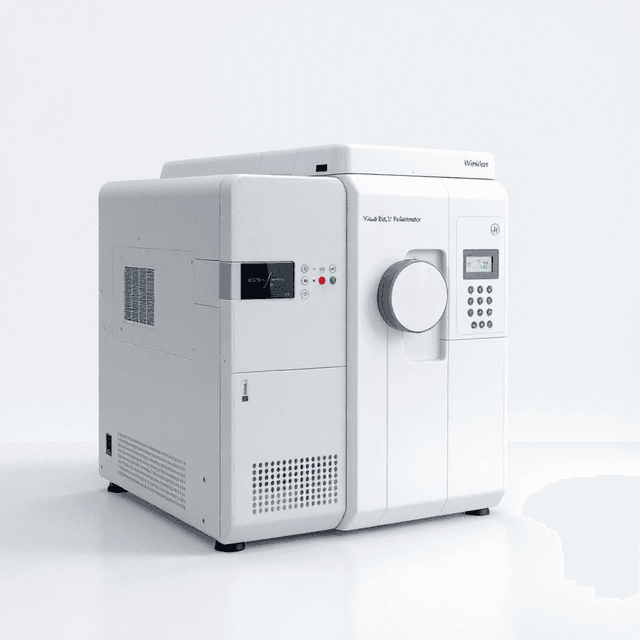
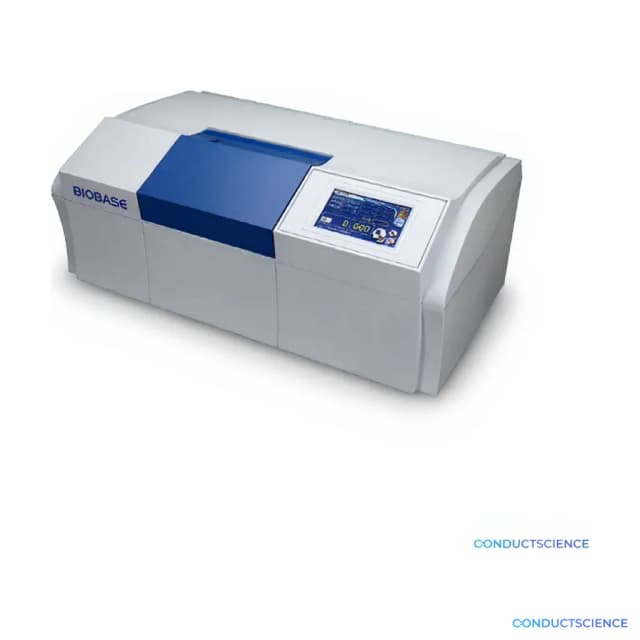
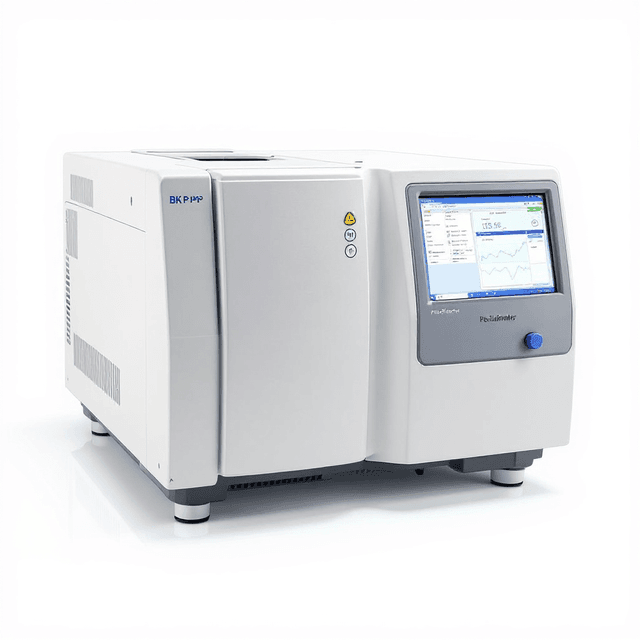
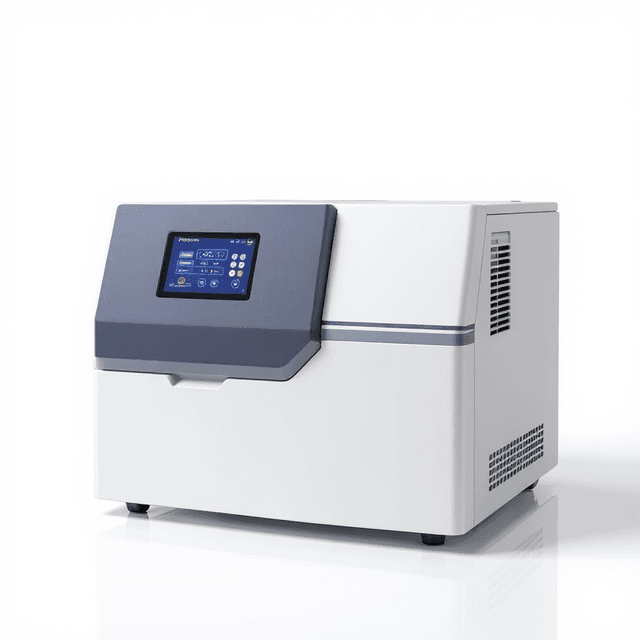
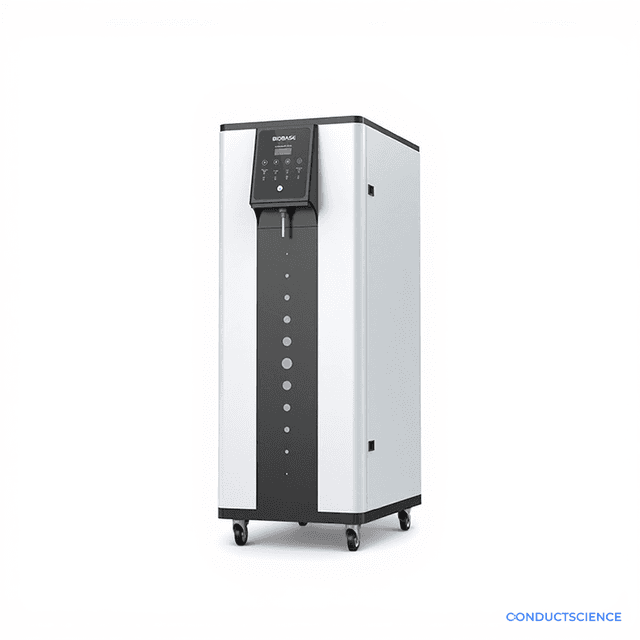
High-Speed Automatic Polarimeter
High-precision automatic polarimeter with LED illumination and Peltier temperature control for optical rotation and sugar content analysis with ±0.004° accuracy and <0.002° repeatability.

Louise Corscadden, PhD
Director of Science · ConductScience
Ask Louise about High-Speed Automatic Polarimeter fit, setup, configuration, or quote prep.
Already working with us? Sign in to connect this with My Scientist.
Key Specifications
Full details →- Model fit
- Configured during quote
- SKU family
- BIO-0549
- Shipping box
- 47.0 x 86.0 x 51.0 cm
- Ordering
- Online checkout and quote request available
- Category
- Analytical Instruments
- Build notes
- Confirm accessories, station layout, and support needs before purchase
The High-Speed Automatic Polarimeter is a precision optical instrument designed for rapid measurement of optical rotation, specific rotation, sugar content, and concentration in liquid samples. Utilizing LED illumination with precision interference filters at the standard sodium D-line wavelength (589nm), this polarimeter delivers high-accuracy measurements with ±0.004° precision and exceptional repeatability of <0.002°. The instrument features built-in Peltier temperature control ranging from 10-50°C, ensuring consistent measurement conditions for temperature-sensitive samples.
With a measurement range of ±90° for optical rotation and ±259°Z for sugar content, the polarimeter can analyze samples with transmission as low as 0.1%, making it suitable for highly concentrated or colored solutions. The high-speed response capability of 8°/second with measurement cycles completing 6 readings in 26 seconds provides efficient throughput for routine analytical workflows. The minimum reading resolution of 0.001° enables detection of subtle changes in optical activity, critical for quality control and research applications requiring precise chiral analysis.
How It Works
Polarimetry measures the rotation of plane-polarized light as it passes through optically active substances. The High-Speed Automatic Polarimeter employs LED illumination filtered to the sodium D-line wavelength (589nm), the standard reference for optical rotation measurements. Plane-polarized light is generated and directed through the sample cell containing the test solution.
Optically active molecules interact with the polarized light, causing the plane of polarization to rotate either clockwise (dextrorotatory) or counterclockwise (levorotatory) by an angle proportional to the concentration, path length, and specific rotation of the substance. The analyzer detector measures this rotation angle with high precision using photoelectric detection systems.
Built-in Peltier temperature control maintains sample temperature between 10-50°C, as optical rotation is temperature-dependent. The instrument automatically performs multiple measurements and calculates specific rotation values, sugar degrees (°Z), or concentrations based on the selected measurement mode and calibration parameters.
Features & Benefits
Automation Level
- fully-automated
Measurement Mode
- Optical rotation, specific rotation, sugar degree and concentration
Frequently Used Methods
- 30
Light Source
- (LED) (up to 100000 hours) +precision interference filters
Working Wavelength
- 589nm(Sodium D Spectrum)
Measurement Range
- ±90°(Rotation ) ±259°Z(Sugar )
Minimum Reading
- 0.001°
Repeatability
- <0.002°
Min. Transmission of Samples able to be Measured
- 0.1%
Response Speed
- 8°/S
Measurement Time
- 6 times/26s
Sample Temp. Control
- Yes
Temp. Control Mode
- Peltier(Built-in)
Temp. Control Range
- 10~50℃
Brand
- ConductScience
Research Domain
- Analytical Chemistry
- Environmental Monitoring
- Food Science
- Industrial Hygiene
- Materials Science
- Pharmaceutical QC
Accuracy
- ±0.004°
Shipping weight
- 36.0 lb
Shipping box
- L: 47.0 cm
- W: 86.0 cm
- H: 51.0 cm
| Feature | This Product | Typical Alternative | Advantage |
|---|---|---|---|
| Light Source Technology | LED with precision interference filters, 100,000-hour lifespan | Traditional tungsten or sodium lamps requiring frequent replacement and warm-up periods | Eliminates lamp replacement costs and provides immediate measurement capability without extended warm-up time. |
| Temperature Control | Built-in Peltier system with 10-50°C range | External water bath systems or no temperature control | Provides precise temperature stability without external equipment, reducing bench space requirements and setup complexity. |
| Measurement Speed | 8°/second response, 6 readings in 26 seconds | Manual null-balance systems requiring 2-5 minutes per measurement | Significantly increases sample throughput and reduces operator time investment for routine analytical workflows. |
| Precision and Repeatability | ±0.004° accuracy with <0.002° repeatability | Entry-level models often achieve ±0.01° accuracy | Enables detection of subtle changes in optical activity critical for pharmaceutical purity analysis and quality control. |
| Sample Transmission Range | Measures samples with 0.1% minimum transmission | Many instruments require higher transmission levels | Accommodates highly concentrated or colored samples without dilution, preserving sample integrity and reducing preparation time. |
| Measurement Range | ±90° rotation, ±259°Z sugar content | Limited range instruments may require multiple scales | Covers both pharmaceutical and food industry applications in a single instrument configuration. |
This polarimeter combines modern LED technology with integrated temperature control and high-speed automation to deliver exceptional precision and throughput. The 100,000-hour LED lifespan and built-in Peltier system reduce maintenance requirements while the 0.1% transmission capability accommodates challenging sample matrices that require dilution with conventional instruments.
Practical Tips
Perform zero calibration with the same solvent used to prepare your samples, as different solvents may have slight optical activity.
Why: This eliminates baseline drift and ensures accurate measurement of the analyte's true optical rotation.
Allow samples to equilibrate to the measurement temperature for at least 5 minutes before analysis, especially when transitioning between different sample types.
Why: Temperature gradients within the sample can cause measurement artifacts and reduce repeatability.
Clean sample cells immediately after use with appropriate solvents, avoiding abrasive materials that could scratch optical surfaces.
Why: Residual sample contamination can affect subsequent measurements and scratched cells introduce light scattering artifacts.
Use the multiple reading capability (6 readings in 26 seconds) and review the standard deviation to assess measurement consistency.
Why: High standard deviation may indicate sample inhomogeneity, air bubbles, or instrumental issues requiring attention.
If measurements drift over time, verify that the LED source has completed warm-up and check for temperature fluctuations in the laboratory environment.
Why: Optical components are sensitive to thermal changes, and incomplete warm-up can cause baseline instability.
Filter samples through 0.45 μm filters before measurement to remove particulates that could cause light scattering.
Why: Suspended particles reduce measurement accuracy and can damage sample cells if allowed to settle and concentrate.
Ensure proper ventilation when measuring volatile organic compounds and use appropriate sample handling procedures for hazardous materials.
Why: Volatile solvents can create vapor pressure changes in sealed cells and pose inhalation hazards in enclosed spaces.
Store certified reference standards in a temperature-controlled environment and check expiration dates before use.
Why: Reference standard degradation or temperature-induced changes can introduce systematic errors in calibration and subsequent measurements.
Setup Guide
What’s in the Box
- High-Speed Automatic Polarimeter main unit
- Sample cells (multiple path lengths) (typical)
- Power adapter and cables
- User manual and calibration certificate
- Sucrose reference standard (typical)
- Cleaning accessories (typical)
Warranty
ConductScience provides a standard one-year manufacturer warranty covering defects in materials and workmanship. Technical support includes calibration guidance and troubleshooting assistance for optimal instrument performance.
Compliance
What sample volumes and cell path lengths are recommended for different applications?
Consult the product datasheet for specific cell recommendations. Path length selection depends on sample concentration and optical activity strength, with shorter cells for concentrated samples and longer cells for dilute solutions.
How does temperature affect optical rotation measurements and why is control important?
Optical rotation is temperature-dependent for most compounds, typically decreasing 0.1-0.5% per degree Celsius. The built-in Peltier system maintains ±0.1°C stability from 10-50°C to ensure consistent, reproducible measurements across different ambient conditions.
Can this polarimeter measure samples with high color or turbidity?
Yes, the instrument can analyze samples with transmission as low as 0.1%, making it suitable for colored solutions, concentrated syrups, and slightly turbid samples that would be difficult with less sensitive polarimeters.
What calibration standards should be used and how frequently?
Certified sucrose solutions are the standard reference for sugar measurements, while quartz control plates verify optical rotation accuracy. Daily calibration checks are recommended for critical applications, with full recalibration monthly or per laboratory protocols.
How does the measurement speed compare to manual polarimeters?
The 8°/second response speed with 6 readings in 26 seconds is significantly faster than manual polarimeters requiring visual null-point detection. This automation reduces operator variability and increases throughput for routine analyses.
What data output formats are available for integration with LIMS systems?
Consult the product datasheet for specific data connectivity options. Modern polarimeters typically provide digital output capabilities for integration with laboratory information management systems.
Can the instrument detect enantiomeric purity in pharmaceutical compounds?
The ±0.004° accuracy and 0.001° resolution enable detection of enantiomeric excess changes relevant to pharmaceutical purity analysis, though specific detection limits depend on the compound's specific rotation and concentration.
What maintenance is required for the LED light source and optical components?
The LED source requires minimal maintenance with its 100,000-hour lifespan. Regular cleaning of optical surfaces with appropriate solvents and periodic calibration verification maintain optimal performance.
Have a question about this product?
Have a question? Just ask.
Send it over and we'll email you a personalized answer — no call, no scheduling.
Prefer to talk it through?