This productStandard
Visual X Maze
Four-choice X-shaped maze with visual cue or arm-discrimination options
visual discrimination, route choice, cue learning, and flexible arm selection.
Quote
Request Quote
X-shaped four-arm maze with programmable LED illumination for visual discrimination learning and spatial memory assessment in mice and rats.
| arm_length | 45 cm |
| arm_width | 10 cm |
| arm_height | 15 cm |
| maze_design | X-shaped |
| number_of_arms | 4 |
| floor_plates | 4 transparent and 4 semi-transparent white |

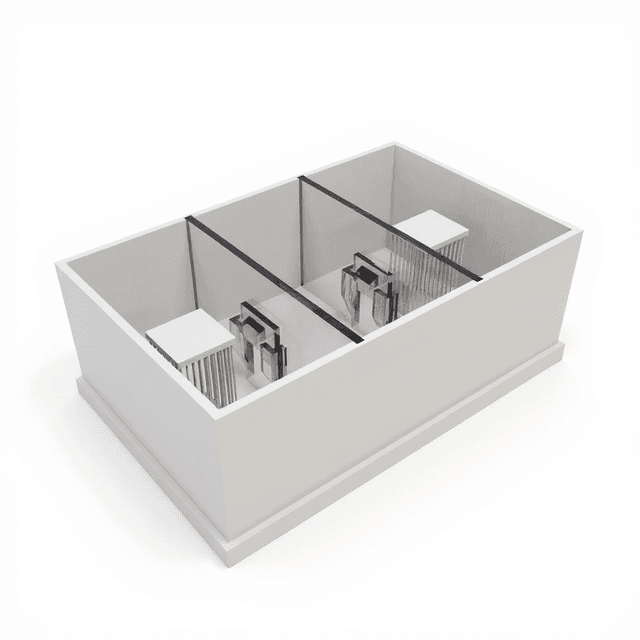
The Visual X Maze (ViS4M) is a specialized four-arm maze apparatus designed for visual discrimination and spatial memory assessment in rodents. With its X-shaped design, it enables both color vision and contrast vision testing, serving as a translational model for studying Alzheimer's disease, aging, and visual impairment conditions.
The apparatus features independently controllable LED arrays in each arm (40 LEDs per arm) with red (~628 nm), green (~517 nm), blue (~452 nm), and white (~441 nm and 553 nm) wavelengths. Illuminance settings range from 6 lux to approximately 100 lux, allowing for graded visual stimuli presentation.
| Feature | Description |
|---|---|
| Dual Testing Modes | Color vision testing via LED illumination and contrast vision testing via object placement |
| Flexible Illuminance | Adjustable light intensity across 5 settings (low, medium, high, red-high, equal) |
| Quantitative Measures | Alternations, transitions, arm preferences, and time-in-zone metrics |
| Minimal Training | Uses spontaneous exploration behaviors — no pre-training required |
| Species Adaptable | Available in mouse and rat configurations with species-specific dimensions |
Neil Veloso, Executive Director, Brown Technology Innovations
The Visual X Maze operates on the principle of visual discrimination learning, where rodents learn to associate specific visual stimuli with spatial locations or reward outcomes. The LED illumination system provides precise wavelength control, enabling researchers to present distinct visual cues that exploit rodent photoreceptor sensitivities and visual processing capabilities.
Each of the four arms contains an independent LED array with 40 individually controllable lights arranged in four rows. The wavelength-specific illumination (red ~628 nm, green ~517 nm, blue ~452 nm, white ~441-553 nm) allows for systematic investigation of color discrimination and visual attention. The modular floor plate system enables height adjustments to accommodate different species and modify task difficulty by altering visual angle and proximity to light sources.
The apparatus incorporates shock bar placement 7 cm inside each arm entrance, permitting aversive conditioning paradigms when combined with the visual stimuli. The dimmable low-voltage transformer system ensures consistent illuminance delivery across experimental sessions, with settings ranging from low-light conditions (6 lux) to bright illumination (~100 lux) for comprehensive visual threshold assessment.
| Feature | This Product | Typical Alternative | Advantage |
|---|---|---|---|
| LED wavelength control | Four specific wavelengths (628 nm red, 517 nm green, 452 nm blue, 441-553 nm white) with 40 LEDs per arm | Basic maze systems often use ambient room lighting or simple on/off illumination without wavelength specificity | Enables precise investigation of rodent photoreceptor responses and color discrimination capabilities for comprehensive visual processing studies. |
| Illuminance range and control | Adjustable from 6 lux to ~100 lux with individual arm control | Fixed lighting conditions or limited intensity adjustment options | Accommodates various experimental conditions from scotopic to photopic vision testing and individual animal threshold assessment. |
| Floor plate modularity | Insertable plates at two height options per species (6 cm or 11 cm for mice; 7.2 cm or 14 cm for rats) | Fixed floor height in most behavioral maze systems | Allows protocol customization for different experimental paradigms and task difficulty adjustment without requiring multiple apparatus. |
| Maze configuration | X-shaped four-arm design with 90-degree angles and integrated shock bar placement | Y-maze, T-maze, or radial arm configurations with varying complexity levels | Provides standardized spatial layout for established protocols while offering sufficient complexity for sophisticated behavioral paradigms. |
| Stimulus control system | Individual remote devices for independent arm control with dimmable low-voltage transformer | Manual switching or basic timer-controlled illumination systems | Enables complex stimulus patterns and counterbalanced experimental designs essential for rigorous behavioral neuroscience research. |
| Species accommodation | Separate mouse and rat configurations with species-specific dimensions | Single-size systems or adjustable mazes with compromised optimization | Provides optimal spatial proportions and stimulus presentation for each species' behavioral characteristics and visual capabilities. |
The ViS4M distinguishes itself through wavelength-specific LED control, modular height adjustment, and species-optimized configurations. The system provides precise visual stimulus delivery with illuminance control ranging from 6 lux to ~100 lux, individual arm operation, and integrated aversive conditioning capabilities for comprehensive visual-spatial learning studies.
Measure actual illuminance at animal eye level using a calibrated photometer before each experimental series to account for LED aging and ensure consistent stimulus delivery.
Why: LED output can drift over time and ambient conditions may affect perceived brightness levels during behavioral testing.
Inspect LED arrays weekly for failed units and clean transparent surfaces with appropriate solvents to maintain uniform light distribution.
Why: Individual LED failure or surface contamination can create unintended spatial brightness gradients that influence animal behavior.
Acclimate animals to the maze environment with neutral illumination before introducing wavelength-specific stimuli to separate spatial from visual learning components.
Why: This approach isolates visual discrimination performance from general maze exploration anxiety and spatial novelty effects.
If animals show unexpected arm preferences, verify illuminance symmetry across all arms and check for reflective surfaces creating unintended light patterns.
Why: Subtle brightness differences or reflections can create inadvertent visual cues that confound experimental interpretation.
Record ambient room lighting conditions and maintain consistent experimental timing to control for circadian influences on rodent visual sensitivity.
Why: Rodent photoreceptor sensitivity varies with circadian phase and background adaptation state affecting behavioral responses.
Test shock bar output with a multimeter before each session if using aversive conditioning protocols and ensure proper electrical isolation from LED systems.
Why: Electrical safety verification prevents equipment damage and ensures consistent aversive stimulus delivery for conditioning paradigms.
Use counterbalanced stimulus presentations across animals and sessions to control for potential position preferences or learning carryover effects.
Why: This experimental design approach strengthens statistical analysis and reduces confounding variables in behavioral data interpretation.
Store floor plates and ceiling covers in dust-free conditions and inspect for scratches or damage that could affect light transmission properties.
Why: Optical clarity of maze components directly impacts stimulus presentation quality and experimental reproducibility.
ConductScience provides a standard one-year manufacturer warranty covering defects in materials and workmanship, with technical support for setup, calibration, and protocol development assistance.
What is the spectral output accuracy of the LED arrays and how stable is illuminance over extended testing sessions?
The LEDs provide wavelength-specific output at red (~628 nm), green (~517 nm), blue (~452 nm), and white (~441 nm and 553 nm). The dimmable low-voltage transformer system maintains consistent illuminance delivery, though specific spectral tolerance and long-term stability specifications should be confirmed in the product datasheet.
Can the system accommodate counterbalanced experimental designs with independent arm control?
Yes, individual remote control devices enable independent operation of each arm's LED array, allowing for complex stimulus presentations and counterbalanced protocols across multiple test sessions.
What are the optimal floor plate height settings for different behavioral paradigms?
Floor plates can be positioned at 6 cm or 11 cm above base for mice, and 7.2 cm or 14 cm for rats. Height selection affects visual angle and stimulus proximity, with higher positions typically used for visual acuity assessment and lower positions for discrimination learning.
How does the shock delivery system integrate with visual stimulus presentation for aversive conditioning?
Shock bars are positioned 7 cm inside each arm entrance, allowing for precise spatial association with visual cues. The timing and intensity of shock delivery relative to LED stimulation requires coordination through the control system.
What data output capabilities are available for automated behavioral scoring?
The current system focuses on stimulus delivery control. Integration with video tracking systems or automated scoring software for movement detection and choice recording should be verified with the manufacturer.
Can the illuminance levels be calibrated to specific photometric standards?
The system provides low (6 lux) to high (~100 lux) settings, but precise photometric calibration requires external light measurement equipment to verify actual illuminance values at animal eye level.
What maintenance is required for the LED arrays and how is LED failure detected?
The 40-LED configuration per arm provides redundancy for consistent illumination. Regular visual inspection and photometric verification help identify LED degradation, though specific maintenance intervals depend on usage intensity.
How does this system compare to traditional Y-maze or Morris water maze approaches for spatial memory assessment?
The ViS4M emphasizes visual discrimination learning with controlled lighting conditions, whereas Y-maze tests spontaneous alternation and Morris water maze assesses spatial navigation. The ViS4M is optimal for studies requiring precise visual stimulus control and wavelength-specific investigations.
Use this apparatus with
No exact ConductVision support page is currently published for Visual X Maze; keep this as a roadmap gap rather than linking to a guessed URL.
Supporting page not yet builtStepwise visual-cue choice setup, trial timing, exclusion rules, and reporting checkpoints.
ConductMaze Visual X Maze Protocol ->No exact calculator page is currently published for Visual X Maze; keep this as a roadmap gap rather than linking to a guessed URL.
Supporting page not yet builtConfiguration considerations
Use these notes to scope species, cohort, tracking, and automation needs. Only verified product or support routes are linked from this section.
Four-choice X-shaped maze with visual cue or arm-discrimination options
visual discrimination, route choice, cue learning, and flexible arm selection.
Quote
Request QuoteMouse, rat, aquatic, insect, or large-animal scaling as appropriate
Use species-specific dimensions and lighting so the apparatus tests the intended construct instead of body size, visibility, or handling tolerance.
Quote
View options ->Camera, gates, sensors, cue control, or event logging as required
Best when the protocol needs reproducible timing, high-throughput scoring, or defensible endpoint extraction across cohorts.
Quote
Request automation help§ 1
The Visual X Maze is a choice and decision assay built around visual discrimination, route choice, cue learning, and flexible arm selection. Interpretable data depend on matching the apparatus geometry, subject species, trial structure, and scoring rules to the behavioral construct under study. 1
Visual-cue choice protocols depend on stable geometry, consistent trial timing, and pre-defined scoring rules. Without those controls, correct choices can be shifted by motivation, locomotion, light level, odor, cue salience, or handling rather than the intended behavioral construct. 1
This methods section summarizes setup, endpoint definitions, common confounds, sample output, adjacent assays, and reporting details needed to evaluate Visual X Maze results alongside the product specifications. 1
§ 2
Visual-cue choice with standardized setup, trial timing, and endpoint extraction.
Critical methodological constraints
Core Visual X Maze endpoints for behavioral interpretation and apparatus quality control.
Correct choices
Cue-guided accuracy
Choice latency
Latency and initiation
Cue-arm sequence
Spatial or zone strategy
Omissions
Engagement control
Cue visibility issues
Quality-control flag
+ Additional metrics: trial duration, zone dwell, event count, path efficiency, tracking confidence, exclusions, and session-level notes.
A compact percentage summary for Visual X Maze output.
§ 3
Aggregate publication data, sample apparatus output, and recent findings from the live PubMed feed.
PubMed volume and co-occurring behavioral methods for Visual X Maze studies.
Representative Visual X Maze output for methods review and endpoint interpretation.
Visual X Maze methods refresh: endpoint definitions, QA flags, and comparator assays
ConductScience methods note prepared for citation review.
The first citation-cron pass should replace this editorial seed with current Visual X Maze methods papers filtered for apparatus, protocol, and endpoint relevance.
§ 4
Limitations of the paradigm, methodological caveats, and current directions.
Variables that shift Visual X Maze results independent of anxiety state.
Cue salience can change apparent Visual X Maze performance without reflecting the intended behavioral construct. Control it in setup and report it in methods.
Side bias can change apparent Visual X Maze performance without reflecting the intended behavioral construct. Control it in setup and report it in methods.
Lighting can change apparent Visual X Maze performance without reflecting the intended behavioral construct. Control it in setup and report it in methods.
Motivation can change apparent Visual X Maze performance without reflecting the intended behavioral construct. Control it in setup and report it in methods.
Visual acuity can change apparent Visual X Maze performance without reflecting the intended behavioral construct. Control it in setup and report it in methods.
Visual X Maze is strongest when endpoint definitions, apparatus settings, and exclusion rules are specified before testing. Treat a single summary metric as a screening signal, then confirm interpretation with latency, engagement, comparator assays, and quality-control review. 1
Choose Visual X Maze when the research question matches visual discrimination, route choice, cue learning, and flexible arm selection. and the lab can control cue salience, side bias, and trial timing.
Specify species, cohort size, apparatus dimensions, lighting, tracking method, automation level, cleaning workflow, endpoint definitions, and exclusion criteria before data collection begins.
Interpretation is strongest when the apparatus configuration, trial timing, scoring thresholds, confound controls, and comparator assays are documented together with the primary endpoint.
Quarterly editorial review of emerging Visual X Maze methodology. Q2 2026
Define correct choices, latency, exclusions, and engagement flags before comparing cohorts.
Camera and event-log workflows can reduce observer burden and improve consistency when zone definitions and event thresholds are validated.
Visual X Maze should link to adjacent maze, motor, or motivation assays when interpretation depends on controls.
Apparatus dimensions, protocol fit, tracking compatibility, and endpoint definitions should be reported together so results are easier to reproduce.
§ 5
10 selected methods and validation references for Visual X Maze.