Behavioral Mazes

Four Arms Plus Maze

$1,990.00

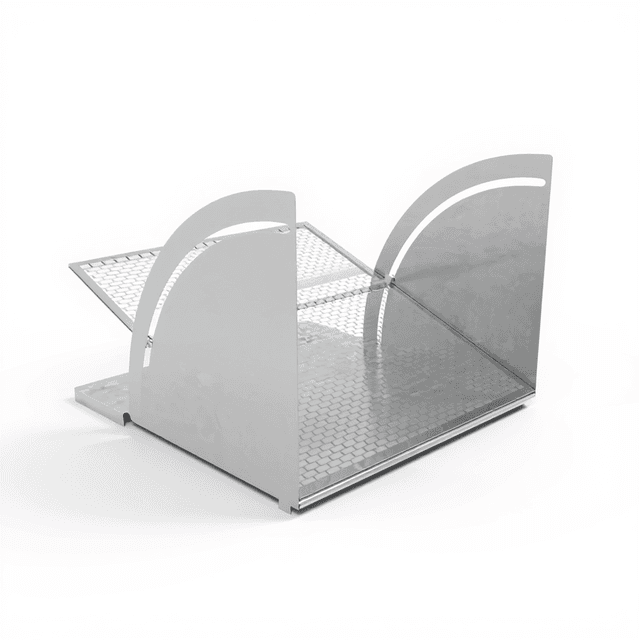
Cross-shaped behavioral maze apparatus for spatial learning, working memory, and motor function assessment in laboratory animals with four 10.2 cm wide arms and integrated feeding cups.

Key Specifications
Automation Levelmanual
SpeciesMouse, Rat
SKU:ME-24201
Need Help? Visit our Support CenterKnowledge base, order lookup, and ticket support
Our Staff are PhD Scientists
Get expert guidance on this product
LC
Louise Corscadden
PhD, Neuroscience
Schedule a Call Instead

The Four Arms Plus Maze is a cross-shaped behavioral apparatus designed for cognitive and motor function assessment in laboratory animals. Measuring 101.6 cm in total length and width with 45.7 cm height, this maze provides four identical arms extending from a central platform, each 10.2 cm wide with feeding cups (6 cm diameter, 3 cm height) for reward-based paradigms.

This apparatus enables researchers to evaluate spatial learning, working memory, and motor coordination through various experimental protocols. The plus-maze configuration allows for flexible experimental designs including spontaneous alternation tasks, spatial memory assessments, and motor deficit evaluations following neurological interventions.

How It Works

The Four Arms Plus Maze operates on principles of spatial cognition and exploratory behavior in laboratory animals. The cross-shaped design creates four equivalent choice points, allowing researchers to measure spontaneous alternation - the natural tendency of rodents to explore novel environments over recently visited areas. This behavior reflects intact working memory and spatial processing capabilities.

During testing, animals are placed in the central platform and allowed to explore freely. The maze design eliminates visual cues that might bias arm selection, ensuring that choices reflect internal cognitive processes rather than external guidance. Feeding cups at arm terminals can be baited with food rewards to motivate exploration and create reinforcement-based learning paradigms.

Data collection focuses on arm entry sequences, dwell times, and alternation patterns. Spontaneous alternation percentage is calculated as the number of alternations divided by possible alternations, providing a quantitative measure of working memory function. Motor assessments examine gait patterns, movement velocity, and coordination during maze navigation.


Features & Benefits

Cross-shaped four-arm design (101.6 cm total dimensions)
Provides equivalent choice points for unbiased assessment of spatial decision-making and spontaneous alternation behavior
10.2 cm arm width
Accommodates comfortable movement for rodents while preventing turning around within arms, ensuring directional choices
45.7 cm maze height
Prevents escape while allowing clear visual monitoring and video tracking of animal behavior
Integrated feeding cups (6 cm diameter, 3 cm height)
Enables reward-based learning paradigms and motivation control without external apparatus modifications
Open-top construction
Facilitates overhead video tracking and behavioral observation without obstruction
Uniform arm configuration
Eliminates structural biases that could confound cognitive assessment results
Durable construction materials
Withstands repeated cleaning and disinfection protocols required for multi-animal studies

Accessories

Enhance your setup with compatible accessories

Total: $0.00

Frequently Bought Together

Total: $1,240.00
Four Arms Plus Maze
Four Arms Plus Maze
$1,990.00
Added to quoteView Quote