Walking Radial Arm Maze
Multi-arm behavioral testing apparatus for spatial learning and memory assessment in rodent models, enabling systematic evaluation of working and reference memory performance.

Louise Corscadden, PhD
Director of Science · ConductScience
Ask Louise about Walking Radial Arm Maze fit, setup, configuration, or quote prep.
Already working with us? Sign in to connect this with My Scientist.
Key Specifications
Full details →- Model fit
- Mouse, Rat
- SKU family
- CS-958203
- Shipping box
- 65.0 x 36.0 x 27.0 cm
- Ordering
- Online checkout and quote request available
- Category
- Behavioral Mazes
- Build notes
- Confirm accessories, station layout, and support needs before purchase
The Walking Radial Arm Maze is a specialized behavioral testing apparatus designed for the assessment of spatial learning, working memory, and reference memory in rodent models. This multi-arm maze configuration allows researchers to evaluate cognitive function through systematic evaluation of arm choice patterns and foraging strategies in laboratory animals.
The apparatus enables controlled assessment of spatial memory performance by requiring subjects to navigate multiple arms radiating from a central platform. Researchers can configure various protocols to distinguish between working memory errors (revisiting previously entered arms within a trial) and reference memory errors (entering arms that never contain rewards), providing comprehensive cognitive assessment capabilities for neuroscience and behavioral pharmacology research applications.
How It Works
The Walking Radial Arm Maze operates on the principle of spatial memory assessment through systematic evaluation of arm choice patterns in a multi-arm configuration. The apparatus typically consists of multiple arms radiating from a central platform, with each arm serving as a potential location for reward placement or spatial cues.
During testing protocols, animals must navigate the maze to locate rewards while avoiding previously visited locations within trials (working memory assessment) and consistently avoiding unrewarded arms across trials (reference memory assessment). The spatial configuration requires animals to utilize hippocampal-dependent spatial memory systems to maintain accurate cognitive maps of arm locations and reward contingencies.
Performance metrics include arm entry sequences, error classifications (working vs. reference memory errors), and latency measures, providing quantitative assessment of cognitive function across multiple memory domains relevant to spatial navigation and foraging behavior.
Features & Benefits
Add-ons and modifications
| Add-on | Price | Details |
|---|---|---|
| Walking Radial Arm Maze | $1,990 | Diameter of mat: 4m Angle between alleyways: 45° Length of alleys: 2m Width of alleys: 22cm Capacity of reward holders: 2dl |
Add any of these to your quote request.
Behavioral Construct
- Spatial Memory
- Working Memory
- Reference Memory
- Spatial Learning
- Cognitive Function
Automation Level
- manual
Research Domain
- Aging Research
- Behavioral Pharmacology
- Learning and Memory
- Neurodegeneration
- Neuroscience
- Toxicology
Species
- Mouse
- Rat
Compatible Tracking Software
- ConductVision
Shipping weight
- 6.06 lb
Shipping box
- L: 65.0 cm
- W: 36.0 cm
- H: 27.0 cm
| Feature | This Product | Typical Alternative | Advantage |
|---|---|---|---|
| Memory Assessment Capability | Simultaneous working and reference memory evaluation through multi-arm configuration | Single memory domain assessment in simpler maze designs | Provides comprehensive cognitive profiling within individual testing sessions, reducing animal numbers and experimental duration. |
| Stress Induction | Land-based testing without swimming stress | Water-based paradigms that introduce swimming stress | Eliminates confounding effects of stress responses on cognitive performance assessment. |
| Protocol Flexibility | Modular design supporting multiple configuration options | Fixed configurations with limited adaptability | Enables customization of difficulty levels and species-specific requirements. |
| Natural Behavior Assessment | Foraging-based paradigm matching natural rodent behaviors | Escape-motivated tasks less representative of natural behaviors | Provides ecologically relevant assessment of spatial cognitive abilities. |
The Walking Radial Arm Maze offers comprehensive spatial memory assessment through naturalistic foraging paradigms, enabling simultaneous evaluation of multiple cognitive domains without stress confounds typical of water-based testing systems.
Practical Tips
Maintain consistent arm orientation and extra-maze cue positioning throughout all experimental sessions.
Why: Environmental consistency is critical for reliable spatial memory assessment and cross-session comparisons.
Record complete entry sequences rather than just error counts to enable detailed behavioral analysis.
Why: Sequential data reveals strategic patterns and cognitive processing differences not captured by error totals alone.
Clean maze components thoroughly between subjects using ethanol solution and allow complete drying.
Why: Prevents olfactory cue contamination that could influence spatial navigation strategies.
Verify arm alignment and central platform stability before each testing session.
Why: Structural integrity ensures consistent spatial relationships and prevents apparatus-induced performance variability.
If animals show arm bias, verify reward placement accuracy and check for inadvertent spatial cues.
Why: Systematic biases often indicate procedural issues rather than cognitive deficits.
Ensure maze edges are smooth and secure to prevent injury during normal locomotion.
Why: Animal safety and welfare are paramount for ethical research conduct and data quality.
Conduct habituation sessions at the same time of day as formal testing to control for circadian effects.
Why: Temporal consistency minimizes performance variability due to circadian rhythm influences on cognitive function.
Setup Guide
What’s in the Box
- Central platform assembly (typical)
- Radial arm components (typical)
- Connection hardware (typical)
- Food cup inserts (typical)
- Assembly instructions (typical)
- User manual (typical)
Warranty
ConductScience provides standard manufacturer warranty coverage with technical support for behavioral testing equipment. Warranty terms and technical support availability should be confirmed at time of purchase.
Compliance
References
Background reading relevant to this product:
Protocol and background
Introduction
The Walking Radial Arm Maze is a human-size adaptation of the conventional rodent Radial Arm Maze that is popularly used in the assessment of spatial learning and navigation in rodents. The maze is used in evaluating spatial processing and navigation abilities of humans based on the presence of different local and distal cues. Understanding the surroundings and effective navigation heavily rely on vision. Vision impairments make independent navigation difficult or impossible (for digital healthcare research tools visit Qolty). However, technological developments have resulted in the creation of Sensory Substitution Devices, which are being evaluated for their efficiency to allow independent navigation (see Virtual Stereo Sonic Task). While vision is an essential part of the equation, deficits in spatial cognition is another factor that greatly impacts navigation.
Neuropsychiatric disorders and neurodegenerative diseases can result in deficits in navigational abilities (Giuliani, & Schenk, 2015; Robaey, McKenzie, Schachar, Boivin, & Bohbot, 2016; Vlček, & Laczó, 2014). The Walking Radial Arm Maze can be used to investigate how characteristics of these diseases and disorders, such as spatial disorientation and disturbed eye movements, affect navigation, and the compensatory navigation strategies adopted by the participants. Unlike traditional Radial Arm Mazes that have walled choice arms, the Walking Radial Arm Maze is an unwalled-open arena with the choice arms laid out on a circular mat. This set-up allows distal environmental cues to aid with navigation. Additionally, different patterned floorings can be placed in the choice arms to add a level of complexity to the task while serving as local cues.
Other apparatuses also used in human behavioral assessments include the Finger Groove Maze, the Finger Maze Test, and the Human Vertical Maze. For virtual mazes, click here.
Apparatus and Equipment
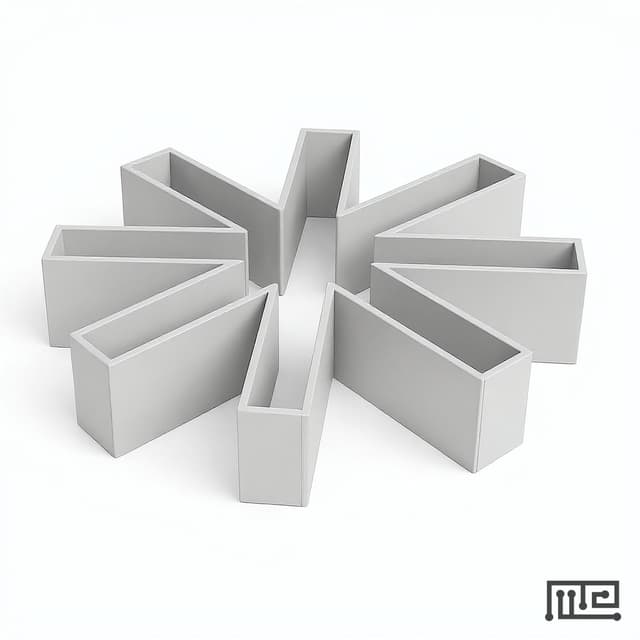
The Walking Radial Arm Maze is constructed using a 4 m diameter mat with 8 alleyway positions marked on it. The alleyways radiate from a central circular start area at an angle of 45° from each other. Each alley is 2 m long and 22 cm wide. Each arm can be equipped with a specific removable floor pattern. At the ends of each arm, reward holders having a capacity of 2 dl are present.
Training Protocol
Depending on the investigation, proper illumination of the maze may be needed, or subjects may need to be blindfolded.
An automated tracking and recording system such as the Noldus EthoVison XT may be used to assist with the observations. Ancillary assessments and recordings, such as heart rate, may also be part of the investigations.
Prior to the experiments, provide a clear set of instructions. Ensure that the participants are not in the test area when reinforcing arms of the Walking Radial Arm Maze.
Following is a sample protocol for the Walking Radial Arm Maze task using patterned flooring.
Free Exploration Trial
Bait the cups of the reinforced patterns in the maze. Introduce the participant to the center of the maze and initiate the exploration trial. Allow the participant to explore the maze until all arms have been visited and the rewards collected.
Acquisition Trials
Following the exploration trial, begin acquisition trials. Place the rewards in the same reinforced arms as in the exploration trial. Introduce the participant to the center of the maze and instruct the participant to visit only the reinforced arms based on the free exploration trial. Perform 3 consecutive trials with an inter-trial interval of approximately 2 to 3 minutes.
Test Trials
Replace the patterned flooring and place identical single-color flooring in all arms. Bait the same arms with rewards as in the previous phases. Introduce the participant to the center of the maze and initiate the test trial.
Conflict Trials
Place the rewards in the same reinforced arms as in the exploration and acquisition trials. Rotate the entire set-up by 90 degrees. Introduce the participant to the center of the maze and instruct the participant to visit only the reinforced arms. Follow the trial by returning the setup to the original orientation and repeat the trial with all other conditions remaining the same (intermediate trial). Perform a third trial (permutation trial) by only changing the positions of the inserts while maintaining the positions of the rewards and other conditions.
Data Analysis
The following observations can be recorded in the Walking Radial Arm Maze:
- The sequence of arm visit
- Time to complete the task
- Number of working memory errors (re-entries)
- Number of reference memory errors (entry into the non-reinforced arm)
- Foraging efficiency
Strengths and Limitations
Strengths
The Walking Radial Arm Maze is constructed using textile, making it easily moveable. Since the maze is unwalled, environmental cues can be used as-is without the need for any additional preparations. This design also makes it easy to test subjects that may need assistance while performing the task. The options of different removable alleyway patterns allow the creation of different visual cue combinations that are useful in the application of a range of learning and memory protocols. The maze can be used in combination with other equipment to observe different parameters, such as gaze direction simultaneously.
Limitations
Since the Walking Radial Arm Maze is an unwalled maze, distal cues may not be completely eliminated. Sensory and motor impairments can affect task performances. In blindfold requiring protocols, impairments in proprioception and movement decisions can impact performances. Performances may also be influenced by unintended cues such as auditory or visual cues and room traffic.
Summary
- The Walking Radial Arm Maze is constructed using a textile material and can be moved to different locations easily.
- The maze does not have walls, which may or may not be beneficial in terms of distal cues.
- The maze comes with a set of removable alleyway floorings to serve as local cues.
- The maze is suitable for the evaluation of individuals that may need some assistance while performing the task.
References
- Bertholet, L., Escobar, M. T., Depré, M., Chavan, C. F., Giuliani, F., Gisquet-Verrier, P., … Schenk, F. (2015). Spatial radial maze procedures and setups to dissociate local and distal relational spatial frameworks in humans. Journal of Neuroscience Methods, 253, 126–141. doi:10.1016/j.jneumeth.2015.06.012
- Robaey, P., McKenzie, S., Schachar, R., Boivin, M., & Bohbot, V. D. (2016). Stop and look! Evidence for a bias towards virtual navigation response strategies in children with ADHD symptoms. Behavioural Brain Research, 298, 48–54. doi:10.1016/j.bbr.2015.08.019
- Vlček, K. & Laczó, J. (2014). Neural Correlates of Spatial Navigation Changes in Mild Cognitive Impairment and Alzheimer’s Disease. Frontiers in Behavioral Neuroscience, doi:10.3389/fnbeh.2014.00089
- Giuliani, F., & Schenk, F. (2015). Vision, spatial cognition and intellectual disability. Research in Developmental Disabilities, 37, 202–208. doi:10.1016/j.ridd.2014.11.015
From the Maze Engineers documentation for this apparatus.
How do I distinguish between working memory and reference memory errors in scoring?
Working memory errors occur when an animal re-enters an arm already visited within the same trial, while reference memory errors involve entering arms that never contain rewards across all trials. Systematic scoring of entry sequences allows quantification of both error types.
What is the recommended habituation protocol before beginning formal testing?
Standard habituation typically involves 2-3 sessions allowing free exploration of the maze with rewards available in all arms, followed by training sessions with the specific reward configuration to be used in experimental protocols.
How should I control for spatial cues in the testing environment?
Maintain consistent positioning of extra-maze cues (posters, furniture, lighting) throughout testing. Some protocols require cue rotation or removal to assess reliance on different spatial reference systems.
What are appropriate reward types and deprivation schedules?
Food rewards (small pellets, cereal pieces) work well with mild food restriction (85-90% free-feeding weight). Consult institutional guidelines for appropriate restriction protocols for your species.
How do I prevent odor trail confounds between trials?
Clean arms with ethanol solution between subjects and allow adequate drying time. Some protocols require arm rotation or use of different arm subsets across trials to minimize olfactory cues.
What sample sizes are typically required for reliable results?
Sample sizes of 8-12 animals per group are common for detecting moderate effect sizes, though power analyses should be conducted based on expected effect magnitude and experimental design requirements.
How does this compare to water maze testing for spatial memory assessment?
The radial arm maze assesses foraging-based spatial memory without swimming stress, allows simultaneous working and reference memory evaluation, but may be more sensitive to motivational factors than water-based paradigms.
Have a question about this product?
Have a question? Just ask.
Send it over and we'll email you a personalized answer — no call, no scheduling.
Prefer to talk it through?