ConductVision Zebrafish Package
$1,990 per yearA 5-year license is $3,990 in total.
The ConductVision license for zebrafish tests.

Behavioral assessment apparatus for evaluating spatial learning, memory, and decision-making capabilities in larval zebrafish through controlled T-maze paradigms.

Director of Science · ConductScience
Ask Louise about Zebrafish Larvae T Maze fit, setup, configuration, or quote prep.
Already working with us? Sign in to connect this with My Scientist.
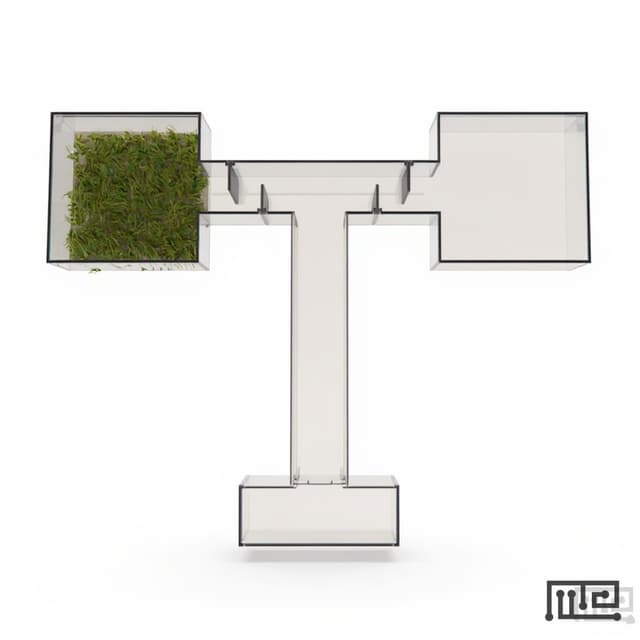
The Zebrafish Larvae T Maze is a specialized behavioral assessment apparatus designed for evaluating spatial learning, memory, and decision-making in larval zebrafish. This maze configuration presents subjects with a simple binary choice paradigm, making it ideal for studies investigating cognitive development, neuropharmacological effects, and genetic influences on learning behavior in early-stage zebrafish.
The T-maze design enables researchers to assess place preference, spatial memory consolidation, and learning acquisition through controlled experimental protocols. The apparatus supports both spontaneous alternation studies and reinforced learning paradigms, providing quantitative measures of cognitive function in this important vertebrate model organism.
The T-maze operates on the principle of binary choice discrimination, where larval zebrafish navigate through a stem arm leading to two perpendicular choice arms. The apparatus exploits the natural exploratory behavior and spatial orientation capabilities of zebrafish larvae, which demonstrate measurable preferences for environmental cues such as light gradients, substrate patterns, or chemical stimuli.
Behavioral assessment relies on quantifying arm entry patterns, residence time distribution, and choice latencies. In spontaneous alternation protocols, the maze measures the inherent tendency to explore novel environments. For reinforced learning paradigms, researchers can establish spatial associations by pairing specific arms with rewarding or aversive stimuli, then measuring acquisition rates and memory retention through subsequent choice behavior.
Data collection typically involves video tracking systems that monitor larval position and movement patterns throughout the testing session. Analysis focuses on choice accuracy, learning curves, and behavioral metrics that reflect underlying neurological processes governing spatial cognition and memory formation.
| Measurement | Larvae T Maze |
|---|---|
| Start arm length | 50 mm |
| Width | 5 mm |
| Depth | 10 mm |
| Total size | 75 mm |
| Feature | This Product | Typical Alternative | Advantage |
|---|---|---|---|
| Choice Paradigm Complexity | Binary choice T-configuration | Multiple choice mazes may offer 4-8 arm configurations | Simplified decision-making reduces confounding variables and enables clearer interpretation of spatial learning deficits. |
| Subject Age Range | Optimized for larval zebrafish | Many maze systems designed for adult fish | Enables cognitive assessment during critical developmental periods when neurological interventions have maximum impact. |
| Experimental Throughput | Individual subject testing | Some systems accommodate multiple subjects simultaneously | Individual assessment eliminates social interaction effects and provides precise behavioral quantification for each subject. |
| Setup Complexity | Simple T-configuration assembly | Complex mazes may require extensive calibration | Straightforward setup reduces technical variability and enables consistent protocol implementation across research sites. |
This larval-specific T-maze provides a focused tool for assessing binary choice behavior and spatial learning in developing zebrafish. The simplified configuration enables reliable behavioral quantification while maintaining the flexibility needed for diverse experimental paradigms.
Acclimate larvae to the maze environment for 2-3 minutes before beginning behavioral assessment to reduce stress-related artifacts.
Why: Initial stress responses can mask genuine cognitive behaviors and reduce experimental reliability.
Replace water between each experimental session and inspect maze surfaces for algae or debris accumulation.
Why: Clean conditions prevent olfactory cue contamination that could influence subsequent behavioral choices.
Record ambient lighting conditions and maintain consistent illumination across all testing sessions.
Why: Zebrafish larvae show strong phototactic responses that can confound spatial preference measurements.
If larvae show excessive freezing behavior, check water temperature and consider reducing environmental stimuli.
Why: Stress-induced freezing prevents normal exploratory behavior needed for meaningful cognitive assessment.
Validate tracking system accuracy by testing with known objects before each experimental session.
Why: Tracking errors can significantly impact behavioral metrics and lead to incorrect interpretation of cognitive function.
Monitor water quality parameters regularly and maintain appropriate pH, temperature, and dissolved oxygen levels.
Why: Suboptimal water conditions can cause physiological stress that affects behavioral performance independent of cognitive factors.
ConductScience provides a standard one-year manufacturer warranty covering defects in materials and workmanship, along with technical support for setup and operational guidance.
Background reading relevant to this product:
What age range of zebrafish larvae is appropriate for T-maze testing?
Larval zebrafish typically show measurable behavioral responses in T-maze paradigms from 5-7 days post-fertilization onward, when swimming behavior and spatial orientation capabilities are sufficiently developed for reliable assessment.
How long should individual testing sessions last?
Testing duration varies by protocol, but typical sessions range from 5-15 minutes to avoid fatigue effects while allowing sufficient time for behavioral expression and choice behavior measurement.
What water depth is recommended for optimal larval behavior?
Water depth should be sufficient to allow normal swimming behavior while preventing larvae from resting on the bottom, typically 5-10mm depending on larval size and developmental stage.
Can the maze be modified for different experimental conditions?
The modular design allows for incorporation of various environmental cues, lighting conditions, and substrate modifications to create specific experimental paradigms as needed.
What tracking systems are compatible with this maze?
The apparatus is designed to work with standard video tracking software commonly used in zebrafish research, including EthoVision, Noldus, and custom analysis platforms.
How should the maze be cleaned between subjects?
Thorough rinsing with system water between subjects is typically sufficient, with periodic disinfection using laboratory-appropriate cleaning solutions followed by complete water replacement.
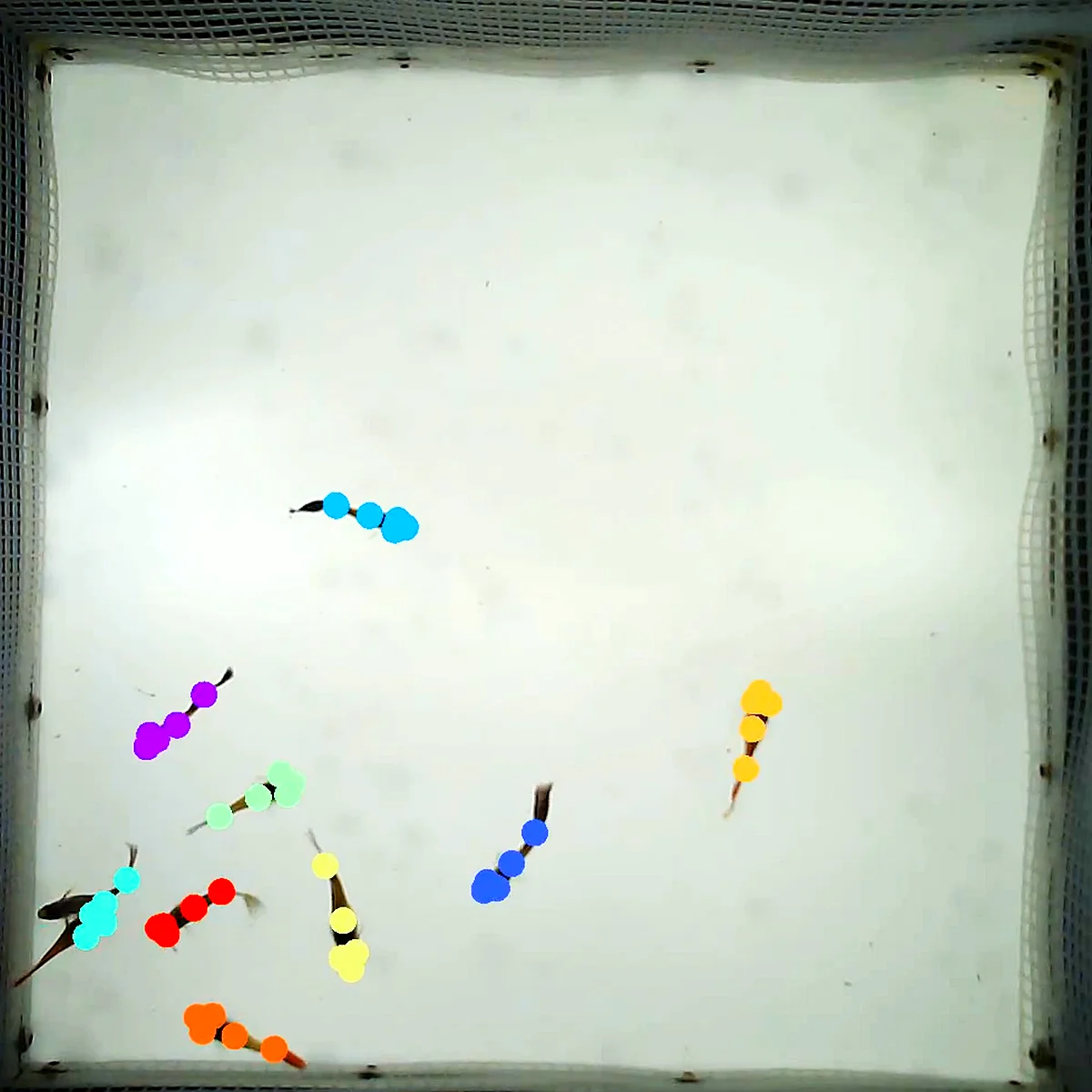
ConductVision is our video-tracking software. Record your sessions on video, and it scores standard zebrafish tests, such as those listed below.
The Zebrafish Package includes a custom assay made on request. To have one made for this test, ask in your quote request.
A 5-year license is $3,990 in total.
The ConductVision license for zebrafish tests.
Send it over and we'll email you a personalized answer — no call, no scheduling.
Prefer to talk it through?
Enhance your setup with compatible accessories