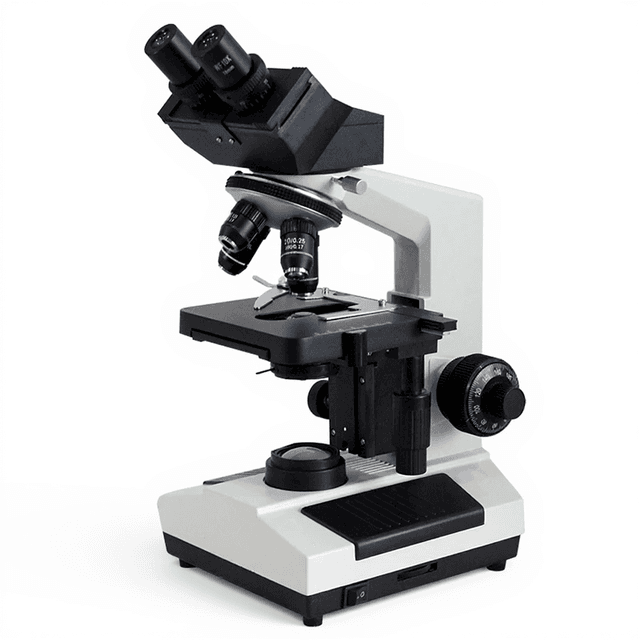
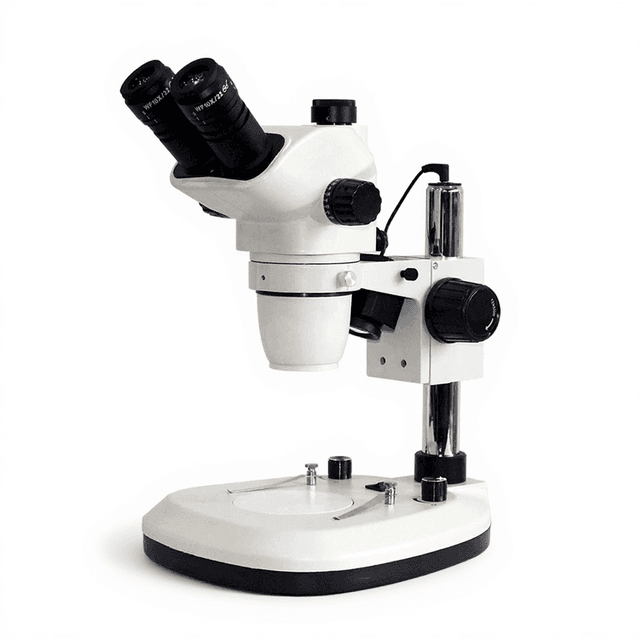
Zoom Illuminated Dissecting Stereo Microscope with Both-side Armrest & Oblique 360° Rotating Mirror
Trinocular stereo dissecting microscope with 6.5X-55X magnification, dual LED/halogen illumination, and 360° rotating head for biological specimen examination and dissection procedures.
| Automation Level | manual |
| Product Type | Microscope |
| Microscope Type | Stereo / Dissecting |
| Application | Assembly & Rework, Sample Preparation |
| Skill Level | Entry Level |
| Brand | ConductScience |

The Zoom Illuminated Dissecting Stereo Microscope provides high-resolution stereoscopic imaging for detailed examination of biological specimens and materials. This trinocular system features variable magnification from 6.5X to 55X with WF10X eyepieces, extending to 220X with optional 20X eyepieces. The 360° rotatable head with 45° inclination and ±5 diopter adjustment accommodates multiple users and viewing angles.
Dual illumination systems—transmitted LED and reflected halogen/LED sources with brightness control—enable versatile specimen visualization techniques. The 115mm working distance and 45mm focusing range provide adequate clearance for specimen manipulation and dissection procedures. Both-side armrests and a clear glass work plate support extended observation sessions and precise specimen positioning.
How It Works
Stereo microscopy employs two separate optical paths to create depth perception, providing three-dimensional visualization of specimens. Light from the dual illumination system—transmitted through the specimen and reflected from the surface—enters the objective lens system. The 0.65X-5.5X zoom objective provides variable magnification while maintaining parfocal operation across the magnification range.
The trinocular head directs light to both eyepieces for binocular viewing and a third port for documentation systems. Diopter adjustment (±5 diopters) compensates for vision differences between users. The interpupillary distance adjustment (54-75mm) accommodates various user anatomy. The coarse focus mechanism provides 22mm movement per rotation for rapid specimen positioning, while fine focusing enables precise depth control within the 45mm focusing range.
Features & Benefits
Automation Level
- manual
Product Type
- Microscope
Microscope Type
- Stereo / Dissecting
Application
- Assembly & Rework
- Sample Preparation
Skill Level
- Entry Level
Brand
- ConductScience
Research Domain
- Cell Biology
- Developmental Biology
- Histopathology
- Materials Science
- Microbiology
- Neuroscience
Weight
- 6.0 kg
Dimensions
- L: 4.9 mm
- W: 6.6 mm
- H: 6.6 mm
Comparison Guide
| Feature | This Product | Typical Alternative | Advantage |
|---|---|---|---|
| Magnification Range | 6.5X-55X standard, extending to 220X with optional accessories | Entry-level models often provide fixed magnification or limited zoom ranges | Variable magnification accommodates different specimen sizes and detail requirements without changing objectives |
| Working Distance | 115mm maximum working distance | Basic stereo microscopes may offer shorter working distances | Adequate clearance for dissection tools and specimen manipulation during procedures |
| Illumination System | Dual LED transmitted and LED/halogen reflected with brightness control | Single illumination source or basic LED without intensity control | Optimal contrast adjustment for both transparent and opaque specimens |
| Head Configuration | Trinocular with 360° rotation and 45° inclination | Binocular heads with limited adjustment range | Enables documentation camera attachment and comfortable viewing angles for multiple users |
| Focus Range | 45mm focusing range with 22mm per rotation coarse adjustment | Smaller focus travel or less precise adjustment mechanisms | Accommodates specimens with significant depth variation while maintaining precise control |
This stereo microscope combines variable zoom magnification with dual illumination systems and trinocular documentation capability. The substantial working distance and focus range support demanding dissection and manipulation procedures in research applications.
Practical Tips
Verify magnification accuracy periodically using a stage micrometer to ensure measurement precision.
Why: Zoom mechanisms can drift over time affecting quantitative measurements and documentation scaling.
Clean optical surfaces only with lens tissue and appropriate solvents, avoiding paper towels or cloth.
Why: Abrasive materials can damage anti-reflective coatings and degrade image quality.
Allow halogen illumination to warm up for 5-10 minutes before critical observations for stable color temperature.
Why: Thermal stability ensures consistent illumination conditions for comparative examinations and photography.
Use transmitted illumination for transparent specimens and reflected illumination for opaque materials.
Why: Proper illumination selection maximizes contrast and reveals structural details effectively.
If image appears flat or lacks depth perception, verify both eyepieces are properly aligned and diopter settings are correct.
Why: Stereoscopic visualization requires precise optical alignment for three-dimensional perception.
Document magnification settings and illumination conditions for each specimen examination session.
Why: Consistent documentation parameters enable reproducible observations and accurate scale references.
Position specimens securely on the work plate and ensure adequate ventilation when using chemical fixatives.
Why: Prevents specimen movement during examination and maintains safe working conditions with volatile solvents.
Setup Guide
What’s in the Box
- Stereo microscope main unit with trinocular head
- WF10X/Ø22mm eyepieces (pair)
- LED and halogen illumination systems
- Clear glass work plate (Ø180x6mm)
- Both-side armrests
- Power supply and cables
- User manual and optical specifications
- Dust covers (typical)
Warranty
ConductScience provides a standard one-year manufacturer warranty covering optical and mechanical components, with technical support for setup and operational guidance.
Compliance
References
Background reading relevant to this product:
What is the actual working distance available for specimen manipulation?
The maximum working distance is 115mm, providing adequate clearance for dissection tools, micromanipulators, and specimen handling while maintaining focus capability.
Can the microscope accommodate users who wear glasses?
Yes, the WF10X eyepieces feature high eye point design for comfortable viewing with glasses, plus ±5 diopter adjustment to compensate for vision differences.
What illumination options are available for different specimen types?
Dual illumination includes transmitted 3W LED for transparent specimens and reflected 6V 20W halogen plus LED for opaque specimens, both with brightness adjustment.
How does the magnification range compare to compound microscopes?
The 6.5X-55X range (up to 220X with accessories) provides lower magnification than compound scopes but maintains stereoscopic depth perception essential for dissection and manipulation.
Can the trinocular port accommodate documentation cameras?
The trinocular head design includes a third optical port suitable for camera attachment, though specific camera compatibility should be verified based on mounting requirements.
What maintenance is required for the optical components?
Regular cleaning of eyepieces and objectives with appropriate lens tissues, periodic calibration verification, and protection from dust when not in use maintain optical performance.
Is the focusing mechanism suitable for precise depth measurements?
The coarse focus provides 22mm per rotation for rapid positioning, while the 45mm total focusing range accommodates specimens with significant depth variation for qualitative examination.
Have a question about this product?
Accessories
Enhance your setup with compatible accessories
Frequently Bought Together
Upgrade Options