Behavioral Tracking for Tree Shrew
Tupaia belangeri
Stress biology, visual cognition, and primate-adjacent neuroscience in Tupaia belangeri. ConductVision delivers automated tracking and quantitative parameter extraction across the full assay catalog below.
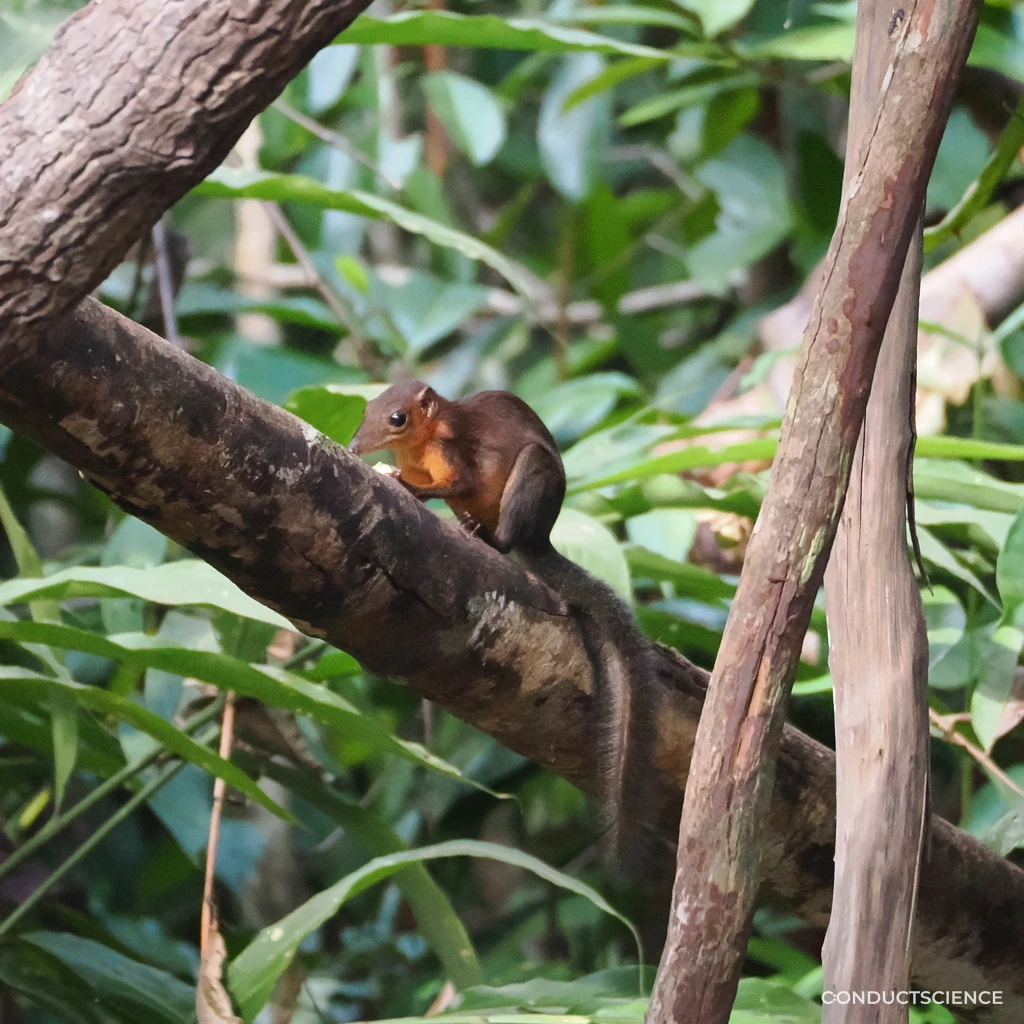
Why Tree Shrew in Behavioral Research
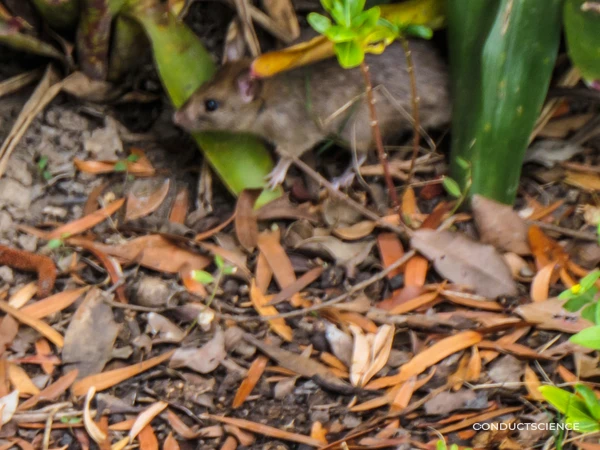
Tree shrews are small, diurnal mammals with primate-like visual systems and well-characterized stress responses. They serve as an alternative to non-human primates for studies of chronic social stress, visual cortex, and emerging viral disease models.
Fuchs E, Flügge G. (2002). Social stress in tree shrews: effects on physiology, brain function, and behavior of subordinate individuals. Pharmacol Biochem Behav, 73(1), 247-258. PMID: 12076744
Fan Y, et al. (2013). Genome of the Chinese tree shrew. Nat Commun, 4, 1426. PMID: 23385571
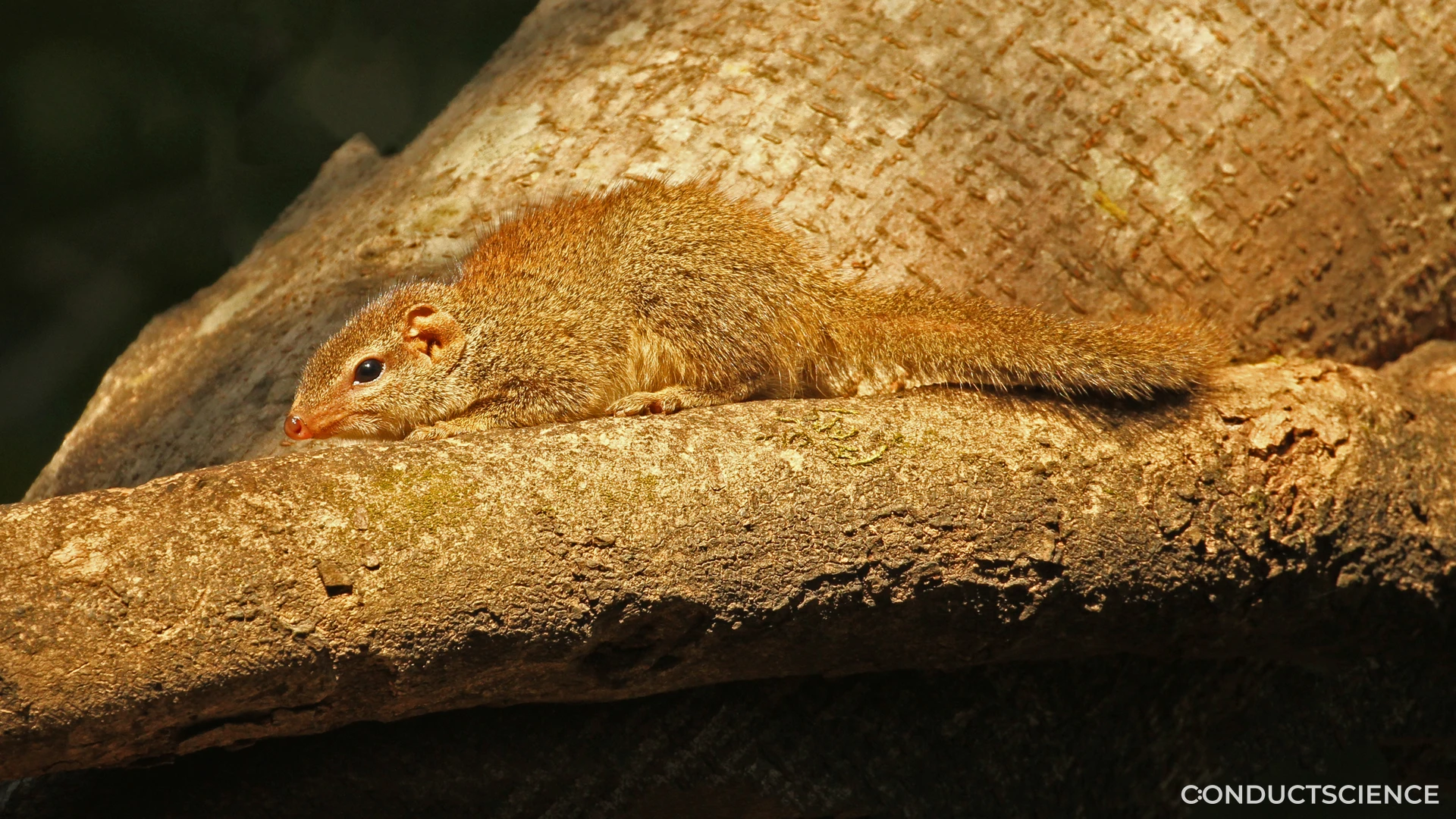
What We Measure in Tree Shrew
Validated assays with quantitative parameter tracking for Tupaia belangeri.
Daily encounters with a dominant conspecific produce a robust subordination phenotype: anhedonia, weight loss, sleep disruption, and HPA hyperactivity. The model is widely used for depression-related research.
| Parameter | Unit | Description |
|---|---|---|
| Subordination latency | min | Time to lose first encounter |
| Body weight change | % | Stress-induced loss |
| Cortisol level | µg/dL | HPA output |
| Sucrose preference | % | Anhedonia index |
Fuchs E, Flügge G. (2002). PMID: 12076744
Tree shrews have primate-like cone-dominant retinas and high visual acuity. Behavioral and electrophysiological acuity assays underpin visual-cortex research.
| Parameter | Unit | Description |
|---|---|---|
| Behavioral acuity | cyc/deg | Highest discriminable grating |
| Contrast sensitivity | log units | Threshold across spatial freq |
| Color discrimination | JND | Cone-mediated thresholds |
| VEP amplitude | µV | Cortical response |
Petry HM, Fox R, Casagrande VA. (1984). Spatial contrast sensitivity of the tree shrew. Vision Res, 24(9), 1037-1042. PMID: 6506466
Open-field activity in tree shrews indexes anxiety and stress-state. Distance, rearing, and vertical exploration are sensitive to chronic stress paradigms.
| Parameter | Unit | Description |
|---|---|---|
| Distance traveled | m | Locomotion |
| Rearing events | count | Exploration |
| Time in center | s | Anxiety-like |
| Climbing events | count | Vertical use |
Holsboer F, et al. (1996). Stress and the brain: from adaptation to disease.
Novel-object recognition assays measure declarative-like memory in tree shrews. Discrimination index and exploration time benchmark recognition performance.
| Parameter | Unit | Description |
|---|---|---|
| Discrimination index | ratio | Novel vs familiar exploration |
| Total exploration time | s | Object engagement |
| Approach latency | s | Initial contact |
| Memory at 24 h | index | Long-term retention |
Khani A, Rainer G. (2012). Recognition memory in tree shrew (Tupaia belangeri) after repeated familiarization sessions. Behav Processes, 90(3), 364-371. PMID: 22507625
Pair encounters produce hierarchical interactions used to set up the chronic-stress paradigm. Approach, agonism, and tail rattling are scored.
| Parameter | Unit | Description |
|---|---|---|
| Agonistic events | count/encounter | Threat, attack |
| Tail rattling | events/min | Stress signal |
| Submissive postures | count | Defeat behavior |
| Encounter outcome | win/lose | Dominance assignment |
Fuchs E, et al. (2001). Behavioural and physiological consequences of social stress in the tree shrew. Stress, 4(1), 31-44.
More Behavioral Tests for Tree Shrew
Sleep / Activity (Diurnal)
Sucrose Preference
Key Parameters: Sucrose vs water consumption
Fuchs E. (2005). CNS Spectr, 10(3), 182-190. PMID: 15741831
Forced Swim / Floating
Key Parameters: Immobility duration
van Kampen M, et al. (2002). Brain Res, 961(2), 269-275. PMID: 12559268
Vocal Repertoire (Whistles, Chatters)
Key Parameters: Call type, rate
Schehka S, Zimmermann E. (2009). PMID: 18759149
Hepatitis Virus Behavioral Phenotype
Key Parameters: Activity decline post-infection
Yang C, et al. (2015). PMID: 26244466
ConductScience Hardware for Tree Shrew Research
Tree Shrew Home-Cage with Climbing
Enrichment and welfare
Dominance Encounter Chamber
Subordination paradigm
Visual Acuity Test Apparatus
Behavioral acuity
Object-Recognition Arena
Memory testing
Automated Activity / Sleep Monitor
Long-term phenotyping
Citations & Further Reading
- Fuchs E, Flügge G. (2002). Social stress in tree shrews: effects on physiology, brain function, and behavior of subordinate individuals. Pharmacol Biochem Behav, 73(1), 247-258. PMID: 12076744
- Fan Y, et al. (2013). Genome of the Chinese tree shrew. Nat Commun, 4, 1426. PMID: 23385571
- Fuchs E, Flügge G. (2002). PMID: 12076744
- Petry HM, Fox R, Casagrande VA. (1984). Spatial contrast sensitivity of the tree shrew. Vision Res, 24(9), 1037-1042. PMID: 6506466
- Holsboer F, et al. (1996). Stress and the brain: from adaptation to disease.
- Khani A, Rainer G. (2012). Recognition memory in tree shrew (Tupaia belangeri) after repeated familiarization sessions. Behav Processes, 90(3), 364-371. PMID: 22507625
- Fuchs E, et al. (2001). Behavioural and physiological consequences of social stress in the tree shrew. Stress, 4(1), 31-44.
Other Model Systems
Discuss Your Tree Shrew Research
Tell us about your models, assays, and experimental goals — we’ll show you how ConductVision fits your workflow.