Primary Assay — Tree Shrew
Social Interaction (Dyadic)
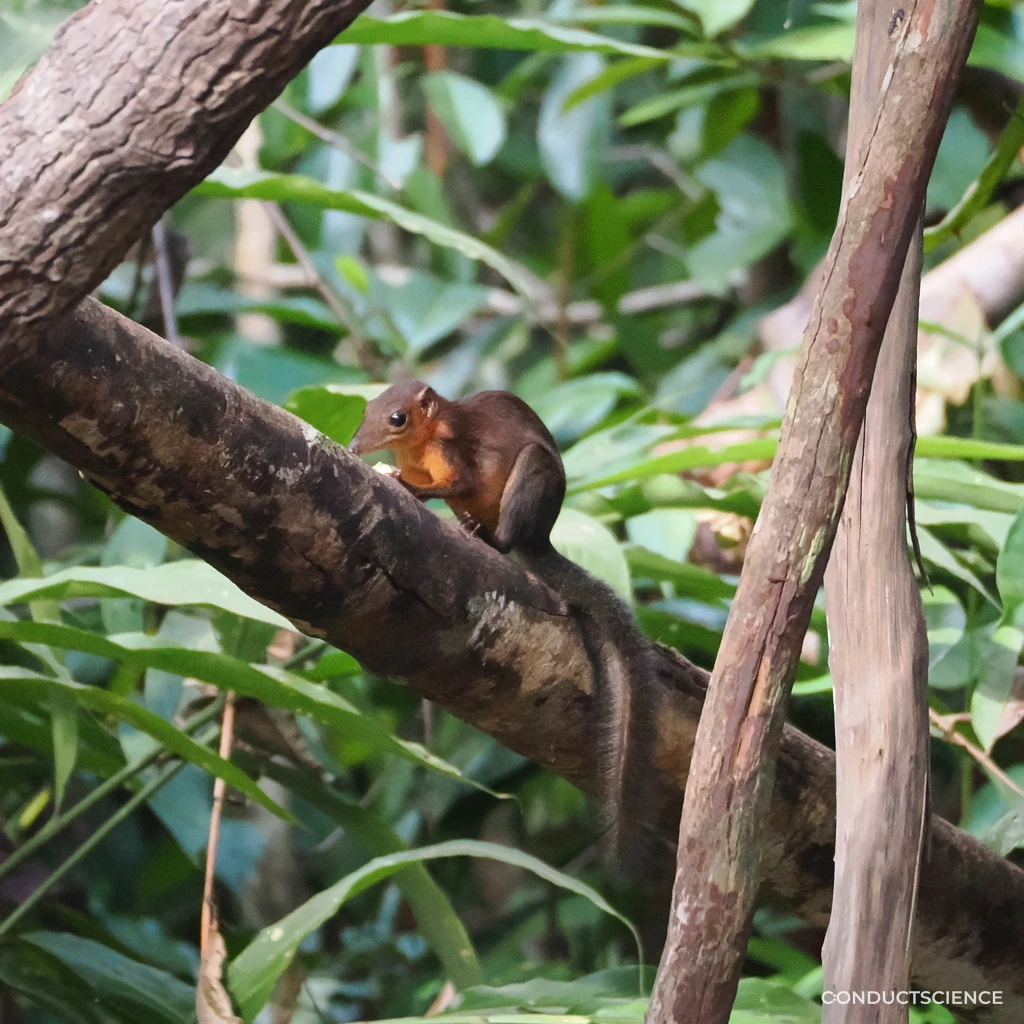
Tupaia belangeri
Pair encounters produce hierarchical interactions used to set up the chronic-stress paradigm. Approach, agonism, and tail rattling are scored.
Quantitative Output
Measured Parameters
Every parameter is automatically tracked frame-by-frame in the ConductVision pipeline for Tupaia belangeri.
| Parameter | Unit | Description |
|---|---|---|
| Agonistic events | count/encounter | Threat, attack |
| Tail rattling | events/min | Stress signal |
| Submissive postures | count | Defeat behavior |
| Encounter outcome | win/lose | Dominance assignment |
References
Citations for Social Interaction (Dyadic)
- Fuchs E, et al. (2001). Behavioural and physiological consequences of social stress in the tree shrew. Stress, 4(1), 31-44.
Compatible Equipment
Hardware for Tree Shrew Research
Tree Shrew Home-Cage with Climbing
Enrichment and welfare
Dominance Encounter Chamber
Subordination paradigm
Visual Acuity Test Apparatus
Behavioral acuity
Object-Recognition Arena
Memory testing
Automated Activity / Sleep Monitor
Long-term phenotyping
Related Assays
Other Tree Shrew Primary Assays
10
Chronic Social Stress (Subordinate)
Tupaia belangeri
Daily encounters with a dominant conspecific produce a robust subordination phenotype: anhedonia, weight loss, sleep dis…
10
Visual Acuity
Tupaia belangeri
Tree shrews have primate-like cone-dominant retinas and high visual acuity. Behavioral and electrophysiological acuity a…
10
Open Field
Tupaia belangeri
Open-field activity in tree shrews indexes anxiety and stress-state. Distance, rearing, and vertical exploration are sen…
Run Social Interaction (Dyadic) on ConductVision
Our team will configure the protocol, camera rig, and analysis pipeline for your tree shrew facility.