Primary Assay — Tree Shrew
Chronic Social Stress (Subordinate)
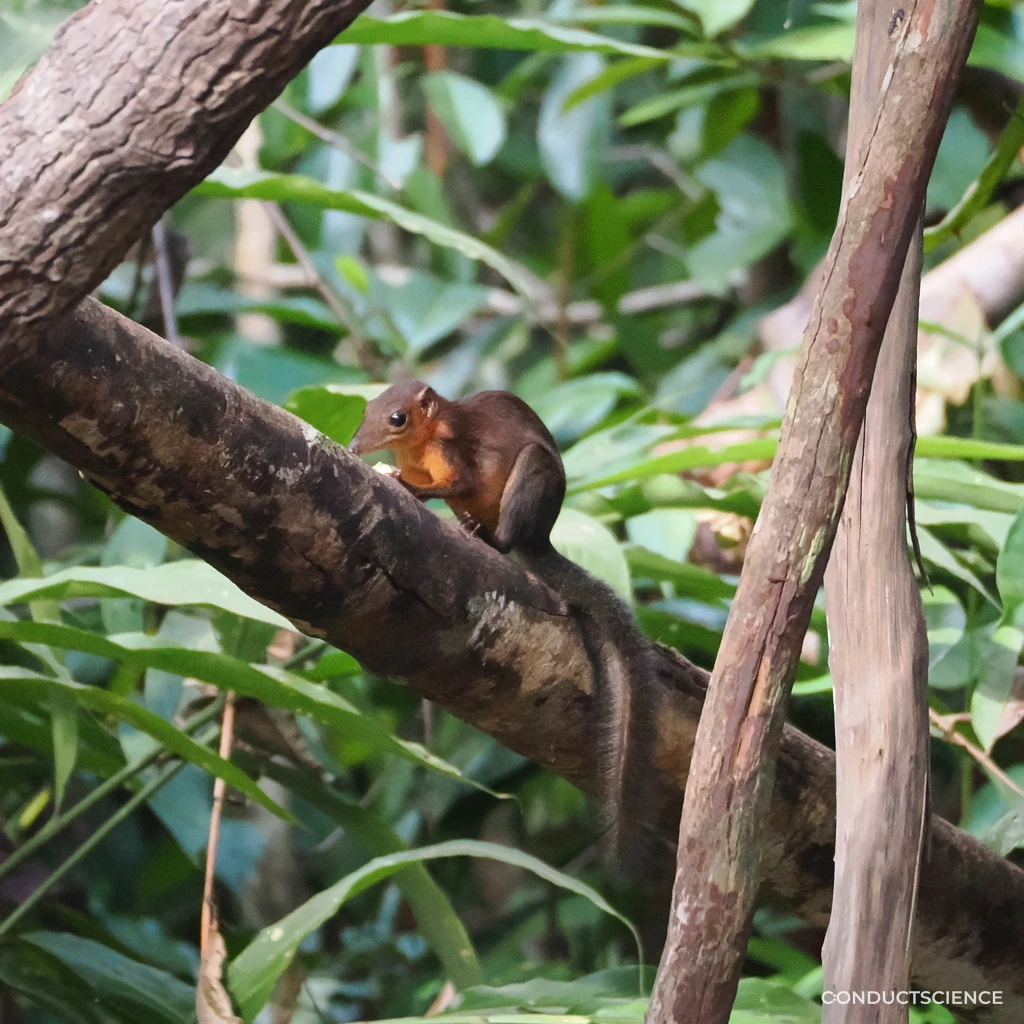
Tupaia belangeri
Daily encounters with a dominant conspecific produce a robust subordination phenotype: anhedonia, weight loss, sleep disruption, and HPA hyperactivity. The model is widely used for depression-related research.
Quantitative Output
Measured Parameters
Every parameter is automatically tracked frame-by-frame in the ConductVision pipeline for Tupaia belangeri.
| Parameter | Unit | Description |
|---|---|---|
| Subordination latency | min | Time to lose first encounter |
| Body weight change | % | Stress-induced loss |
| Cortisol level | µg/dL | HPA output |
| Sucrose preference | % | Anhedonia index |
References
Citations for Chronic Social Stress (Subordinate)
- Fuchs E, Flügge G. (2002). PMID: 12076744
Compatible Equipment
Hardware for Tree Shrew Research
Tree Shrew Home-Cage with Climbing
Enrichment and welfare
Dominance Encounter Chamber
Subordination paradigm
Visual Acuity Test Apparatus
Behavioral acuity
Object-Recognition Arena
Memory testing
Automated Activity / Sleep Monitor
Long-term phenotyping
Related Assays
Other Tree Shrew Primary Assays
10
Visual Acuity
Tupaia belangeri
Tree shrews have primate-like cone-dominant retinas and high visual acuity. Behavioral and electrophysiological acuity a…
10
Open Field
Tupaia belangeri
Open-field activity in tree shrews indexes anxiety and stress-state. Distance, rearing, and vertical exploration are sen…
10
Object Recognition
Tupaia belangeri
Novel-object recognition assays measure declarative-like memory in tree shrews. Discrimination index and exploration tim…
Run Chronic Social Stress (Subordinate) on ConductVision
Our team will configure the protocol, camera rig, and analysis pipeline for your tree shrew facility.