Behavioral Tracking for Prairie Vole
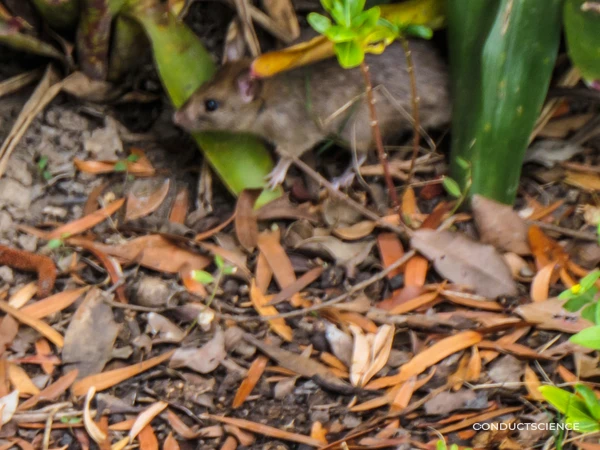
Microtus ochrogaster
Pair bonding, social monogamy, and oxytocin biology in Microtus ochrogaster. ConductVision delivers automated tracking and quantitative parameter extraction across the full assay catalog below.
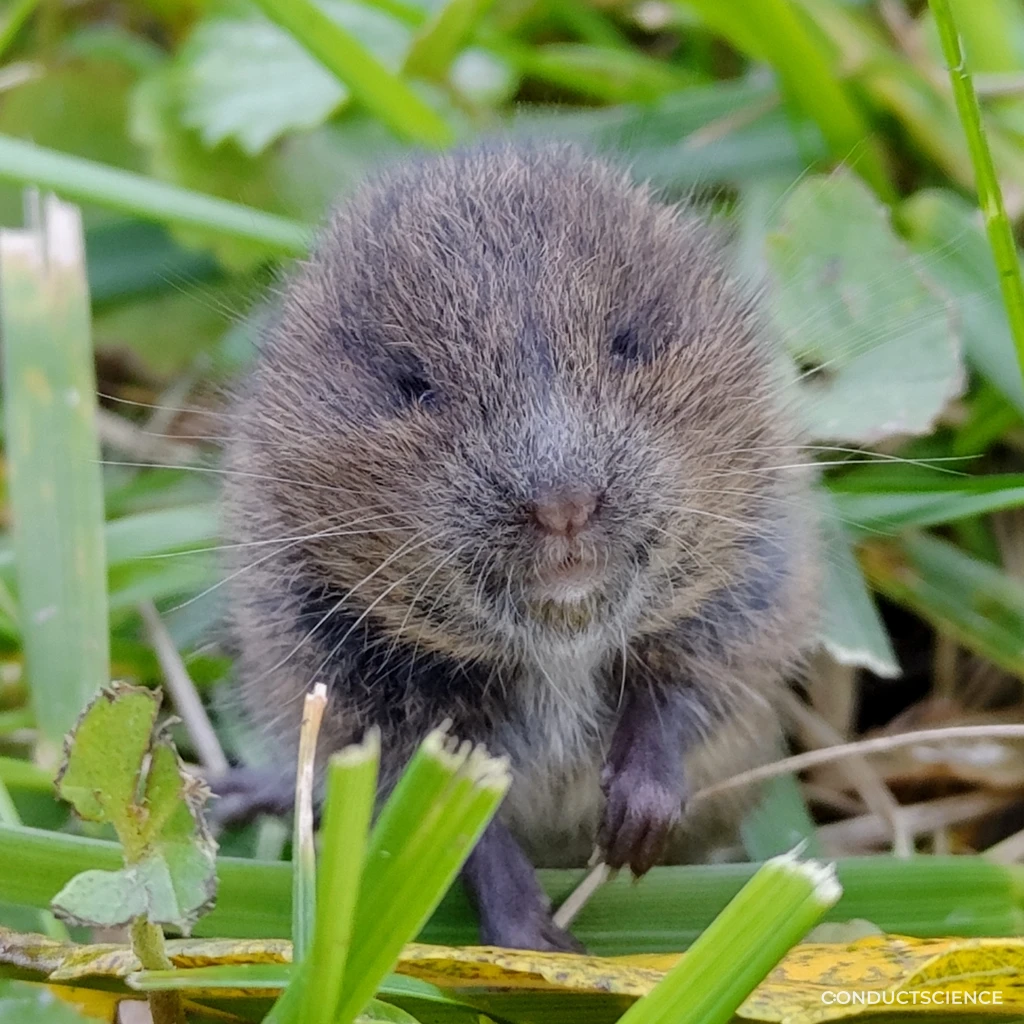
Why Prairie Vole in Behavioral Research
The prairie vole is the leading model for social monogamy, pair-bond formation, and oxytocin/vasopressin signaling in social cognition. Its naturally monogamous behavior, contrastable with non-bonding meadow voles, makes it indispensable for affiliative neuroscience.
Young LJ, Wang Z. (2004). The neurobiology of pair bonding. Nat Neurosci, 7(10), 1048-1054. PMID: 15452576
Carter CS, et al. (1995). Physiological substrates of mammalian monogamy: the prairie vole model. Neurosci Biobehav Rev, 19(2), 303-314. PMID: 7630584
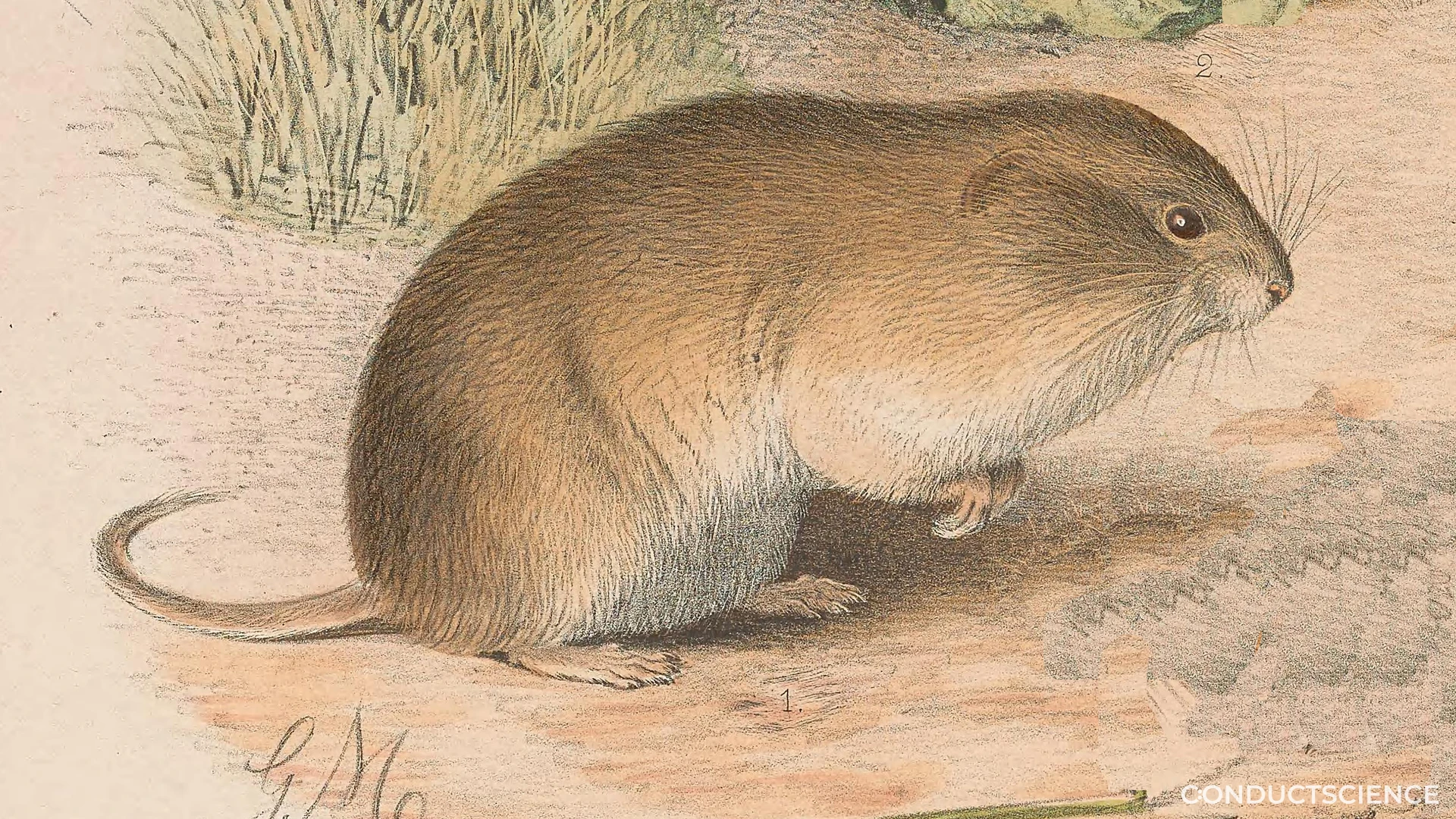
What We Measure in Prairie Vole
Validated assays with quantitative parameter tracking for Microtus ochrogaster.
After cohabitation, prairie voles show selective huddling with the bonded partner over a novel stranger in a 3-chamber arena. Partner-vs-stranger huddling is the gold-standard pair-bond assay.
| Parameter | Unit | Description |
|---|---|---|
| Partner huddling | s | Time in contact with partner |
| Stranger huddling | s | Time in contact with stranger |
| Partner preference index | ratio | Selectivity score |
| Time alone | s | Non-social occupancy |
Williams JR, et al. (1992). Development of partner preferences in female prairie voles (Microtus ochrogaster): the role of social and sexual experience. Horm Behav, 26(3), 339-349. PMID: 1398553
Pair-bonds form rapidly after 24 h of mating or 6 h with mating, modulated by oxytocin and vasopressin. Cohabitation duration and mating frequency manipulate bond strength.
| Parameter | Unit | Description |
|---|---|---|
| Cohabitation duration | h | Time before testing |
| Mating bouts | count | Mating-induced bonding |
| Selective aggression | events | Mate guarding emergence |
| Latency to bond formation | h | Affiliation onset |
Insel TR, Hulihan TJ. (1995). A gender-specific mechanism for pair bonding: oxytocin and partner preference formation in monogamous voles. Behav Neurosci, 109(4), 782-789. PMID: 7576222
Both prairie vole parents provide care, including pup retrieval, hovering, and licking. Time-on-pups and retrieval latency are sensitive to oxytocin manipulation.
| Parameter | Unit | Description |
|---|---|---|
| Pup retrieval latency | s | Time to retrieve scattered pups |
| Time on pups | min/h | Hovering / nursing |
| Licking and grooming bouts | count/h | Maternal/paternal care |
| Nest quality score | index | Nest construction |
Rilling JK, Young LJ. (2014). The biology of mammalian parenting and its effect on offspring social development. Science, 345(6198), 771-776. PMID: 25124431
Open-field activity in voles indexes anxiety-like behavior modulated by social bond status. Center time and locomotion respond to pair separation.
| Parameter | Unit | Description |
|---|---|---|
| Distance traveled | m | Locomotion |
| Time in center | s | Anxiety-like |
| Rearing events | count | Exploration |
| Defecation | count | Stress |
Bosch OJ, Young LJ. (2018). Oxytocin and social relationships: from attachment to bond disruption. Curr Top Behav Neurosci, 35, 97-117. PMID: 28812263
Voles investigate conspecifics through anogenital sniffing, side-by-side contact, and head-to-head interaction. Investigation duration indexes social motivation and recognition.
| Parameter | Unit | Description |
|---|---|---|
| Investigation duration | s | Active social contact |
| Anogenital sniff time | s | Identity assessment |
| Approach latency | s | Social motivation |
| Aggression events | count | Agonism |
DeVries AC, et al. (1996). Modulation of pair bonding in female prairie voles (Microtus ochrogaster) by corticosterone. Proc Natl Acad Sci, 93(21), 11980-11984. PMID: 8876248
More Behavioral Tests for Prairie Vole
Ultrasonic Vocalizations
Key Parameters: Pup separation USV rate
Lepri JJ, et al. (1988). Anim Behav, 36, 467-472.
Alloparental Care
Key Parameters: Care to non-offspring pups
Roberts RL, et al. (1998). PMID: 9790524
Mate Guarding / Selective Aggression
Key Parameters: Attacks on intruder males/females
Winslow JT, et al. (1993). Nature, 365(6446), 545-548. PMID: 8413609
Consoling / Empathic-Like Behavior
Key Parameters: Allogrooming after stressed partner
Burkett JP, et al. (2016). Science, 351(6271), 375-378. PMID: 26798013
Pair-Separation Stress
Key Parameters: Anxiety / depression measures
Bosch OJ, et al. (2009). PMID: 19443596
ConductScience Hardware for Prairie Vole Research
3-Chamber Partner Preference Arena
Pair-bond quantification
USV Recording Microphone Array
Vocal communication
Home-Cage Video Tracking
Cohabitation behavior
Open-Field Arena
Anxiety-like measures
Pup-Retrieval Test Cage
Parental care
Citations & Further Reading
- Young LJ, Wang Z. (2004). The neurobiology of pair bonding. Nat Neurosci, 7(10), 1048-1054. PMID: 15452576
- Carter CS, et al. (1995). Physiological substrates of mammalian monogamy: the prairie vole model. Neurosci Biobehav Rev, 19(2), 303-314. PMID: 7630584
- Williams JR, et al. (1992). Development of partner preferences in female prairie voles (Microtus ochrogaster): the role of social and sexual experience. Horm Behav, 26(3), 339-349. PMID: 1398553
- Insel TR, Hulihan TJ. (1995). A gender-specific mechanism for pair bonding: oxytocin and partner preference formation in monogamous voles. Behav Neurosci, 109(4), 782-789. PMID: 7576222
- Rilling JK, Young LJ. (2014). The biology of mammalian parenting and its effect on offspring social development. Science, 345(6198), 771-776. PMID: 25124431
- Bosch OJ, Young LJ. (2018). Oxytocin and social relationships: from attachment to bond disruption. Curr Top Behav Neurosci, 35, 97-117. PMID: 28812263
- DeVries AC, et al. (1996). Modulation of pair bonding in female prairie voles (Microtus ochrogaster) by corticosterone. Proc Natl Acad Sci, 93(21), 11980-11984. PMID: 8876248
Other Model Systems
Discuss Your Vole Research
Tell us about your models, assays, and experimental goals — we’ll show you how ConductVision fits your workflow.