Primary Assay — Prairie Vole
Partner Preference Test
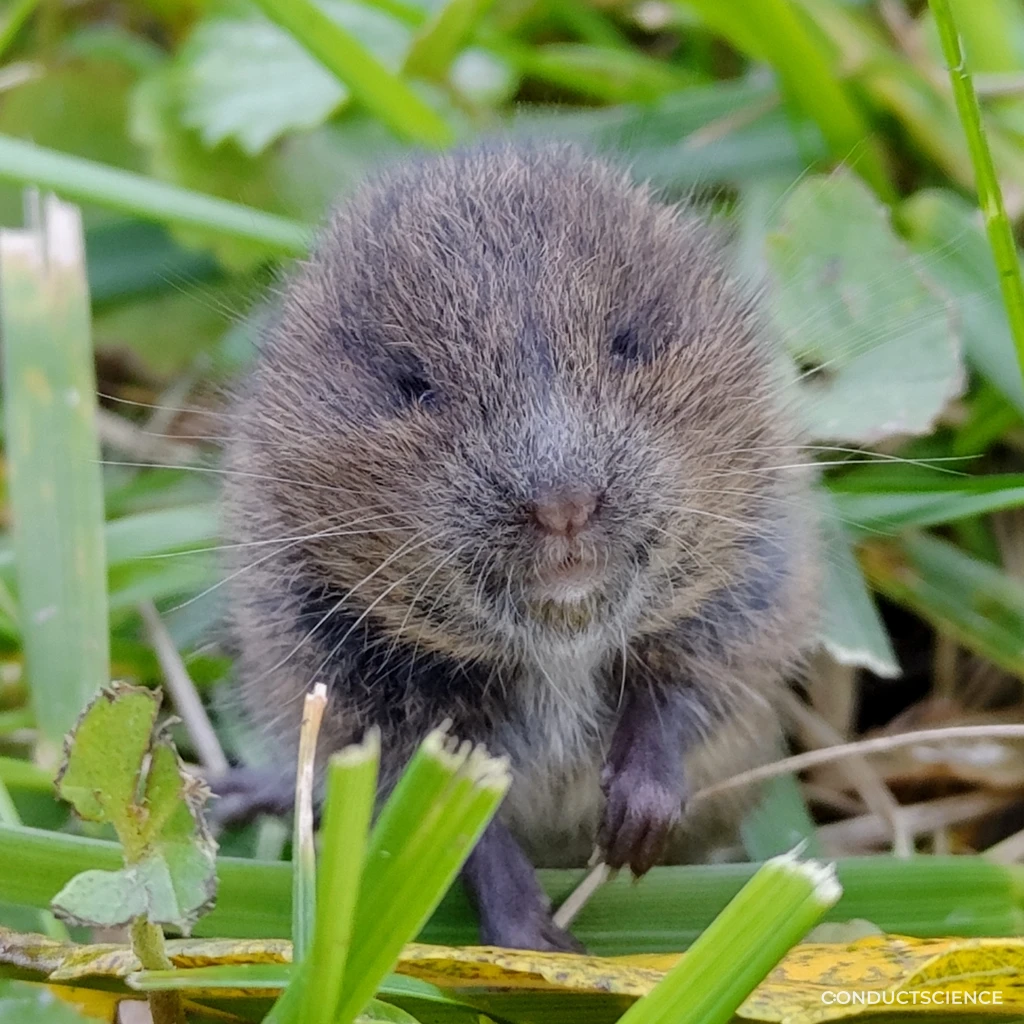
Microtus ochrogaster
After cohabitation, prairie voles show selective huddling with the bonded partner over a novel stranger in a 3-chamber arena. Partner-vs-stranger huddling is the gold-standard pair-bond assay.
Quantitative Output
Measured Parameters
Every parameter is automatically tracked frame-by-frame in the ConductVision pipeline for Microtus ochrogaster.
| Parameter | Unit | Description |
|---|---|---|
| Partner huddling | s | Time in contact with partner |
| Stranger huddling | s | Time in contact with stranger |
| Partner preference index | ratio | Selectivity score |
| Time alone | s | Non-social occupancy |
References
Citations for Partner Preference Test
- Williams JR, et al. (1992). Development of partner preferences in female prairie voles (Microtus ochrogaster): the role of social and sexual experience. Horm Behav, 26(3), 339-349. PMID: 1398553
Compatible Equipment
Hardware for Prairie Vole Research
3-Chamber Partner Preference Arena
Pair-bond quantification
USV Recording Microphone Array
Vocal communication
Home-Cage Video Tracking
Cohabitation behavior
Open-Field Arena
Anxiety-like measures
Pup-Retrieval Test Cage
Parental care
Related Assays
Other Prairie Vole Primary Assays
12
Pair-Bond Formation (Cohabitation)
Microtus ochrogaster
Pair-bonds form rapidly after 24 h of mating or 6 h with mating, modulated by oxytocin and vasopressin. Cohabitation dur…
12
Parental Care
Microtus ochrogaster
Both prairie vole parents provide care, including pup retrieval, hovering, and licking. Time-on-pups and retrieval laten…
12
Open Field
Microtus ochrogaster
Open-field activity in voles indexes anxiety-like behavior modulated by social bond status. Center time and locomotion r…
Run Partner Preference Test on ConductVision
Our team will configure the protocol, camera rig, and analysis pipeline for your prairie vole facility.