Primary Assay — Prairie Vole
Pair-Bond Formation (Cohabitation)
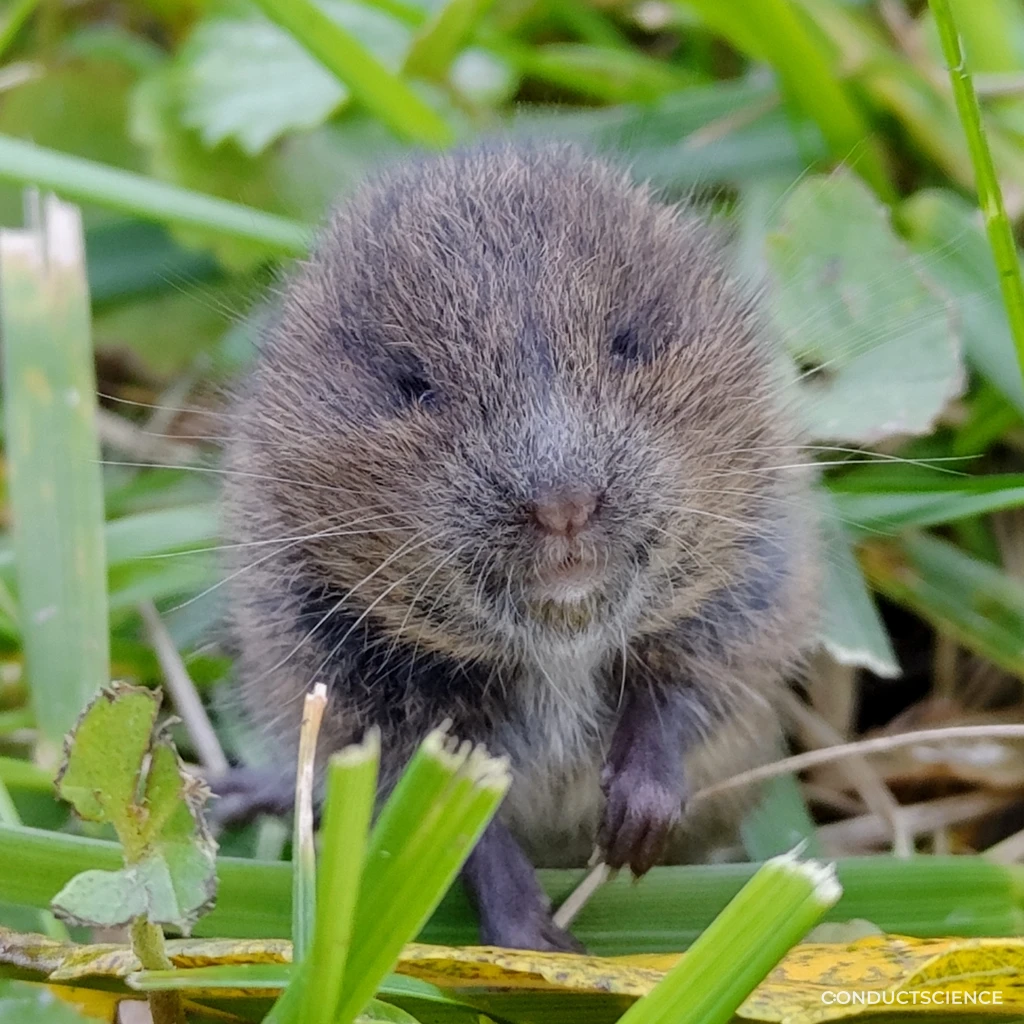
Microtus ochrogaster
Pair-bonds form rapidly after 24 h of mating or 6 h with mating, modulated by oxytocin and vasopressin. Cohabitation duration and mating frequency manipulate bond strength.
Quantitative Output
Measured Parameters
Every parameter is automatically tracked frame-by-frame in the ConductVision pipeline for Microtus ochrogaster.
| Parameter | Unit | Description |
|---|---|---|
| Cohabitation duration | h | Time before testing |
| Mating bouts | count | Mating-induced bonding |
| Selective aggression | events | Mate guarding emergence |
| Latency to bond formation | h | Affiliation onset |
References
Citations for Pair-Bond Formation (Cohabitation)
- Insel TR, Hulihan TJ. (1995). A gender-specific mechanism for pair bonding: oxytocin and partner preference formation in monogamous voles. Behav Neurosci, 109(4), 782-789. PMID: 7576222
Compatible Equipment
Hardware for Prairie Vole Research
3-Chamber Partner Preference Arena
Pair-bond quantification
USV Recording Microphone Array
Vocal communication
Home-Cage Video Tracking
Cohabitation behavior
Open-Field Arena
Anxiety-like measures
Pup-Retrieval Test Cage
Parental care
Related Assays
Other Prairie Vole Primary Assays
12
Partner Preference Test
Microtus ochrogaster
After cohabitation, prairie voles show selective huddling with the bonded partner over a novel stranger in a 3-chamber a…
12
Parental Care
Microtus ochrogaster
Both prairie vole parents provide care, including pup retrieval, hovering, and licking. Time-on-pups and retrieval laten…
12
Open Field
Microtus ochrogaster
Open-field activity in voles indexes anxiety-like behavior modulated by social bond status. Center time and locomotion r…
Run Pair-Bond Formation (Cohabitation) on ConductVision
Our team will configure the protocol, camera rig, and analysis pipeline for your prairie vole facility.