3D Cell Culture Microfluidic Chip
Microfluidic platform for 3D cell culture with pH and temperature control, designed for long-term perfusion studies and physiologically relevant cell growth environments.
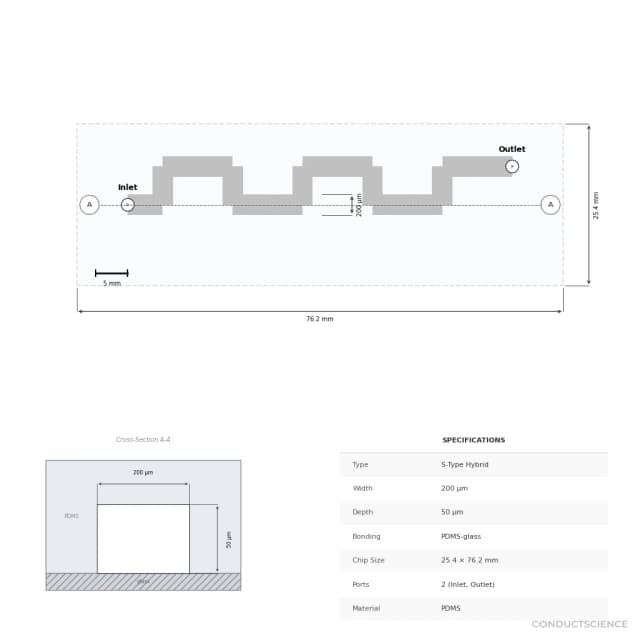
Reusable chip — designed for multiple experimental runs. Compatible with standard microfluidic tubing: steel pins (0.7 mm ID / 1.0 mm OD) and silicone tubing (0.8 mm ID / 1.9 mm OD). Available in bulk packs (5‑, 10‑, and 25‑unit) for lab-scale and consumable workflows.

Louise Corscadden, PhD
Director of Science · ConductScience
Ask Louise about 3D Cell Culture Microfluidic Chip fit, setup, configuration, or quote prep.
Already working with us? Sign in to connect this with My Scientist.
Key Specifications
Full details →- Model fit
- 3 selectable configurations
- SKU family
- WHM-0074
- Shipping box
- 181.8 x 136.3 x 90.9 cm
- Ordering
- Online checkout and quote request available
- Category
- Cell Culture Chips
- Build notes
- Confirm accessories, station layout, and support needs before purchase
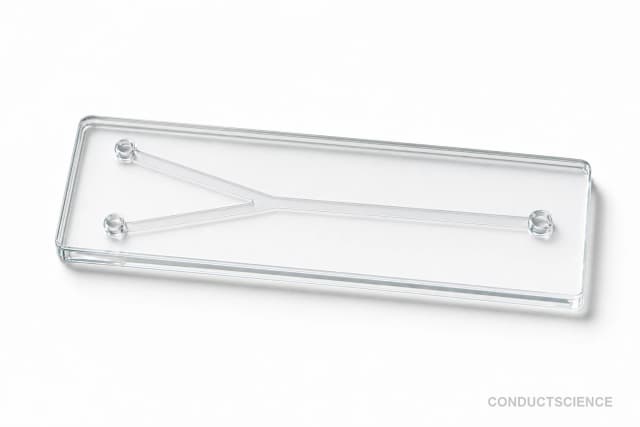
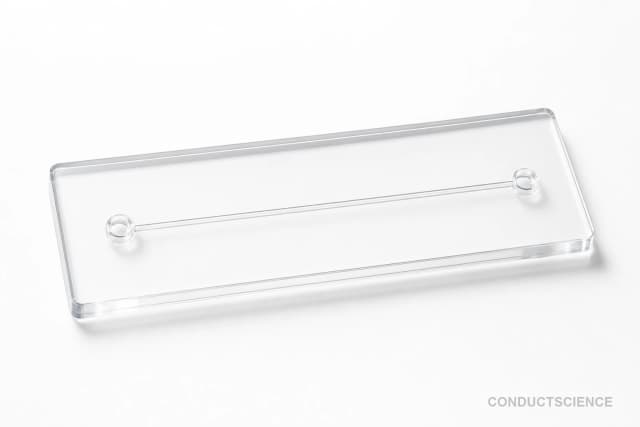
The 3D Cell Culture Microfluidic Chip (WHM-0074) provides a controlled microenvironment for three-dimensional cell culture applications with integrated pH and temperature monitoring capabilities. This microfluidic platform enables long-term cell culture studies under perfusion conditions, supporting the growth and maintenance of cells in a more physiologically relevant 3D architecture compared to traditional flat culture methods.
The chip incorporates microfluidic channels designed for continuous perfusion, allowing researchers to maintain stable culture conditions while providing controlled nutrient delivery and waste removal. The integrated environmental monitoring supports extended culture periods required for differentiation studies, drug screening assays, and tissue engineering applications where temporal dynamics are critical to experimental outcomes.
How It Works
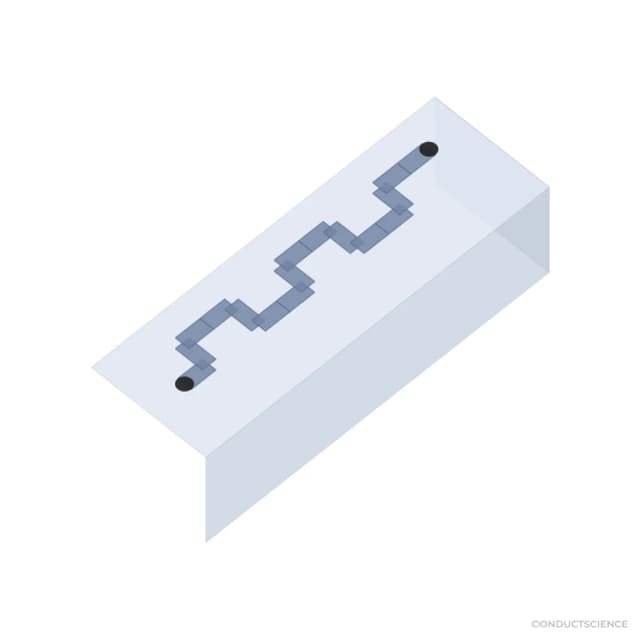
The microfluidic chip utilizes microfabricated channels to create controlled 3D culture environments where cells can grow in three dimensions rather than as monolayers. The perfusion system delivers fresh media through inlet channels while removing waste products through outlet channels, maintaining optimal nutrient gradients and waste removal similar to physiological conditions.
Integrated sensors monitor pH and temperature within the culture chambers, providing real-time feedback on environmental conditions critical for cell viability and function. The microfluidic design creates laminar flow patterns that ensure uniform distribution of nutrients and growth factors while minimizing shear stress on cultured cells.
The 3D architecture allows cells to form natural cell-cell and cell-matrix interactions, leading to more physiologically relevant cell behavior, gene expression patterns, and drug responses compared to traditional 2D culture systems.
Features & Benefits
Shipping weight
- 3.3 lb
Shipping box
- L: 181.8 cm
- W: 136.3 cm
- H: 90.9 cm
| Feature | This Product | Typical Alternative | Advantage |
|---|---|---|---|
| Culture Architecture | 3D microfluidic chambers with perfusion | Many systems offer only 2D monolayer culture or static 3D conditions | Provides more physiologically relevant cell behavior and drug responses through 3D growth patterns |
| Environmental Control | Integrated pH and temperature monitoring | Basic systems rely on external incubator control only | Enables real-time monitoring and maintenance of optimal culture conditions within the microenvironment |
| Perfusion Capability | Continuous media flow for long-term culture | Static culture systems require manual media changes | Supports extended culture periods with consistent nutrient delivery and waste removal |
| Application Scope | Long-term cell culture and perfusion studies | Entry-level systems often limited to short-term or endpoint assays | Enables comprehensive temporal studies of cell behavior, differentiation, and drug responses |
This microfluidic platform combines 3D culture architecture with integrated environmental monitoring and perfusion capabilities. The system provides physiologically relevant culture conditions suitable for extended experimental timelines and real-time parameter monitoring.
| Model | SKU | Listed price | Status | Shipping box |
|---|---|---|---|---|
| 25-Pack | WHM-0074-25PK | Quote | Available | 181.8 x 136.3 x 90.9 cm |
| 10-Pack | WHM-0074-10PK | $1,490.00 | Available | 181.8 x 136.3 x 90.9 cm |
| 5-Pack | WHM-0074-5PK | Quote | Available | 181.8 x 136.3 x 90.9 cm |
Practical Tips
Calibrate pH and temperature sensors using standard reference solutions before each experimental series to ensure accurate environmental monitoring.
Why: Accurate environmental data is critical for reproducible cell culture results and experimental validity.
Flush all microfluidic channels with sterile water followed by 70% ethanol between experiments to prevent contamination and channel blockage.
Why: Proper cleaning maintains channel integrity and prevents cross-contamination between experimental runs.
Pre-equilibrate all culture media to the target temperature and pH before introducing to the perfusion system.
Why: Media equilibration prevents environmental fluctuations that could stress cells during the initial culture establishment phase.
If air bubbles form in channels, increase flow rate temporarily while ensuring inlet reservoirs remain filled to prevent additional air introduction.
Why: Air bubbles can disrupt cell culture and interfere with proper nutrient and waste transport through the microfluidic network.
Record environmental parameters at regular intervals throughout long-term culture experiments to document culture stability and identify trends.
Why: Systematic data collection enables correlation of environmental conditions with experimental outcomes and troubleshooting of culture issues.
Handle all cell culture reagents and waste materials according to biosafety protocols appropriate for the cell types being cultured.
Why: Proper biosafety practices protect laboratory personnel and prevent environmental contamination during microfluidic culture operations.
Setup Guide
What’s in the Box
- 3D Cell Culture Microfluidic Chip (typical)
- Tubing connectors and fittings (typical)
- User manual and setup instructions (typical)
- Calibration certificate for sensors (typical)
- Sterile packaging materials (typical)
Warranty
ConductScience provides a standard one-year manufacturer warranty covering defects in materials and workmanship, along with technical support for setup and operation procedures.
Compliance
References
Background reading relevant to this product:
What cell types are compatible with this 3D culture platform?
The chip supports various cell types including primary cells, immortalized cell lines, and stem cells. Specific compatibility depends on the cell's growth requirements and the culture media formulation used.
How long can cells be maintained in continuous culture?
The perfusion system and environmental controls support long-term culture periods ranging from days to weeks, depending on the specific cell type and experimental requirements.
What flow rates are recommended for different cell types?
Flow rates should be optimized based on cell type sensitivity to shear stress and metabolic requirements. Consult product datasheet for recommended starting parameters and optimization protocols.
Can the pH and temperature sensors be recalibrated?
Environmental sensors require periodic calibration to maintain accuracy. Calibration procedures and recommended intervals should be followed as specified in the user manual.
What data output formats are available for monitoring data?
Consult product datasheet for specific data logging capabilities and compatible software interfaces for environmental monitoring data collection.
How does this compare to traditional culture flasks for drug screening?
3D microfluidic culture provides more physiologically relevant drug responses due to improved cell-cell interactions and controlled microenvironments, though requires more specialized setup compared to standard flask culture.
What maintenance is required for the perfusion system?
Regular cleaning and sterilization of channels is necessary between experiments, along with periodic replacement of tubing and verification of flow rates and sensor calibration.
Have a question about this product?
Have a question? Just ask.
Send it over and we'll email you a personalized answer — no call, no scheduling.
Prefer to talk it through?