8-Channel Parallel Chip (Slide Format)
8-channel microfluidic chip in standard slide format for high-throughput parallel screening applications.
Reusable chip — designed for multiple experimental runs. Compatible with standard microfluidic tubing: steel pins (0.7 mm ID / 1.0 mm OD) and silicone tubing (0.8 mm ID / 1.9 mm OD). Available in bulk packs (5‑, 10‑, and 25‑unit) for lab-scale and consumable workflows.

Louise Corscadden, PhD
Director of Science · ConductScience
Ask Louise about 8-Channel Parallel Chip (Slide Format) fit, setup, configuration, or quote prep.
Already working with us? Sign in to connect this with My Scientist.
Key Specifications
Full details →- Model fit
- 3 selectable configurations
- SKU family
- WHM-0120
- Shipping box
- 181.8 x 136.3 x 90.9 cm
- Ordering
- Online checkout and quote request available
- Category
- Microfluidic Chips
- Build notes
- Confirm accessories, station layout, and support needs before purchase
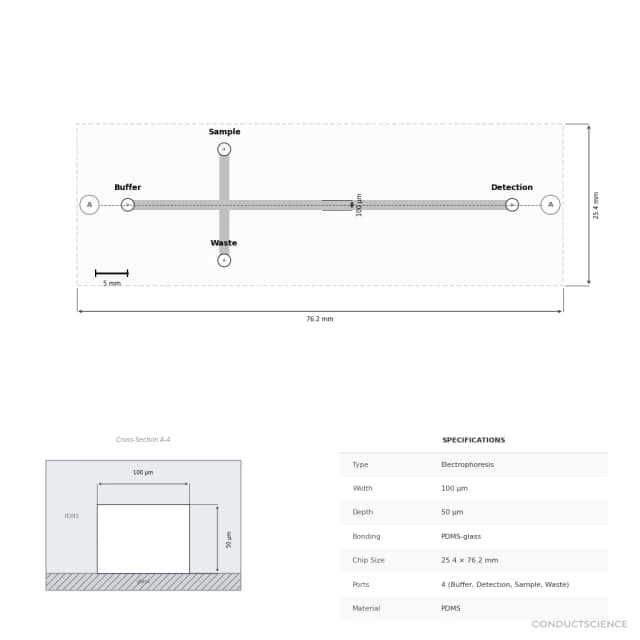
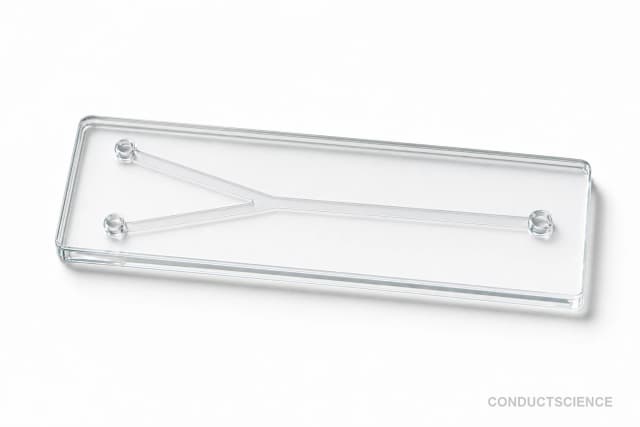
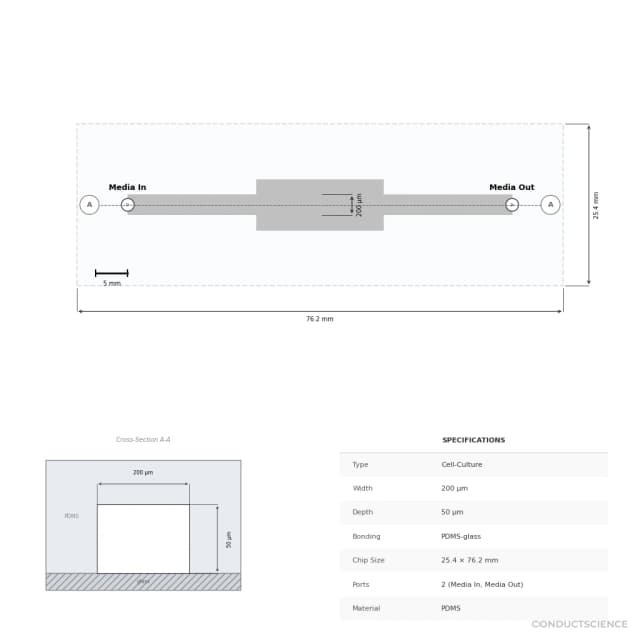
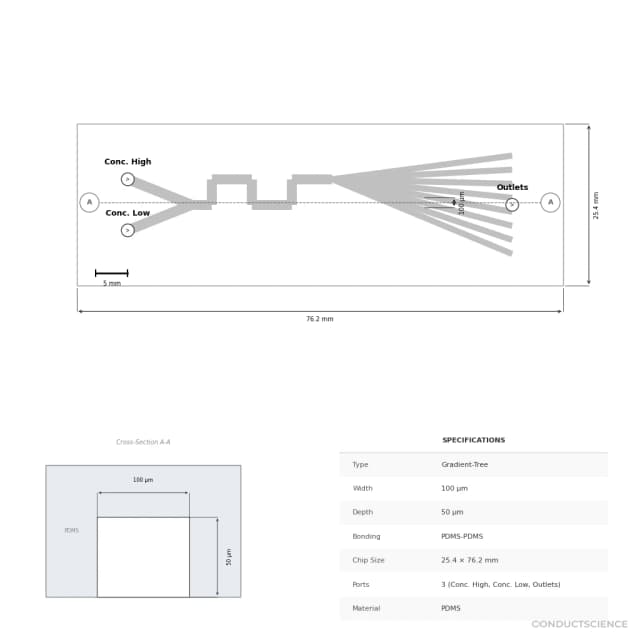
The 8-Channel Parallel Chip provides high-throughput microfluidic screening capabilities in a standard microscope slide format. This microfluidic device features eight independent channels arranged in parallel, enabling simultaneous processing of multiple samples or experimental conditions within a single 25 x 76 mm footprint. The slide format design ensures compatibility with standard microscopy equipment and laboratory workflows.
Each channel operates independently, allowing researchers to conduct parallel experiments with different reagents, concentrations, or experimental parameters. The parallel architecture maximizes experimental throughput while minimizing sample consumption and reagent costs. This configuration is particularly valuable for screening applications where multiple conditions must be tested simultaneously under identical environmental conditions.
How It Works
The 8-Channel Parallel Chip utilizes microfluidic principles to create eight independent flow channels within a single substrate. Each channel is fabricated with precise dimensions to control fluid flow rates and mixing characteristics. Laminar flow conditions within the microchannels enable predictable fluid behavior and minimal cross-contamination between channels.
Sample introduction occurs through dedicated inlets for each channel, with flow rates controlled by pressure differentials or external pumping systems. The parallel configuration allows identical flow conditions across all channels while maintaining sample isolation. Channel geometry and surface treatments can be optimized for specific applications, from cell culture to chemical synthesis.
The slide format dimensions (25 x 76 mm) match standard microscope slides, enabling direct integration with microscopy systems for real-time observation and analysis. This compatibility facilitates optical detection methods including fluorescence imaging, absorbance measurements, and phase contrast microscopy across all channels simultaneously.
Features & Benefits
Shipping weight
- 3.3 lb
Shipping box
- L: 181.8 cm
- W: 136.3 cm
- H: 90.9 cm
| Feature | This Product | Typical Alternative | Advantage |
|---|---|---|---|
| Number of channels | 8 parallel channels | Entry-level devices often provide 1-4 channels | Higher throughput enables more conditions or replicates in a single experiment |
| Format compatibility | Standard 25 x 76 mm slide format | Custom dimensions requiring specialized holders | Direct compatibility with existing microscope stages and laboratory equipment |
| Application focus | High-throughput screening design | General-purpose microfluidic devices with varied configurations | Optimized geometry and channel arrangement for parallel screening workflows |
| Channel independence | Independent operation of all 8 channels | Some devices have shared inlet or outlet manifolds | Complete sample isolation prevents cross-contamination between experimental conditions |
This 8-channel parallel chip combines high-throughput capabilities with standard slide format compatibility. The independent channel architecture and screening-optimized design provide advantages for researchers requiring simultaneous multi-condition experiments.
| Model | SKU | Listed price | Status | Shipping box |
|---|---|---|---|---|
| 25-Pack | WHM-0120-25PK | Quote | Available | 181.8 x 136.3 x 90.9 cm |
| 10-Pack | WHM-0120-10PK | $1,490.00 | Available | 181.8 x 136.3 x 90.9 cm |
| 5-Pack | WHM-0120-5PK | Quote | Available | 181.8 x 136.3 x 90.9 cm |
Practical Tips
Prime all channels with buffer solution before introducing samples to ensure consistent flow patterns and eliminate air bubbles.
Why: Air bubbles can disrupt flow and create uneven conditions between channels.
Clean channels immediately after use with appropriate solvents followed by drying gas to prevent residue buildup.
Why: Protein or chemical residues can alter channel surface properties and affect subsequent experiments.
Verify flow rate consistency across all channels using colored dye solutions before each experimental session.
Why: Flow rate variations between channels can compromise the validity of parallel comparisons.
If flow stops in one channel, check for clogs at the inlet and outlet ports using a microscope before adjusting pressure.
Why: Partial blockages are common failure points and can usually be cleared without replacing the entire chip.
Record inlet pressures and flow rates for each channel to ensure reproducible experimental conditions between runs.
Why: Documented flow parameters enable proper replication and troubleshooting of experimental protocols.
Use appropriate chemical-resistant tubing and fittings when working with organic solvents or corrosive solutions.
Why: Incompatible materials can degrade and contaminate samples or create safety hazards.
Setup Guide
What’s in the Box
- 8-Channel Parallel Chip
- User manual (typical)
- Connection guide (typical)
Warranty
ConductScience provides a standard one-year manufacturer warranty covering defects in materials and workmanship. Technical support is available for setup guidance and troubleshooting assistance.
Compliance
What flow rates can be achieved in each channel?
Flow rates depend on the pumping system and channel geometry. Typical microfluidic chips support flow rates from nanoliters to microliters per minute. Consult the product datasheet for specific flow characteristics and recommended operating parameters.
How do I prevent cross-contamination between channels?
The channels are physically isolated within the chip substrate. Maintain proper inlet pressure balance and avoid overpressurization that could cause leakage. Use separate tubing and reservoirs for each channel.
What materials are compatible with the chip substrate?
Compatibility depends on the chip substrate material. Most microfluidic chips are made from PDMS, glass, or plastic polymers. Consult the product datasheet for chemical compatibility with your specific solvents and reagents.
Can the chip be reused for multiple experiments?
Reusability depends on the experiment type and cleaning protocol. For cell culture or protein applications, single-use may be preferred. For chemical analyses, thorough cleaning with appropriate solvents may allow reuse.
What microscope objectives work best with this chip?
Standard microscope objectives compatible with the working distance through the chip substrate work well. Low to medium magnification objectives (4x to 40x) typically provide optimal field of view for monitoring multiple channels.
How do I connect external pumps or pressure controllers?
Use appropriate tubing connectors matched to the chip's inlet port size. Luer fittings or direct tubing insertion are common connection methods. Ensure secure connections without over-tightening.
What sample volumes are required for each channel?
Sample volumes depend on channel dimensions and experimental duration. Microfluidic channels typically require microliters of sample, with dead volumes determined by the total channel and tubing volume.
Have a question about this product?
Have a question? Just ask.
Send it over and we'll email you a personalized answer — no call, no scheduling.
Prefer to talk it through?