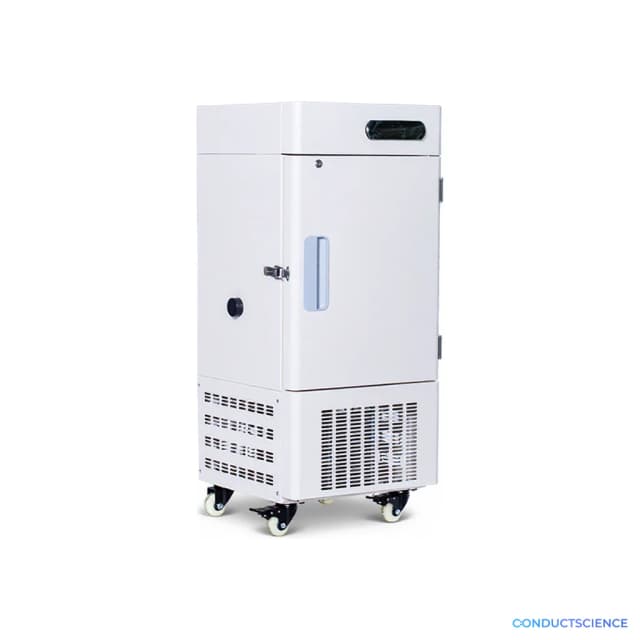
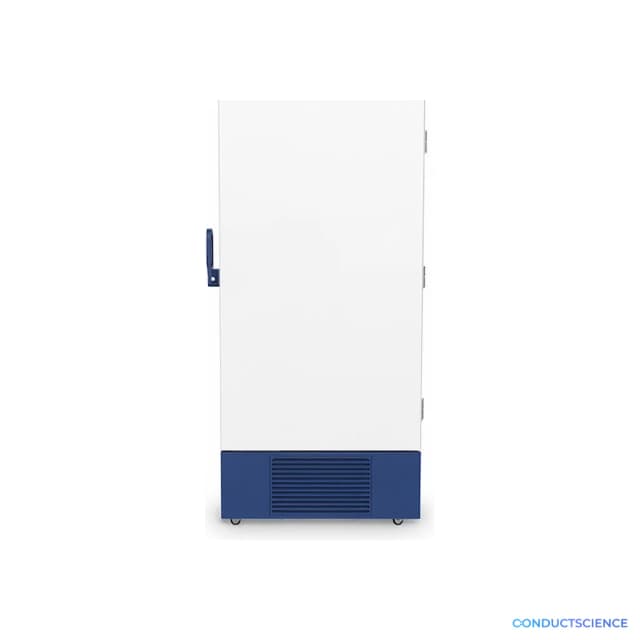
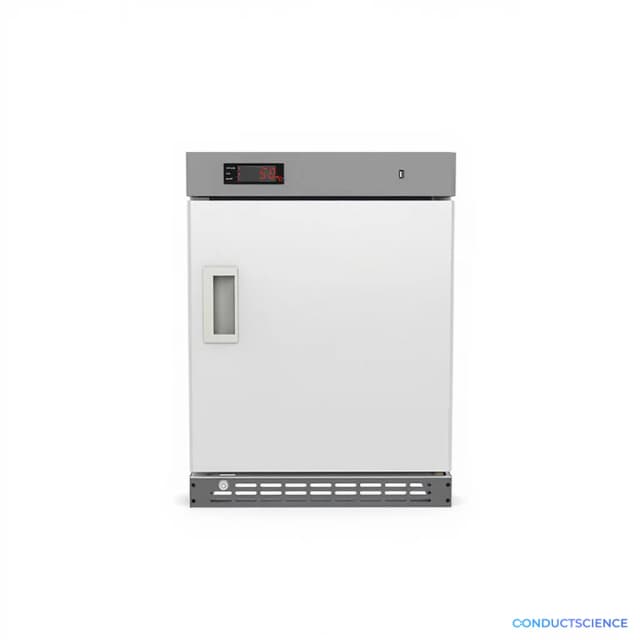
86℃ Freezer(Undercounter Type) 90L
Compact 90-liter ultra-low temperature freezer maintaining -86°C for cryogenic sample storage in space-constrained laboratory environments.

Louise Corscadden, PhD
Neuroscience · ConductScience
Ask Louise about 86℃ Freezer(Undercounter Type) 90L fit, setup, configuration, or quote prep.
Already working with us? Sign in to connect this with My Scientist.
The 86℃ Freezer (Undercounter Type) 90L provides ultra-low temperature storage in a compact undercounter format suitable for laboratory environments with limited floor space. This freezer maintains consistent temperatures at -86°C, enabling long-term preservation of temperature-sensitive biological samples, reagents, and research materials. The 90-liter capacity accommodates standard laboratory storage containers while fitting beneath standard laboratory benches.
The undercounter design maximizes laboratory workflow efficiency by positioning frequently accessed samples at ergonomic heights. Temperature uniformity and stability are critical for maintaining sample integrity during extended storage periods, supporting research protocols that require cryogenic preservation without the footprint of full-size ultra-low freezers.
How It Works
Ultra-low temperature freezers achieve -86°C operation through a cascade refrigeration system utilizing multiple refrigerants and compression stages. The primary refrigerant circuit pre-cools the sample chamber, while a secondary ultra-low temperature circuit provides the final cooling to reach -86°C. Insulation systems minimize heat transfer from the ambient environment to maintain temperature stability.
Temperature control systems monitor and regulate cooling cycles to prevent temperature excursions that could compromise sample integrity. The undercounter design incorporates specialized insulation and door sealing systems to minimize cold air loss during access cycles while maintaining consistent internal temperatures throughout the storage volume.
Features & Benefits
Automation Level
- manual
Research Domain
- Cancer Research
- Cell Biology
- Clinical Diagnostics
- Immunology
- Microbiology
- Pharmaceutical QC
Weight
- 92.0 kg
Dimensions
- L: 61.0 mm
- W: 32.0 mm
- H: 45.0 mm
| Feature | This Product | Typical Alternative | Advantage |
|---|---|---|---|
| Storage Capacity | 90-liter internal volume | Entry-level models often offer 50-60 liters | Provides greater sample storage capacity while maintaining undercounter form factor. |
| Form Factor | Undercounter design (45 cm height) | Most ultra-low freezers are upright floor models | Maximizes laboratory space utilization by fitting beneath standard laboratory benches. |
| Footprint | Compact 61×32 cm base dimensions | Larger models require dedicated floor space | Enables installation in space-constrained laboratory environments without compromising accessibility. |
| Weight | 92 kg total weight | Comparable capacity models vary significantly | Facilitates installation and positioning in laboratory settings with weight restrictions. |
This freezer combines ultra-low temperature capability with space-efficient undercounter design, providing 90 liters of -86°C storage in a compact format suitable for laboratories with limited floor space.
Practical Tips
Allow adequate clearance around ventilation areas to ensure proper heat dissipation and optimal cooling performance.
Why: Restricted airflow can lead to compressor strain and temperature instability.
Clean condenser coils regularly to maintain cooling efficiency and prevent system overload.
Why: Dust accumulation reduces heat transfer efficiency and increases energy consumption.
Verify temperature accuracy using calibrated reference thermometers at multiple locations within the storage volume.
Why: Temperature gradients can exist within freezers, affecting sample preservation uniformity.
Ensure proper electrical grounding and use dedicated circuits to prevent electrical hazards during operation.
Why: High-current draw of ultra-low freezers requires appropriate electrical safety measures.
Document temperature records and any excursions to maintain sample integrity documentation for regulatory compliance.
Why: Temperature history is critical for validating sample quality in regulated research environments.
Monitor door seal integrity regularly and replace gaskets if cold air loss is detected.
Why: Compromised door seals lead to temperature instability and increased energy consumption.
Organize samples systematically with clear labeling to minimize door-open time during sample retrieval.
Why: Extended door opening causes temperature fluctuations that can compromise sample integrity.
Setup Guide
What’s in the Box
- 86℃ Freezer main unit
- Power cord and electrical connections (typical)
- User manual and operation guide (typical)
- Temperature monitoring documentation (typical)
- Sample storage racks or shelving (typical)
Warranty
ConductScience provides standard manufacturer warranty coverage including technical support for operational guidance and troubleshooting assistance during the warranty period.
Compliance
References
Background reading relevant to this product:
What is the temperature uniformity throughout the 90-liter storage volume?
Temperature uniformity specifications should be consulted in the product datasheet to ensure consistent storage conditions for all sample locations.
How long does initial cooldown take to reach -86°C?
Initial cooldown typically requires 4-6 hours depending on ambient conditions and loading, though specific performance data should be verified in technical documentation.
What are the electrical requirements for installation?
Electrical specifications including voltage, current draw, and circuit requirements are detailed in the installation manual to ensure proper electrical supply.
Can the freezer accommodate standard laboratory storage containers?
The 90-liter capacity is designed for standard laboratory containers, though specific rack configurations and container compatibility should be verified based on storage needs.
What maintenance procedures are required for optimal performance?
Regular maintenance including condenser cleaning, door seal inspection, and temperature calibration verification are typically required as specified in the maintenance schedule.
How does this compare to larger ultra-low freezers in terms of energy efficiency?
Smaller capacity freezers typically offer improved energy efficiency per liter of storage compared to larger units, though specific consumption data should be consulted.
Have a question about this product?
Upgrade Options