Advanced Capillary Electrophoresis Chip
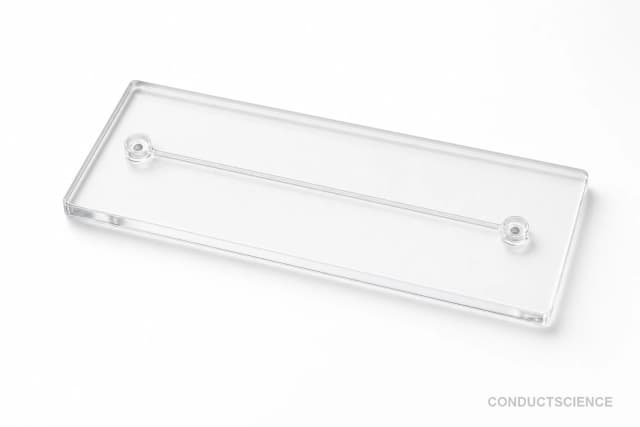
Microfluidic capillary electrophoresis chip with integrated injection and detection zones for high-efficiency separation of proteins, nucleic acids, and drugs in analytical and diagnostic applications.
Reusable chip — designed for multiple experimental runs. Compatible with standard microfluidic tubing: steel pins (0.7 mm ID / 1.0 mm OD) and silicone tubing (0.8 mm ID / 1.9 mm OD). Available in bulk packs (5‑, 10‑, and 25‑unit) for lab-scale and consumable workflows.

Louise Corscadden, PhD
Director of Science · ConductScience
Ask Louise about Advanced Capillary Electrophoresis Chip fit, setup, configuration, or quote prep.
Already working with us? Sign in to connect this with My Scientist.
Key Specifications
Full details →- Model fit
- 3 selectable configurations
- SKU family
- WHM-0112
- Shipping box
- 181.8 x 136.3 x 90.9 cm
- Ordering
- Online checkout and quote request available
- Category
- Electrophoresis Chips
- Build notes
- Confirm accessories, station layout, and support needs before purchase
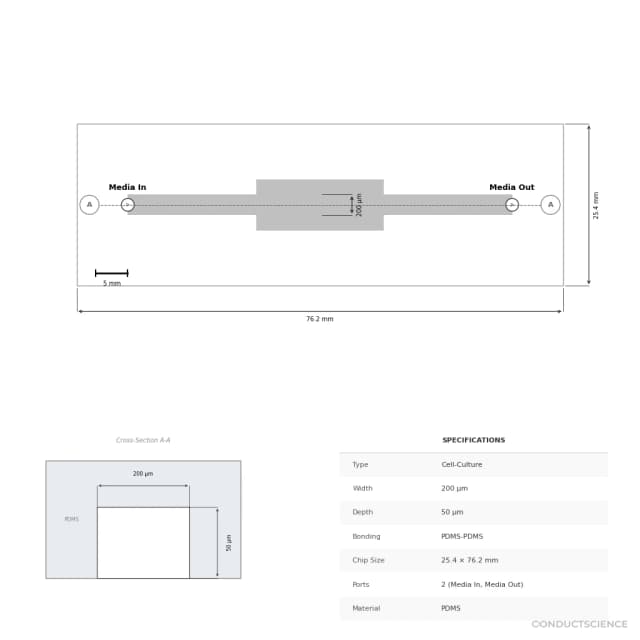
The Advanced Capillary Electrophoresis Chip is a microfluidic device designed for high-efficiency electrophoretic separation of proteins, nucleic acids, and pharmaceutical compounds. This lab-on-chip platform integrates sample injection and detection zones within a single microfluidic architecture, enabling researchers to perform capillary zone electrophoresis (CZE) analyses with reduced sample volumes and enhanced separation control compared to traditional capillary systems.
The chip's microfluidic design provides precise control over electric field distribution and sample transport, supporting applications in bioanalytical chemistry, pharmaceutical analysis, and diagnostic assay development. The integrated detection zone allows for real-time monitoring of separated analytes, while the microfluidic format enables automation-compatible workflows and parallel processing capabilities.
How It Works
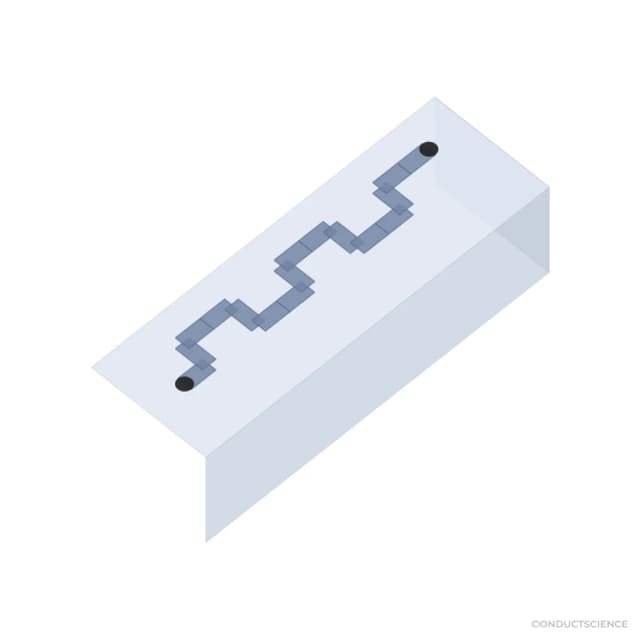
Capillary electrophoresis separation occurs when charged analytes migrate through the microfluidic channels under the influence of an applied electric field. The chip's microfabricated channels create a controlled environment where analytes separate based on their charge-to-size ratio, with smaller, more highly charged species migrating faster toward the oppositely charged electrode.
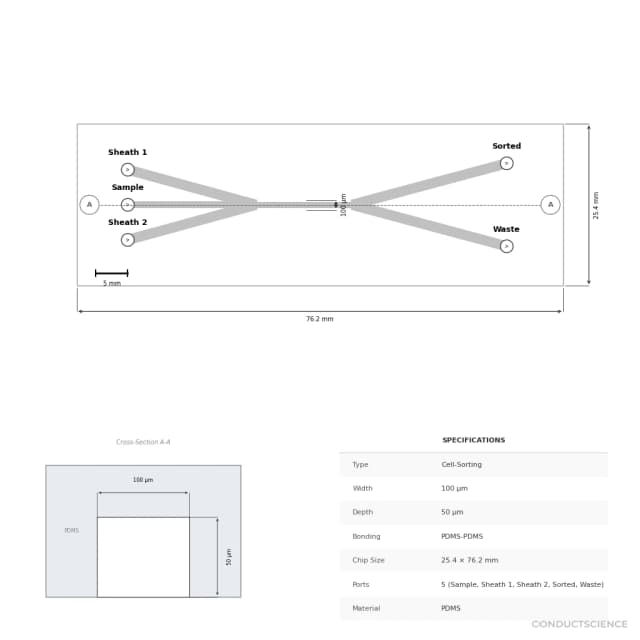
The integrated injection system introduces samples into the separation channel through electrokinetic or pressure-driven injection mechanisms. As analytes migrate through the channel, they separate based on their electrophoretic mobility, creating distinct zones that reach the detection region at different times. The detection zone monitors separated analytes through optical, electrochemical, or other detection methods integrated within the chip architecture.
The microfluidic format provides advantages over conventional capillary systems, including reduced sample and reagent consumption, faster analysis times, and the ability to incorporate multiple separation channels or detection points within a single device.
Features & Benefits
Shipping weight
- 3.3 lb
Shipping box
- L: 181.8 cm
- W: 136.3 cm
- H: 90.9 cm
| Feature | This Product | Typical Alternative | Advantage |
|---|---|---|---|
| Integration Level | Integrated injection and detection zones within single chip | Separate injection systems and external detection components | Reduces system complexity and improves reproducibility by eliminating connection interfaces between components. |
| Analyte Compatibility | Supports proteins, nucleic acids, and drugs in single platform | Specialized chips often optimized for single analyte classes | Provides research flexibility by enabling multiple analytical applications with a single chip design. |
| Sample Volume Requirements | Microfluidic design minimizes sample consumption | Conventional systems often require larger sample volumes | Enables analysis of precious samples and reduces reagent costs in high-throughput applications. |
| Separation Efficiency | High-efficiency separation through optimized microfluidic channels | Performance varies significantly across different manufacturers | Consistent separation performance supports reliable analytical results and method transferability. |
The Advanced Capillary Electrophoresis Chip combines integrated injection and detection within a microfluidic platform supporting multiple analyte classes. The chip's design emphasizes versatility across proteins, nucleic acids, and drug analysis applications while minimizing sample requirements through microfluidic architecture.
| Model | SKU | Listed price | Status | Shipping box |
|---|---|---|---|---|
| 25-Pack | WHM-0112-25PK | Quote | Available | 181.8 x 136.3 x 90.9 cm |
| 10-Pack | WHM-0112-10PK | $1,490.00 | Available | 181.8 x 136.3 x 90.9 cm |
| 5-Pack | WHM-0112-5PK | Quote | Available | 181.8 x 136.3 x 90.9 cm |
Practical Tips
Use standards that closely match your analyte's chemical properties and mobility range for accurate quantitative results.
Why: Similar chemical behavior ensures calibration curves accurately reflect sample analyte response.
Flush channels thoroughly with appropriate cleaning solutions between different sample types to prevent cross-contamination.
Why: Microfluidic channels can retain trace amounts of previous samples that interfere with subsequent analyses.
Allow buffer and samples to equilibrate to room temperature before analysis to ensure consistent migration times.
Why: Temperature variations affect solution viscosity and analyte mobility, leading to migration time variability.
Check for air bubbles in channels if peak shapes appear distorted or migration times are inconsistent.
Why: Air bubbles disrupt electric field uniformity and can cause irregular sample migration patterns.
Monitor baseline stability before sample injection to ensure detector performance is optimal.
Why: Baseline drift or noise can compromise quantitative accuracy and detection limits.
Always disconnect power before handling chips to avoid electrical hazards during chip replacement.
Why: High voltages used in electrophoresis can cause serious injury if proper safety protocols are not followed.
Document buffer pH and ionic strength for each analysis to ensure reproducible separation conditions.
Why: Buffer conditions directly affect analyte mobility and separation selectivity in electrophoretic systems.
Setup Guide
What’s in the Box
- Advanced Capillary Electrophoresis Chip (typical)
- User manual and protocol guide (typical)
- Quality control certificate (typical)
- Storage container (typical)
Warranty
ConductScience provides a one-year manufacturer warranty covering defects in materials and workmanship, with technical support for setup and protocol optimization. Extended warranty options and service contracts are available for high-usage laboratory environments.
Compliance
What sample volumes are required for analysis?
Microfluidic chips typically require nanoliter to microliter sample volumes. Consult product datasheet for specific injection volume requirements and recommended sample concentrations for optimal separation.
Can the chip be used with different buffer systems?
The chip is compatible with various electrophoresis buffers appropriate for capillary zone electrophoresis. Buffer selection depends on your specific analytes and separation requirements.
How many separations can be performed per chip?
As a disposable device, the chip is designed for single-use or limited reuse depending on sample type and cleaning protocols. Consult product specifications for recommended usage limits.
What detection methods are compatible?
The integrated detection zone supports various detection methods including UV-visible absorption, fluorescence, and electrochemical detection, depending on the specific chip configuration and instrumentation.
What voltage ranges are recommended for separation?
Optimal separation voltages depend on channel length, buffer conditions, and analyte properties. Consult product datasheet for recommended voltage ranges and field strength parameters.
How does performance compare to conventional capillary electrophoresis?
The microfluidic format typically provides faster analysis times and lower sample consumption compared to traditional capillary systems, while maintaining comparable or enhanced separation efficiency.
What are the storage and handling requirements?
Store chips in a dry environment at room temperature until use. Handle carefully to avoid damage to microfluidic channels and maintain sterility if required for biological samples.
Are calibration standards required?
Yes, appropriate standards for your analyte class are recommended for method validation and quantitative analysis. Standard selection depends on your specific application requirements.
Have a question about this product?
Have a question? Just ask.
Send it over and we'll email you a personalized answer — no call, no scheduling.
Prefer to talk it through?