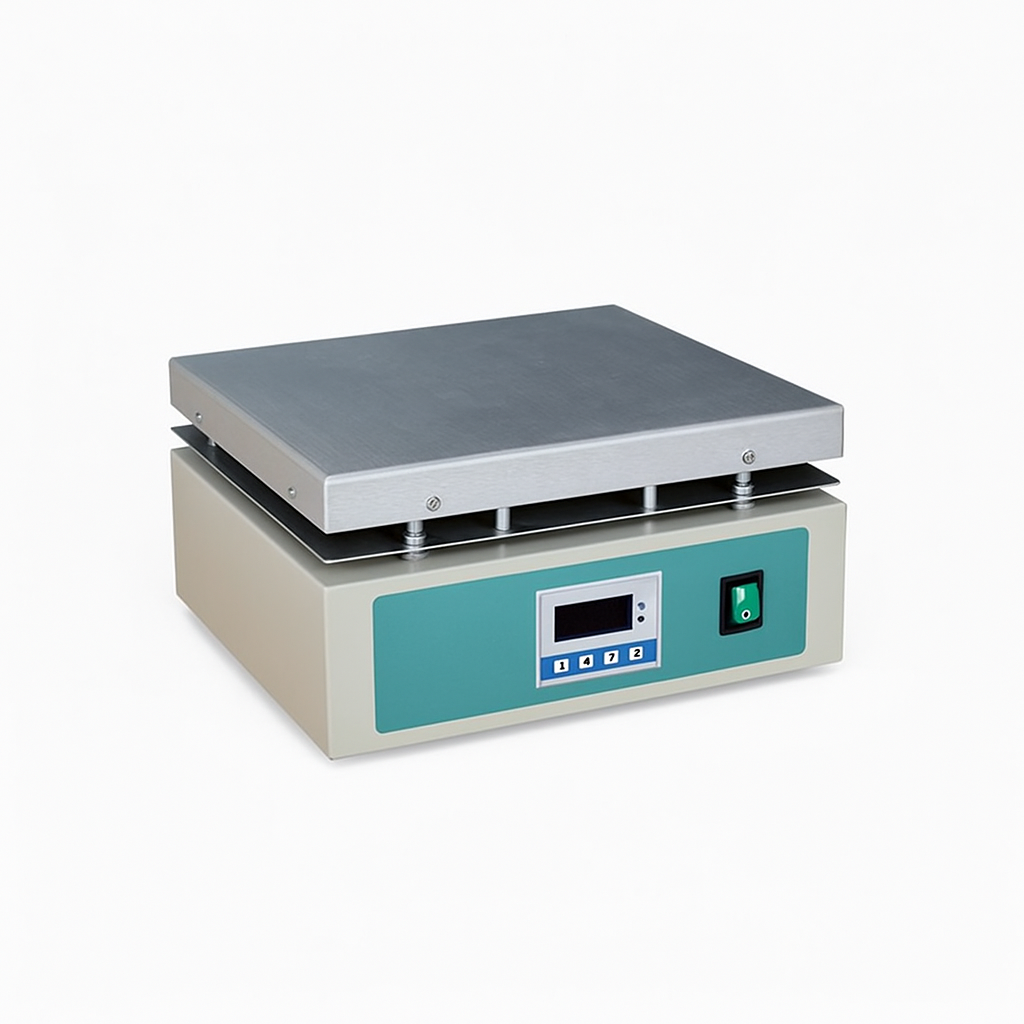
Aluminum/Ceramic Hot Plate
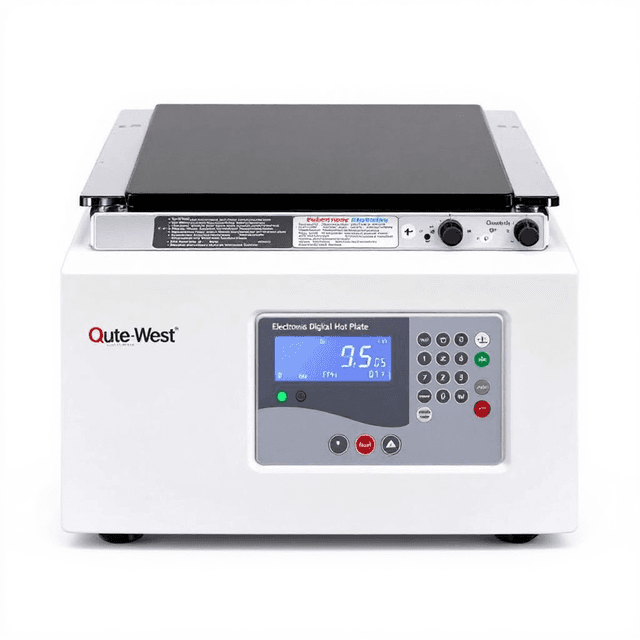
Laboratory hot plates with aluminum or ceramic surfaces providing controlled heating up to 380°C in multiple plate size configurations for sample preparation and analytical applications.

Louise Corscadden, PhD
Director of Science · ConductScience
Ask Louise about Aluminum/Ceramic Hot Plate fit, setup, configuration, or quote prep.
Already working with us? Sign in to connect this with My Scientist.
Key Specifications
Full details →- Model fit
- 5 selectable configurations
- SKU family
- BIO-0693
- Shipping box
- 42.0 x 43.6 x 38.0 cm
- Ordering
- Online checkout and quote request available
- Category
- Benchtop Instruments
- Build notes
- Aluminum, Ceramic
The Aluminum/Ceramic Hot Plate provides controlled heating for laboratory applications requiring precise temperature control up to 380°C. Available in multiple plate configurations ranging from 120×120mm to 600×400mm, these hot plates accommodate diverse sample sizes and experimental requirements. The units feature either aluminum or ceramic heating surfaces, with power consumption scaled from 180W to 3000W based on plate size.
These hot plates support sample preparation, chemical synthesis, and analytical procedures requiring consistent thermal conditions. The temperature range from room temperature to 380°C covers most standard laboratory heating applications, while the variable plate sizes enable use with different vessel configurations and sample volumes.
How It Works
The hot plate operates through resistive heating elements embedded beneath the aluminum or ceramic surface. Electrical current passes through these resistance coils, generating heat that transfers through the plate material to the sample vessel. Temperature control is achieved through integrated thermostatic regulation that modulates power delivery to maintain the selected temperature setpoint.
Aluminum plates provide rapid heat transfer and uniform temperature distribution due to the metal's high thermal conductivity. Ceramic surfaces offer chemical inertness and resistance to thermal shock, making them suitable for aggressive chemical environments. The heating elements are designed to provide consistent thermal output across the entire plate surface area.
Features & Benefits
Heating Surface Size
- 120mm
- 170mm
- 190mm
- 400mm
- 600mm
Heating Surface Material
- Aluminum
- Ceramic
Power Supply Options
- AC 110/220V, 50/60 Hz
- AC 220V, 50/60 Hz
Max Temperature
- 350°C
Power Rating
- 1000W
- 1200W
- 1500W
- 2000W
- 2500W
Shipping weight
- 29.98 lb
Shipping box
- L: 42.0 cm
- W: 43.6 cm
- H: 38.0 cm
| Feature | This Product | Typical Alternative | Advantage |
|---|---|---|---|
| Plate Size Range | 120×120mm to 600×400mm options | Many models offer limited size selections | Allows researchers to match plate size to specific vessel requirements and sample volumes. |
| Surface Material Options | Both aluminum and ceramic surfaces available | Single surface material per model | Provides choice between thermal performance and chemical compatibility based on application needs. |
| Maximum Temperature | 380°C operating range | Entry-level models often limited to 300°C or lower | Supports high-temperature applications including sample digestion and synthesis procedures. |
| Power Scaling | 180W to 3000W based on plate size | Fixed power regardless of heating area | Optimizes energy efficiency while maintaining appropriate heating performance for each plate size. |
These hot plates offer flexible sizing from 120×120mm to 600×400mm with dual surface material options and power scaling up to 3000W. The 380°C maximum temperature and universal power supply compatibility provide versatility for diverse laboratory heating applications.
| Model | SKU | Listed price | Status | Shipping box |
|---|---|---|---|---|
| AH-600E/D | AH-600E/D | $579.00 | Available | 42.0 x 43.6 x 38.0 cm |
| AH-400E/D | AH-400E/D | $599.00 | Available | 42.0 x 43.6 x 38.0 cm |
| CH-190E | CH-190E | $499.00 | Available | 42.0 x 43.6 x 38.0 cm |
| AH-170E | AH-170E | $399.00 | Available | 42.0 x 43.6 x 38.0 cm |
| AH-120E | AH-120E | $239.00 | Available | 42.0 x 43.6 x 38.0 cm |
Practical Tips
Verify temperature accuracy using a calibrated reference thermometer placed in contact with the plate surface.
Why: Ensures accurate temperature control for reproducible experimental conditions.
Clean the plate surface regularly with appropriate solvents and avoid abrasive materials that could damage the surface.
Why: Maintains optimal heat transfer and prevents contamination between samples.
Allow gradual temperature changes to prevent thermal shock, especially with ceramic surfaces.
Why: Prevents surface cracking and extends equipment lifespan.
Use appropriate heat-resistant gloves and ensure adequate ventilation when operating at high temperatures.
Why: Protects personnel from thermal burns and removes potentially hazardous vapors.
Position vessels centrally on the plate surface for uniform heating and consistent results.
Why: Ensures even temperature distribution across the sample for reliable data collection.
If temperature overshoots occur, check for proper vessel contact with the plate surface and verify setpoint programming.
Why: Poor thermal contact can cause control instability and temperature variations.
Setup Guide
What’s in the Box
- Hot plate unit (typical)
- Power cord (typical)
- User manual and safety instructions (typical)
- Temperature calibration certificate (typical)
Warranty
ConductScience provides a standard one-year manufacturer warranty covering defects in materials and workmanship, with technical support available for operational guidance and troubleshooting assistance.
Compliance
What is the temperature accuracy and stability of these hot plates?
Consult the product datasheet for specific accuracy and stability specifications. Temperature control is achieved through integrated thermostatic regulation for setpoint maintenance.
How do I choose between aluminum and ceramic plate surfaces?
Aluminum plates provide rapid heat transfer and uniform distribution, while ceramic surfaces offer chemical inertness and thermal shock resistance for aggressive chemical applications.
What vessel types are compatible with these hot plates?
The plates accommodate standard laboratory glassware including beakers, flasks, and reaction vessels. Ensure vessel base diameter matches plate dimensions for optimal heat transfer.
Can these units be used for overnight heating applications?
While the units can operate continuously, consult your laboratory safety protocols for overnight operation requirements and implement appropriate monitoring procedures.
What maintenance is required for optimal performance?
Regular cleaning of the plate surface and periodic temperature calibration verification are recommended. Avoid thermal shock by allowing gradual temperature changes.
How does power consumption vary with plate size?
Power consumption scales from 180W for the smallest 120×120mm plates to 3000W for the largest 600×400mm configurations, optimized for heating performance.
Have a question about this product?
Have a question? Just ask.
Send it over and we'll email you a personalized answer — no call, no scheduling.
Prefer to talk it through?