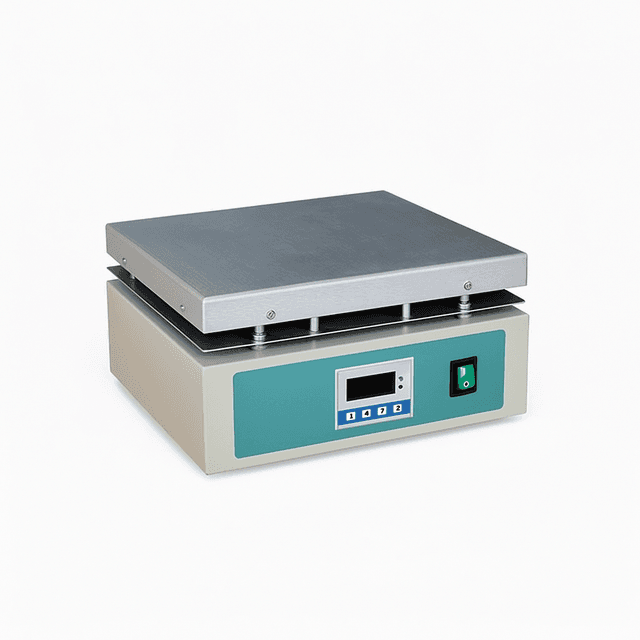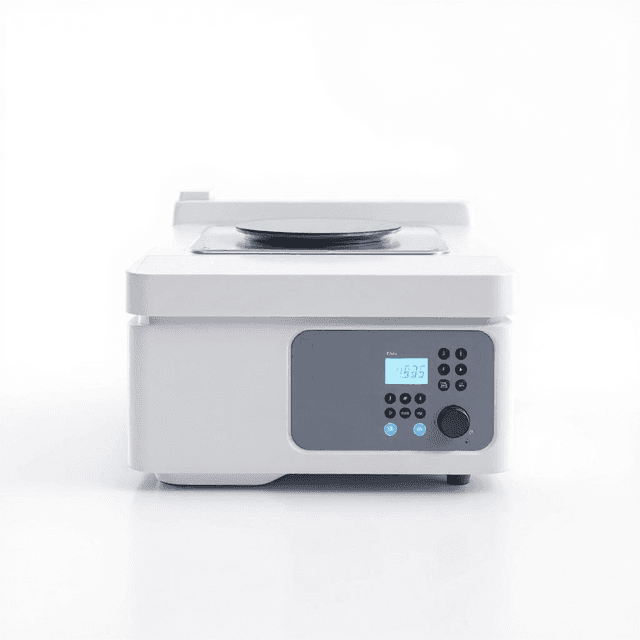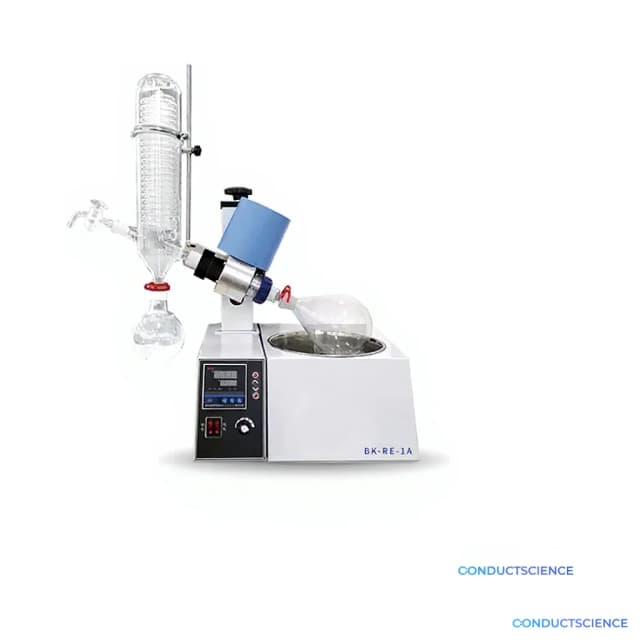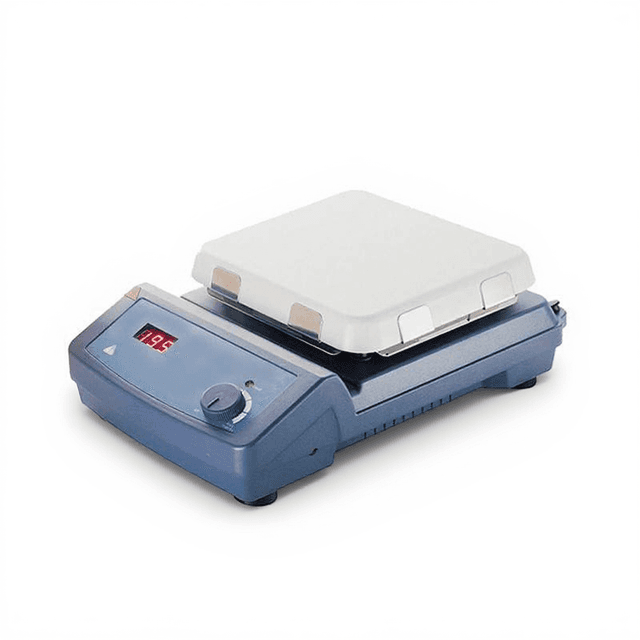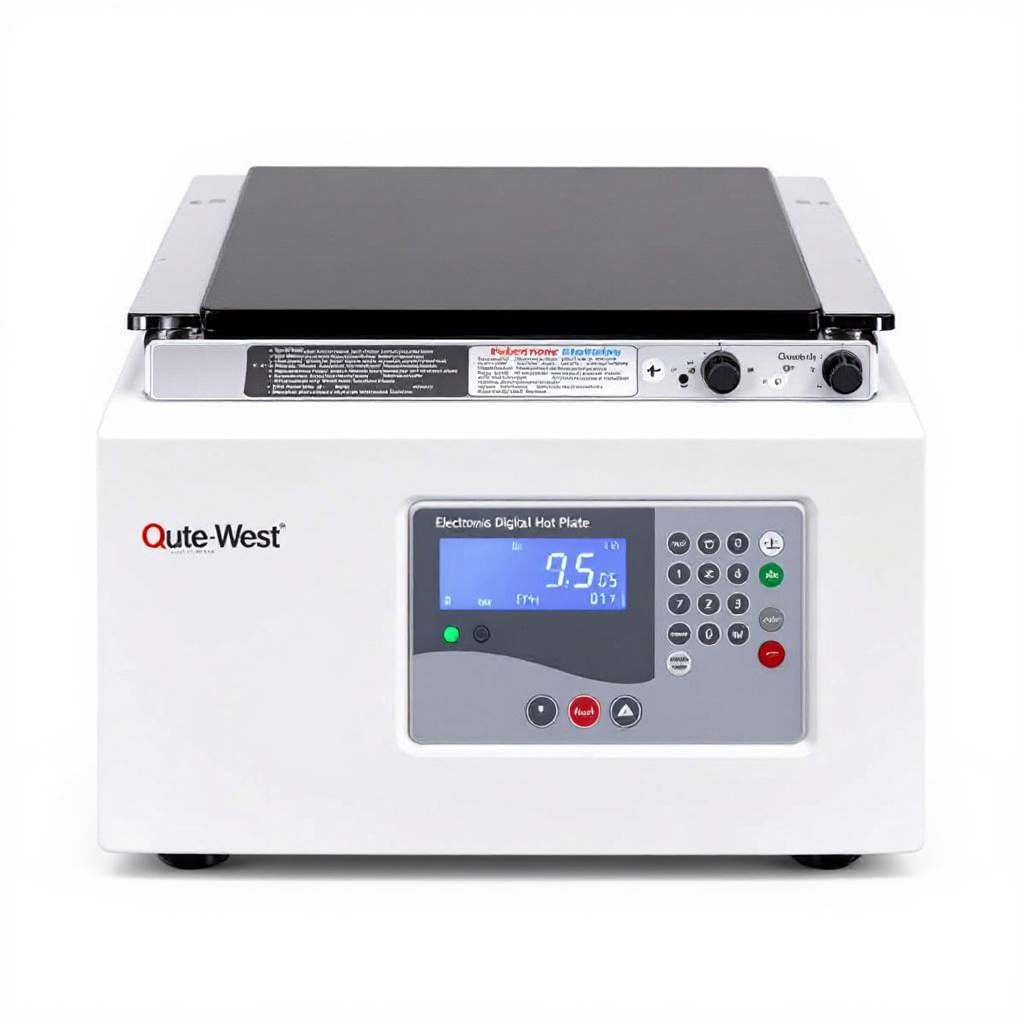
Electronic & Digital Hot Plate
Digital hot plate with temperature control from RT+20°C to 380°C, featuring anti-bacterial coating and available in three plate sizes for laboratory heating applications.

Louise Corscadden, PhD
Director of Science · ConductScience
Ask Louise about Electronic & Digital Hot Plate fit, setup, configuration, or quote prep.
Already working with us? Sign in to connect this with My Scientist.
Key Specifications
Full details →- Model fit
- Configured during quote
- SKU family
- BIO-0692
- Shipping box
- 42.0 x 43.6 x 38.0 cm
- Ordering
- Online checkout and quote request available
- Category
- Benchtop Instruments
- Build notes
- Cold-rolled steel with anti-bacteria powder coating
The Electronic & Digital Hot Plate provides precise temperature control for heating applications in research laboratories. This benchtop instrument features a cold-rolled steel construction with anti-bacterial powder coating and operates across a temperature range from ambient +20°C to 380°C. Available in multiple plate sizes (400×280mm, 450×350mm, and 600×400mm) with corresponding power ratings from 1500W to 3000W, the unit accommodates varying sample volumes and heating requirements.
The digital temperature control system enables reproducible heating protocols essential for sample preparation, chemical synthesis, and analytical procedures. The anti-bacterial coating on the main body supports use in sterile environments, while the robust steel construction ensures stable performance during extended heating cycles.
How It Works
The hot plate operates through resistive heating elements embedded within the plate surface, converting electrical energy to thermal energy through Joule heating. Digital temperature sensors provide feedback to a microprocessor-controlled system that maintains the set temperature through pulse-width modulation of the heating elements.
The anti-bacterial powder coating creates a non-porous surface that resists microbial growth while providing thermal conductivity for uniform heat distribution across the plate surface. Temperature control algorithms compensate for thermal losses and sample loading variations to maintain stable heating conditions throughout the experimental procedure.
Features & Benefits
Automation Level
- semi-automated
SSH-E450
- SSH-E600
SSH-D400
- SSH-D450
Plate Size(mm)
- 400*280
450*350
- 600*400
400*280
- 450*350
Range of Temperature
- RT+20~380°C
Material(Main body)
- Cold-rolled steel with anti-bacteria powder coating
Power/Voltage
- AC220V, 50/60Hz
Consumption(W)
- 1500W
2000W
- 3000W
1500W
- 2000W
Package Size(mm)
- 450*340*290
500*400*290
- 650*460*290
450*340*290
- 500*400*290
Brand
- ConductScience
Research Domain
- Analytical Chemistry
- Cell Biology
- Environmental Monitoring
- Food Science
- Materials Science
- Microbiology
- Pharmaceutical QC
Shipping weight
- 29.98 lb
Shipping box
- L: 42.0 cm
- W: 43.6 cm
- H: 38.0 cm
| Feature | This Product | Typical Alternative | Advantage |
|---|---|---|---|
| Temperature Range | RT+20°C to 380°C | Many entry-level models limited to 300°C maximum | Extended high-temperature capability supports more demanding sample preparation protocols. |
| Plate Size Options | Three sizes: 400×280mm, 450×350mm, 600×400mm | Single plate size per model | Allows selection of optimal heating area for different sample volumes and laboratory workflows. |
| Surface Coating | Anti-bacterial powder coating | Standard painted or uncoated surfaces | Reduces contamination risk and simplifies cleaning in sterile environments. |
| Power Range | 1500W to 3000W depending on size | Fixed power rating regardless of plate size | Power scaling matches plate size for optimal heating performance and energy efficiency. |
| Construction Material | Cold-rolled steel with powder coating | Aluminum or cast iron plates | Steel construction provides superior durability and uniform heat distribution. |
This hot plate series offers extended temperature range to 380°C with anti-bacterial coating and multiple plate size options. The cold-rolled steel construction with variable power ratings provides durability and appropriate heating capacity for different laboratory applications.
Practical Tips
Verify temperature accuracy monthly using a calibrated reference thermometer placed in thermal contact with the plate surface.
Why: Ensures measurement traceability and identifies drift before it affects experimental results.
Clean the plate surface with mild detergent after each use and inspect the anti-bacterial coating for damage.
Why: Prevents cross-contamination and maintains the protective properties of the coating.
Allow 15-20 minutes warm-up time at operating temperature before beginning time-sensitive procedures.
Why: Ensures thermal equilibrium and stable temperature control throughout the experimental protocol.
Use heat-resistant gloves and ensure adequate ventilation when operating above 200°C.
Why: Prevents thermal injury and manages vapor evolution from heated samples.
Document actual plate temperature alongside set temperature for critical applications.
Why: Provides complete temperature records for method validation and troubleshooting.
If heating is uneven across the plate, check for warping and verify proper electrical connections.
Why: Uneven heating can indicate mechanical damage or electrical faults that require service.
Match container size to plate dimensions for optimal heat transfer efficiency.
Why: Improves heating uniformity and reduces energy consumption during extended procedures.
Setup Guide
What’s in the Box
- Electronic hot plate main unit
- Power cord
- User manual
- Temperature calibration certificate (typical)
- Safety instructions
Warranty
ConductScience provides a standard 1-year manufacturer warranty covering defects in materials and workmanship, with technical support for operational guidance and troubleshooting assistance.
Compliance
What is the temperature accuracy and stability of the digital control system?
Consult product datasheet for specific accuracy and stability specifications. Digital control systems typically provide better precision than analog controls.
Can the unit be used with corrosive chemicals or acids?
The anti-bacterial powder coating provides chemical resistance, but compatibility with specific reagents should be verified based on your application requirements.
How long does it take to reach maximum temperature from room temperature?
Heating rate depends on the selected power rating and plate size. Higher wattage models (3000W) will reach temperature faster than lower power units (1500W).
Is temperature calibration required, and how often?
Regular calibration verification is recommended using a traceable reference thermometer. Frequency depends on usage intensity and accuracy requirements.
What safety features are included to prevent overheating?
Consult product documentation for specific safety features. Most digital hot plates include over-temperature protection and thermal monitoring.
Can multiple containers be heated simultaneously on the larger plate sizes?
Yes, the larger plate sizes (450×350mm and 600×400mm) can accommodate multiple containers, though temperature uniformity across the surface should be verified for your specific setup.
What maintenance is required for the anti-bacterial coating?
The powder coating can be cleaned with standard laboratory detergents. Avoid abrasive cleaners that could damage the surface finish.
Have a question about this product?
Have a question? Just ask.
Send it over and we'll email you a personalized answer — no call, no scheduling.
Prefer to talk it through?
Accessories
Enhance your setup with compatible accessories