Bed Unit Ozone Sterilizer
High-capacity ozone sterilization system generating 5000 mg/h for decontamination of laboratory equipment and enclosed workspaces with programmable cycle parameters.

Louise Corscadden, PhD
Director of Science · ConductScience
Ask Louise about Bed Unit Ozone Sterilizer fit, setup, configuration, or quote prep.
Already working with us? Sign in to connect this with My Scientist.
Key Specifications
Full details →- Model fit
- Configured during quote
- SKU family
- BIO-0166
- Shipping box
- 83.0 x 38.0 x 35.0 cm
- Ordering
- Online checkout and quote request available
- Category
- Sterilizers
- Build notes
- Confirm accessories, station layout, and support needs before purchase
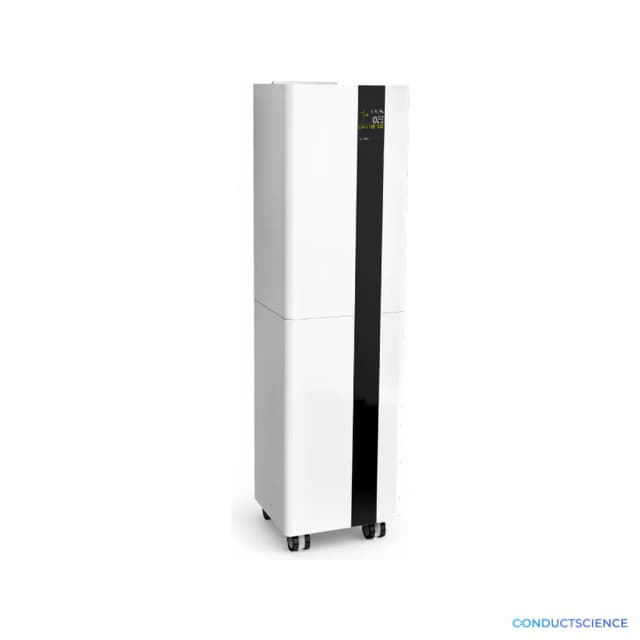
The Bed Unit Ozone Sterilizer is a high-capacity gas sterilization system designed for decontamination of laboratory equipment, biosafety cabinets, and enclosed workspaces. This unit generates 5000 mg/h of ozone for rapid sterilization of surfaces and air within sealed environments, providing an alternative to traditional autoclave or chemical disinfection methods.
The system features programmable cycle parameters with customizable timing for ozone filling, disinfection, pump-out, and parsing phases (0-99 minutes each). Dual-mode operation supports both single and twin bed configurations, while integrated temperature detection and analytical agent change prompts ensure consistent sterilization performance. The compact footprint and quiet operation (45-50 dB) make it suitable for laboratory environments where space and noise considerations are important.
How It Works
Ozone sterilization operates through oxidative destruction of cellular components in microorganisms. The system generates ozone (O₃) through electrical discharge, creating a highly reactive gas that disrupts protein structures, lipid membranes, and nucleic acids in bacteria, viruses, fungi, and spores. The triatomic oxygen molecule readily donates its third oxygen atom, causing irreversible damage to cellular structures and leading to microbial death.
The sterilization process follows a programmed four-phase cycle. During the ozone filling phase, the generator produces 5000 mg/h of ozone gas that is distributed throughout the sealed chamber or workspace. The disinfection phase maintains ozone concentration for the specified contact time to achieve the desired log reduction of microorganisms. The pump-out phase removes ozone gas from the treated space, while the parsing phase allows any residual ozone to decompose naturally back to oxygen, ensuring safe access to the sterilized area.
Features & Benefits
Automation Level
- semi-automated
Disinfection Method
- Ozone
Ozone Generation
- 5000mg/h
Ozone Filling Time
- 0~99min(Customizable)
Disinfection Time
- 0~99min(Customizable)
Pump-out Time
- 0~99min(Customizable)
Parsing Time
- 0~99min(Customizable)
Noise
- 45~50dB(A)
Special Function
- Single and twin bed mode, temperature detection, analytical agent change prompt, selection of disinf
Consumption
- 410VA
External Size(W*D*H)
- 380*350*830mm
Package Size(W*D*H)
- 445*385*967mm
Brand
- ConductScience
Research Domain
- Analytical Chemistry
- Cell Biology
- Clinical Diagnostics
- Environmental Monitoring
- Microbiology
- Pharmaceutical QC
Weight
- 40kg
Shipping weight
- 31.0 lb
Shipping box
- L: 83.0 cm
- W: 38.0 cm
- H: 35.0 cm
| Feature | This Product | Typical Alternative | Advantage |
|---|---|---|---|
| Ozone Generation Rate | 5000 mg/h capacity | Entry-level units often provide 1000-3000 mg/h output | Higher generation rates reduce cycle times for large volume sterilization and heavily contaminated loads. |
| Programmable Timing Control | Four independent phase timers (0-99 minutes each) | Basic models offer fixed timing or fewer programmable parameters | Allows optimization of each cycle phase for different materials and contamination levels. |
| Operating Modes | Single and twin bed mode selection | Most units operate in single configuration only | Provides flexibility to sterilize multiple chambers simultaneously or adapt to different workspace configurations. |
| Environmental Monitoring | Integrated temperature detection | Basic systems lack environmental monitoring | Temperature data ensures ozone stability and sterilization consistency across different environmental conditions. |
| Maintenance Alerts | Analytical agent change prompt system | Manual tracking of maintenance intervals | Automated prompts prevent degraded performance and ensure reliable ozone generation over system lifetime. |
| Noise Level | 45-50 dB operation | Industrial units often operate at higher noise levels | Quiet operation allows use in occupied laboratory spaces without disrupting research activities. |
This sterilizer combines high-capacity ozone generation with comprehensive programmable controls and monitoring features. The 5000 mg/h output and flexible timing parameters support a wide range of sterilization applications while maintaining laboratory-friendly operation characteristics.
Practical Tips
Verify ozone output concentration using calibrated UV absorption monitors at regular intervals to ensure consistent generation performance.
Why: Ozone generators can experience output drift over time due to electrode aging or contamination.
Clean ozone generation components according to the analytical agent change prompts and inspect tubing for ozone-resistant material degradation.
Why: Regular maintenance prevents performance decline and ensures safe, reliable operation.
Seal treatment chambers thoroughly and use ozone-compatible materials in the gas pathway to maximize sterilization efficacy.
Why: Ozone leaks reduce treatment concentration and may create safety concerns in occupied spaces.
Install ozone monitors in the laboratory area and ensure adequate ventilation when operating the sterilizer.
Why: Ozone exposure above occupational limits can cause respiratory irritation and other health effects.
Document cycle parameters, ozone concentrations, and biological indicator results to establish validation records for each application.
Why: Consistent documentation supports regulatory compliance and troubleshooting of sterilization failures.
If sterilization efficacy decreases, check for chamber leaks, verify ozone generation output, and inspect for load configuration changes.
Why: Multiple factors can affect ozone distribution and contact time, requiring systematic evaluation to identify root causes.
Allow adequate parsing time for ozone decomposition based on your specific chamber volume and environmental conditions before accessing treated areas.
Why: Residual ozone concentrations must reach safe levels to prevent exposure during equipment retrieval or maintenance.
Setup Guide
What’s in the Box
- Ozone sterilizer main unit
- Power cord and electrical connections
- Ozone delivery tubing set (typical)
- User manual and operation guide
- Installation hardware (typical)
- Warranty documentation
Warranty
ConductScience provides a standard one-year manufacturer warranty covering defects in materials and workmanship, with technical support for installation and operation questions.
Compliance
What is the effective treatment volume for the 5000 mg/h ozone output?
Treatment volume depends on chamber tightness, load characteristics, and target log reduction. Consult product datasheet for specific volume calculations based on your sterilization requirements.
How do I validate sterilization efficacy for my specific application?
Use biological indicators appropriate for ozone sterilization (spore strips) placed throughout the treatment area. Monitor ozone concentration with calibrated detectors and establish kill curves for your target organisms.
What materials are compatible with ozone sterilization?
Most laboratory plastics, glass, and metals are compatible. Avoid natural rubber, some elastomers, and materials containing unsaturated organic compounds that may degrade upon ozone exposure.
How long does residual ozone take to decompose after the cycle?
Ozone half-life varies with temperature, humidity, and surface materials. The programmable parsing time (0-99 minutes) should be validated for your specific environment to ensure safe levels before access.
Can this system be integrated with existing ventilation or containment equipment?
Yes, the ozone delivery tubing can connect to biosafety cabinets, isolators, or custom chambers. Ensure adequate sealing and compatible materials in the gas pathway.
What maintenance is required for consistent ozone generation?
The system includes analytical agent change prompts to indicate when ozone generation components need service. Regular calibration of ozone output and system leak testing are recommended.
How does this compare to UV or chemical sterilization methods?
Ozone provides gas-phase penetration into crevices and around complex geometries where UV light cannot reach, while avoiding chemical residues that require removal or neutralization.
Have a question about this product?
Have a question? Just ask.
Send it over and we'll email you a personalized answer — no call, no scheduling.
Prefer to talk it through?